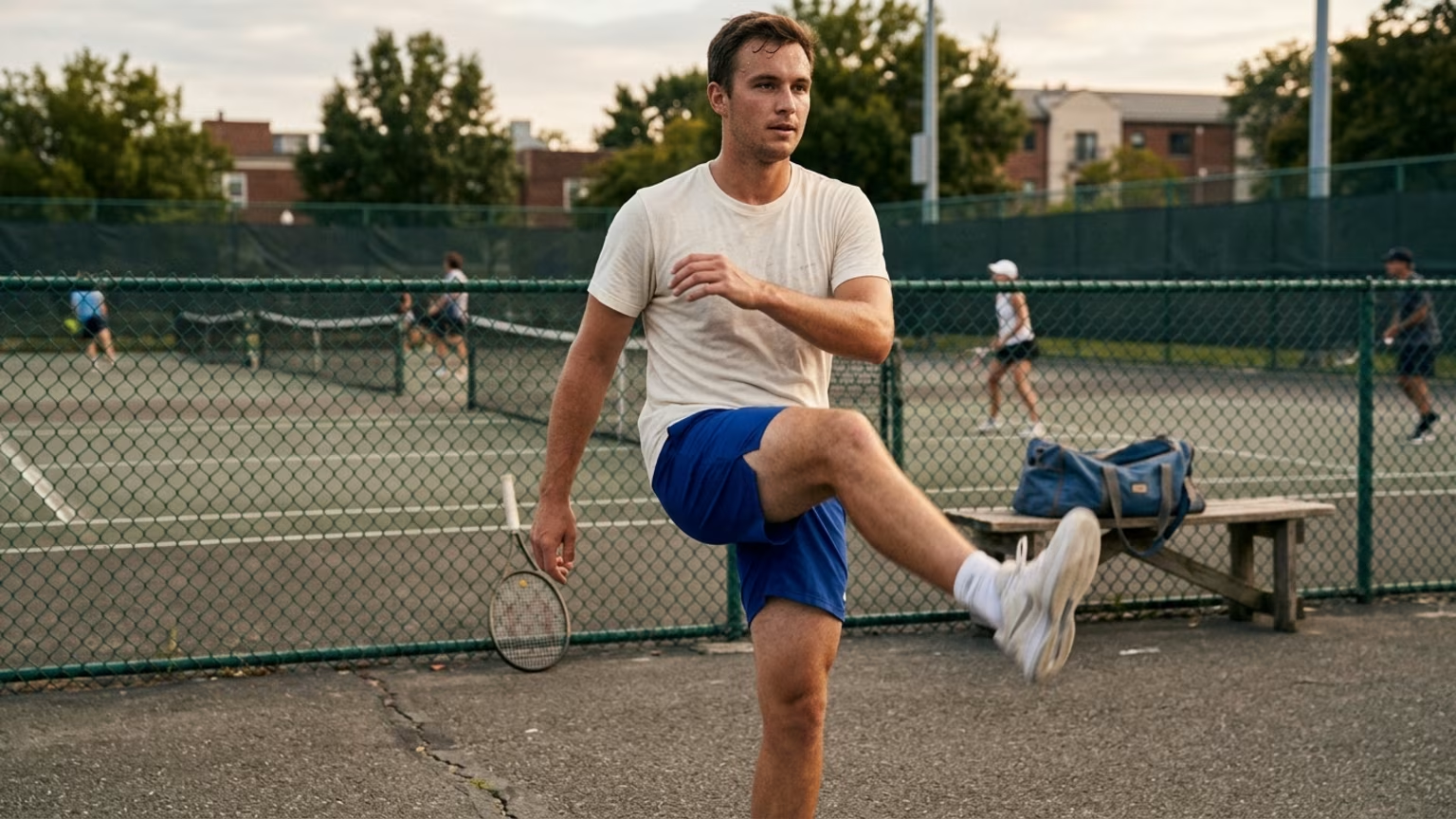

Build a court-ready warm-up routine for tennis, pickleball, and padel. Rehearse movements, raise body temperature, and prepare your joints for better play.




You have just finished tying your shoes on a chilly morning, and your knees immediately remind you of yesterday's hard sets. You walk onto the court feeling heavy, hoping the first few games will somehow loosen your joints. Playing through stiffness is a familiar feeling for many adult athletes. It does not have to be your permanent reality.
At evercourts, we hear from many players who struggle with early match stiffness. "I remember finishing a tough two hour padel match on a cold Tuesday night and waking up the next morning feeling like my lower back was locked in concrete. For a long time, I just accepted this as the price of playing hard in my forties. But once I started spending just ten minutes on targeted hip mobility before heading to the club, the stiffness almost completely vanished."
"It taught me that we do not have to accept pain as a default state of aging." A useful racquet-sport routine has two linked jobs before you play. First, it must raise your body temperature and improve circulation. Second, it must rehearse the movements and intensity you will soon need on the court.
This protocol focuses entirely on capability and athletic longevity. It moves you from general activity to specific court actions without creating unnecessary fatigue. You want to feel physically ready to compete, rather than exhausted from a heavy conditioning workout. Building a reliable court-ready physical preparation habit keeps you moving well.
Older players often mistake joint stiffness for a permanent loss of ability. In reality, a proper preparation sequence simply gives your body the time it needs to adapt. Your resting heart rate and cold muscles are not ready to handle a sudden sprint. Gradually bridging the gap between resting and playing protects your joints.
Static stretching involves holding a muscle in a lengthened position. While it can improve flexibility, it does not provide the gradual increase in heart rate you need. It also fails to rehearse the rapid braking, lateral movement, and split-step timing required for court sports. You can still stretch for specific flexibility needs, but do not confuse it with complete physical preparation.
For a casual hit, your objective is to prepare your body efficiently. You can complete this simple routine in just five minutes. The goal is to move from general activity to racquet-specific actions without creating fatigue.
Begin by raising your core temperature with easy jogging, brisk walking, or low-impact jumping jacks. Gradually increase your pace until you feel warmer and are lightly perspiring. You should not feel winded during this first minute. Older players might find it more comfortable to begin with marching before progressing to a side shuffle.
Transition into dynamic mobility using controlled exercises rather than long held stretches. Perform arm circles, trunk rotations, and marching knee lifts to open up your joints. You can also add gentle heel-to-glute movements and ankle rolls while holding the fence. The purpose is to move your hips, shoulders, and trunk through ranges relevant to racquet swings.
Now you must rehearse actual court movement with short, controlled repetitions. Practice side shuffles, forward-and-back steps, and crossover steps at roughly half speed. Add a gentle lunge in each direction and a two-step recovery movement back toward the center. Keep your steps quiet, stay balanced, and only increase your speed if the movement feels entirely comfortable.
The final phase requires rehearsing your first reactions. Use a partner or an imaginary cue to practice a split step before moving left, right, forward, or backward. Add short shadow swings after each movement to simulate actual play. This sequence is vital because it rehearses the exact transition from a ready position into a stroke.
Training your body for racquet sports goes beyond a brief preparation session. A 2026 systematic review and meta-analysis of neuromuscular training in tennis players evaluated this topic closely. It included 18 studies and 670 participants. Across heterogeneous programs lasting six to 12 weeks, the review found improvements in several outcomes.
These outcomes included stroke velocity, sprint performance, countermovement-jump performance, and agility time. The pooled effects were not evidence for one particular warm-up routine. The interventions actually included resistance, plyometric, core, agility, footwork, medicine-ball, and multicomponent training. The review rated the certainty of evidence as low for stroke velocity and sprint performance.
It noted very low certainty for agility, countermovement jump, and serve accuracy. The participants were exclusively male and were mainly youths and young adults rather than older recreational players. The studies varied substantially in duration, frequency, loading, content, and testing procedures. Because of this variation, the results cannot establish that one specific neuromuscular or warm-up protocol will work for every player.
A short pre-court routine helps you feel prepared, but it does not replace long-term physical conditioning. Maintaining a comprehensive approach to building a life of healthy racquet sports requires ongoing work. You must combine daily movement habits with appropriate pre-match preparation to maintain your athletic capabilities.
A match preparation routine should build progressively rather than jumping straight to maximum speed. A practical 12-minute court-ready warm-up structure serves serious play well. Begin with three to four minutes of general movement to get warm and lightly sweating. Avoid turning this phase into conditioning, as your objective is readiness.
Follow this with three to four minutes of dynamic mobility and activation. Use controlled leg swings, walking lunges, and body-weight squats to prepare your lower body. Next, spend two to three minutes on a court movement progression. Build from walking patterns to moderate shuffles, short accelerations, and controlled decelerations.
Finally, dedicate four to six minutes to progressive hitting. Start with mini-court exchanges, build toward longer groundstrokes, and finish with volleys or serves. The final minutes should include the first reactions that matter tactically for your match. Begin your physical preparation early so you have time for a short pause before competition.
Every racquet sport places different biomechanical demands on your body. Your preparation should reflect the specific court dimensions and stroke selections of your game. Modifying your movements ensures your joints are ready for the exact stresses of your sport.
For tennis, you need to prepare for covering larger distances. Include more retreating steps and open-stance movement rehearsals in your footwork phase. You should also dedicate specific time to overhead serve preparation. The tennis serve requires significant shoulder and trunk loading, so controlled shadow swings are essential.
For pickleball, the focus shifts to defending the non-volley zone. Emphasize compact reactions, rapid lateral shuffles, and short accelerations. Practice staying low and balanced while decelerating quickly to handle fast exchanges at the net. Your shoulder preparation should focus on controlled overhead motions rather than full-power serves.
For padel, you must prepare for a blend of quick net play and deep corner retrieval. Focus on controlled overhead preparation and rotational movements to handle playing off the glass. Add extra side lunges and crossover steps to rehearse the explosive diagonal movements required in a match. Rehearsing these specific patterns helps you transition smoothly into your first game.
You can build a reliable pre-court habit by following a simple sequence. This checklist summarizes the routine for quick reference before hitting the court.
Start using this five-minute sequence before your next casual session to move better today.
Follow Evercourts for practical insights on tennis, pickleball and padel performance, movement, recovery and healthy ageing. Stay connected for new articles, research-led guidance and ideas to help you play well and keep playing for years.


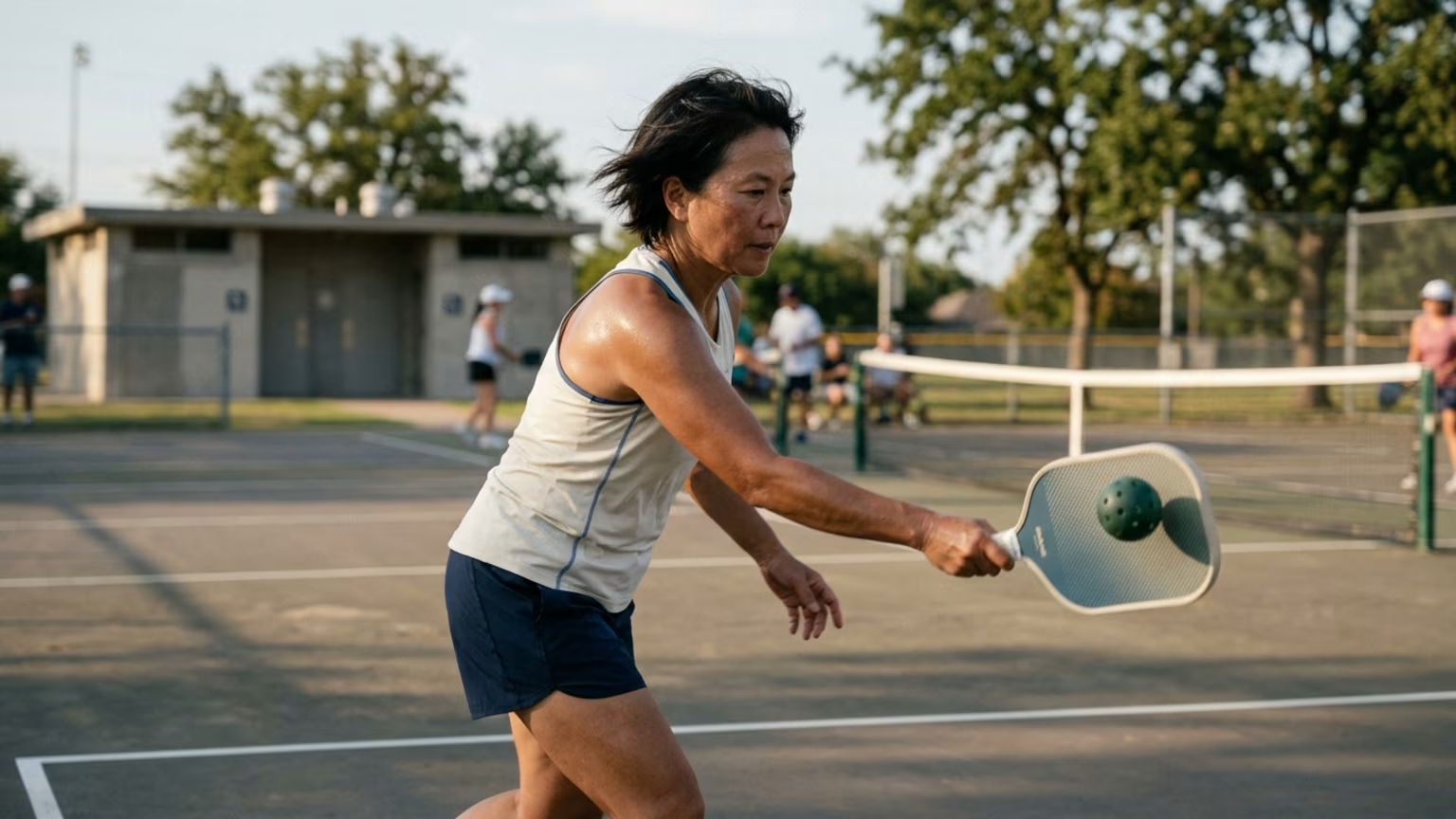
A recent live-play test of a silent pickleball highlights its value for practice, but standard balls still perform better for match play and power control.

An evidence check on sports supplements like tart cherry juice. Learn why racquet sports players should prioritize core nutrition over functional foods.
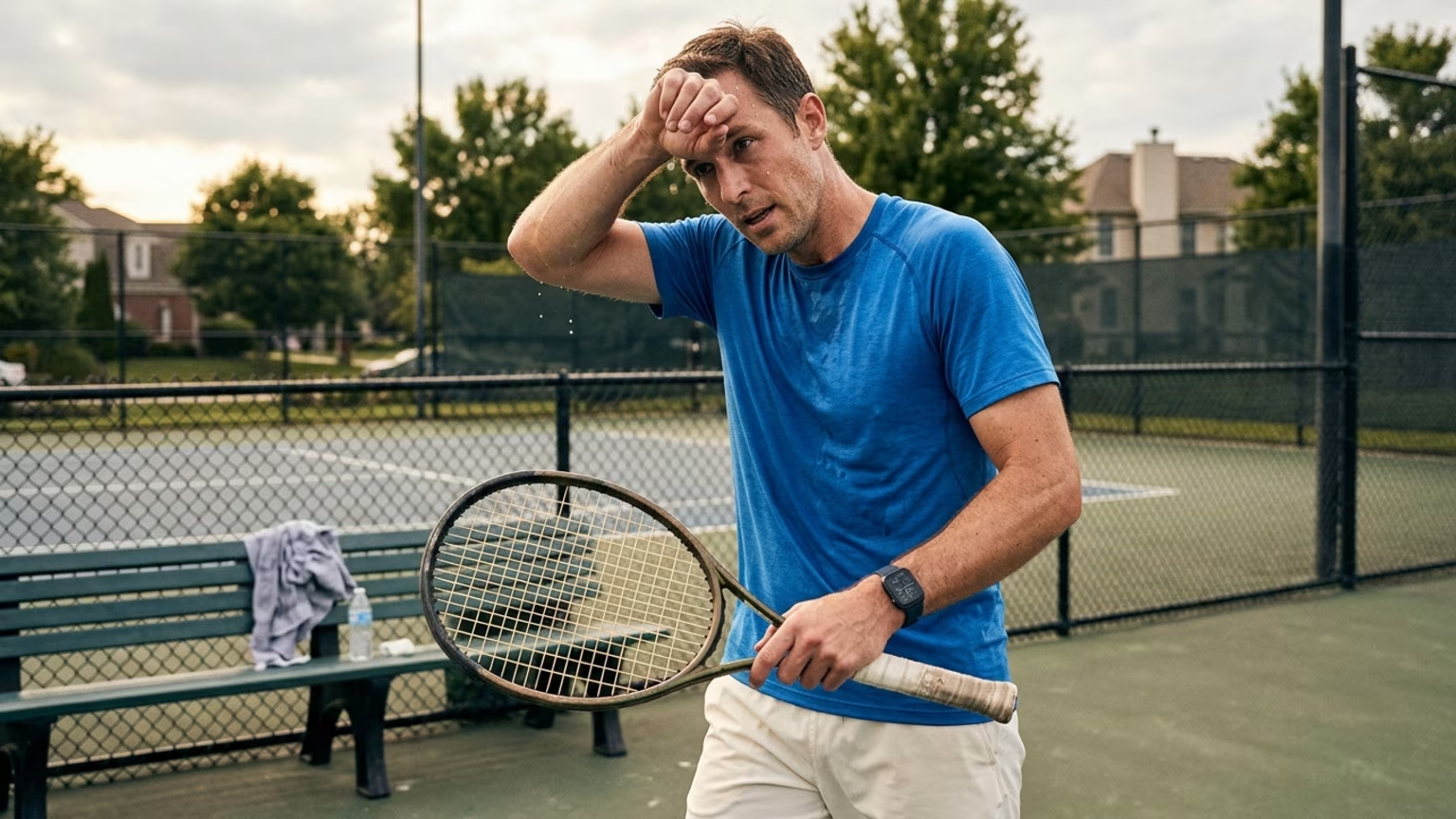
In late 2026, Oura analyzed wearable data to see how recreational tennis impacts heart health and recovery. Learn what this means for your athletic longevity.
Read practical guidance for better movement, smarter preparation and a game that keeps working for you.
explore the Blog
