

Explore how Novak Djokovic incorporates elements of the Wim Hof Method and cold water immersion into his preparation, and learn what it means for everyday racquet sports recovery.




In September 2026, extensive coverage detailed Novak Djokovic's long standing use of the Wim Hof Method as part of his overall preparation and recovery protocol. The report from Punto de Break highlighted how the tennis champion integrates controlled breathing, cold exposure, and mental training into his daily routine. This news arrives as players of all levels increasingly seek reliable ways to maintain their health on the court. During Wimbledon 2026, Djokovic stated that he spends more time on recovery now than at any other point in his career. He listed cold water immersion, hyperbaric chambers, cryotherapy, and red light therapy as his primary physical maintenance tools.
The Wim Hof Method is commonly described as combining controlled breathing, gradual cold exposure, and focused mental training. Djokovic has practiced elements of this system for years and has publicly stated that he finds the methods beneficial for his life in general. He notably documented a session in February 2020 where he entered an icy mountain river in Italy and remained submerged for one minute and 45 seconds. The approach aims to expose practitioners to physical discomfort while developing robust control over the body's natural stress response.
Djokovic has heavily emphasized the mental dimension of this practice. He has stated that mindset is everything and believes that elite performance often comes down to the power of the mind. By using cold exposure as a controlled discomfort exercise, players can practice regulating their breathing and attention. They can then learn to return to a calm mental state, which is highly relevant to handling intense pressure on the court. Finding the right routine is vital, as consistent competitive preparation helps athletes manage those demanding match moments.
However, Djokovic's current preparation involves a vast and highly individualized system. His system includes strict nutrition, sleep tracking, meditation, and multiple recovery modalities. The September 2026 Punto de Break report clarifies that his routine may not perfectly follow the complete Wim Hof protocol today. Cold immersion remains just one tool within a much broader framework designed to support his athletic longevity. Understanding evidence based recovery methods helps clarify why professionals utilize such varied approaches.
Translating an elite protocol into a practical routine for adult recreational players requires careful context. Seeing a world class athlete sit in an icy river can lead everyday players to assume extreme measures are necessary for success. The reality is that basic, consistent habits often provide a much higher return on investment for the average athlete. I remember finishing a tough two hour padel match on a cold Tuesday night and waking up the next morning feeling like my lower back was locked in concrete.
For a long time, I just accepted this as the price of playing hard in my forties. But once I started spending just ten minutes on targeted hip mobility before heading to the club, the stiffness almost completely vanished. It taught me that we do not have to accept pain as a default state of aging. Mastering the fundamentals is the best way to support long term player health.
Recreational players should start with ordinary, supervised recovery practices before attempting aggressive cold exposure. Safety is also a critical factor when evaluating these modern physiological techniques. The breathing component of the Wim Hof Method specifically combines deep breathing with extended breath holding. Frigid Vitality reports that breath hold or hyperventilation based exercises should never be performed in or near water without appropriate safety controls.
Low carbon dioxide states can reduce the natural warning sensation that prompts breathing. This creates a severe drowning risk if a player loses consciousness. Players should also separate the three elements of the method rather than assuming they must all be utilized together.
Using the mental training concept to practice controlled exhalation during a match is entirely safe and highly effective. Padel and pickleball players can use focused breathing to reset between fast paced points. Practicing attention and emotional resets on the court offers immense practical value without requiring extreme physical stressors. You can build mental resilience and focus without ever stepping into a frozen lake.
The scientific backing for the complete Wim Hof Method remains quite limited despite its growing popularity. A 2024 systematic review noted by Punto de Break found that studies on the method had small sample sizes ranging from 15 to 48 participants. These studies featured predominantly male participants and carried a substantial risk of bias. Reporting from NewsZetu adds that the quality of the current evidence was simply too low to support broad effectiveness claims without further research.
Research specifically focusing on cold water immersion provides a slightly clearer picture for active athletes. A 2025 review and meta analysis involving 3,177 participants found reductions in stress in some post immersion measurements. This extensive review also noted positive signals for sleep quality and overall quality of life. However, it did not find a clear and immediate improvement in immune function, and it confirmed that cold immersion initially produces an acute inflammatory response.
When looking at direct performance benefits, the academic results are decidedly mixed. A pooled review reported by Sama Says in 2026 included 30 randomized trials and 527 participants. This review found modest relief in perceived muscle soreness and tracked muscle damage markers. However, it found no measurable improvement in jump power or maximum strength among the studied participants. These findings suggest that cold immersion helps players feel physically recovered but does not necessarily make them faster or stronger.
Looking toward the next season, the conversation around racquet sports recovery will shift away from generic cold applications. The latest sports science points toward a highly context dependent approach to ice baths and cold plunges. A 2026 review published in PMC describes cold water immersion as potentially useful for acute recovery during packed tournament schedules. However, it highlights a clear trade off between short term recovery effects and long term training adaptation.
This distinction is crucial for athletes trying to balance skill development with physical readiness on the court. Using cold immersion immediately after every strength session may actually blunt the muscle adaptations you are working hard to achieve. Players will increasingly use cold exposure selectively to manage acute soreness between closely scheduled matches. It will serve as a situational tactic for intense tournament weekends rather than a mandatory daily requirement.
Follow Evercourts for practical insights on tennis, pickleball and padel performance, movement, recovery and healthy ageing. Stay connected for new articles, research-led guidance and ideas to help you play well and keep playing for years.


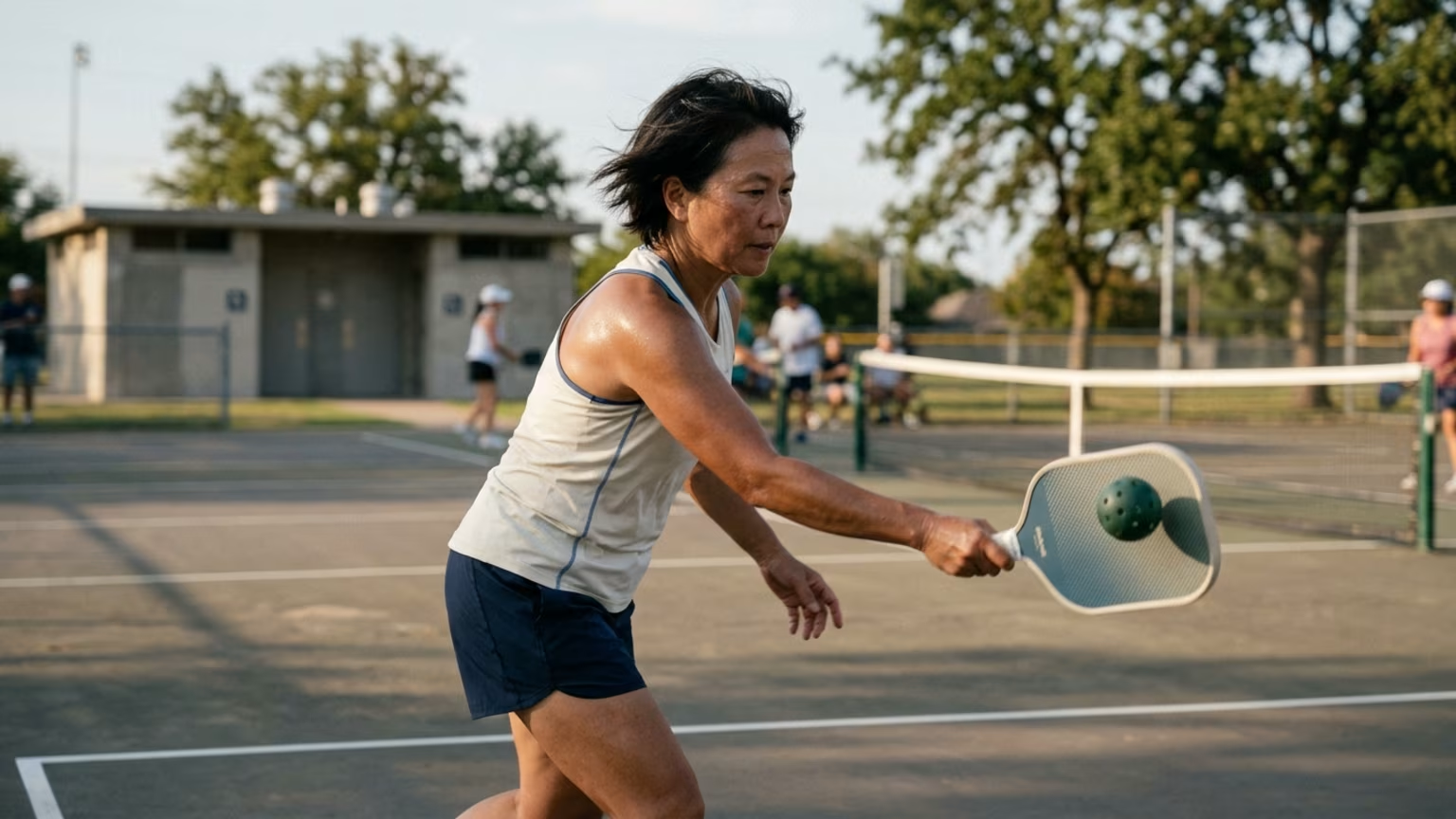
A recent live-play test of a silent pickleball highlights its value for practice, but standard balls still perform better for match play and power control.

An evidence check on sports supplements like tart cherry juice. Learn why racquet sports players should prioritize core nutrition over functional foods.
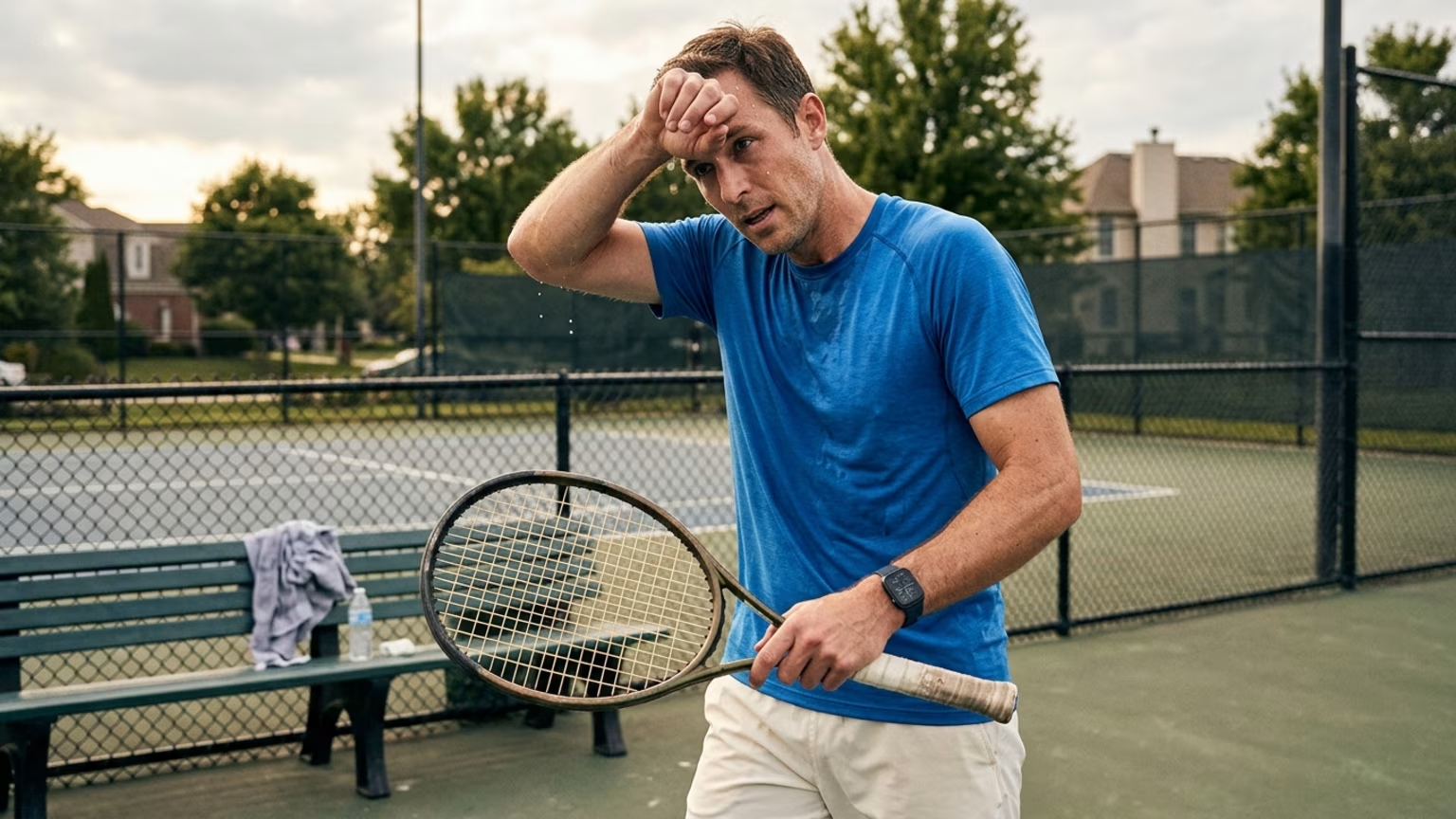
In late 2026, Oura analyzed wearable data to see how recreational tennis impacts heart health and recovery. Learn what this means for your athletic longevity.
Read practical guidance for better movement, smarter preparation and a game that keeps working for you.
explore the Blog
