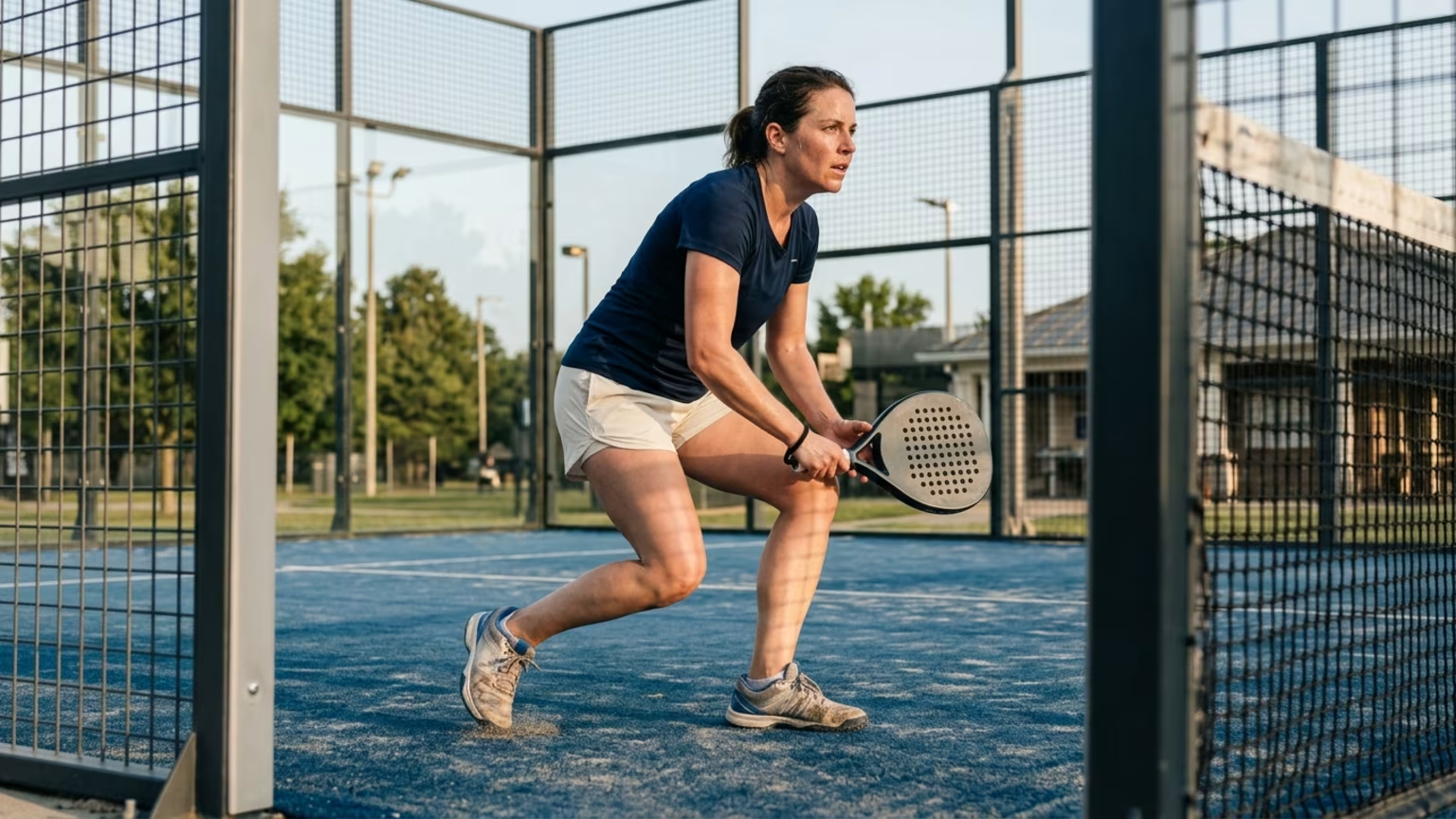

A grounded guide to padel readiness, split-step timing, adjustment steps and recovery, with clear limits on what coaching advice proves.




Efficient padel footwork is the sequence of getting ready, adjusting your position around the ball and recovering your balance for the next shot. It is about organizing movement and racket preparation rather than making every action bigger or faster.
The central coaching idea is straightforward: keep the racket available, make adjustable movements near the ball and finish ready for another response. These are connected parts of a rally rather than separate technical tasks.
For adult players, that gives the topic a useful focus. Instead of asking only how quickly you can reach the ball, consider whether you arrive prepared for the shot you need to play.
The defensive coaching guide describes readiness, adjustment steps and recovery as parts of back-court play. Read together, those cues present footwork as a repeated movement sequence rather than one isolated burst. The player prepares to respond in either direction and then reorganizes after the shot.
At the net, the problem includes limited preparation time. The same guide recommends a compact block when a fast volley leaves little room for a larger swing. Footwork and racket preparation therefore belong in the same conversation.
For someone who also plays tennis or pickleball, a useful question is whether the next response begins from readiness or from unfinished movement. The padel examples make that question concrete: back-court defense asks for adjustable positioning, while net play places attention on having the racket available.
Our broader discussion of court positioning and movement choices provides another way to consider that connection.
These sources are padel coaching guides, not controlled studies or comparisons with tennis and pickleball. They do not establish injury prevention, longer playing careers or measured performance gains. Their useful contribution is a set of practical technique cues that should be read in the context of the shot being played.
For back-court defense, the defensive guide recommends slightly bent knees, weight balanced on the balls of the feet and the racket held in front. That is guidance for a defensive situation rather than a universal stance for every shot.
At the net, a volley coaching guide gives a related rationale for keeping the racket up: there is no need to lift it from waist level before each volley. This is an explanation of preparation, not a measured claim about reaction speed.
The common thread is availability. The racket begins somewhere useful for the situation instead of becoming another task to organize after the ball arrives.
The forehand-volley guide recommends watching the opponent’s racket preparation and shoulder angle. It also advises timing the split step so the feet land in a balanced position around the opponent’s contact.
The guides describe the timing slightly differently. One places the landing at contact, while another describes the hop just before contact. Their practical common ground is a landing that leaves the player balanced and able to respond.
The useful cue is therefore readiness around contact rather than a jump performed independently of the opponent’s shot. For more context, our article on connecting split-step timing with movement considers that relationship.
The defensive guide favors small, adjustable steps over long strides that commit the player too early. The practical synthesis is to distinguish covering ground from settling into position for the shot.
Larger movement may be needed to reach the area of the ball. Smaller adjustments then organize the distance for contact. This is not an instruction to take tiny steps throughout every rally.
It is a way of separating two jobs: getting to the ball and preparing to play it. Those jobs belong together without having to look identical.
When a fast volley arrives with little preparation time, the defensive guide recommends a short block rather than a large swing. The important detail is the situation: the compact response is recommended because time is limited.
That does not turn every shot into a block. It makes compact preparation a response to the ball arriving, rather than a rigid style imposed on the whole rally.
A useful coaching question is whether the preparation matches the available time. The guidance is about that match, not about making every movement as small as possible.
After a defensive shot, the guide recommends returning to a central and balanced position. The research synthesis also emphasizes bringing the racket back to readiness for the next ball.
Recovery is therefore part of the shot sequence, not something considered only after a hurried contact. A player’s attention can include both the ball just played and the position needed for the next response.
The sequence remains simple: prepare, respond, adjust and recover. Its value as a coaching framework is that each part leads into the next.
For athletic longevity, the useful focus is repeatable technique rather than age-based assumptions about movement. These guides organize their advice around defensive and volley situations. They do not assign those techniques to a particular age group.
That leaves room for an adult player to discuss specific movement questions: whether the racket starts ready, whether the landing is balanced and whether the final steps remain adjustable. Those are more concrete topics than a general judgment about being too slow or too old.
A practical conversation with a coach could examine back-court readiness separately from net preparation. It could also distinguish the movement used to cover ground from the adjustments used near contact. Our discussion of controlled first-step mechanics in padel offers related context.
Continuing to play over the years is a broader ambition than refining one technical detail. Footwork provides a manageable part of that conversation: how to organize the next shot with attention to preparation and balance.
Recurring aches or stiffness are reasons to bring the conversation beyond technique and consult a qualified physiotherapist or healthcare provider. The same applies when discomfort is influencing how you stand or move, or when a physical concern makes you unsure about playing.
A coaching cue should not be used to explain away those concerns. Questions about symptoms and personal playing decisions belong in an individual assessment rather than a general footwork article.
There is room for both a well-prepared next shot and an honest view of how movement feels. The game does not need those two things to be in conflict.
Follow Evercourts for practical insights on tennis, pickleball and padel performance, movement, recovery and healthy ageing. Stay connected for new articles, research-led guidance and ideas to help you play well and keep playing for years.


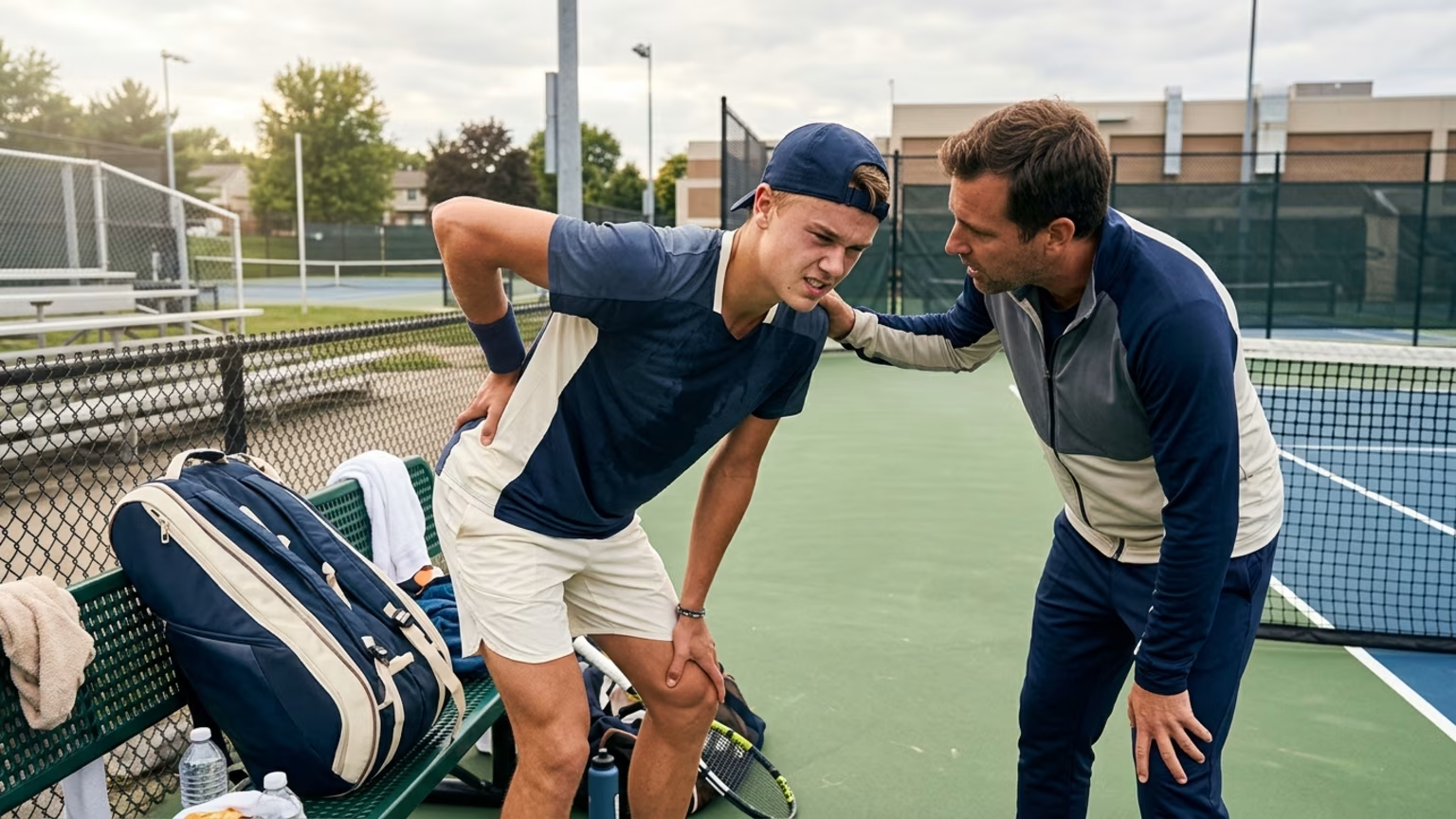
Holger Rune withdrew from the European Open with a back problem. The facts behind his decision and a grounded perspective for recreational players.

The Dink’s October 17 guide emphasizes deep returns, ball-height decisions and positioning against faster pickleball opponents.

A new report outlines padel and tennis gear trends. Learn how to assess adjustable rackets, sensor feedback and smart-court claims.
Read practical guidance for better movement, smarter preparation and a game that keeps working for you.
explore the Blog
