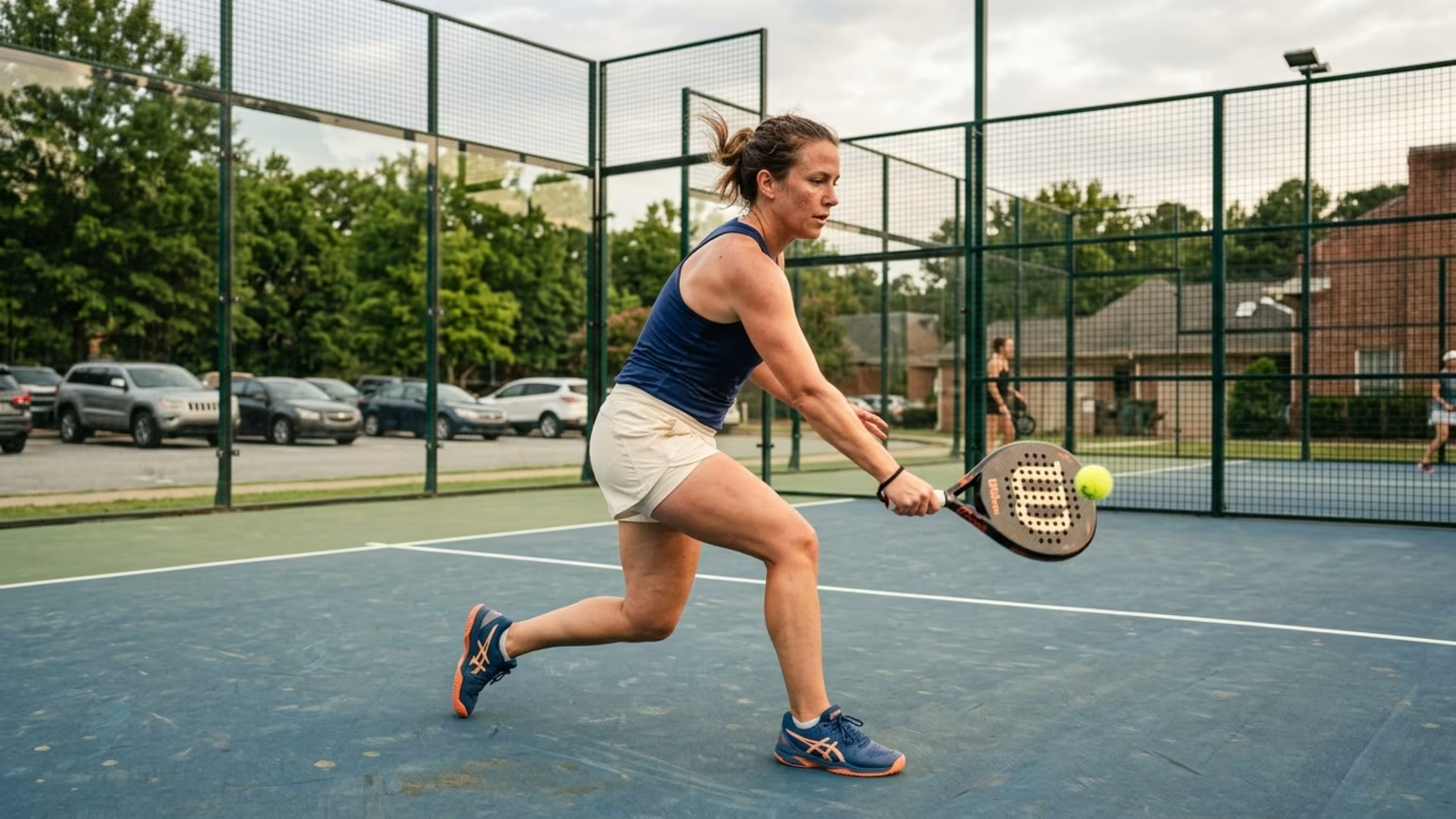

Padel footwork requires more than straight-line speed. Learn why current research highlights first-step reactions, controlled braking, and recovery mechanics.




First-step movement and deceleration refer to a player's ability to push off explosively and then brake under control. This physical quality dictates court coverage much more than top straight-line speed. Court footwork is fundamentally about arriving balanced and ready for the next ball. Padel movement specifically demands repeated short accelerations and sharp direction changes rather than long sprints.
Mastering these mechanics allows players to defend the corners effectively and react safely to unpredictable rebounds. A strong initial push creates time, while reliable brakes provide the foundation for a controlled swing. Without this foundation, players end up lunging at the ball and compromising their posture. Effective movement is not just about getting to the ball.
It is about arriving in a position where your lower body can support the shot. When players lack the ability to decelerate smoothly, their upper body takes on the extra strain to compensate.
Racquet sports force players to manage rapid changes of momentum in tight spaces. Tennis requires lateral slides and hard stops on abrasive hard courts or slippery clay. These surfaces demand high levels of eccentric strength from the quadriceps and calves to slow the body down safely. Pickleball demands explosive lateral shifts at the kitchen line to defend quick volleys.
The condensed court size means players have very little time to transition from a full sprint to a complete stop. Padel introduces an enclosed court that creates constant unpredictable rebounds from the back and side glass. A ball coming off a wall forces a padel player to brake abruptly and adjust their posture instantly. Players frequently have to sprint forward for a drop shot, stop, and immediately backpedal for a lob.
This continuous cycle of starting, stopping, and retreating places a unique burden on the lower extremities. The confined space means every movement is a reaction to a rapidly changing geometry. I learned how taxing this explosive movement can be when I first started playing pickleball. I noticed how many people skipped warming up entirely before heading to the courts.
They would jump straight out of their cars and right up to the kitchen line. I tried doing that and immediately pulled a calf muscle. Pickleball requires just as much explosive lateral movement as tennis, just in a tighter space. Since then, I always spend five minutes doing dynamic lunges and ankle rolls.
It changes everything about how confident I feel pushing off the baseline. That same principle applies perfectly to the sudden starts required to defend the glass in padel. Without proper preparation, the tissues in the lower leg simply cannot handle the demand of sudden stopping.
Sports scientists characterize padel as an intermittent sport defined by repeated accelerations, decelerations, and sharp direction changes. Because the court is relatively small, players rarely reach their absolute maximum sprinting speed. Instead, success relies on how quickly a player can transition between forward, lateral, and backward movements. Professional padel athlete Jesús Moya notes that people often underestimate the intensity of the sport.
He points out that padel constantly demands acceleration, braking, turning, and explosive movement to stay competitive. The ability to stop rapidly is just as vital as the initial burst of pace. However, the need for short-burst agility does not mean that maximal speed, power, or general athleticism are irrelevant. A strong aerobic base and overall lower-body power remain essential for executing these explosive movements repeatedly over a long match.
The repeated demands of starting and stopping take a significant physical toll on the body. A 2023 systematic review covering eight studies and 2,022 players looked closely at padel injury rates. The review reported approximately three injuries per 1,000 training hours and eight injuries per 1,000 matches. The researchers stressed that the underlying evidence had limited quality and substantial variation between studies.
Despite these limitations, the injury data provides useful insight into the physical stresses of the sport. The same review identified the elbow as the most frequently reported injury location. This was followed closely by the knee, the shoulder, and the lower back. Tendons and muscles were commonly involved tissues across the studied populations.
Improving your deceleration directly supports athletic longevity by protecting your joints from excessive shock. Adult players often focus on running faster, but absorbing force safely is far more important for joint health. Training your brakes ensures your knees and lower back do not absorb excessive impact during every rally. Healthy aging on the court comes from moving with control rather than simply chasing a ball recklessly.
Building this physical capacity ensures you can enjoy competitive play for decades. Practical coaching drills can help you build this controlled movement without exhausting your body. First, practice a deliberate split-step reaction by having a partner point to a corner. Push off decisively to create space early instead of reaching late.
Players who understand how to train the first step typically experience less late-match fatigue. The goal is to generate power efficiently from a stable base rather than taking extra, inefficient steps. You should also work on braking before the ball by moving diagonally for a short distance. Come to a complete stop to avoid running past the intended contact point.
Hitting while off balance puts unnecessary stress on your joints and reduces your shot accuracy. Incorporating a structured 10-minute padel warm-up will also prepare your muscles for these sudden stops. Practicing this control helps you handle tricky rebounds off the back glass with absolute confidence. Next, focus on your lob reaction and retreat mechanics during your practice sessions.
When a lob goes up, avoid turning it into a blind backward sprint. Turn your hips, use controlled crossover steps, and decelerate smoothly before you attempt an overhead swing. Improving your court movement across racquet sports requires prioritizing balance over top speed at all times. Finally, train your recovery positioning by taking deliberate steps back to a neutral defensive stance after every shadow swing.
Even with sensible training and good movement habits, occasional injuries can still happen. Soreness after a tough match is a normal part of sports, but sharp pain is not. You should seek guidance from a healthcare provider if you experience localized joint pain that persists. A professional is also necessary if pain fails to improve after a few days of rest.
Pushing through joint discomfort often leads to compensatory movement patterns that can create secondary issues. Pay close attention to how your knees and lower back feel during sudden stops. If decelerating for a drop shot causes a sharp twinge, it is time to get an assessment. A qualified physiotherapist can evaluate your movement patterns and identify any strength imbalances safely.
They can provide specific exercises to strengthen the muscles responsible for absorbing shock during hard braking. This targeted approach is much more effective than relying on generic rest alone. Taking early action on minor discomfort ensures you can resolve small issues before they worsen. Continuing to play on compromised joints makes it much harder to maintain your court coverage safely.
Ignoring a stiff knee today might result in a more severe muscle strain during your next match. By addressing these warning signs early, you protect your ability to keep playing your favorite racquet sports for years. Next time you step onto the court, pick three practice rallies to focus entirely on stopping completely before you swing.
Follow Evercourts for practical insights on tennis, pickleball and padel performance, movement, recovery and healthy ageing. Stay connected for new articles, research-led guidance and ideas to help you play well and keep playing for years.


An evidence check on sports supplements like tart cherry juice. Learn why racquet sports players should prioritize core nutrition over functional foods.
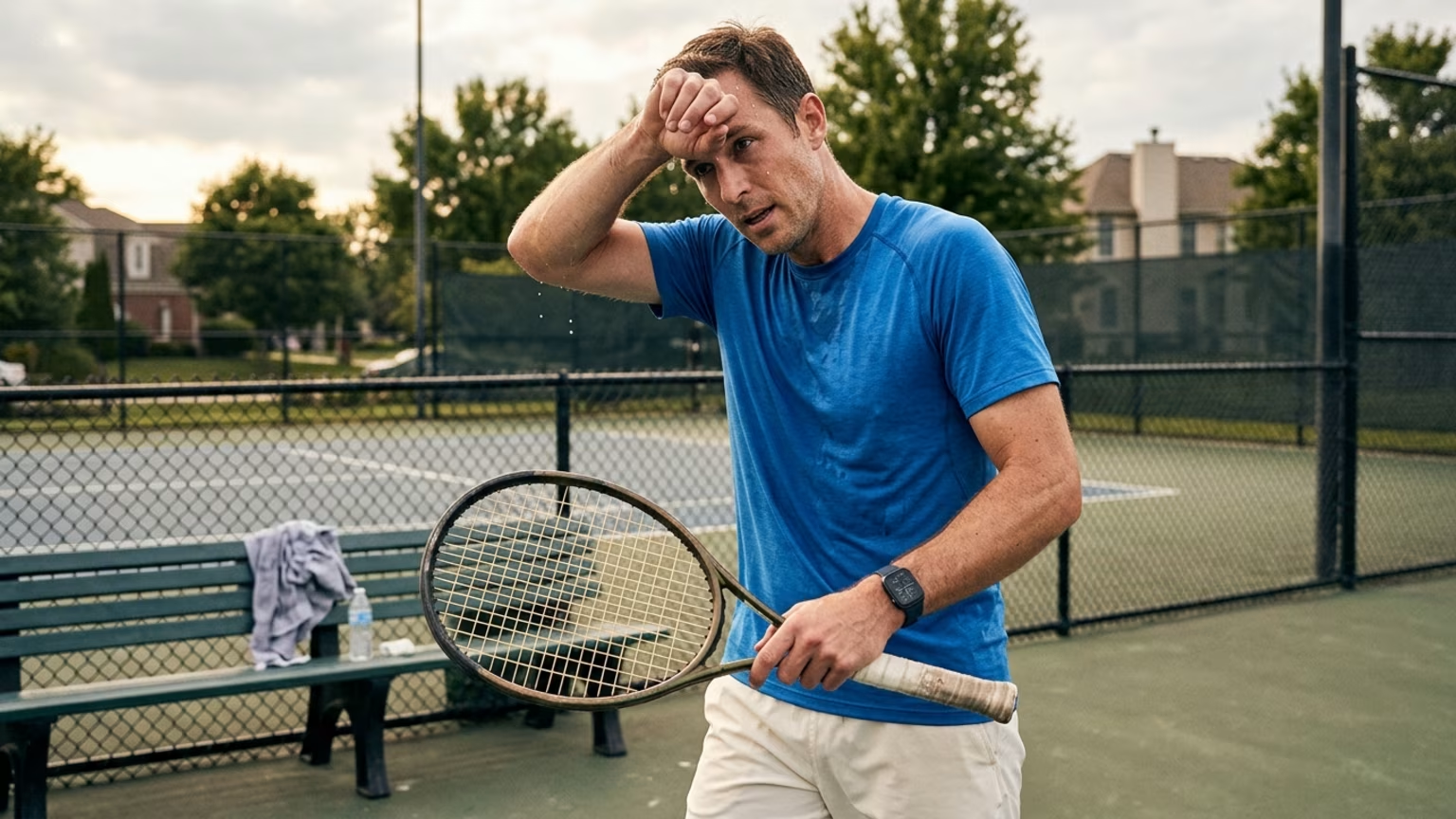
In late 2026, Oura analyzed wearable data to see how recreational tennis impacts heart health and recovery. Learn what this means for your athletic longevity.
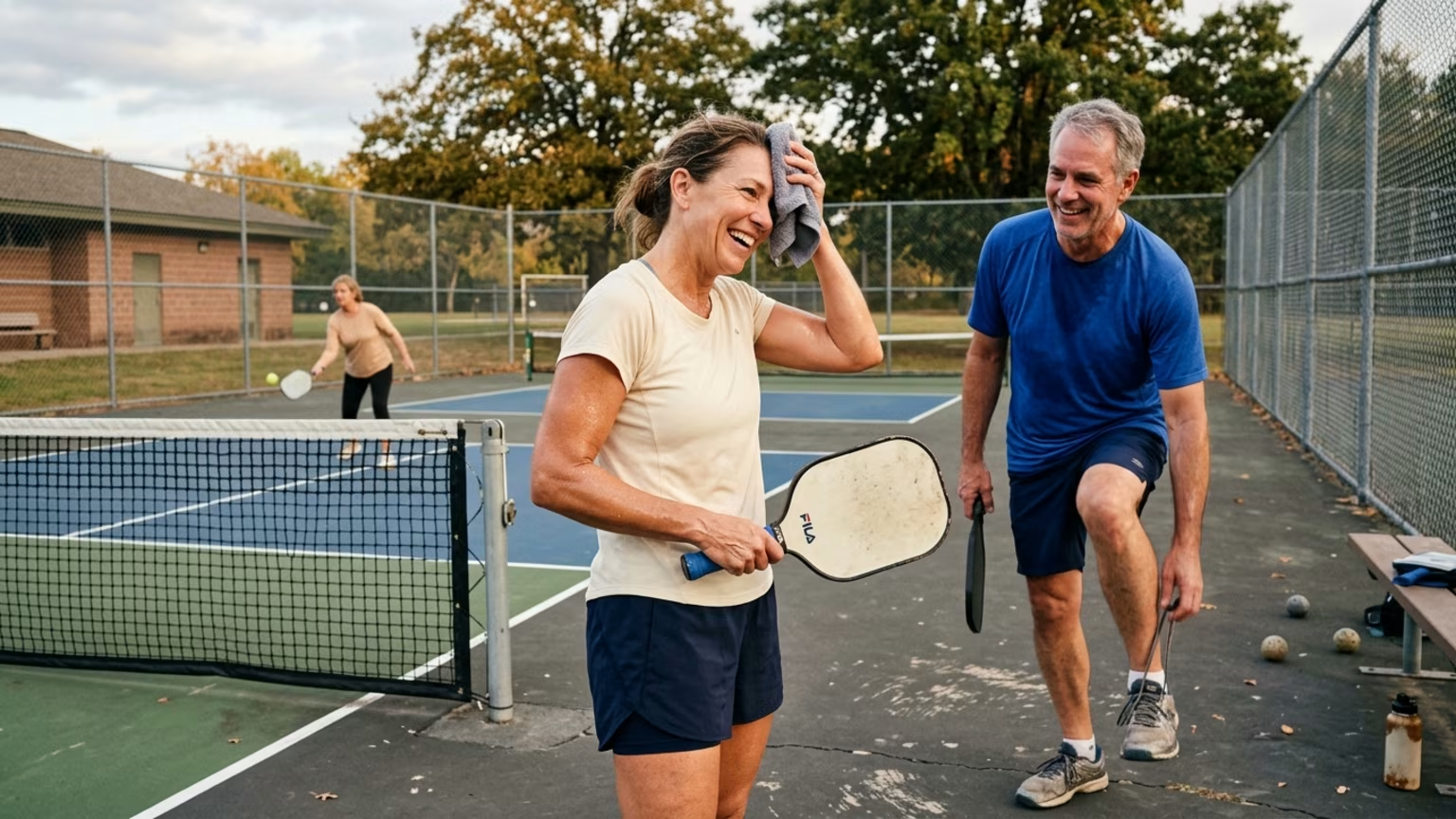
Recent guidelines emphasize gradual progression, dynamic warm-ups, and scheduled recovery to help adult racquet sports players maintain athletic longevity.
Read practical guidance for better movement, smarter preparation and a game that keeps working for you.
explore the Blog
