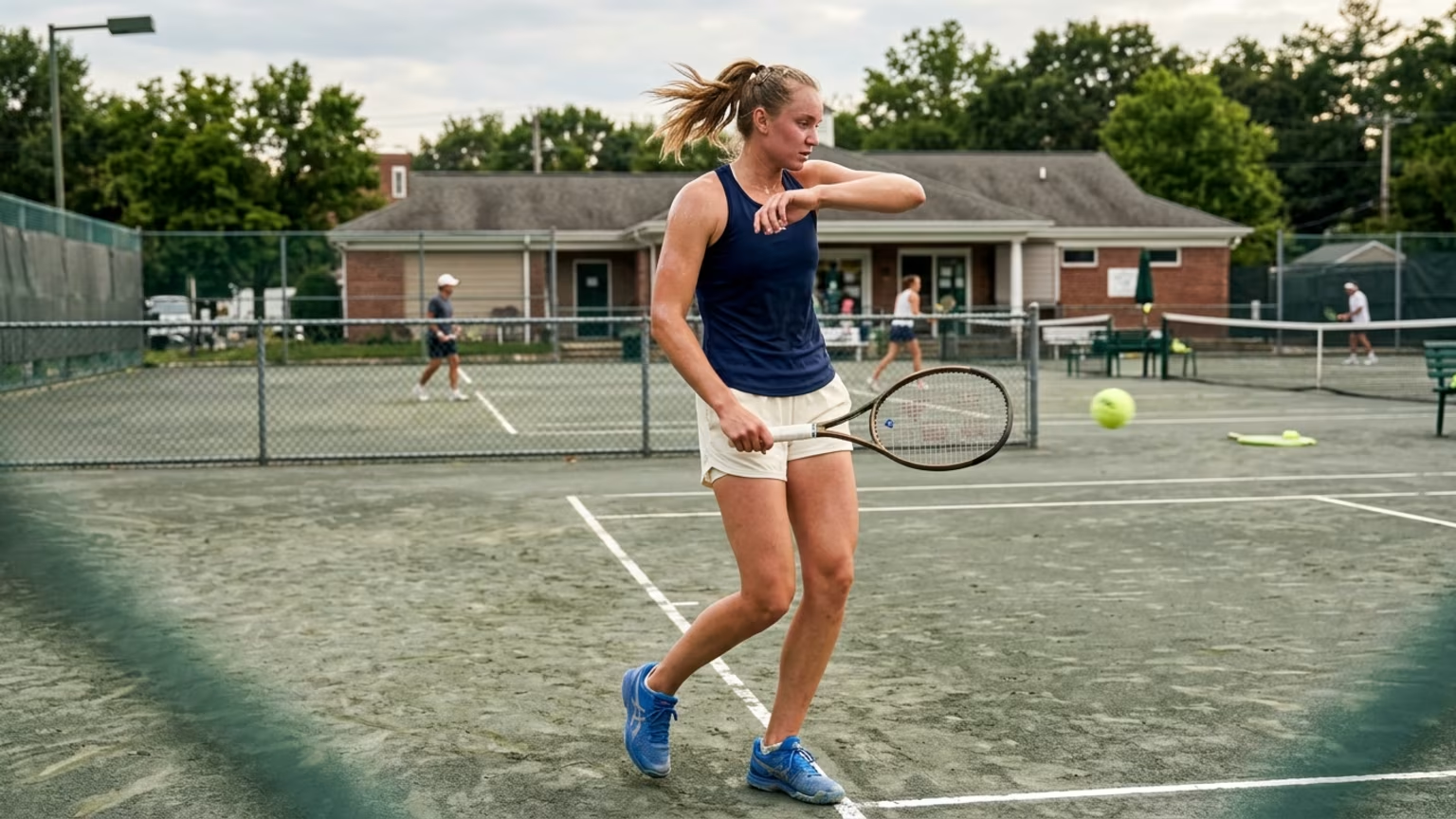

Elena Rybakina reached the 2026 US Open quarterfinals by prioritizing rest and daily workload management over rigid pre-tournament preparation blocks.




In September 2026, Elena Rybakina advanced to the US Open quarterfinals without dropping a single set. Reuters reported on September 8 that the world number two seed arrived in New York after recovering from an ankle injury. This physical setback had forced her to retire from her Cincinnati Open quarterfinal against Iga Świątek just weeks prior. Despite lingering fitness doubts, Rybakina managed her preparation timeline to achieve the best US Open performance of her career.
Rybakina entered the hard-court major with a highly uncertain medical situation. She confirmed that she and her team did not know whether she would even be able to compete. A doctor remained available by phone while her coaching staff managed her schedule strictly on a daily basis. This cautious approach effectively replaced a conventional pre-tournament training block.
According to Reuters, Rybakina did not play tennis for seven days leading up to the event. She was also unable to complete much movement-oriented work in the gym during that time. She noted that her preparation was severely limited, forcing her team to assess her condition daily. This measured strategy ultimately set up a quarterfinal match against Zheng Qinwen.
Rybakina provided direct insight into her restricted routine during the lead-up to the tournament. She told reporters that her preparation was not ideal and that she could not perform standard exercises. Her quotes support a highly conservative performance lesson for any competitive player. Decisions regarding recovery and competition must often be adjusted daily rather than governed by a rigid plan.
Before facing Zheng, Rybakina defeated two-time US Open champion Naomi Osaka 6-1, 6-4 in the fourth round. A victory in the quarterfinal would put Rybakina in position to overtake Aryna Sabalenka for the world number one ranking. The ranking opportunity formed part of a wider competitive race involving Sabalenka, Coco Gauff and Jessica Pegula. However, Rybakina maintained that her primary focus was winning titles and taking the tournament one match at a time.
A successful return to competition does not mean an athlete is fully symptom-free. For Rybakina, the US Open required playing through recent physical restrictions with the backing of a dedicated team and medical staff. Adult recreational players do not have a doctor on standby during their weekend leagues. Amateurs must therefore avoid treating elite athlete comebacks as a rigid recovery guide and instead monitor their own physical responses.
Players should treat persistent pain around the ankle or Achilles region as a clear signal to modify activity. Amateurs should use a daily readiness check before stepping on the court. Assess pain, swelling, walking comfort and whether movement-specific warm-ups make symptoms worse. If physical indicators deteriorate, players should substitute competitive play with mobility work or rest.
It is also critical to separate practice volume from competition volume. A player returning from an ankle issue might tolerate a short session of controlled hitting. That same player may not be ready for consecutive tournament days or long matches with heavy tie-breaks. Structuring rest periods before symptoms force a complete shutdown is vital for athletic longevity.
Recreational athletes can also benefit from keeping a basic activity log. Recording match duration, serving volume, perceived exertion and next-day symptoms helps track workload trends. The goal is to identify whether fatigue and recovery metrics are moving in the wrong direction. Adopting Rybakina's approach of focusing on the immediate match prevents players from committing automatically to every open-play session.
Amateurs should also maintain a clear medical escalation threshold during any comeback. New swelling, bruising, altered gait or sharp pain should prompt an evaluation by a qualified clinician. A sensible return should move progressively from pain-free daily activity to controlled hitting. Players can then advance to movement drills and practice sets before resuming full competition.
The numerical context of this run highlights the effectiveness of reduced preparation volume. Rybakina spent seven consecutive days completely off the court right before a major tournament. She substituted intense physical conditioning for rest and highly restricted gym activity. Despite this steep drop in training volume, she reached the quarterfinals without losing a single set.
Her fourth-round victory over Osaka required only 17 games to complete a 6-1, 6-4 win. This efficiency on the court minimized her physical exposure during a vulnerable recovery phase. The world number two seed managed to protect her injured ankle by keeping matches as short as possible. This highlights the value of disciplined match management for surviving deep tournament runs.
The ranking math adds further context to her tournament workload. Rybakina needed one more victory against Zheng to secure the top spot the following week. Sabalenka remained in contention and publicly weighed the possibility of losing the top ranking against pursuing a third consecutive US Open title. Rybakina's team avoided letting rankings dictate their schedule by keeping their focus squarely on match-by-match execution.
Rybakina's careful progression highlights a growing awareness of the physical toll of late-season tennis. Her path directly competes with other top seeds who are navigating intense schedules while trying to optimize their physical readiness. We will likely see more players adopting recovery-focused preparation strategies during the remaining hard-court swing.
Osaka provided another clear example of this shifting mindset following her fourth-round exit. She stated that she was undergoing further medical imaging and intended to be careful about her remaining match load this season. This trend of prioritizing physical assessments over guaranteed tournament appearances is setting a new standard for workload management. Managing fatigue early will remain the defining strategy for maintaining healthy aging and performance through the rest of the competitive calendar.
Follow Evercourts for practical insights on tennis, pickleball and padel performance, movement, recovery and healthy ageing. Stay connected for new articles, research-led guidance and ideas to help you play well and keep playing for years.


An evidence-led look at pickleball lunges, balanced recovery, movement practice and when to seek professional advice.

A practical tournament-day mailbag covering schedules, venue rules, food, fluids and flexible plans for tennis, pickleball and padel.

Understand tennis's strength, power, balance and braking demands, with a cautious framework for off-court preparation and long-term play.
Read practical guidance for better movement, smarter preparation and a game that keeps working for you.
explore the Blog
