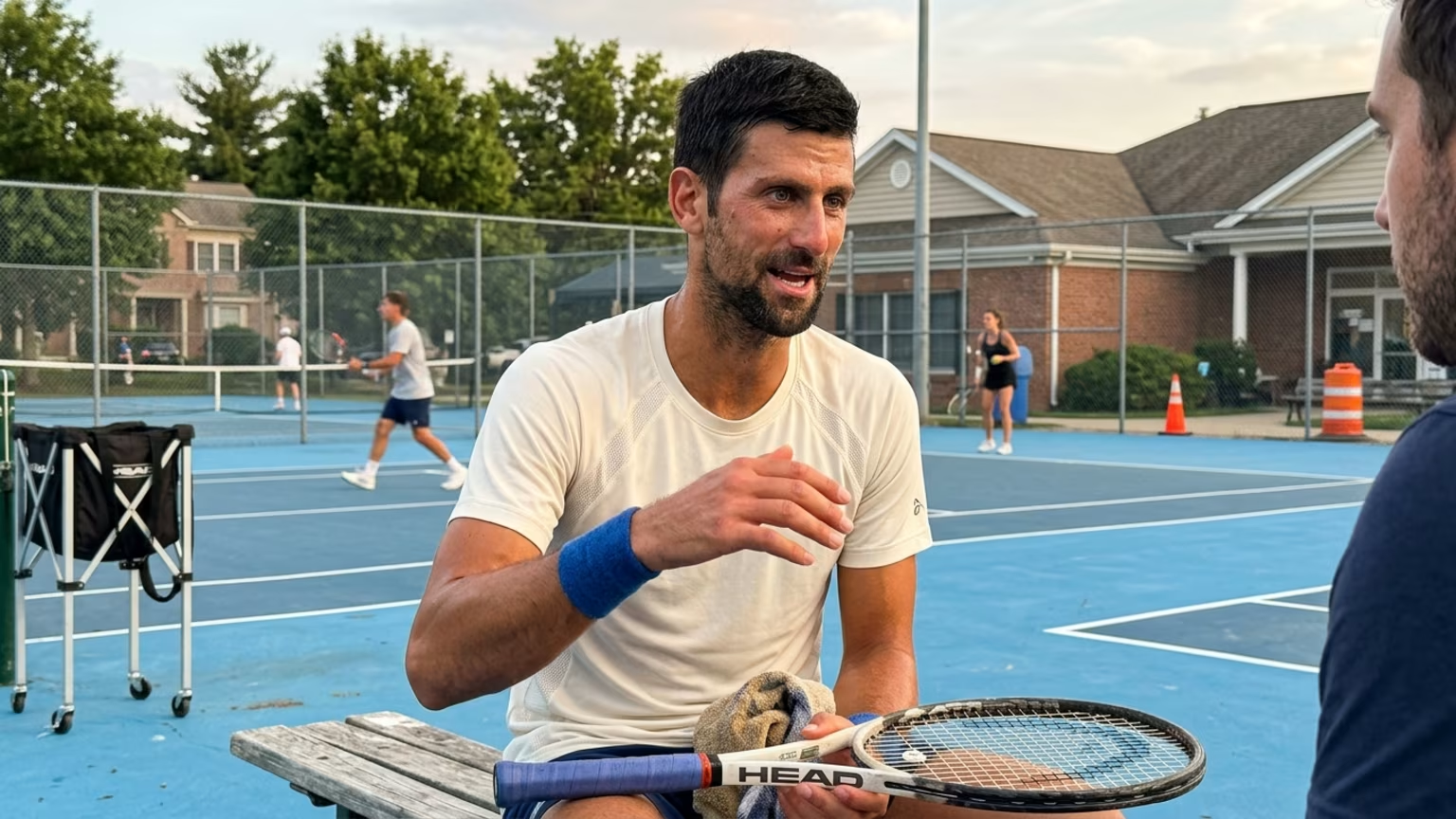

Novak Djokovic emphasized recovery-focused preparation before the US Open. Learn how managing your tournament workload improves racquet sport performance.




Workload management is the intentional balancing of training stress and recovery time to peak for specific competition days. Novak Djokovic entered the 2026 US Open seeking a record-setting 25th Grand Slam singles title, which would move him beyond Margaret Court’s all-time total of 24 major singles championships. This milestone highlights how physical readiness dictates competitive success. Understanding how an elite player schedules rest offers a practical framework for anyone planning a tournament weekend.
The pressure to constantly practice can overshadow the need for physical restoration. Adult players often feel guilty for taking days off before a big match. However, resting is an active part of any successful competition strategy. Peak performance requires a well-rested energy system.
Practice sessions rarely duplicate the repeated explosive efforts required in actual matches. Tennis, pickleball, and padel challenge the body through constant changes of direction and unscripted reactions. Players constantly accelerate to reach the ball, decelerate to strike, and recover to a neutral position. This cycle taxes the anaerobic energy system far more than a controlled drill or baseline hitting session.
Muscle recovery is not a passive process that happens automatically. Your body actively repairs tissues and replenishes energy stores during periods of rest. Pushing through constant fatigue interrupts this biological repair cycle. Ignoring the demand for recovery ultimately limits your ability to generate explosive power on the court.
A practice environment allows athletes to control their heart rate and rest between rallies. Competition removes that control entirely. Opponents dictate the pace of play, forcing you into compromised positions and sudden sprints. Structuring a proper court-ready preparation system helps bridge this gap by priming the body for unpredictable movement.
The emotional stress of competition also amplifies physical fatigue. Nervous energy burns through glycogen reserves quickly. A player might feel fresh during a light hitting session but become exhausted after one competitive set. Recognizing this disparity is the first step toward better tournament planning.
The differences between these sports also dictate how fatigue accumulates. Padel matches involve frequent squatting and explosive bursts off the glass walls. Tennis requires long baseline rallies that heavily load the legs and hips. Pickleball demands rapid lateral transitions and sustained crouched postures at the non-volley zone.
The 39-year-old Serbian was seeded fourth and scheduled to face Argentina’s Mariano Navone in the opening round on Arthur Ashe Stadium. His preparation was shaped partly by an early Cincinnati exit. Reuters reported that Djokovic struggled in the heat in Cincinnati and required a medical timeout. Rather than describing the result as purely negative, he said the defeat gave him approximately two weeks to train and prepare his body and mind for New York.
Djokovic told reporters that he does not like early losses anywhere. He added that he had two weeks to really train and get his body and mind into the right state before the tournament. He explicitly stated that training does not reproduce the demands of playing best-of-five-set matches. He cautioned that you do not normally play best-of-five sets during practice sessions.
The 2026 US Open schedule ran from the opening-round matches on August 30 toward the men’s final on September 13. The tournament field was affected by Jannik Sinner’s knee injury and Carlos Alcaraz’s return from a four-month absence. These absences underscore that continuous training without adequate recovery often leads to physical breakdown. Applying these workload lessons from tournament play prevents unexpected fatigue during long events.
The pressure to perform in front of large crowds adds another layer of complexity. Professional athletes understand that mental fatigue drains physical resources rapidly during long tournaments. An unexpected block of rest allows the central nervous system to reset completely. This mental freshness is just as critical as physical stamina when matches go to a deciding set.
Djokovic also identified the first rounds as especially challenging in recent years. He said his immediate objective was to overcome the opening hurdle and build from there. He felt as prepared as he could be, yet he cautioned that the tournament itself provides the real test. Pre-tournament confidence does not guarantee seamless execution once the matches begin.
Djokovic has said that longevity and staying healthy enough to compete for many years were longstanding goals. He was set to make his 20th US Open appearance, joining a small group of men to reach that total. For adult players, this translates to prioritizing athletic longevity over grinding through every available practice hour. Treating unexpected free time as a chance to restore the body is highly beneficial.
A player entering a local weekend tournament needs a different plan from someone preparing for a single social match. Building match intensity progressively allows the body to adapt safely. Recreational competitors can apply this by treating early games as pacing exercises rather than physical emergencies. This measured approach forms the basis of tournament injury prevention.
Many amateurs believe that playing more sets directly equates to better fitness. In reality, managing your total workload prevents overuse injuries that keep you off the court entirely. A slightly lighter training day can ensure that your subsequent matches remain high quality. The goal is continuous participation over months and years.
Your weekly tennis or pickleball schedule should realistically match your physical capacity. Older adults often require longer recovery windows between intense competitive efforts. Adjusting your calendar to include designated rest days protects your joints from excessive wear. A thoughtful approach ensures that you can enjoy the sport for decades.
Professional players utilize advanced tracking tools to monitor their daily readiness. While recreational players may not have access to a dedicated sports science team, they can still apply these core concepts. Listening to subjective signals like joint stiffness is an accessible way to manage your workload. Making smart decisions about when to rest requires self-awareness rather than complex technology.
Using unexpected breaks purposefully is a major key to sustainable athletic health. If a league match is canceled, use the time for mobility work or extra sleep. Automatically replacing a lost competition with another exhausting session ignores what your body actually needs. You must think in seasons rather than isolated sessions to maintain your capabilities.
Tracking your physical response is crucial when planning your tournament schedule. Persistent soreness, declining movement quality, and poor sleep are clear signs that your body needs intervention. If these symptoms worsen, you should consult a qualified physiotherapist or sports healthcare provider. A medical professional can accurately assess whether your discomfort is routine muscle fatigue or a developing joint issue.
A persistent ache that lingers for several days is completely different from normal post-match soreness. Joint swelling or sharp pains during specific movements should immediately prompt a professional evaluation. Trying to play through a genuine injury frequently leads to compensatory movement patterns. These bad habits can cause secondary injuries that require even longer recovery times.
Players should never ignore a sharp drop in their willingness to accelerate. Unusual changes in your swing mechanics can also indicate underlying physical stress. Getting an expert evaluation helps you address small problems before they turn into long-term setbacks. Relying on specialized advice ensures you can safely diagnose preparation and movement mistakes.
A deliberate strategy to manage effort ensures you are ready when the most important points arrive. Record-setting milestones, like a pursuit of a 25th major championship, are built entirely on calculated rest and targeted workload management. Balancing your energy system properly allows you to step onto the court with complete physical confidence. In the end, true readiness is defined by how well you recover before the first serve is struck.
Follow Evercourts for practical insights on tennis, pickleball and padel performance, movement, recovery and healthy ageing. Stay connected for new articles, research-led guidance and ideas to help you play well and keep playing for years.


Holger Rune withdrew from the European Open with a back problem. The facts behind his decision and a grounded perspective for recreational players.

The Dink’s October 17 guide emphasizes deep returns, ball-height decisions and positioning against faster pickleball opponents.

A new report outlines padel and tennis gear trends. Learn how to assess adjustable rackets, sensor feedback and smart-court claims.
Read practical guidance for better movement, smarter preparation and a game that keeps working for you.
explore the Blog
