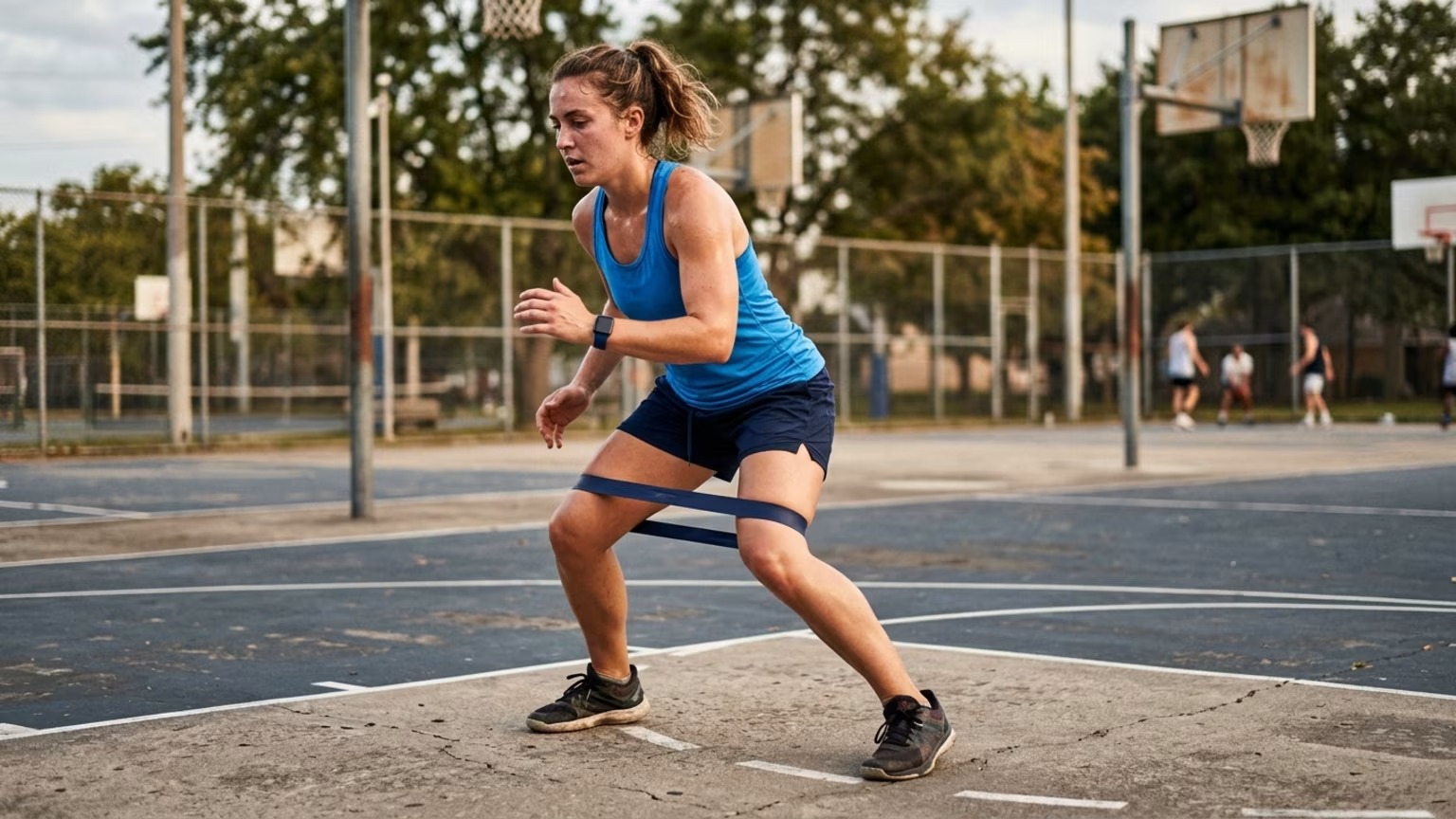

A minimum-effective-dose strength plan for tennis, pickleball and padel players. Learn how to maintain your physical capabilities in just two short sessions.




UK public-health guidance recommends muscle-strengthening activity for the major muscle groups on at least two days per week. For adult racquet-sport players, this modest baseline is exactly what is needed to maintain physical capacity. It provides a sustainable template for building off-court strength without sacrificing valuable time on the court. Minimum-effective-dose training is simply the practice of doing just enough progressive resistance work to support your sport.
Tennis, pickleball and padel are not simply aerobic activities. They require repeated acceleration, sudden braking, rapid directional changes and powerful stroke execution. Padel combines frequent strokes with repeated short-distance sprints in multiple directions. These physical requirements place substantial stress on the entire body during a tough match.
The legs and hips must generate force to accelerate and push back toward the center of the court. The calf and ankle complex absorbs impact during rapid repositioning and split steps. Meanwhile, the trunk manages rotation and transfers power from the lower body to the racquet. Repeated swings also heavily load the shoulder complex, forearms and grip.
Developing a minimum-effective-dose training plan helps manage these specific demands. It ensures the muscles are prepared for the exact forces they will face during competition.
The science of physical preparation emphasizes basic consistency over complex methods. A recent review reported potential benefits from neuromuscular training in some tennis performance measures. However, it rated the certainty of evidence for several outcomes as low or very low. This suggests that there is no single magical exercise protocol for court athletes.
Furthermore, the American Medical Association’s sports-medicine guidance warns that ramping up pickleball intensity too quickly can cause problems. It specifically links rapid increases in playing volume to strains, shoulder or knee pain and pickleball elbow. Overtraining in the gym can compound this issue if players are not careful. A sensible program provides enough progressive resistance to improve capacity without adding unnecessary fatigue.
The two-day target is a public-health guideline, not a guarantee that every player needs an identical amount of work. However, two full-body sessions lasting 20 to 30 minutes provide a practical starting point. Players should target one to two working sets per exercise. Most strength exercises should be performed for six to 12 controlled repetitions.
The effort should be manageable, always leaving a few technically sound repetitions in reserve. The UK guidance identifies several primary targets for strengthening. These include the legs, hips, back and abdomen. It also highlights the chest, shoulders and arms.
The first session should prioritize the lower body, pushing movements and trunk control. Begin with a squat variation like a goblet squat or a simple sit-to-stand movement. This develops general leg strength for rising from low defensive positions. Follow this with a split-stance exercise such as a reverse lunge.
Single-leg exercises are highly relevant because players frequently brake and push off from staggered positions. Incorporating variations like reverse lunges allows players to train the legs with relatively modest loads. Next, incorporate a hip hinge like a kettlebell deadlift to train the glutes and hamstrings. Keep the spine stable and move directly from the hips.
Pair a pressing movement, such as an incline push-up, with a dumbbell row. This superset balances the upper body and supports shoulder control during strokes. Finish the workout with two-leg calf raises and an anti-rotation exercise like a Pallof press. The calf and ankle complex absorbs significant force during rapid push-offs.
The second weekly session introduces lateral movement and focuses on shoulder capacity. Start with a lateral step-up or a supported side lunge. This closely resembles the wide positions players use when reaching for difficult shots. Add a hip stability movement like a banded lateral walk to build pelvic control.
For the upper body, combine a cable row with band external rotation. The goal of external rotation is to train the shoulder through a controlled, pain-free range. Finish with controlled trunk rotation using a cable machine or light medicine ball. Including targeted forearm and grip exercises can also support repeated stroke production.
Keep the load moderate to avoid overworking the elbow tendons. Elbow symptoms are often related to repeated loading and rapid increases in activity. This means more grip work is not automatically better for your joints. Consistently completing a sensible amount of work is always the priority.
Choosing the right movement is a matter of matching difficulty to the player rather than the sport's image. A competitive tennis player does not automatically need complex Olympic lifts or maximal jumps. A recreational pickleball player may benefit greatly from basic strength work that looks entirely unspectacular. The best exercise is simply the one that can be performed with consistent, pain-free technique.
The selected movement must fit the player’s available equipment and current physical capacity. A goblet squat easily trains the squat pattern without requiring a heavy barbell. A supported split squat trains single-leg strength without demanding advanced balance from the start. A basic band row effectively trains pulling strength at home with minimal setup.
Power work should remain optional and secondary to basic strength control. Players who already have a solid strength base might eventually add light medicine-ball chest passes. They could also practice low-level pogo hops or small lateral bounds. However, these explosive movements are not strict prerequisites for maintaining the ability to play.
A short dynamic warm-up can mentally and physically prepare the player for court movement. The AMA recommends dynamic stretching before pickleball to help manage the risk of acute injury. A practical five-minute routine might include brisk walking, calf raises and bodyweight squats. It can also feature lateral steps, arm circles and easy shadow swings.
The primary purpose of a warm-up is to rehearse movement smoothly, not to create fatigue. Players should gradually increase their heart rate and lightly engage the muscles they will soon rely upon. Rushing onto the court cold increases the risk of early-match strains. Taking just a few minutes to prepare sets a healthy foundation for the entire session.
Fitting these sessions around regular court play is crucial for long-term consistency. The simplest schedule places strength sessions on non-consecutive days. Players should avoid putting a hard leg workout immediately before an important match. For a schedule with two court sessions, strength training can easily fall on the off days.
If a player hits the court three times a week, careful planning is required. A short upper-body and trunk session is generally easier to tolerate near court play than a high-volume leg workout. Placing a strength day directly between two court days ensures the body gets enough stimulus without overwhelming the nervous system. Always prioritize recovery and sleep to maximize the benefits of both gym and court time.
Adding difficulty to a strength plan requires patience and careful observation. Players should progress one variable at a time to avoid sudden spikes in fatigue. Start by improving exercise technique and expanding the comfortable range of motion. Once a movement feels smooth, add repetitions within the target range.
Only add physical resistance or a second set when the current workload feels genuinely easy. It is vital not to increase gym volume and court time simultaneously. When playing volume rises, keep strength work stable or reduce it temporarily. If a player must strength-train and play on the same day, court performance should usually come first.
Using a sustainable strength program ensures off-court training supports your match schedule rather than hindering it.
Understanding these basic physical mechanics helps adult players maintain their capabilities over time. A modest, consistent strength plan directly supports an athletic longevity plan. It builds a physical buffer against the wear and tear of intense rallies. This makes it easier to recover between matches and stay active for years to come.
The goal is not to train like a professional athlete preparing for a world tour. The objective is to keep your body resilient enough to handle your current recreational schedule. By focusing on the major muscle groups, players protect their movement quality as they age. A well-chosen routine simply makes the player more capable of handling the next season.
While a standard strength plan is beneficial, players must listen to their bodies carefully. The American Medical Association recommends medical evaluation for persistent problems. People with heart or lung issues, or those returning from inactivity, should obtain medical clearance before starting pickleball. Do not attempt to exercise through sharp joint pain or severe stiffness.
If a player experiences persistent shoulder weakness, sharp knee pain or ongoing elbow symptoms, they should consult a qualified physiotherapist or healthcare provider. A professional can offer individualized guidance that a general article cannot provide. Those two days per week of recommended strengthening are an excellent foundation for any court player. However, knowing when to rest and seek expert care is the true key to staying on the court.
Follow Evercourts for practical insights on tennis, pickleball and padel performance, movement, recovery and healthy ageing. Stay connected for new articles, research-led guidance and ideas to help you play well and keep playing for years.


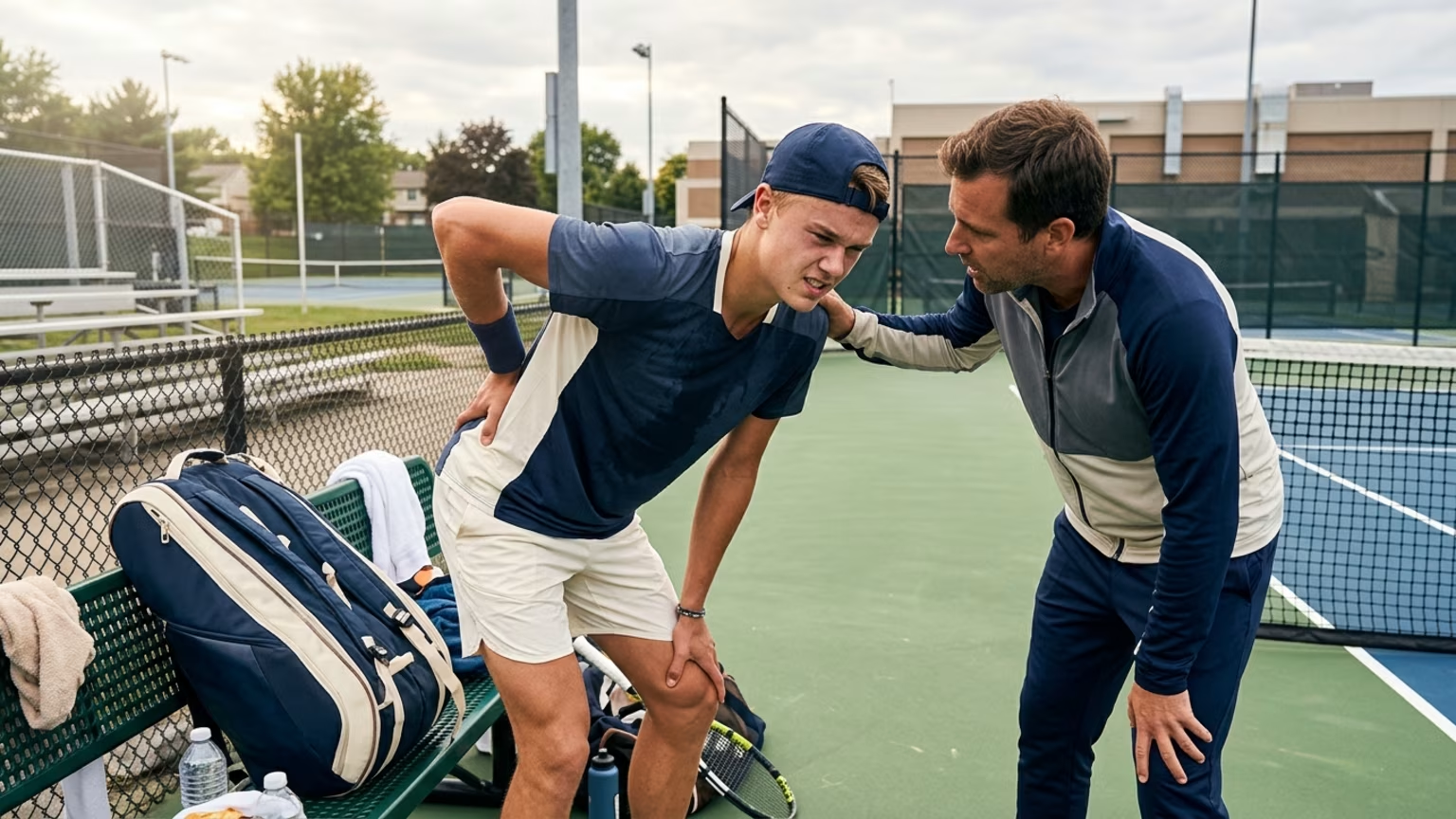
Holger Rune withdrew from the European Open with a back problem. The facts behind his decision and a grounded perspective for recreational players.

The Dink’s October 17 guide emphasizes deep returns, ball-height decisions and positioning against faster pickleball opponents.

A new report outlines padel and tennis gear trends. Learn how to assess adjustable rackets, sensor feedback and smart-court claims.
Read practical guidance for better movement, smarter preparation and a game that keeps working for you.
explore the Blog
