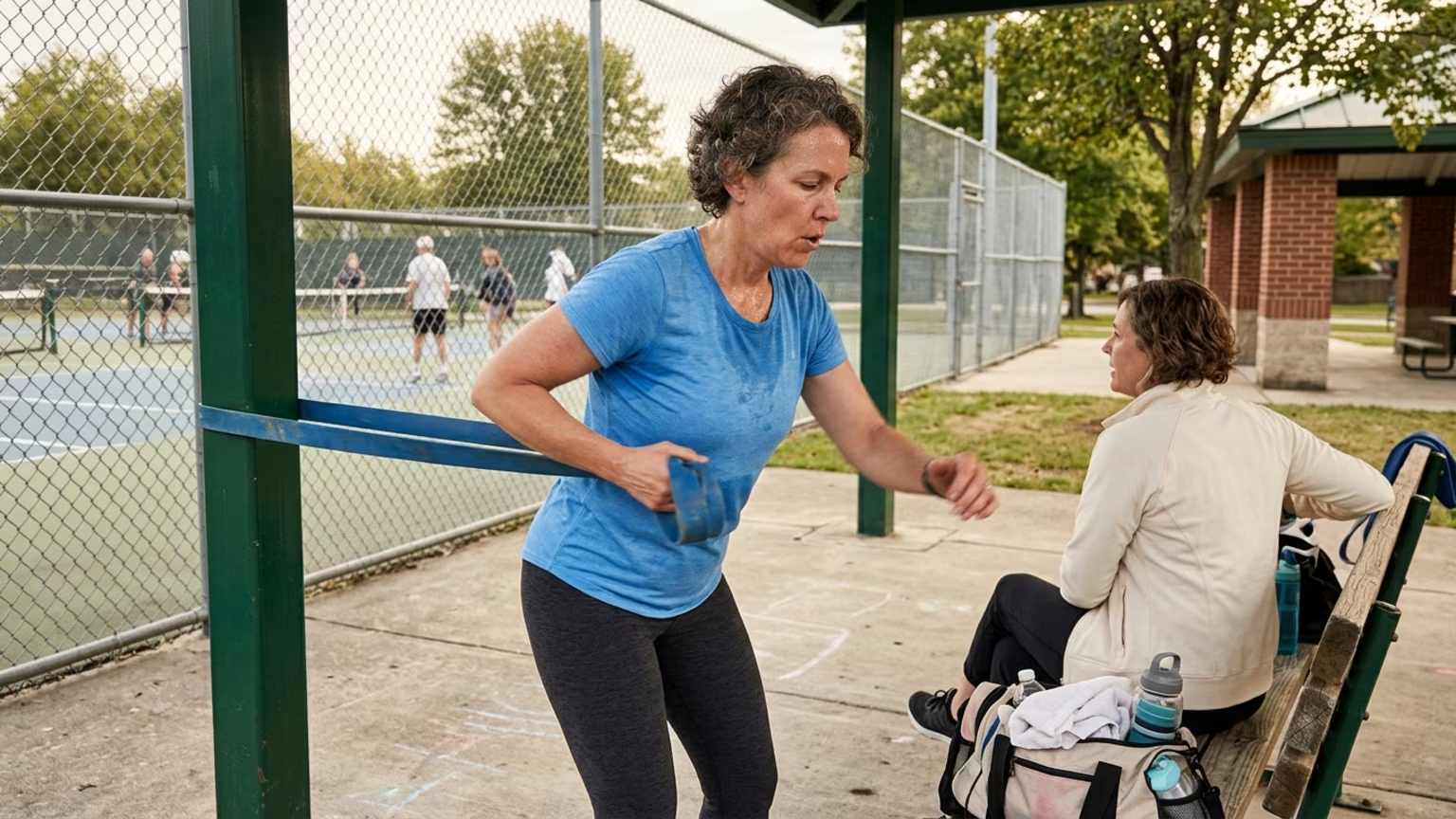

Discover practical ways to strengthen bone tissue after 45. Learn why targeted resistance training and walking are essential for racquet sports longevity.




You have heard it a million times: playing your favorite racquet sport is enough to keep your skeleton strong as you age. Here is why that is outdated. The reality is that simply showing up to the court does not provide the specific mechanical load required for athletic longevity. While tennis, pickleball, and padel are fantastic for cardiovascular health, they are not complete solutions for maintaining bone density. Relying solely on the repetitive stresses of match play can actually leave you vulnerable over time.
Where did this bad advice start? For decades, general fitness guidelines told middle-aged adults to simply stay active to remain healthy. Recreational players logically assumed that hours of sprinting and hitting every week checked every physical requirement. It is incredibly easy to see why players believe their intense weekend matches protect their bodies entirely. When your muscles ache after a long match, it genuinely feels like you have done enough strength work.
Furthermore, many racquet sports enthusiasts worry that lifting weights will make them too stiff or slow for the court. They have relied on the natural impact of running on hard courts to maintain their skeletal strength. This belief was heavily reinforced by outdated coaching manuals that separated cardiovascular endurance from heavy strength training. Busy adults naturally chose the joy and competition of the game over the solitary repetition of the gym.
We also have to acknowledge the reality of adult schedules. Finding time to play padel or tennis is already a challenge for many working professionals. Adding a dedicated resistance training program feels like an impossible demand on their limited free time. Sadly, this separation leaves critical gaps in long-term skeletal support. Ignoring direct resistance work allows age-related bone changes to progress quietly until a minor slip becomes a major problem.
Let us look at the grounded, research-led reality regarding skeletal health. Bone tissue actively continues to renew itself throughout your entire life, although this process naturally becomes less active with age. In August 2026, Izvestia reported on insights from Anna Kravchenko. She serves as the head of teacher training and product-quality control at the LEVITA ballet and stretching studio network.
Kravchenko explicitly challenged the popular idea that it is too late to strengthen bones after age 45. She explained that resistance exercise provides a highly effective mechanical stimulus to the skeleton. This type of activity produces mechanical loading directly through the muscles and bones. The research strongly supports the need for this specific, targeted physical effort.
A 2026 network meta-analysis focusing on middle-aged and older adults evaluated different resistance training frequencies. Moderate-intensity resistance training performed three times per week ranked highest for several measured skeletal sites. These critical sites included the lumbar spine and femoral neck. The study also highlighted favorable rankings for the total hip, trochanter, and Ward's triangle.
High-intensity resistance exercise twice weekly ranked highest for total-body bone mineral density in that same analysis. However, Kravchenko clarified that effective resistance work does not necessarily require heavy gym equipment. Elastic bands, small dumbbells, and focused body-weight exercises serve as very practical and effective options. The article also mentioned using stairs instead of an elevator as a simple way to add beneficial activity.
It is also crucial to understand how various movement types impact the body. Dancing combines muscular work, coordination, balance, and vital bone loading. This unique combination is highly relevant for racquet sports players who constantly manage rapid changes of direction. Conversely, Kravchenko noted that Pilates and stretching do not create the same direct mechanical loading on bones as resistance exercise.
Instead, activities like Pilates support stronger deep muscles, improved posture, and better physical control. For general cardiovascular health, Izvestia separately quoted neurologist Maxim Sutormin. In a discussion focused on physical activity and stroke prevention, he recommended swimming for 20 to 30 minutes once or twice per week. He also advised getting at least 10,000 steps per day for general wellness.
A 2026 systematic review and meta-analysis adds vital context regarding older adults and physical safety. This extensive review included 29 randomized controlled trials involving 6,367 community-dwelling adults aged 60 or older. Across 19 trials involving 4,690 participants, exercise interventions were associated with fewer injurious falls. This finding showed a pooled risk ratio of 0.87 with a 95 percent confidence interval of 0.80 to 0.95.
The same review looked closely at severe outcomes like bone breaks resulting from falls. Across 11 trials involving 2,630 participants, exercise was associated with fewer fall-related fractures. This specific data point showed a pooled risk ratio of 0.56 and a 95 percent confidence interval of 0.37 to 0.85. The authors cautioned that the certainty of the fracture evidence was rated low due to varied exercise programs.
Now that you know the biomechanical truth, how should you actually adapt your routine? You must actively integrate resistance training into your weekly schedule to support healthy aging. Focus on practical exercises like squats and sit-to-stands. You can also include step-ups, hip hinges, and calf raises using elastic bands or light dumbbells at home. Padel and tennis players specifically need strong legs and hips to support rapid acceleration and safe deceleration.
Do not treat your favorite racquet sport as a complete substitute for dedicated strength training. While the court absolutely provides intense movement, it does not offer the progressive resistance needed for optimal bone density. You should also add moderate or brisk walking to your weekly routine. Walking serves as an accessible, weight-bearing activity that creates a natural load on the skeletal system. It keeps your muscles active without the heavy recovery demands of another tough match.
Incorporate deliberate balance and coordination work to complement your racquet sport practice. Better balance directly supports safer court movement and lowers your overall fall risk during intense rallies. You can use Pilates and stretching as excellent support work for better posture and body awareness. Remember that they should always complement your resistance exercises rather than replace them entirely. Taking time to rebuild movement confidence after injury requires this exact blend of strength and balance work.
If you are returning to play or adjusting your fitness routine, you must progress gradually. The 2026 systematic review noted wide variation in effective exercise programs across different populations. You should increase your resistance weight, training volume, or court intensity one variable at a time. Doing too much too soon is a classic trap for enthusiastic recreational players. You might want to consider concurrent training for racquet sports to safely build endurance and strength simultaneously.
When managing these new physical additions, you must plan your rest properly. Proper sleep and nutrition are when the actual tissue repair takes place. Players often forget that physical adaptation happens during rest, not during the workout itself. Taking a strategic approach to deloading for racquet sports ensures you do not overtrain your joints.
Finally, always consider your personal medical history before starting any new physical routines. Anyone with a history of osteoporosis, persistent joint pain, or previous fragility fractures should seek clinical guidance first. Physical activity is a crucial part of prevention, but it never replaces professional medical care. Dedicated players should focus on designing a racquet sports life that lasts by balancing court time with targeted skeletal support.
The New Golden Rule is to treat resistance training and weight-bearing movement as non-negotiable foundations for your court time. You can no longer rely on competitive match play alone to keep your skeleton robust and resilient. Building true athletic longevity requires doing the quiet, consistent work away from the baseline.
Follow Evercourts for practical insights on tennis, pickleball and padel performance, movement, recovery and healthy ageing. Stay connected for new articles, research-led guidance and ideas to help you play well and keep playing for years.


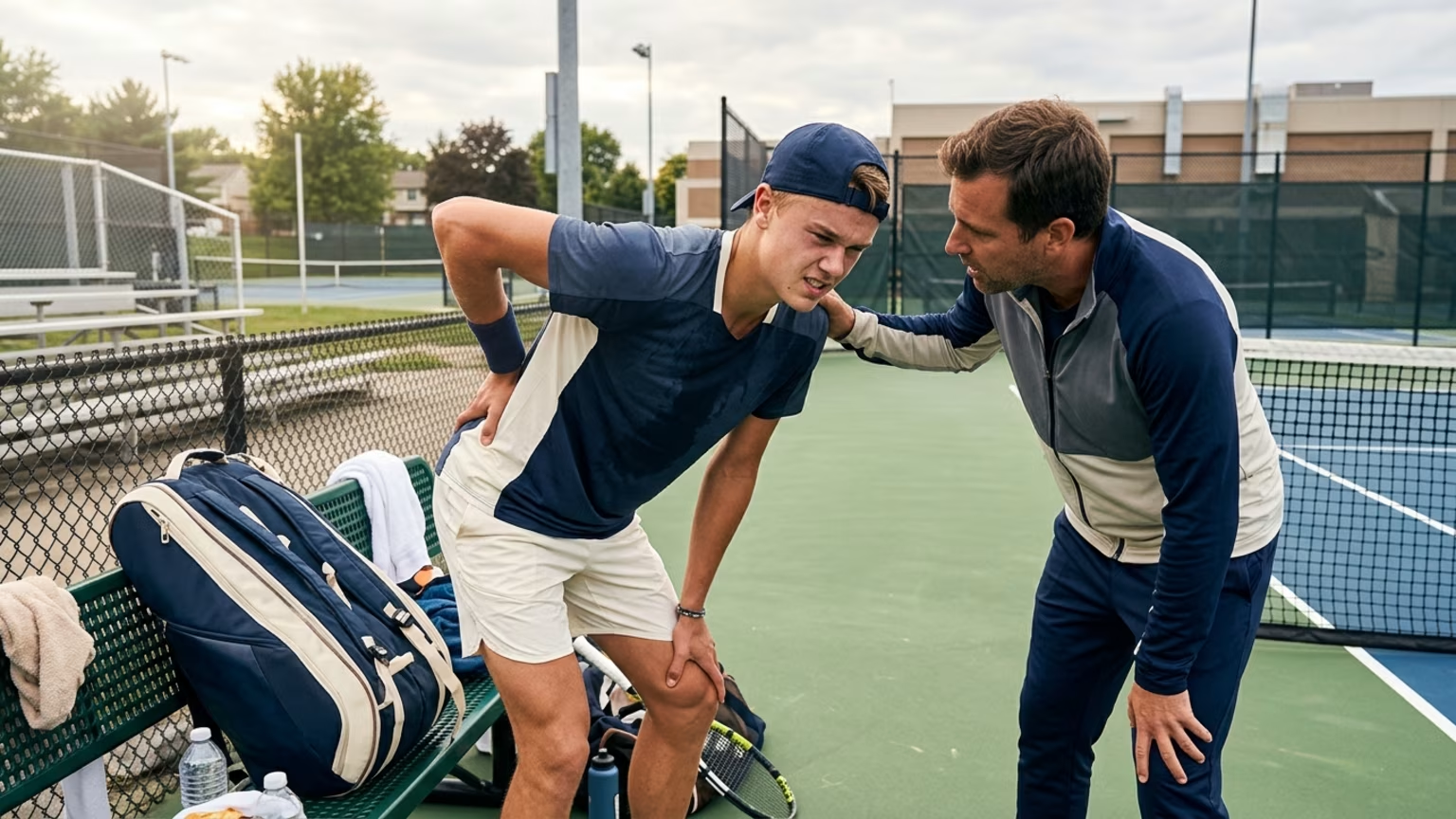
Holger Rune withdrew from the European Open with a back problem. The facts behind his decision and a grounded perspective for recreational players.

The Dink’s October 17 guide emphasizes deep returns, ball-height decisions and positioning against faster pickleball opponents.

A new report outlines padel and tennis gear trends. Learn how to assess adjustable rackets, sensor feedback and smart-court claims.
Read practical guidance for better movement, smarter preparation and a game that keeps working for you.
explore the Blog
