

How FITTER Pickleball linked court movements with training, and what recreational players should take from its design and reported evidence.




On September 30, 2025, Butler Eagle reported that Slippery Rock University exercise-science professor Michael Holmstrup and player Gino Cicconi had developed FITTER Pickleball, a training regimen and book built around pickleball movements.
According to Butler Eagle, the collaborators worked on the project for more than a year and a half. Their work produced a training and practice regimen, the book FITTER Pickleball and a website.
The starting point was Cicconi's playing experience. He demonstrated common court movements and described where he felt physical stress. He identified 13 shots and their corresponding movements, which Holmstrup analyzed to develop joint-focused workout and stretching recommendations.
The newspaper described a program built around:
Holmstrup said the side-to-side progression was selected to resemble movement near the net. He also highlighted the demands players place on their knees and shoulders.
The intended audience was everyday players, not only older adults. Holmstrup said the book aimed to put exercise-science terminology into accessible language. The emphasis was on translating court movement into preparation that players could understand.
For an elite or professional player, the question would be whether this approach supports performance under competitive demands. For a weekend league player, the first question is whether the preparation reflects the movements they actually make. A tournament result and a useful training rationale are different things.
Cicconi's experience gives the project its player perspective. Butler Eagle reported that he was 63 at the time of the interview and had played and competed for more than 12 years. He described recognizing that he could not play at 63 exactly as he had at 51. That is a personal account of adapting expectations, not a fixed rule about what any age permits.
Cicconi also told the newspaper that he felt the regimen contributed to better tournament play and greater confidence. Those were self-reported observations. The report provided no independent evaluation or controlled trial and no complete exercise sequence, dosage or progression schedule. It therefore does not establish that FITTER Pickleball prevents injuries, improves competitive results or suits every player's health and abilities.
The practical takeaway is the design principle: connect preparation with the demands of play rather than treating shot practice as the whole picture. That principle does not require a recreational player to copy Cicconi's competitive ambitions. It provides a way to ask more useful questions about a training resource.
These are questions about the quality and relevance of the explanation. They are not a prescription for particular exercises. The reported approach points toward movement-specific preparation, while the actual program materials are the place to look for its full recommendations.
For related reading, Evercourts' free resources on building an off-court strength foundation and balancing training with court time provide a broader context for preparation. The aim is to keep the training discussion connected to continued participation rather than chase a promise of quick improvement.
It also helps to keep the playing format in view when considering a resource. Evercourts examines the shift between singles and doubles movement as a separate topic. FITTER Pickleball's reported development process is a reason to ask which movements a recommendation is designed around.
Players seeking a routine should consult the actual program materials or a qualified exercise or health professional about appropriate exercise selection and progression. Where health concerns affect those decisions, qualified care is the appropriate place for personal guidance.
A trade-media report citing Sports & Fitness Industry Association figures put U.S. pickleball participation at 24.3 million in 2025, compared with 4.2 million in 2020. It also reported 7.5 million core players who played at least eight days that year.
That core category describes participation frequency rather than tournament ability. The editorial implication is that movement-focused preparation belongs in the recreational conversation as well as the competitive one. This fits the creators' stated intention to make their book usable by everyday players.
A University of Arkansas repository page describing a 2024 study adds age-related context. Its abstract reports that injury mechanisms differed across age groups in U.S. National Electronic Injury Surveillance System data and recommends age-specific interventions.
For Evercourts, the useful interpretation is to keep the player in view rather than attach one standard routine to an entire age group. Athletic longevity is a reason to seek relevant preparation, not a reason to assume every adult needs identical training.
Over the next season, the development worth watching is whether movement-focused pickleball resources make their recommendations easier to assess. Clear links between court tasks and exercise choices would be more useful than broader promises about performance or injury prevention.
For FITTER Pickleball, a meaningful next chapter would be public reporting on how its recommendations are applied and assessed beyond the creators' experience. Independent evaluation would give players a stronger basis for judging outcomes. Clear descriptions of progression would also help qualified professionals assess how the approach fits different players.
The direction worth watching is not whether recreational players start training like professionals. It is whether sport-specific preparation becomes clearer and better supported, so adults can make informed choices about keeping pickleball in their lives.
Follow Evercourts for practical insights on tennis, pickleball and padel performance, movement, recovery and healthy ageing. Stay connected for new articles, research-led guidance and ideas to help you play well and keep playing for years.


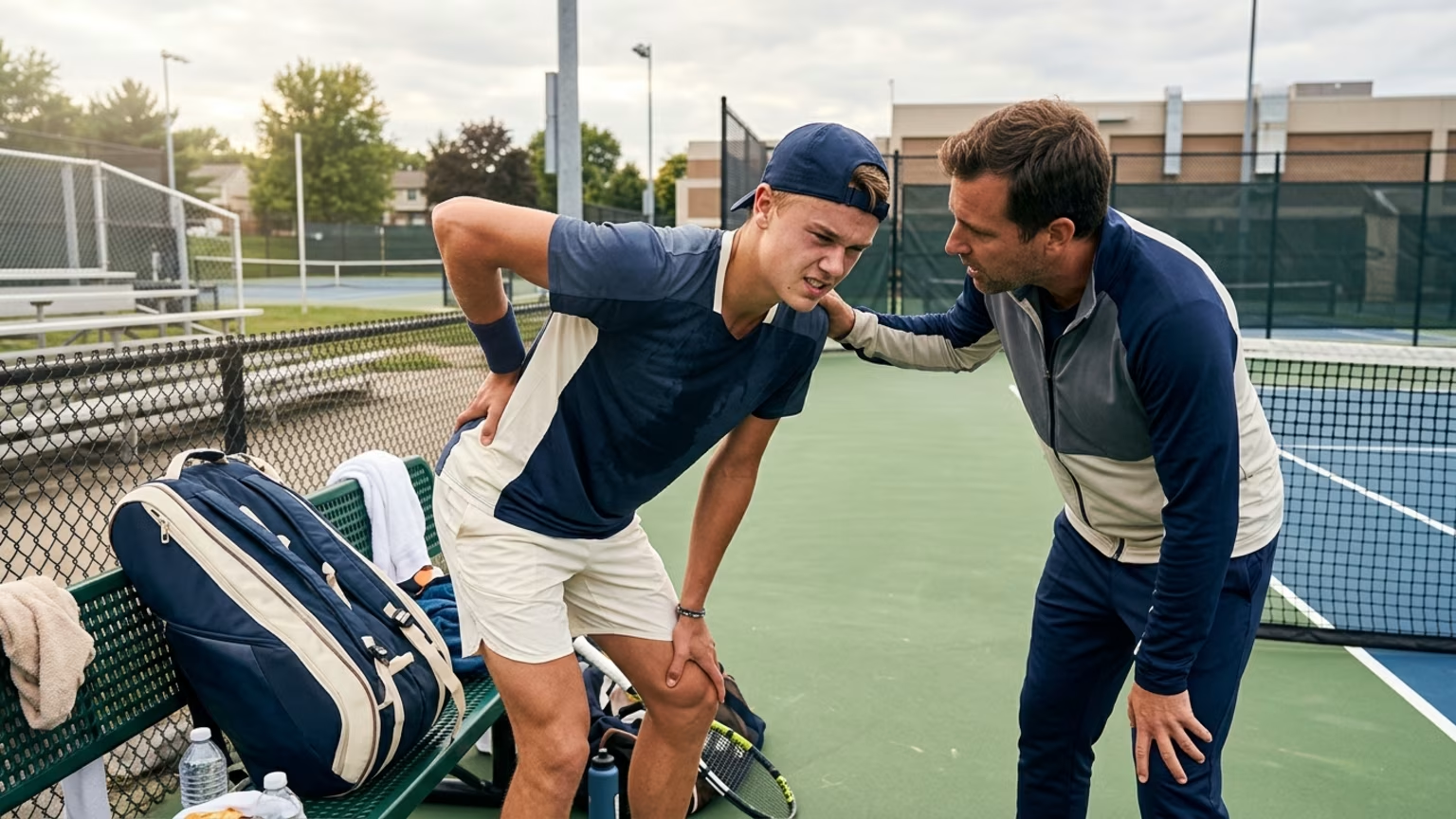
Holger Rune withdrew from the European Open with a back problem. The facts behind his decision and a grounded perspective for recreational players.

The Dink’s October 17 guide emphasizes deep returns, ball-height decisions and positioning against faster pickleball opponents.

A new report outlines padel and tennis gear trends. Learn how to assess adjustable rackets, sensor feedback and smart-court claims.
Read practical guidance for better movement, smarter preparation and a game that keeps working for you.
explore the Blog
