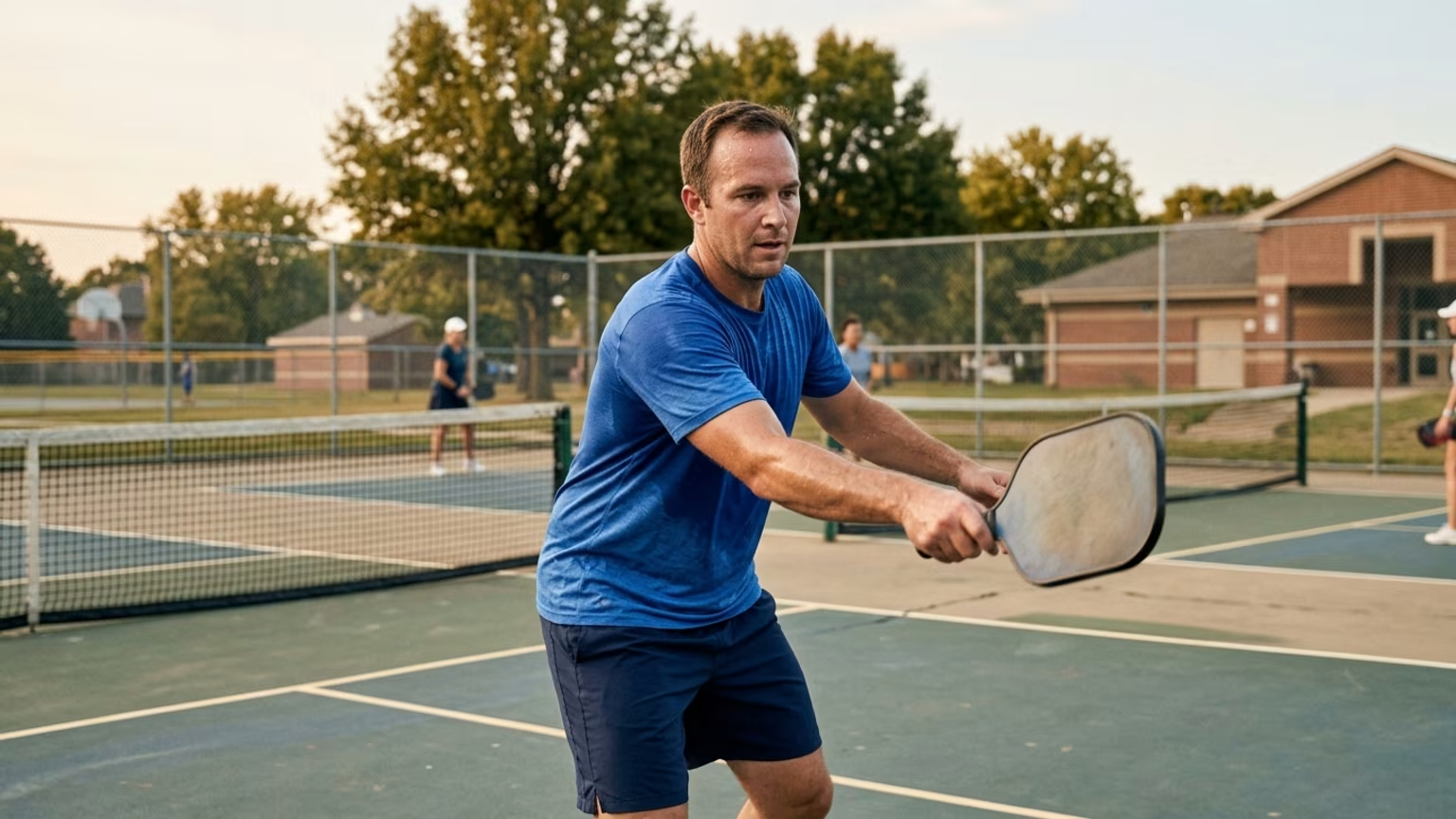

A recent Cureus study found a four-week supervised Thrower's Ten program improved shoulder strength and balance in young adult racket athletes.




On September 17, 2026, a peer-reviewed Cureus study reported that a four-week Thrower’s Ten exercise program improved upper-extremity dynamic balance and strength in racket-sports players. The prospective study measured baseline and post-program outcomes for participants who completed targeted shoulder resistance training. This single-group research design compared participants against their own initial results without utilizing a separate control group.
The research team recruited 32 players from sports complexes in Vadodara, India. The group consisted of young adults between 18 and 40 years old, with a mean age of 25.9 years. Within the sample, 69 percent played badminton and 31 percent played lawn tennis. Males made up 84 percent of the participant pool.
All participants completed three physiotherapist-supervised Thrower’s Ten sessions per week for four weeks. The routine was administered bilaterally to ensure both arms received consistent progressive Theraband resistance. During the first week, participants used a short lever arm and a low-resistance green Theraband. They performed three sets of eight to 10 repetitions, taking 30 seconds of rest between sets.
The physical demands increased carefully as the weeks progressed. The lever arm was extended during the second week to challenge the shoulder further. Resistance levels then progressed from the green Theraband to a heavier blue Theraband during weeks three and four. Finally, a press-up exercise was added to the routine during those last two weeks to complete the progression.
For the adult recreational player, this research offers a practical look at how structured preparation supports court performance. We know that many adult players rely entirely on playing their sport to maintain their physical conditioning. The results from this study support the shift toward adding short blocks of targeted resistance work to your weekly schedule. Players may reasonably view a structured strengthening block as a useful supplement to court time, especially when the program is progressed gradually.
It is important to view these findings through the lens of everyday adult play. The study examined young badminton and lawn tennis players, not older recreational pickleball or padel athletes. The findings suggest potential applications for racquet sports generally, but they do not guarantee identical results for players in different age brackets. A cautious reading of the study recognizes the three-day supervised format as the specific protocol that produced the improvements, rather than a universally proven prescription.
Preparation is often the missing link for recreational athletes. When I first started playing pickleball, I noticed how many people skipped warming up entirely. They would jump straight out of their cars and right up to the kitchen line. I tried doing that and immediately pulled a calf muscle.
Pickleball requires just as much explosive lateral movement as tennis, just in a tighter space. Since then, I always spend five minutes doing dynamic lunges and ankle rolls. It changes everything about how confident I feel pushing off the baseline.
The same principle applies to the upper body, where a structured upper body strength guide can help prepare joints for the demands of serving. Active adults need to progress training gradually and incorporate resistance exercise to support athletic longevity. Tennis Canada and Cleveland Clinic Canada strongly recommend this approach for active adults. Their guidance emphasizes gradual progression, consistent strength training, sufficient recovery, and refusing to play through persistent pain.
If you are returning to the court after a long break, you should treat your shoulders with the same careful attention. The Cureus study specifically excluded participants with current pain and relevant injury histories. Anyone dealing with shoulder discomfort should get individualized guidance from a sports-medicine professional before starting any resistance protocol. Focusing on the strength you actually use on court ensures you build physical capacity without taking unnecessary risks.
To quantify the results, the researchers measured dynamic balance using the Upper Quarter Y Balance Test, which is also known as the UQYBT. They tested upper-extremity strength with the Medicine Ball Throw Test, or MBTT. The data showed distinct improvements across both testing protocols after the four weeks.
Right-side UQYBT composite scores increased from 106.4 percent to 114.1 percent. This represented a mean improvement of 7.69 percentage points, with a reported 95 percent confidence interval of 6.83 to 8.55. The right-side improvements were statistically significant with p<0.001 and a Cohen’s d of 3.24. Left-side UQYBT scores showed a similar upward trend, rising from 105.8 percent to 114.8 percent.
The left side saw a mean improvement of 8.98 percentage points, showing a 95 percent confidence interval of 7.42 to 10.54, with p<0.001 and a Cohen’s d of 2.11. Throwing power also improved over the course of the intervention. MBTT distance increased from an average of 23.1 feet to 24.8 feet. This mean improvement of 1.70 feet came with a 95 percent confidence interval of 1.40 to 2.00, p<0.001, and a Cohen’s d of 2.06.
The study reported no statistically significant differences in these outcomes based on sport type, limb dominance, or training frequency. However, the authors cautioned that the sample and subgroup sizes were small. The study may simply have lacked the statistical power to detect meaningful differences.
While the numbers show significant pre-program to post-program improvement, the study has important structural limitations. The trial used a single-group design without a control group. The authors note this means the observed changes could partly reflect natural variation or practice effects from repeating the tests. Practice effects are especially relevant to the UQYBT because it is a complex motor skill.
Participants might improve their scores simply by becoming more familiar with the testing procedure itself. The authors emphasize that future controlled trials are necessary to confirm whether these improvements are solely due to the Thrower’s Ten intervention. The sample was recruited purposively from local sports complexes, which limits how confidently the findings can be generalized to older adults or beginners. Furthermore, the program was delivered under physiotherapist supervision, which may not be replicated when players perform exercises independently at home.
Additionally, the study measured strength and balance rather than actual injury rates. The intervention improved the measured variables, but researchers did not track whether participants suffered fewer shoulder or elbow injuries. Players should not assume that a longer medicine-ball throw automatically equals a lower risk of injury on the court. Building capacity for serves and overheads requires consistent, holistic training rather than just focusing on increasing test scores.
Looking ahead, the practical trend for adult racquet athletes is shifting heavily toward combining court practice with structured physical preparation. We expect sports medicine professionals to push for larger, controlled trials that track actual injury incidence alongside performance metrics. As the research matures, the focus will likely expand beyond young tennis and badminton players to include older demographics across pickleball and padel. The most durable players over the next season will be those who actively bridge the gap between playing hard and preparing methodically.
Follow Evercourts for practical insights on tennis, pickleball and padel performance, movement, recovery and healthy ageing. Stay connected for new articles, research-led guidance and ideas to help you play well and keep playing for years.


A recent live-play test of a silent pickleball highlights its value for practice, but standard balls still perform better for match play and power control.

An evidence check on sports supplements like tart cherry juice. Learn why racquet sports players should prioritize core nutrition over functional foods.
In late 2026, Oura analyzed wearable data to see how recreational tennis impacts heart health and recovery. Learn what this means for your athletic longevity.
Read practical guidance for better movement, smarter preparation and a game that keeps working for you.
explore the Blog
