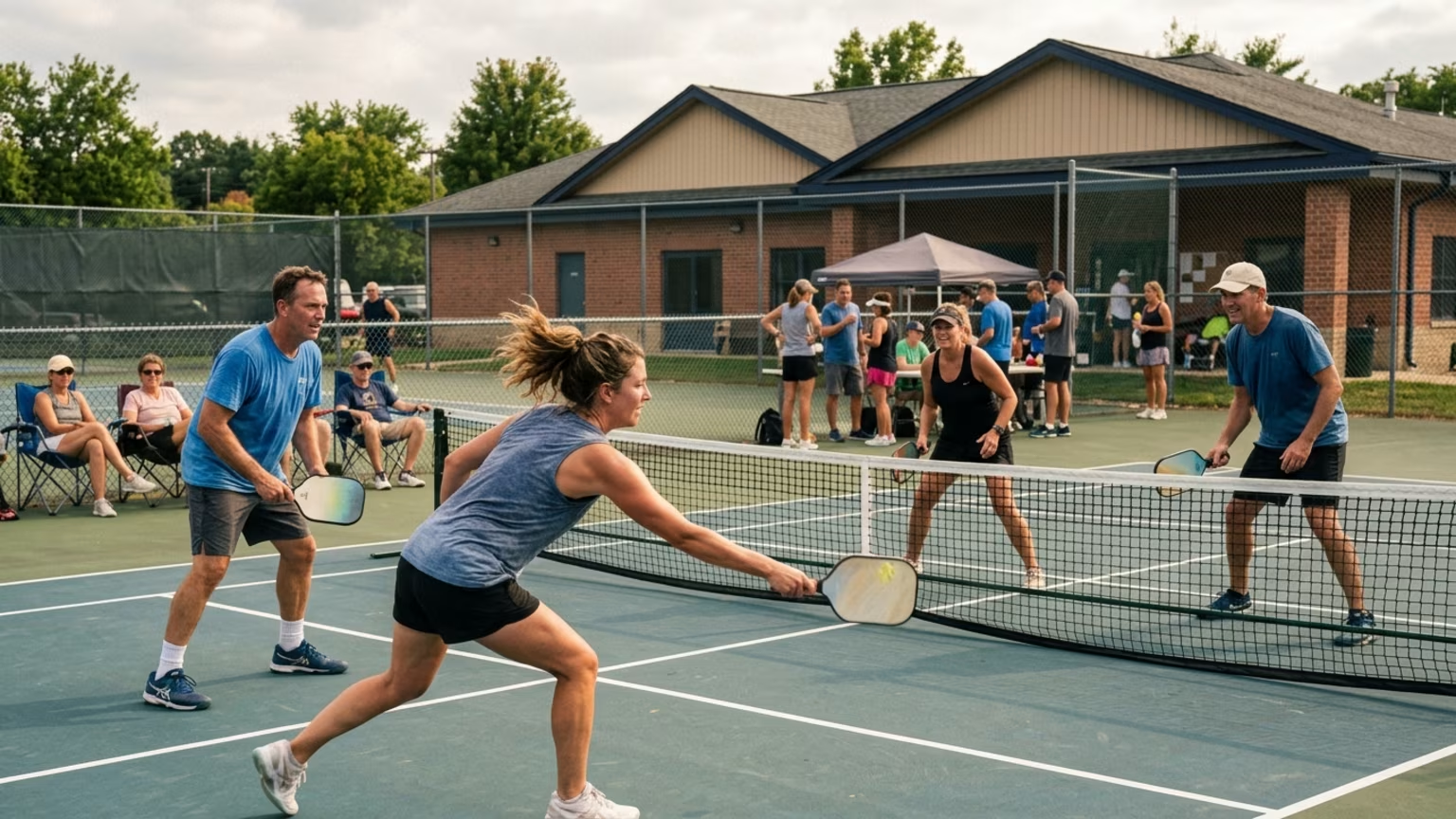

The French Tennis Federation invites clubs to organize World Pickleball Day events from October 9 to 11, 2026, offering adults a structured path to learn the game safely.




You have just finished a brutal three-setter, and your knees are protesting every step toward the parking lot. You might look over at the adjacent courts and wonder if a smaller format could save your joints without dulling your competitive edge. The French Tennis Federation reports that more than 150 clubs took part in the first World Pickleball Day in October 2025. That club turnout matters because it signals a shift toward organized infrastructure, giving players a clear path to learn the game properly.
The French Tennis Federation is inviting its clubs, committees, regional leagues and schools to organize activities across France. These events will run from Friday, October 9 through Sunday, October 11, 2026. The main focus remains on the official World Pickleball Day on Saturday, October 10. The initiative aims to make the sport more accessible and support its national development through structured club environments.
For Evercourts readers, this initiative provides a crucial opportunity to protect their healthy aging. Improvising on a new court often leads to poor mechanics and unnecessary joint stress. These federation-backed sessions allow players to focus on capability and technique under supervision. A structured introduction helps you enjoy the game longer and avoid the common pitfalls of unguided recreational play.
According to the federation, the event is organized at the initiative of the World Pickleball Federation. Participating structures can register their events through the ADOC platform. Once registered, these clubs will appear on a national map published on fft.fr. The federation will provide customizable communication materials through its Mon Kit Com platform.
Clubs are additionally encouraged to promote activities on Facebook or Instagram using the hashtags #JournéeMondialeDuPickleball and #JournéeMondialePickleball. Participating structures may also compete for a Wilson pickleball kit supplied by the French Tennis Federation.
The federation deliberately leaves the event format open for participating organizations. Each venue can adapt activities to its specific facilities, staffing and audience. Suggested formats include introductory sessions, recreational training, homologated or non-homologated tournaments, match play and social events. Since the federation does not mandate a uniform safety curriculum, players must navigate these options systematically.
Complete beginners should seek out an introductory or training session before jumping into a tournament. The federation explicitly lists initiation and training formats among the options available to clubs. A coached session offers a low-pressure environment to learn paddle control and court positioning. This approach builds a foundation of safe movement habits before the pressure of keeping score takes over.
Players cannot assume that their previous footwork will transfer perfectly to a smaller court. The spaces are compact, and players spend significant time near the non-volley zone. A high-quality session will emphasize balanced deceleration, short adjustment steps and controlled reaching. You must learn to recover to a stable position after every shot. Proper coaching here prevents the lunging and off-balance strikes that often lead to acute injuries for untrained adults.
A first session should never become a full day of repeated, intense matches. Players returning to racquet sports should start with a warm-up, skill practice and short games. Volume should only increase if the player remains comfortable and free of pain. A gradual buildup prevents early injuries and respects your current conditioning level.
Emerging research highlights the benefits of a paced, structured approach for athletic longevity. A 2026 randomized controlled trial examined an eight-week program for community-dwelling older adults with pre-frailty. The study found that 42% of participants in the pickleball group transitioned to non-frailty, compared with just 8% in the control group. These results prove that measured, supervised progression yields better health outcomes than sudden, high-intensity play.
The most valuable outcome of World Pickleball Day is finding a recurring coached session. You might identify an adult beginner group or a mixed program that fits your weekly schedule. The federation registration system and the upcoming national map on fft.fr make finding a tennis or pickleball club much easier for local players.
Using these tools helps you transition from a one-time participant to a regular club member. If competition is your ultimate goal, look for venues offering non-homologated match play first. This allows you to test your skills in a structured but lower-stakes environment.
Competitive racquet players will adapt quickly to the paddle but must learn new tactical positioning. Beginners will enjoy the social format but should not feel pressured to play tournament-length matches. The flexible event design allows clubs to serve many different audiences. You must check the session description carefully before stepping on the court.
Adapting to a new racquet sport requires understanding your existing movement habits. Tennis players transition with excellent swing mechanics but often struggle with rapid deceleration near the kitchen line. When switching between tennis, pickleball and padel, these players must consciously shorten their strides. Tennis converts need to prepare for much faster ball returns in tight spaces. Taking large tennis strides on a smaller court often results in jammed shots and lost balance.
Padel players are already comfortable with compact court spaces and letting the ball travel. However, they must adjust to a lower net and a completely different paddle weight. The movement demands of different courts require padel players to stay grounded rather than relying on back-glass positioning. They must focus on taking the ball early instead of waiting for a rebound.
Pickleball specialists who attend these events should prioritize controlled stopping and clear partner communication. Even experienced players benefit from revisiting the fundamentals of balance and weight transfer during these structured sessions.
Before you attend a local event, review these critical steps to ensure a productive session.
Learning a new sport is an ongoing process of refining your habits and respecting your body. A single weekend event cannot guarantee perfect technique or immediate fitness results. True athletic capability is built quietly over time, one intentional step at a time.
Follow Evercourts for practical insights on tennis, pickleball and padel performance, movement, recovery and healthy ageing. Stay connected for new articles, research-led guidance and ideas to help you play well and keep playing for years.


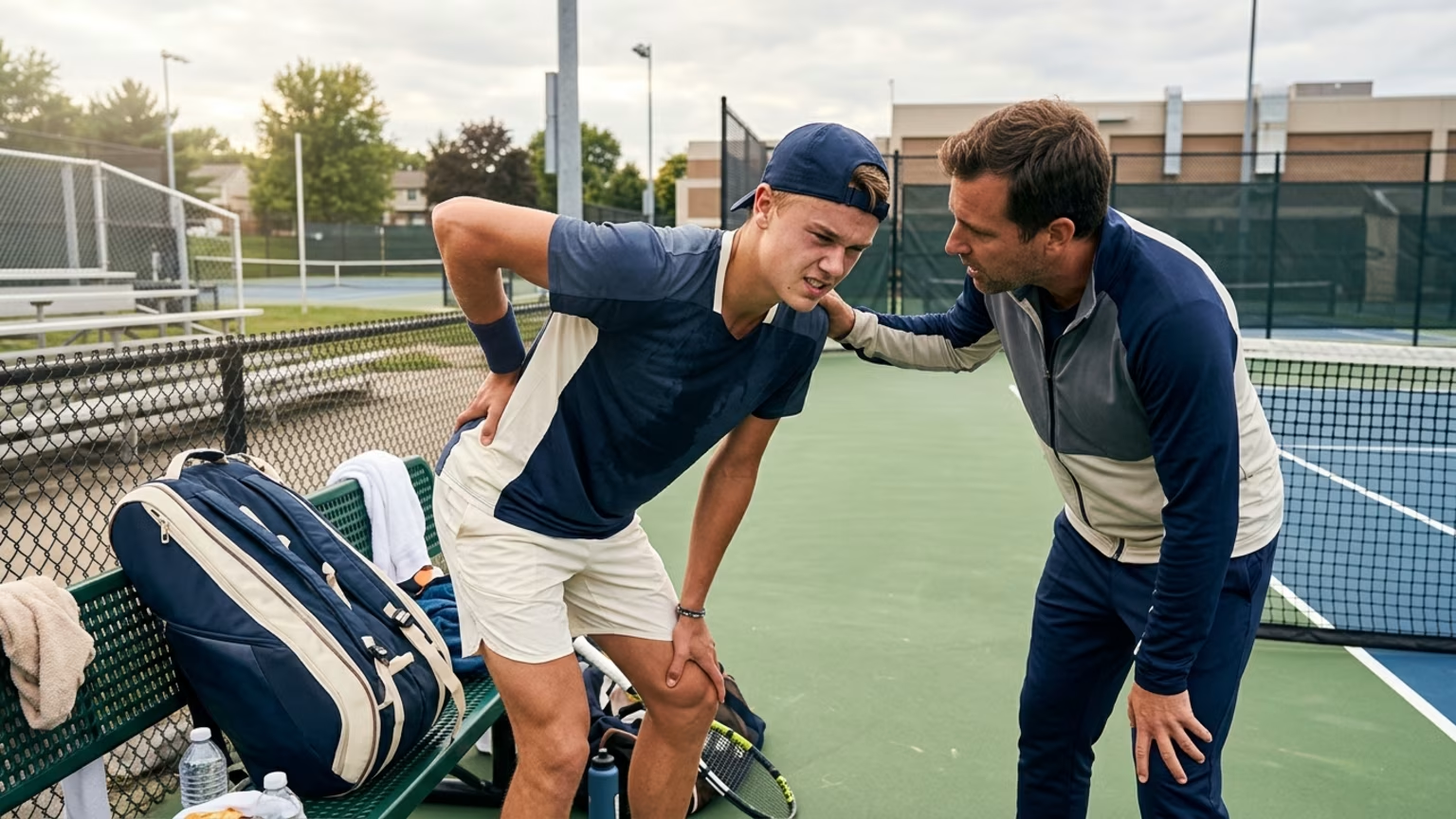
Holger Rune withdrew from the European Open with a back problem. The facts behind his decision and a grounded perspective for recreational players.

The Dink’s October 17 guide emphasizes deep returns, ball-height decisions and positioning against faster pickleball opponents.

A new report outlines padel and tennis gear trends. Learn how to assess adjustable rackets, sensor feedback and smart-court claims.
Read practical guidance for better movement, smarter preparation and a game that keeps working for you.
explore the Blog
