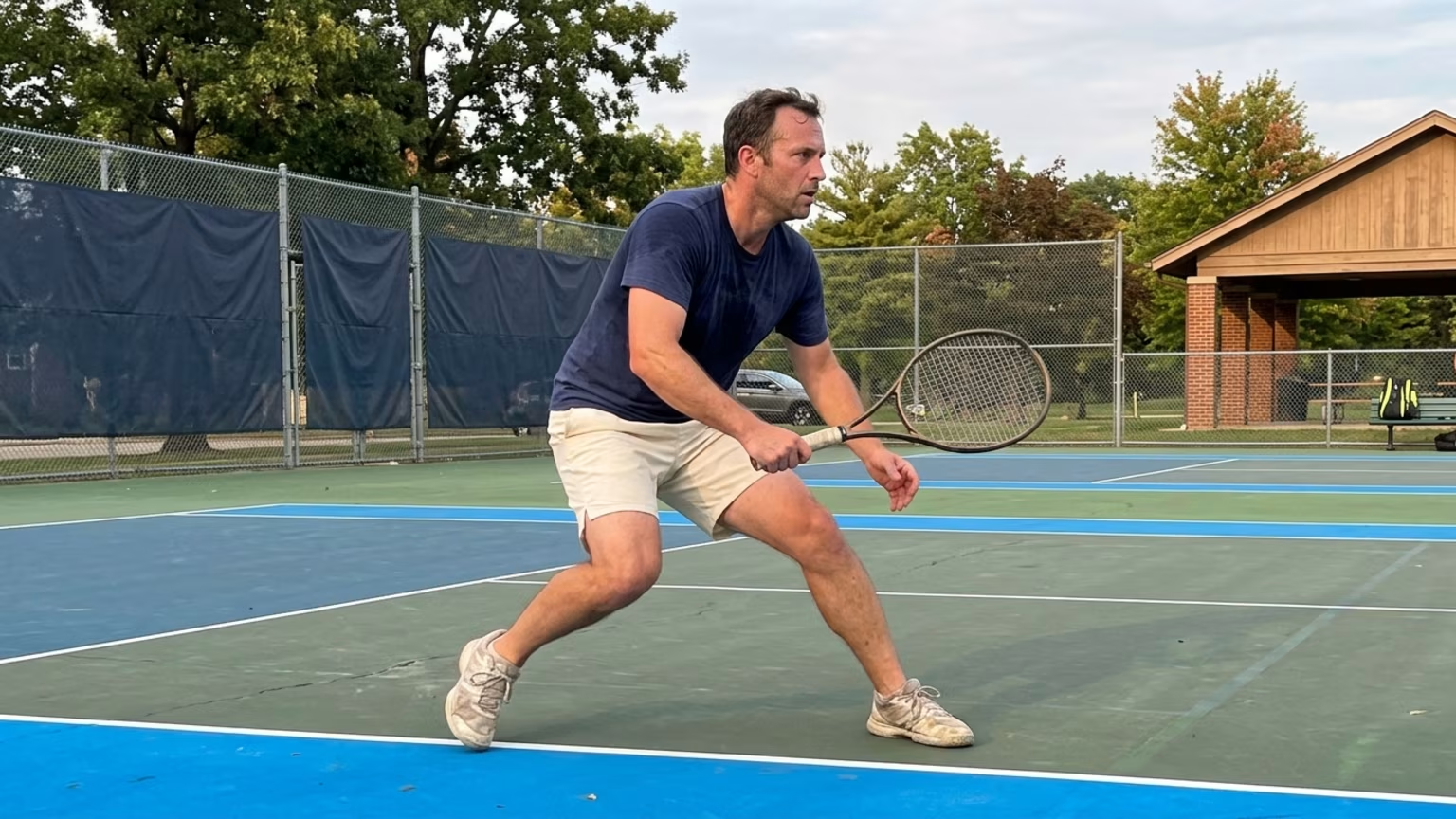

Court movement relies on multidirectional control rather than straight-line speed. Understand how deceleration training supports healthy aging on the court.




Multidirectional court movement is the physical ability to accelerate, brake, change angles, and regain balance during a rally. A player chasing down a wide shot must plant their foot securely before striking the ball. This requires controlling momentum rather than simply running as fast as possible in one single direction. Effective footwork is ultimately about managing these sudden, chaotic transitions safely.
Many amateur athletes mistakenly believe that court speed is identical to straight-line sprinting speed. In reality, moving well on a tennis or padel court relies heavily on deceleration and stability. You have to be able to stop your body weight efficiently under immense physical pressure. Without this braking capacity, even the fastest runners will struggle to establish a stable hitting base.
The ability to change direction fluidly is what separates efficient players from those who constantly feel rushed. When you lack multidirectional control, every wide ball feels like an emergency that throws you off balance. This leads to wildly erratic shots and an increased risk of losing your footing. Building a foundation of controlled, varied movement is the key to consistent court positioning.
Tennis, pickleball, and padel demand continuous physical adjustments that deeply test your lower body. A tennis coaching article describes court movement as a repeated sequence of responding, accelerating, braking, and recovering. You must stop forcefully to set up for a shot, maintain balance through contact, and push off again. These sports rarely allow you to run in a predictable, uninterrupted line.
The spatial constraints of padel and pickleball require equally intense starting and stopping. In a typical match, explosive shifts occur over very short distances, magnifying the mechanical load on your muscles. Players must constantly react to unpredictable angles and spin. Understanding this unique physical demand is vital for players who want to build lasting resilience.
In pickleball, specific coaching guidance emphasizes practicing direction changes over simply adding more running volume. Moving laterally, diagonally, and backward requires distinct physical coordination that traditional long-distance jogging does not provide. Players must physically condition their legs to handle the specific geometric demands of the smaller court. Focusing heavily on movement quality actively prepares the body for the abrupt forces of competitive play.
When players ignore these multidirectional demands, they often experience excessive fatigue during competitive matches. The constant cycle of starting and stopping requires a massive amount of energy from your lower body. If you only practice moving forward, the lateral and diagonal movements will drain your stamina much faster. Training for the actual demands of the sport helps you conserve energy for crucial points.
Sports science demonstrates that specific agility training can yield measurable benefits for mature court athletes. A 10-week program combined strength, balance, and change-of-direction work for pickleball players aged 55 and older. Participants in this group improved their change-of-direction speed by 0.7 seconds over the course of the study. They also reported a highly significant reduction in their fear of falling during physical activity.
This outcome highlights the practical value of targeted practice, but it has clear, documented limitations. The study was small, non-randomized, and focused specifically on older players with a history of falls. Therefore, the exact speed improvements should not be assumed or generalized for all adult players. The most important takeaway is that rehearsing controlled movement patterns systematically builds player confidence.
Recreational athletes often jump straight into complex agility drills without mastering basic bodily stability first. However, a successful training plan should always begin with slow, controlled patterns before increasing the pace. By prioritizing cross training for racquet sports injury prevention, you ensure your joints can handle much higher competitive intensities later on. Building this foundational capacity protects your body from unexpected, awkward lunges.
Properly structured movement training also helps your nervous system recognize and adapt to court-specific patterns. By practicing the sequence of accelerating, braking, and recovering, your body learns to perform these actions automatically. This means you spend less time thinking about your feet and more time focusing on your opponent. Establishing these automatic responses is essential for improving your overall reaction time during play.
At Evercourts, we believe that prioritizing movement quality over raw speed is crucial for athletic longevity. Mastering deceleration allows you to absorb impact safely, reducing the physical toll on your joints over time. When you train the movements behind better footwork, you build the physical resilience needed to compete for years. This proactive approach actively supports healthy aging and highly consistent, enjoyable performance.
Practicing sport-specific cues also protects your body during fast, chaotic, and demanding rallies. For example, pickleball coaching resources strongly advise using a split step timed exactly with the opponent's contact. Maintaining a forward-weighted stance helps you react efficiently without having to scramble wildly out of position. By internalizing these habits, you ensure that faster court movement remains a safe and reliable asset.
Conditioning your body for multidirectional demands prevents the rapid fatigue that often leads to sloppy technique. When your legs are trained to handle quick transitions, your upper body can stay relaxed during aggressive swings. This precise energy efficiency is exactly what helps older adults maintain their competitive edge in longer matches. Focusing on the right movement mechanics pays incredible dividends in every single set you play.
Long-term playability requires a commitment to maintaining your physical balance and agility as you get older. Players who regularly practice controlled direction changes are far less likely to suffer from preventable stiffness. The goal is to build a body that can handle the unique stresses of stopping and starting continuously. By respecting these specific demands, you protect your physical health and your passion for the game.
While practicing direction changes is highly beneficial, it should never cause sharp pain or lingering joint stiffness. If you experience swelling, consistent discomfort or a sense of instability when braking, pause your training. These are clear signs that it is time to consult a qualified physiotherapist or experienced sports doctor. A healthcare provider can safely assess your mechanics and identify any underlying muscular weaknesses or imbalances.
Getting professional guidance helps you address small movement flaws before they become chronic, long-term physical limitations. Sometimes, difficulty with deceleration stems from a lack of basic ankle mobility or poor core control. A professional can provide highly individualized corrections that generic online fitness drills simply cannot offer. This targeted care is absolutely essential for maintaining your physical capabilities as you age and play.
Working with a physical therapist can also help you safely rebuild your confidence after a minor tweak. They can design a progressive return-to-play plan that specifically targets the braking and accelerating forces of your sport. This structured approach removes the guesswork from your recovery and ensures you do not return too soon. Having a trusted professional in your corner is a massive advantage for any dedicated adult athlete.
Ultimately, your true goal is to trust your body during every sudden stop, pivot, and explosive start. The next time you are frantically chasing down a wide shot, you want to plant your foot and feel completely balanced. Seeking timely medical advice when things hurt ensures you can safely control your momentum under pressure. With a smart approach to multidirectional movement, you can confidently return to the ready position for the next ball.
Follow Evercourts for practical insights on tennis, pickleball and padel performance, movement, recovery and healthy ageing. Stay connected for new articles, research-led guidance and ideas to help you play well and keep playing for years.


Rod Laver, Tim Henman, and Pat Rafter discussed timing and coaching at the 2026 Laver Cup. Learn how adult players can use these insights for healthy aging.
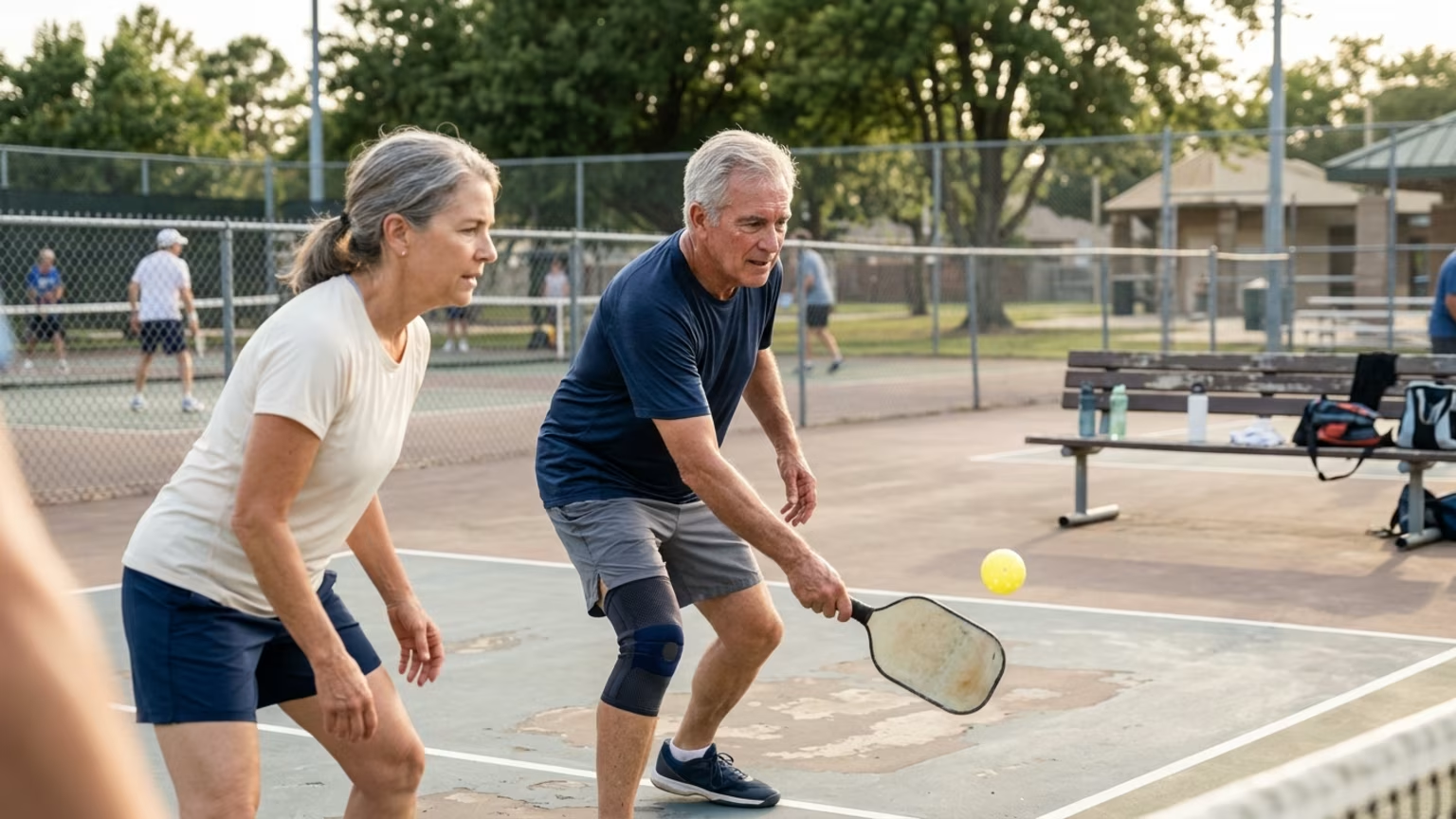
A new Nature Aging study reveals how exercise creates biological signals that protect joint health, offering practical insights for aging racquet sports players.
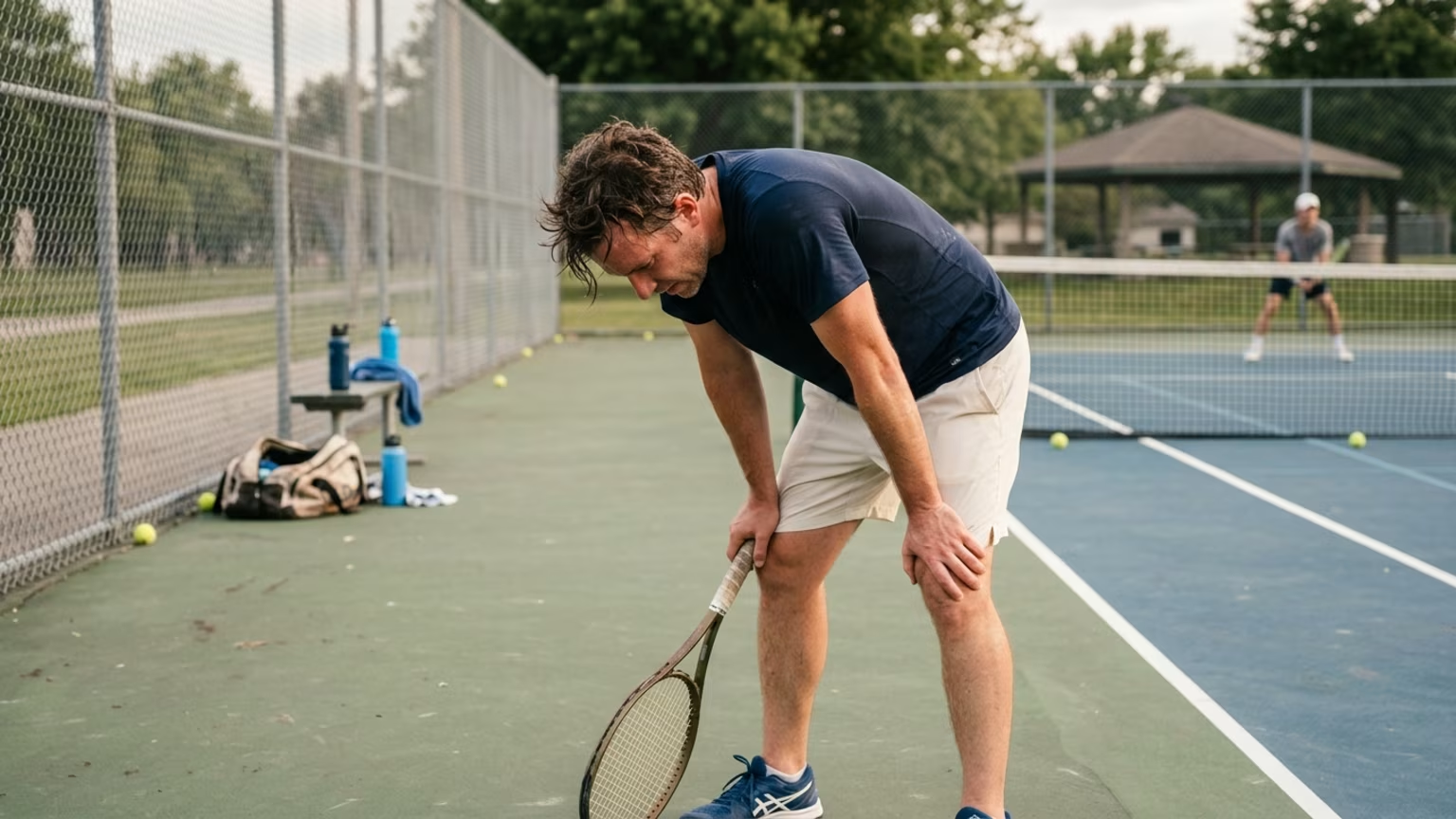
Understand why padel's stop-start movements require specific repeat-effort fitness. Learn how building leg strength and balance supports athletic longevity.
Read practical guidance for better movement, smarter preparation and a game that keeps working for you.
explore the Blog
