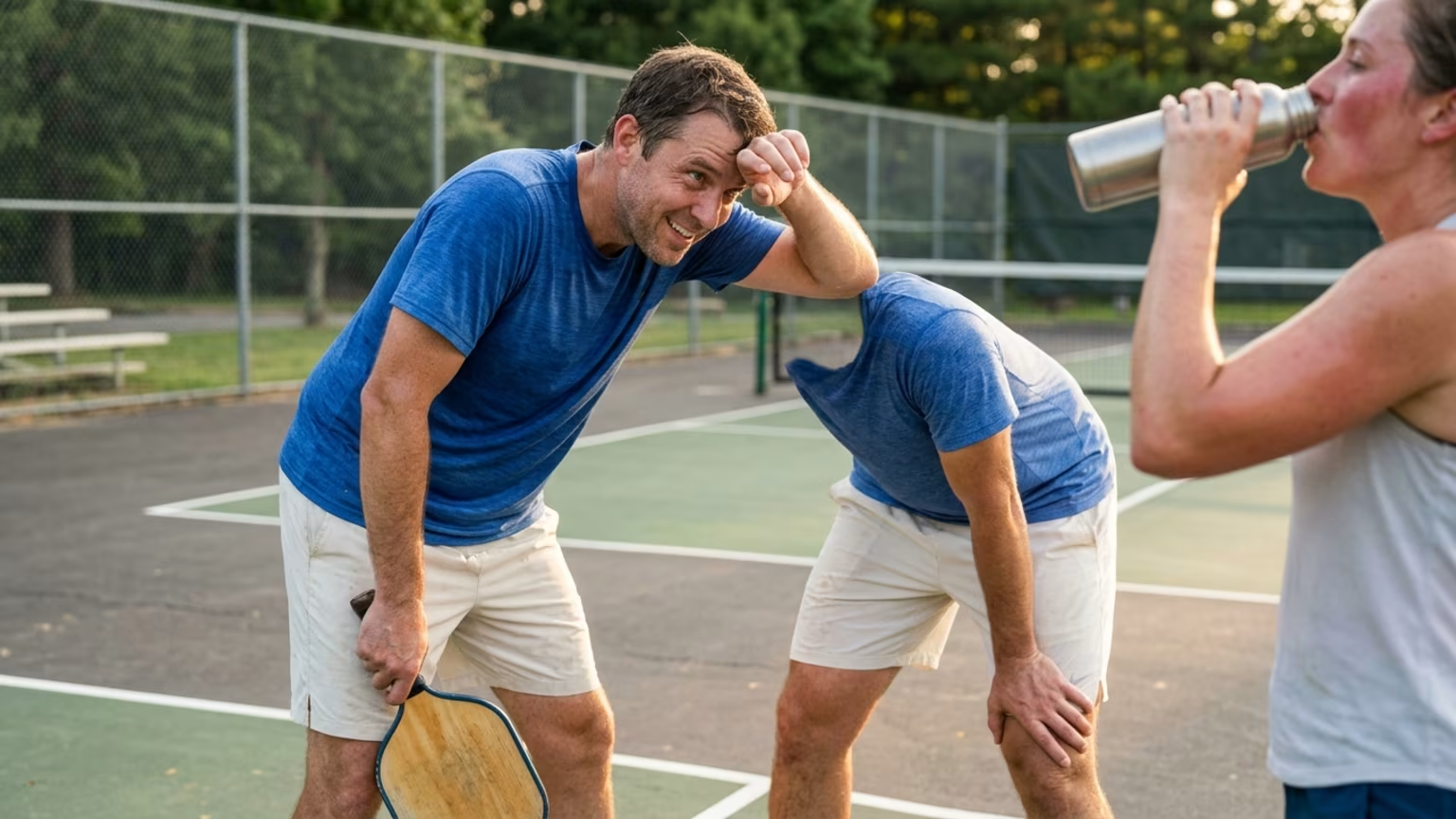

Pickleball nationals in Cary implemented a heat-adjusted schedule. Evercourts explains how midday pauses and smart hydration protect adult athletic longevity.




Athletic guidelines recommend seven to 14 days of gradual exposure to properly acclimatize to extreme heat. For the weekend racquet sports player, that extensive preparation window simply does not exist. Popular fitness culture tells athletes they can push through any weather condition if they just consume enough branded electrolyte supplements. This perspective is fundamentally flawed and actively dangerous for adult recreational competitors.
You cannot hydrate your way out of an unsafe environment. True athletic longevity requires stepping off the court when temperatures peak to protect your long-term health. The prevailing narrative suggests that battling extreme heat builds mental toughness and superior competitive character. Social media is filled with images of athletes sweating through intense midday summer sessions.
We are often told that proper hydration and sheer willpower are all you need to perform. In reality, ignoring severe environmental factors is a fast track to serious physical distress. Smart players know that retreating to the shade is a measurable strategic advantage. It is clearly time to stop treating dangerous midday heat as a worthy opponent.
Extreme temperatures demand structural changes to how we approach the game on a daily basis. You cannot simply tough it out when the humidity reaches dangerous physical levels. Respecting the climate is a primary hallmark of highly intelligent court management. Players who adapt their schedules ultimately enjoy significantly more hours on the court over their lifetime.
Fitness marketing heavily promotes complex hydration formulas and incredibly rigid water consumption rules. These campaigns imply that a perfectly balanced sports drink provides an invisible shield against the sun. They aggressively sell the illusion that basic human biology can be overridden by the right beverage. Adult recreational players often absorb this unhelpful message and try to tough out midday matches.
They regularly ignore the reality of their own physiology to match a totally unrealistic standard. The recent pickleball nationals in Cary, North Carolina, provided a sharp operational contrast to this tough-guy mentality. Times Now News reported that Cary organizers split the quarterfinal schedule into morning and evening sessions because of expected heat. Rather than run the quarterfinal program continuously, staff divided Friday’s competition to actively protect the athletes.
This was a decisive operational shift designed to mitigate severe and highly predictable environmental risks. Tournament staff determined that pausing was vastly preferable to exposing players to unsafe heat conditions. This directly reflects how serious athletic organizations prioritize overall player safety over a strict continuous timetable. The tournament organizers did not ask their athletes to simply drink more water and aggressively push through the afternoon.
Singles quarterfinals were wisely scheduled first thing in the morning on Humana Championship Court. These critical matches were expected to finish around midday before the worst ambient heat finally arrived. Organizers properly recognized that strategic match scheduling is a substantially better defense than willpower alone. This high level of environmental respect is exactly what everyday adult players should emulate.
At the Cary tournament, competitive doubles play was scheduled to resume at approximately 4:30 p.m. after a very long mid-day break. This wise decision aligns closely with clearly established public heat-safety guidance. Health experts consistently recommend cooler outdoor activity periods, accessible shade, frequent breaks and steady hydration. The human body requires adequate time to lower its core temperature during intense outdoor exertion.
A deliberate afternoon pause is a strict physiological necessity on a very hot summer day. The harsh medical realities of sudden heat illness are severe and highly progressive in nature. Reported warning signs of clinical heat exhaustion include a severe headache and persistent nausea. Players might also experience sudden dizziness alongside highly unusual physical weakness.
Extreme thirst and unusually heavy sweating are additional warning indicators of serious physical distress. These specific symptoms indicate that the cardiovascular system is desperately struggling to successfully cool the body. If a player foolishly ignores these warning signals, the medical condition can escalate incredibly rapidly. Recognizing sudden in-match physical distress is a truly vital skill for anyone stepping onto the court.
Pushing aggressively past exhaustion leads directly to a genuine and terrifying medical emergency. Heat stroke presents with severe emergency warning signs like profound confusion or an obviously altered mental status. Additional medical red flags include noticeably slurred speech and sudden uncontrolled physical seizures. A total loss of consciousness is also a well-documented and incredibly severe risk.
Heat stroke can have immediate fatal consequences if emergency medical care is unfortunately delayed. The common assumption that a player can simply rest on the bench for five minutes and recover is dangerously incorrect. A later start time or a formally rescheduled match is the only scientifically sound solution. Even with newly adjusted tournament schedules, competitive players must carefully monitor the actual playing conditions.
A 4:30 p.m. evening start time does not automatically guarantee a perfectly safe sporting environment. The actual physical risk depends heavily on the current local temperature, ambient humidity and radiant heat. A truly safer schedule must always be firmly based on the local weather forecast rather than just the clock. Proper physical safety protocols require constant medical vigilance throughout the entire competitive season.
Adult tennis, pickleball and padel players can easily adopt highly practical heat-aware operational habits. The absolute first step is to avoid the hottest daily playing window entirely whenever physically possible. Purposefully schedule your outdoor practice sessions for the early morning or the very late evening. If you help organize a weekend club ladder, structurally build a massive gap into the middle of the day.
This careful daily structure perfectly mirrors the physical load management safely seen at professional racquet tournaments. You should also strategically plan your personal shade before you hit the very first ball. Safely identify shaded seating or an indoor cooling area immediately near your primary court. If someone starts feeling severely unwell, you urgently need a designated safe place for them to recover immediately.
Public health guidance forcefully emphasizes moving symptomatic athletes out of direct heat as quickly as possible. Do not wait for a full medical emergency to urgently figure out where the closest air conditioning is located. Proper daily hydration is still highly critical, but it safely requires practical common sense instead of rigid formulas. Always bring slightly more fluid than you actually expect to need and safely keep it right courtside.
Drink clean water steadily before, during and entirely after your competitive racquet match. However, never purposefully adopt a rigid fluid intake target unsupported by your own physical needs or direct medical advice. Proper liquid hydration should strictly support your physical performance while you only play in safely verified environmental conditions. Finally, always carefully respect your own personal medical history and actual chronological age.
Older adults and competitive players with previous heat illness should seek individualized medical advice before competing in the summer. A documented personal history of severe heat sensitivity is a completely valid reason to safely modify your play. Stop play completely and immediately if you begin to feel unexpectedly dizzy or severely nauseous. Never actively use a standard scheduled changeover just to recklessly push through very dangerous physical symptoms.
Leaving the court before the midday heat spikes is not a failure of endurance, but rather a vital strategy to ensure you can safely return for your afternoon match.
Follow Evercourts for practical insights on tennis, pickleball and padel performance, movement, recovery and healthy ageing. Stay connected for new articles, research-led guidance and ideas to help you play well and keep playing for years.


Holger Rune withdrew from the European Open with a back problem. The facts behind his decision and a grounded perspective for recreational players.

The Dink’s October 17 guide emphasizes deep returns, ball-height decisions and positioning against faster pickleball opponents.

A new report outlines padel and tennis gear trends. Learn how to assess adjustable rackets, sensor feedback and smart-court claims.
Read practical guidance for better movement, smarter preparation and a game that keeps working for you.
explore the Blog
