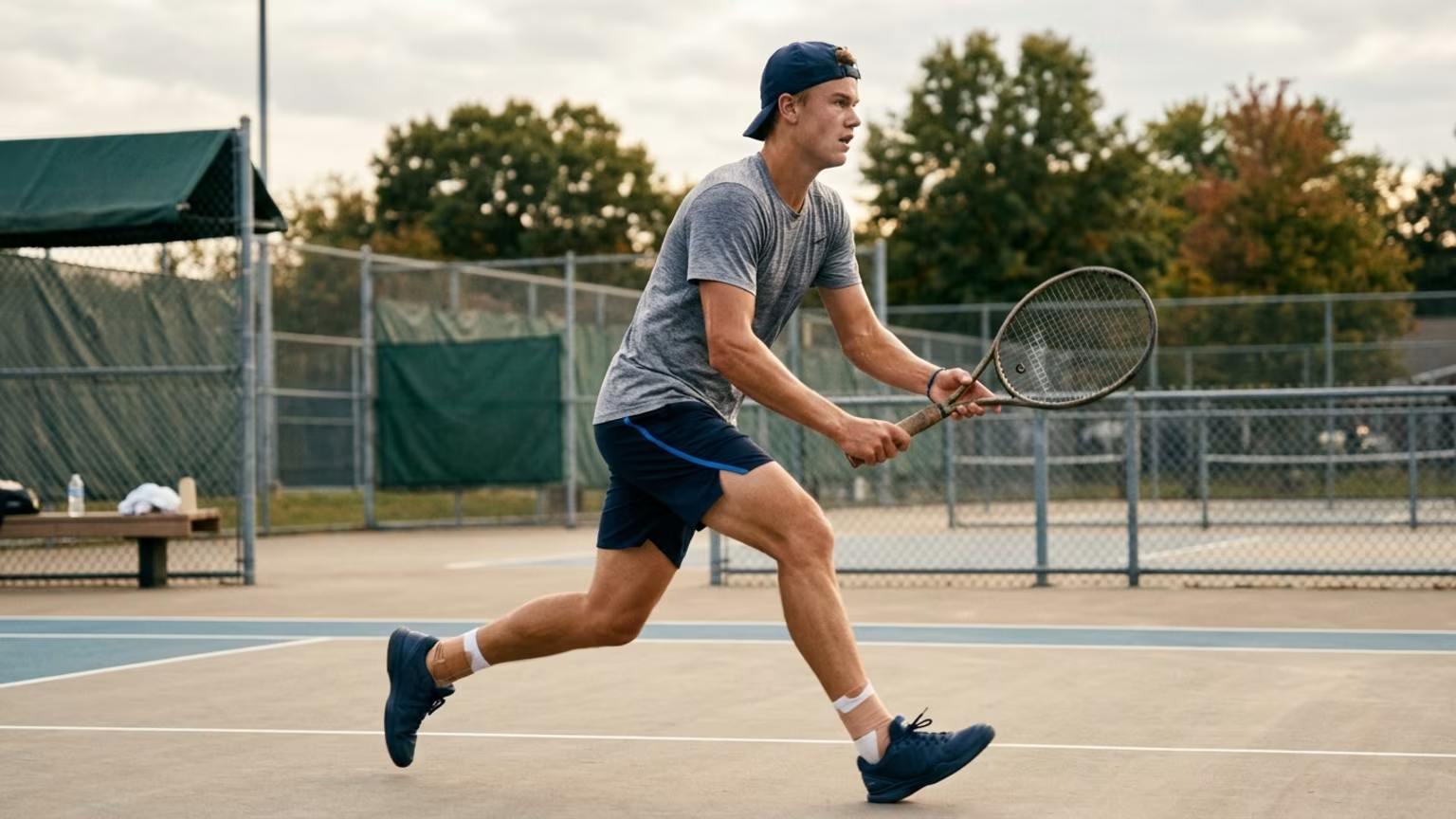

Holger Rune returned to the Davis Cup after a 335-day Achilles injury layoff. Learn how his 11-month recovery highlights progressive loading for adult players.




In September 2026, Holger Rune returned to competitive tennis in the Davis Cup after a 335 day absence. His prolonged layoff was caused by a ruptured left Achilles tendon. This severe injury occurred during his October 2025 Stockholm Open semifinal match against Ugo Humbert. Rune was forced to retire from that match after leading six to four and two games to two according to ESPN.
Rune made his highly anticipated return representing Denmark in a Davis Cup tie against Bulgaria. He faced Iliyan Radulov in his first competitive match back on the court. Rune defeated Radulov in straight sets by a score of six to three in both sets. This significant victory was completed in one hour and 27 minutes.
The successful return leveled the tie for Denmark and set the stage for a tougher test. The following day, Rune faced former Top 5 player Grigor Dimitrov. Rune defeated Dimitrov by dropping the first set three to six before winning the next two sets six to three and seven to six. That deciding set tiebreak victory helped Denmark win the tie three to two.
This moment required immense patience and a willingness to adjust professional timelines. Rune had initially targeted an earlier return during the clay court season. However, Tennishead reported that his comeback was delayed so that he could allow more time for recovery. Rune noted that he and his team had trained extensively while completing daily rehabilitation.
Rune described his 11 month absence as a brutal experience. Professional tennis players have access to elite medical teams to monitor every phase of their rehabilitation. They measure specific strength metrics and adjust daily training loads based on clinical data. Adult club players do not have this luxury and often rush their recovery based on calendar dates.
When I first started playing pickleball, I noticed how many people skipped warming up entirely. They would jump straight out of their cars and right up to the kitchen line. I tried doing that and immediately pulled a calf muscle. Pickleball requires just as much explosive lateral movement as tennis does.
Since then, I always spend five minutes doing dynamic lunges and ankle rolls. It changes everything about how confident I feel pushing off the baseline. That experience taught me the importance of preparing the body for the unique demands of our sports. A recreational athlete must rebuild foundational movement patterns before playing competitive matches again.
Rune emphasized that he got up every day to do his physical rehab. His delayed comeback shows that recovery should be treated as a fluid process rather than a fixed date. Adult players recovering from lower limb injuries must focus on progressive loading over many months. You should build tissue capacity gradually before testing it in a full match environment.
A ruptured Achilles tendon is one of the most demanding injuries an athlete can face. Rune stated that he trained extensively while completing his rehabilitation every single day. This relentless daily commitment is what eventually allowed him to stand on a competitive court again.
Adult recreational players often underestimate the prolonged nature of tendon healing. We assume that once we can walk without pain, we are ready to play competitive matches. Tendons require consistent mechanical loading to regain their structural integrity. Skipping this phased approach often leads to recurring stiffness and secondary injuries.
The emotional aspects of returning to play are also a major factor. Rune mentioned that returning in front of his home crowd was the perfect way to begin his comeback. Having a supportive environment can boost motivation during the grueling final stages of recovery. However, athletes must carefully balance this emotional excitement with rational clinical decisions.
Focusing on returning to racquet sports after injury requires objective clinical guidance. Coverage after his first match reported that Rune said his body felt better than before. While feeling confident is a great sign, subjective wellness cannot replace professional strength testing. Players need qualified clinicians to clear them for the explosive movements required in tennis and padel.
One of the hardest lessons for adult players is managing total weekly physical load. A successful return requires balancing time spent on the court with time spent in the gym. If a player adds hard court sessions without maintaining their strength routines, they risk overloading a healing tendon. True athletic longevity comes from respecting this delicate balance between work and rest.
Progressing court exposure must happen in distinct and carefully monitored stages. A return match can be successful while an athlete is still rebuilding their overall competitive sharpness. Players should transition from controlled hitting to short points before attempting full practice sets. Monitoring how a joint or tendon feels the next morning is a crucial part of this progression.
Using professional clearance is essential for navigating these physical transitions safely. Rune followed a structured program, and adult players must also rely on individualized medical assessments. Every recovery timeline is unique. Applying a professional player's 335 day standard to your own injury is a mistake, as your return must be based on actual tissue tolerance.
The rankings impact of a 335 day absence is drastic for a professional player. Before the injury, Rune had reached a career high ranking of World No. 4. Tennishead reported that he entered this post injury period ranked No. 144 in the world. He had not yet played a single official ATP event this year.
This steep drop illustrates why patience is difficult but absolutely necessary. Rune sacrificed short term ranking points to ensure a more stable physical foundation. The decision to postpone his clay court return prioritized his long term health over immediate results. Securing two consecutive Davis Cup wins suggests that the cautious approach was effective.
However, those victories do not mean the rehabilitation process is entirely finished. The difference between initial physical availability and restored match endurance is significant. A player can be structurally cleared to compete while still needing time to regain their previous stamina. Committing to healthy aging through injury prevention means viewing recovery as a continuous habit rather than a finish line.
The Davis Cup was simply the first phase of an ongoing load management strategy. Rune scheduled his official ATP return for the Japan Open. His upcoming calendar also included the Shanghai Masters and the European indoor hard court swing. This density of tournaments will severely test his tendon capacity and his recovery routines.
Over the next season, the tennis world will watch how his body responds to cumulative match fatigue. One successful weekend is encouraging, but managing international travel and consecutive matches requires a highly strategic approach. We expect to see more players prioritizing selective workload management strategies following severe injuries. Rune has shown that prioritizing physical readiness over calendar dates is the smartest path forward.
Follow Evercourts for practical insights on tennis, pickleball and padel performance, movement, recovery and healthy ageing. Stay connected for new articles, research-led guidance and ideas to help you play well and keep playing for years.


A recent live-play test of a silent pickleball highlights its value for practice, but standard balls still perform better for match play and power control.

An evidence check on sports supplements like tart cherry juice. Learn why racquet sports players should prioritize core nutrition over functional foods.
In late 2026, Oura analyzed wearable data to see how recreational tennis impacts heart health and recovery. Learn what this means for your athletic longevity.
Read practical guidance for better movement, smarter preparation and a game that keeps working for you.
explore the Blog
