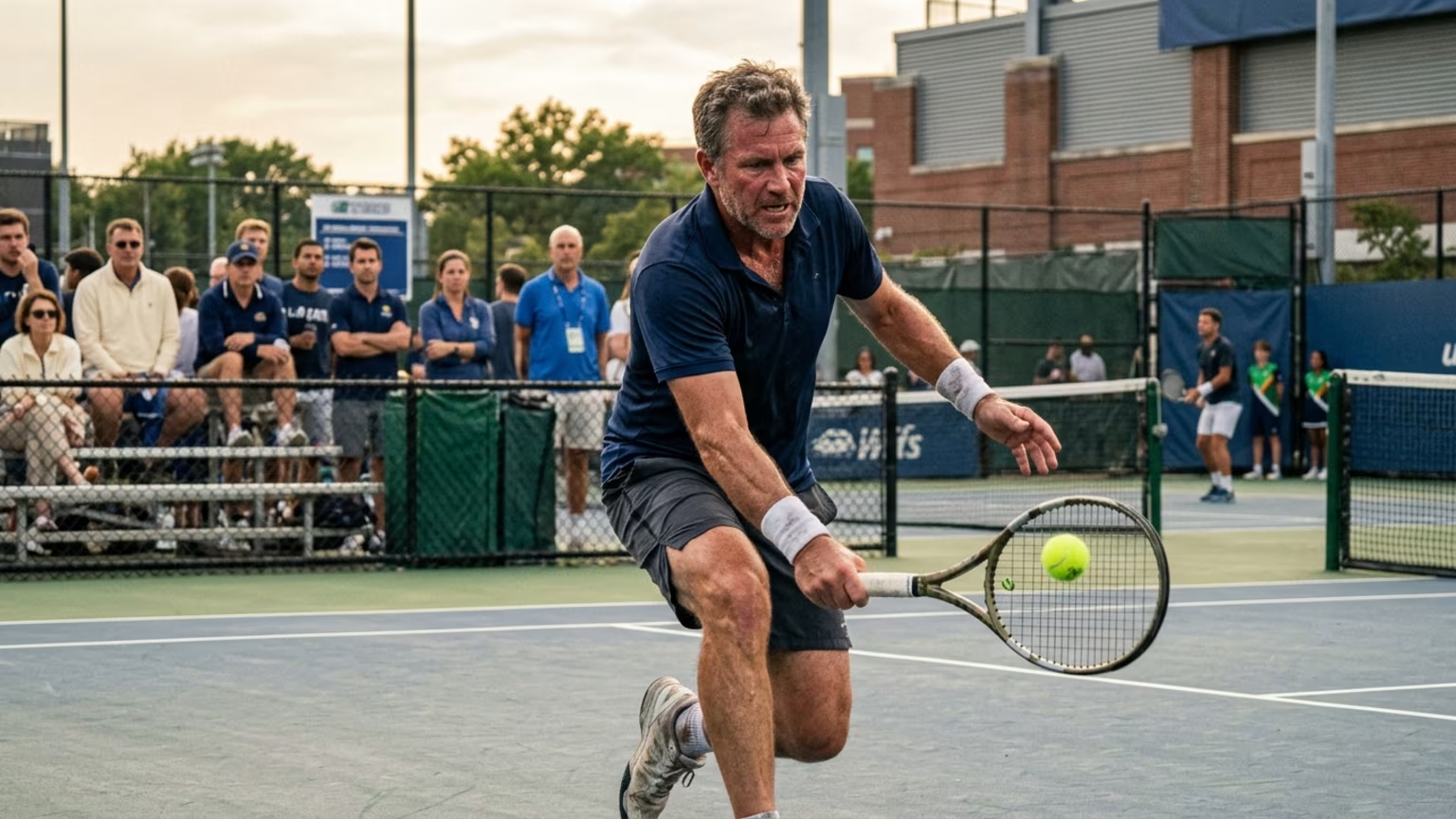

The 2026 US Open revealed how workload impacts aging champions like Novak Djokovic. Learn why adult players must manage court volume for athletic longevity.




The 2026 US Open began in September with a stark snapshot of athletic longevity. Novak Djokovic suffered his first opening-round Grand Slam defeat in exactly 20 years. The 39-year-old entered the prestigious event as the most decorated former champion in the active draw. He proudly held previous US Open victories from 2011, 2015, 2018, and 2023.
However, his tournament campaign ended almost immediately when Mariano Navone defeated him in five sets. This unexpected result established a central performance management theme for the entire tournament. Competing in modern professional tennis demands extraordinary physical resilience and optimal joint health. The repeated sprinting, stopping, and changing of direction required in best-of-five-set tennis takes a massive toll.
Djokovic’s early exit served as a prominent reminder of the physical limits inherent in elite racquet sports. Even the most successful athletes must eventually navigate the reality of accumulated workload and declining recovery speed. The tournament quickly showcased how professional scheduling impacts athletes regardless of their past championship records. It provided a clear view into the intense physical demands placed on modern tennis professionals today.
The early stages of the event demonstrated how accumulated court time affects players across different career stages. The tournament opened with four of the five active former champions in the professional draw. Defending champion Carlos Alcaraz was the fifth tournament winner in this highly relevant group. Very quickly, the physical toll of professional competition became apparent to spectators and analysts alike.
Marin Cilic, the 2014 champion, withdrew before playing a single match because of an injury. Stan Wawrinka, the 2016 champion, is officially retiring during the 2026 season. Daniil Medvedev was 30 years old and ranked eighth in the world during the event. The 2021 champion exited in the round of 16 after Frances Tiafoe eliminated him.
Meanwhile, Alcaraz returned to active competition after an absence of nearly five months caused by a right-wrist injury. He reached the quarter-finals by successfully defeating Tommy Paul in straight sets. This crucial victory extended his Grand Slam match-winning streak to exactly 18 matches. The young athlete proved that returning from a significant physical setback is possible with proper time away.
Despite his recent success, the younger champion noted that he plans to take much longer breaks in the future. He stated publicly that he considers the current tennis calendar entirely impossible to sustain. Alcaraz also believes players are becoming increasingly tired and injured as the season progresses. He argued that players should have more freedom to choose events according to their actual health needs.
Professional Grand Slam tennis involves immense travel, daily training density, and best-of-five-set demands. Club players do not face this exact rigorous schedule, but the fundamental rules of physical capacity still apply to everyone. If elite athletes must carefully manage their court hours, recreational players must also treat competitive volume as a critical training variable. A sudden jump in weekend league matches can easily overload your joints.
Adult players should actively separate match intensity from total court time when planning their weekly schedules. A rigorous singles match demands significantly more recovery than a relaxed doubles session. When you blend repeated court sessions with heavy strength training or running, you rapidly increase the risk of overload. Balancing continuous play with strategic rest is essential for maintaining your physical capabilities throughout a long season.
Persistent pain, joint swelling, or altered movement should prompt an immediate reduction in your training load. Players should view these physical symptoms as valuable information rather than a test of personal mental toughness. Masking discomfort to finish a match often leads to longer absences from the court later on. Addressing these warning signs early helps protect your long-term athletic longevity.
Players aiming to stay competitive for years must respect how their physical training response changes over time. Sports-medicine commentary emphasizes that aging does not necessarily produce an abrupt loss of baseline endurance. Instead, older athletes may simply tolerate less training intensity on a weekly basis. They also often recover less efficiently from repeated high-intensity efforts on hard courts.
Rob Sikka told The Athletic that late-career athletes must account for this reduced recovery efficiency. He noted that players must consider the accumulated demands placed on joints, tendons, and muscles over decades. These physiological differences become especially relevant when an athlete must sprint, stop, and change direction repeatedly. Preparing your body with a thorough court-ready warm-up becomes non-negotiable as you age.
For amateur players, this means building dedicated recovery blocks into the calendar before pain forces a prolonged break. It also requires progressing lower-body strength and trunk control gradually over time. Proper conditioning supports the sudden rotational actions required by tennis, pickleball, and padel. Improving your game as you get older depends entirely on keeping your body healthy enough to practice consistently.
Building a resilient body requires focusing on specific physical attributes outside of standard court practice. Adult athletes should prioritize lower-body strength, trunk control, and shoulder capacity during their gym sessions. Calf and Achilles conditioning also provide crucial support for the rapid accelerations required by the sport. Proper strength training builds the foundation necessary to handle the repetitive stress of competitive matches safely.
Do not try to copy a professional return-to-play timeline if you do sustain an injury during a match. Alcaraz returned to top form after almost five months away, but amateur players must let their own symptoms guide their recovery speed. The underlying rehabilitation process is rarely risk-free for recreational athletes. Returning to competition after a wrist injury requires professional guidance and a very gradual increase in hitting volume.
The verifiable data from the opening week highlights the sharp contrast between historical success and current competitive readiness. Djokovic entered the tournament as a highly decorated athlete with four US Open titles. However, his opening match required five demanding sets of repeated sprinting, stopping, and changing direction. The result ended Djokovic’s impressive 20-year run without a first-round Grand Slam defeat.
Medvedev also faced a demanding timeline before losing a tight match in the fourth round against Tiafoe. The 2021 champion was eliminated in a match lasting 2 hours and 57 minutes. Meanwhile, Alcaraz advanced by defeating Paul, making him the only former US Open champion capable of defending the title late in the tournament. The 2024 champion, Jannik Sinner, was absent from the field entirely.
These outcomes clearly prove that a player's past title count cannot serve as a reliable proxy for their current physical durability. The tournament did not simply present a narrow older-player story for the media. It presented a broader load-and-recovery narrative involving champions at vastly different career stages. An injury interruption can significantly affect players across the entire age spectrum.
The events of the 2026 US Open signal a clear shift in how elite players will likely construct their competitive years moving forward. As top-tier athletes increasingly voice concerns about the demanding calendar, expect to see more deliberate scheduling and intentional absences. Tournaments may routinely see top seeds skipping mandatory events to actively preserve their physical health. Players are widely recognizing that constant competition without adequate rest is biologically unsustainable.
This evolving approach offers a highly valuable blueprint for anyone playing recreational racquet sports locally. Recognizing the biological limits of human recovery is a strategic advantage rather than a competitive weakness. Proper load management ensures that athletes can perform at a consistently high level when it matters most. Careful scheduling prevents minor aches from developing into season-ending joint injuries.
As the sport demands greater speed and power, the players who manage their volume best will remain on the court the longest. Recreational athletes should adopt this professional mindset by periodizing their own playing volume throughout the year. Taking planned weeks off from heavy match play will become a standard practice for serious adult players. Ultimately, prioritizing physical longevity over continuous competition is the smartest way to enjoy racquet sports for life.
Follow Evercourts for practical insights on tennis, pickleball and padel performance, movement, recovery and healthy ageing. Stay connected for new articles, research-led guidance and ideas to help you play well and keep playing for years.


Understand how coverage, playing format and wall rebounds shape tennis, pickleball and padel movement, with research context for long-term play.

Plan the move from league night to tournament weekend with practical answers on practice, recovery, travel, meals and match-day arrangements.

Put tennis point timings in context, track court and strength work, and compare your activity without borrowing workload targets from other sports.
Read practical guidance for better movement, smarter preparation and a game that keeps working for you.
explore the Blog
