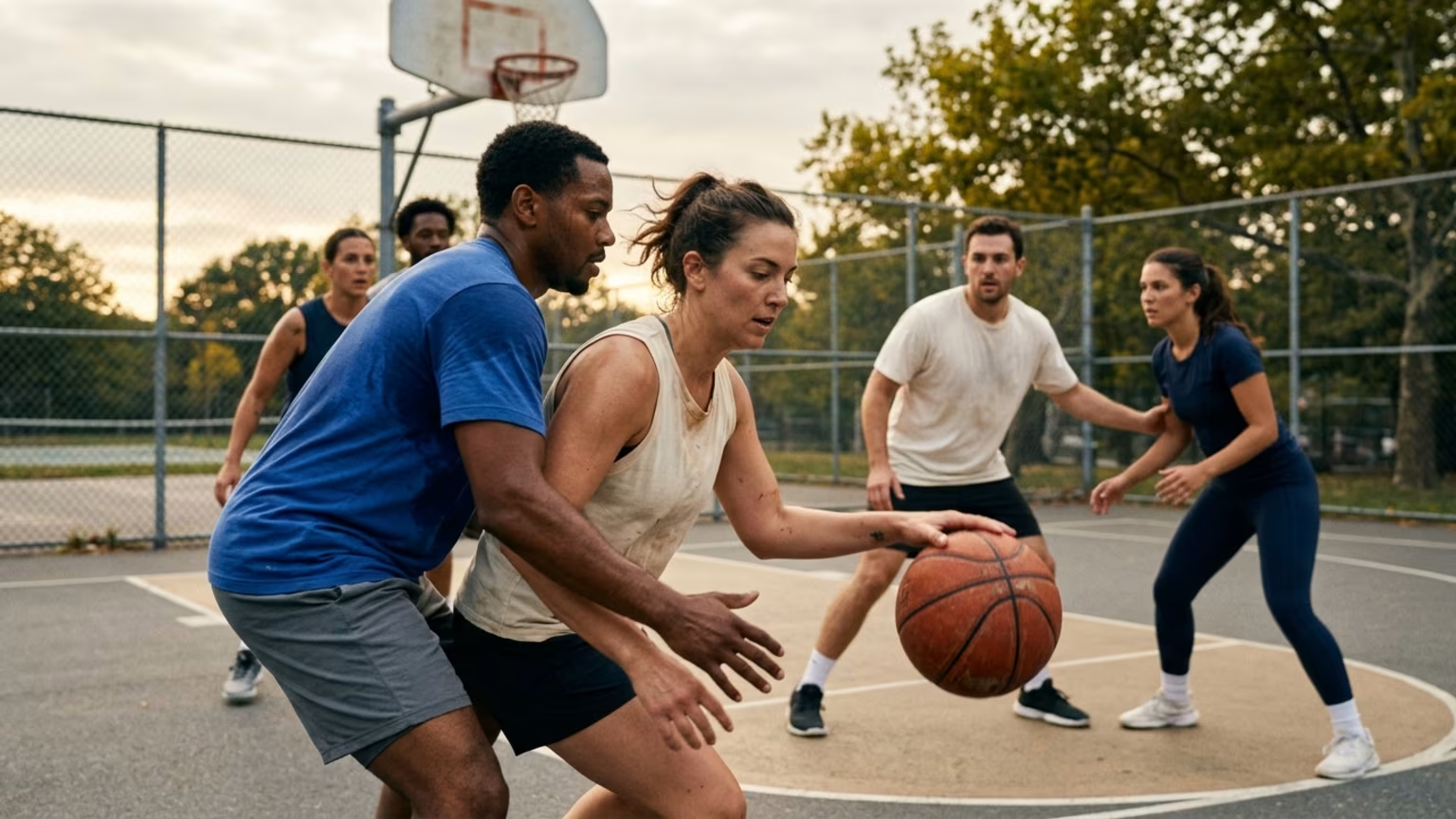

Learn how to build a sustainable racquet sports playing circle with predictable schedules, open play options and practical substitute systems for healthy aging.




The Copenhagen City Heart Study followed 8,577 participants for up to 25 years. This striking observation leads many fitness marketers to claim tennis guarantees nearly a decade of extra life. This oversimplification misses the point entirely. You cannot buy athletic longevity with an expensive supplement routine if you do not actually have a consistent group to play with.
Social media algorithms reward extreme promises and intense daily workout plans. Influencers suggest that serious players must grind every single day to see results. The grounded reality for an adult racquet sports player is far less dramatic. You just need a reliable schedule and a community that respects your time constraints.
When I first started playing pickleball, I noticed how many people skipped warming up entirely. They would jump straight out of their cars and right up to the kitchen line. I tried doing that and immediately pulled a calf muscle. Pickleball requires just as much explosive lateral movement as tennis, just in a tighter space.
Since then, I always spend five minutes doing dynamic lunges and ankle rolls. It changes everything about how confident I feel pushing off the baseline. Rushing to the court is often a symptom of poor group organization. A well structured playing circle eliminates that last minute stress completely.
Sports science points to the massive benefits of consistent physical activity. Media Indonesia reports that the Copenhagen City Heart Study tracked its 8,577 participants over decades. The observational design cannot prove that tennis itself directly caused longer life. The findings should therefore be treated as an association rather than a guarantee.
The practical lesson from this data is beautifully modest. Make it as easy as possible for people to keep showing up week after week. The best longevity game plan relies on sustainable habits and social connection. A reliable circle protects your performance and your enjoyment of the sport.
A sustainable playing community needs a simple operating system. You should use one messaging channel as the operational center for your group. The primary goal is to make the next opportunity to play obvious. A recurring event is much more dependable than a new negotiation every week.
Your group chat should include a pinned weekly post with the date and time. It also helps to list the venue, surface type and expected skill level. Use a simple response system where players reply if they are in or out. Set a firm deadline for players to confirm their attendance by the previous evening.
Without a clear system, members will constantly ask questions that were already answered. This creates unnecessary administrative friction for the organizers. Setting clear communication rules prevents your phone from buzzing endlessly. Members quickly learn to simply check the pinned post for updates.
Administration should be shared across one or two organizers. These administrators can maintain the calendar and resolve duplicate court bookings. Keep match logistics from getting buried by moving unrelated discussions to a separate social channel. This ensures everyone knows exactly when and where to arrive.
Choose one recurring session as the anchor for your group. This might be a Wednesday evening or a Saturday morning. The goal is to create a predictable default time for the core group. It does not need to suit every single person perfectly.
You can then add flexible options around this main event. Open play allows people to attend without needing a permanent partner. You might also add a challenge session for players who want more competitive matches. This layered structure keeps players connected even when their schedules change.
A flexible setup prevents one person from forcing the entire group to renegotiate the calendar. It gives adults a practical way to manage their weekly racquet sports routine effectively. Building multiple entry points makes the sport accessible to players with varying availability.
Open play works best when the rules are clearly visible before people arrive. You must decide how players check in and how courts are assigned. It is also important to establish how long games or rotations will last. The International Padel Federation characterizes padel as a fun, highly social doubles game.
This social aspect translates perfectly to open play formats. Open play should not mean an absolute lack of structure. A beginner who is repeatedly placed against much stronger players may simply stop attending. An advanced player may leave if every session feels uncompetitive.
Create separate courts or rotations based on different needs. A development court is great for beginners working on consistency. A mixed court serves players who enjoy varied pairings and cooperative games. A competitive court provides a space for stronger players seeking faster points.
A group can easily lose members if every session serves only one playing preference. You can solve this by rotating the format on a known schedule. Players can then choose the sessions that best suit their current goals. USA Pickleball describes its Up & Down the River format as combining competition and community.
They note this setup groups players with others of similar skill. You can replicate this by offering social doubles one week and competitive rounds the next. Another week could focus on practice drills and specific skill development. Announce the format early so people can opt out without feeling awkward.
A dedicated substitute list is more reliable than a desperate message sent to everyone. Ask your regulars about their general availability and preferred formats. You can maintain a lightweight spreadsheet with each person's approximate playing level. Include any relevant physical limitations they voluntarily wish to disclose.
The substitute protocol should clearly outline how far in advance people must cancel. Sending a message three hours before a match often leaves the court empty. Give earlier notice for booked courts or paid training sessions. Repeated late cancellations may mean losing priority for limited capacity sessions.
When a player cancels, the organizer should contact the first suitable substitute privately. This avoids exposing personal circumstances to the entire group chat. Set a cancellation policy that is firm but remains entirely humane. Do not punish a genuine injury or family emergency.
The goal is to protect the people who reliably reserve time and travel. Knowing what to look for in a racquet sports club often comes down to this level of organization. A group of six to ten active players is often highly dependable. Keep the main core manageable while maintaining a wider list for occasional events.
A reliable community needs boundaries that protect personal autonomy. Skill matching should be practical, private and easily revisable. Avoid presenting ratings as a strict hierarchy of personal worth. Instead, describe what the specific session actually requires from the players.
For healthy aging, you must normalize sensible physical modifications. Offer shorter sessions or more recovery time between games. Allow players to play doubles instead of singles if they need less impact. Give people permission to leave early without needing to provide a long explanation.
These modifications are not signs that someone has stopped being a serious player. They are pragmatic ways to preserve continuity on the court. Organizers should distinguish between a simple preference and exclusionary behavior. Respectful boundaries help everyone keep enjoying racquet sports for years.
A sustainable playing community relies on shared expectations rather than perfect attendance.
Follow Evercourts for practical insights on tennis, pickleball and padel performance, movement, recovery and healthy ageing. Stay connected for new articles, research-led guidance and ideas to help you play well and keep playing for years.


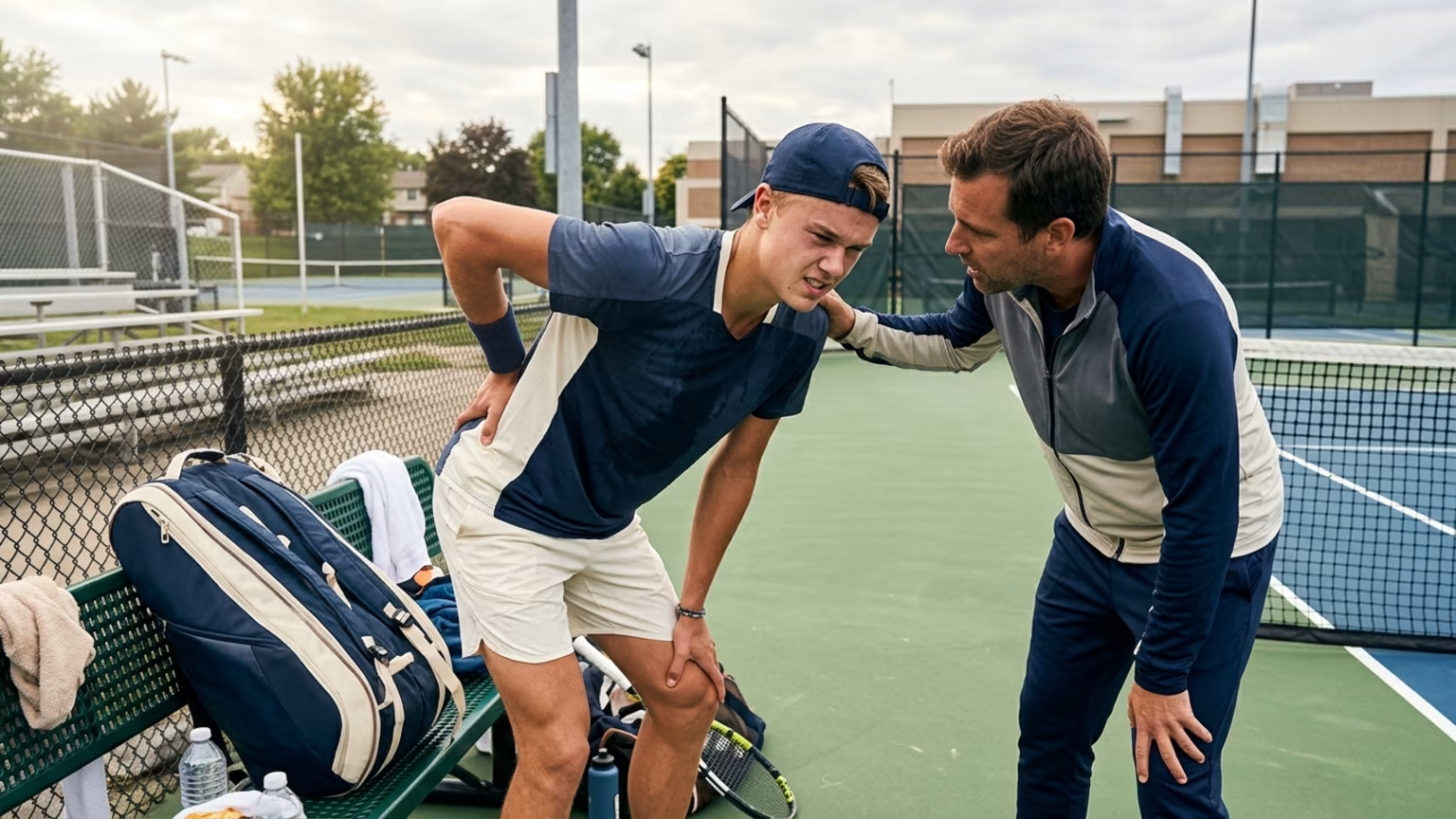
Holger Rune withdrew from the European Open with a back problem. The facts behind his decision and a grounded perspective for recreational players.

The Dink’s October 17 guide emphasizes deep returns, ball-height decisions and positioning against faster pickleball opponents.

A new report outlines padel and tennis gear trends. Learn how to assess adjustable rackets, sensor feedback and smart-court claims.
Read practical guidance for better movement, smarter preparation and a game that keeps working for you.
explore the Blog
