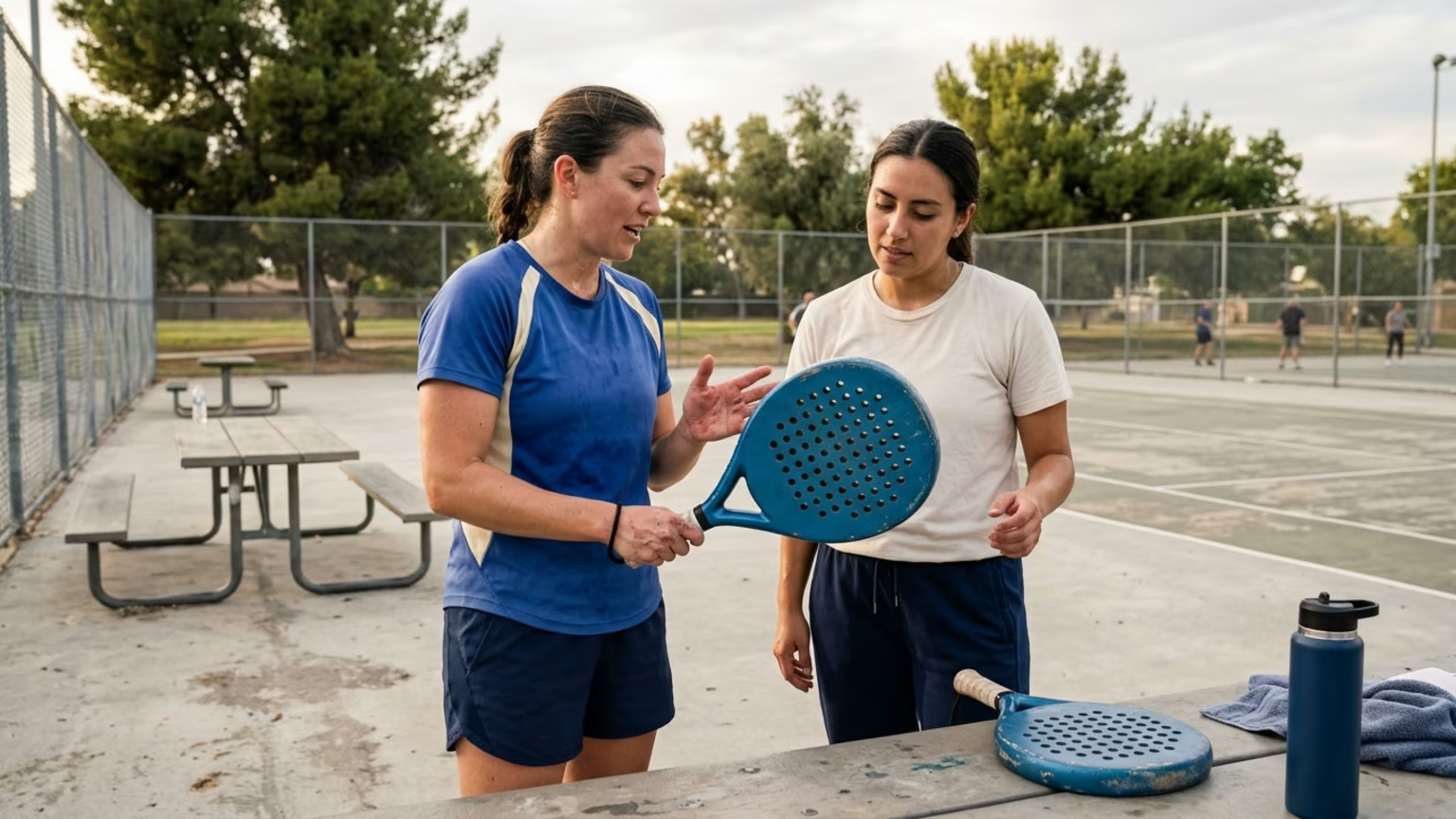

Learn how to choose a padel racket based on shape, balance and weight. Discover why adult recreational players should prioritize comfort over raw power.




In 2026, new analysis published in Frontiers in Medicine outlined how a padel racket's geometry alters performance, noting that high balance diamond shapes punish mishits far more severely than rounder designs. This structural reality matters because selecting equipment solely for maximum power often leads to mechanical breakdown. Adult players who want to sustain their court time must understand how racket shape, balance and weight interact with physical tolerance.
Product guides commonly define shape, balance and hardness as the main variables affecting how a racket behaves on the court. A round racket generally places its sweet spot near the center of the face. It tends to feature lower balance, making it easier to maneuver and more forgiving on off center contact. This stability reduces the harsh vibrations sent down the arm, making a round racket highly practical for players prioritizing placement.
A teardrop frame moves the effective sweet spot somewhat higher. It is commonly presented in equipment guides as an all court compromise between control and power. This middle ground serves players who have developed reliable contact points but wish to avoid the high demands of a heavily weighted setup.
A diamond racket shifts the sweet spot even higher on the face and combines that geometry with a higher balance point. This design favors power on overheads, but it demands far more accurate contact. Advanced attacking players with dependable technique can leverage this extra weight, while recreational players may find it heavy and punishing during rapid volleys.
Professional padel players can repeatedly swing head heavy rackets because their kinetic chains are highly conditioned. They generate speed efficiently through leg drive, trunk rotation and precise timing. The average weekend league player often lacks this elite biomechanical efficiency. When an adult recreational player buys a high balance racket for extra power, they usually end up relying heavily on their arm to move the extra weight.
This creates a significant problem over a long match. A head heavy frame creates greater leverage, which feels substantially more demanding as fatigue sets in. Attempting to maneuver a demanding racket with tired shoulders often leads to late preparation and poor contact. Comfort and an appropriate grip fit should always serve as the primary screening criteria before looking at performance labels.
A round, lower balance racket is usually the logical first category for a player whose strengths are lobs, blocks, resets and patient construction. The central sweet spot and easier maneuverability can be more valuable than maximum overhead output when a player wins points through placement rather than sheer force. Too many adult players sacrifice this defensive consistency in pursuit of a faster smash. That trade off rarely pays off in long club matches where unforced errors dictate the final score.
Finding the right equipment helps us enjoy the sport longer, which is a key part of our focus at Evercourts. We recommend that adult players choose the least demanding racket category that supports their natural style. A lighter frame with neutral balance allows for quicker reactions during defensive exchanges and reduces the effort required to swing repeatedly.
Static weight is only one part of the equipment equation. A heavy racket provides stability, but excessive weight can strain the wrist over time. The distribution of that mass determines how heavy the racket actually feels during a competitive match. For example, HEAD describes its Radical Motion model as a versatile mid balance option that weighs 355 grams and features a balance point of 260 millimeters.
This specification illustrates a balanced approach, providing enough mass for stability without making the racket excessively difficult to handle. Core hardness also plays a major role in how a racket performs during a match. A softer foam core is commonly marketed as more forgiving and control friendly. A firmer core is associated with a crisper response for stronger hitters who generate their own pace.
A stiff racket can feel efficient when contact is perfectly centered, but it may feel harsh or difficult to control when a player is fatigued. Understanding these metrics helps players make informed decisions instead of falling for vague marketing terms. Control usually describes a racket that is easier to position, stop and maneuver. Power generally refers to how easily the frame helps produce ball speed, especially on overheads. That extra output often comes with slower handling and greater physical demand on the forearm and shoulder.
Racket selection is crucial for court comfort, but equipment cannot replace physical preparation. I remember finishing a tough two hour padel match on a cold Tuesday night and waking up the next morning feeling like my lower back was locked in concrete. For a long time, I just accepted this as the price of playing hard in my forties.
But once I started spending just ten minutes on targeted hip mobility before heading to the club, the stiffness almost completely vanished. It taught me that we do not have to accept pain as a default state of aging. A forgiving racket might reduce the strain on your elbow, but maintaining your physical capability requires a broader approach.
Building a routine around mobility, stability and joint health is essential for athletic longevity. General sports science heavily supports the need for comprehensive physical conditioning. A 2018 systematic review analyzed by Tools.fit reported that structured strength training reduced athletic injury risk to roughly one third across the evaluated trials. While this finding covers a broad range of athletes, the underlying principle applies directly to adult padel players.
A well chosen racket works best when paired with a complete functional strength program. A racket cannot compensate for poor preparation, late contact, inefficient technique or excessive playing volume.
Catalog numbers cannot tell you how a racket will respond to your unique swing mechanics. Before making a purchase, players should perform controlled shadow swings in the actual configuration they intend to use. Accessories like protectors and overgrips can alter the balance point significantly.
Grip comfort deserves special attention during this testing phase. An uncomfortable or undersized handle often encourages excessive squeezing, which places unnecessary stress on the forearm flexors. You should be able to hold the racket securely without continually tightening your hand. Test the handle with your normal overgrip applied, and reject any model that forces you to grip tightly to control the head.
Pay close attention to how the racket decelerates. If the wrist or forearm begins working harder to stop the racket during a simulated volley, the setup might be too head heavy. The goal is to find a racket that feels easy to reposition and switch between forehand and backhand grips.
Over the next season, we expect the padel market to shift toward comfortable, medium balance models as adult players increasingly prioritize healthy aging over sheer output. The industry is beginning to recognize that maintaining long-term playability matters far more to the average consumer than matching professional specifications. Players are learning that equipment should complement good technique, not compensate for a lack of physical preparation.
When that 2026 Frontiers in Medicine research highlighted the demanding nature of diamond frames, it offered a valuable lesson for the recreational community. A racket cannot replace footwork, early preparation or a repeatable swing. By selecting equipment based on personal comfort and realistic load tolerance, you can keep enjoying padel for years to come.
Follow Evercourts for practical insights on tennis, pickleball and padel performance, movement, recovery and healthy ageing. Stay connected for new articles, research-led guidance and ideas to help you play well and keep playing for years.


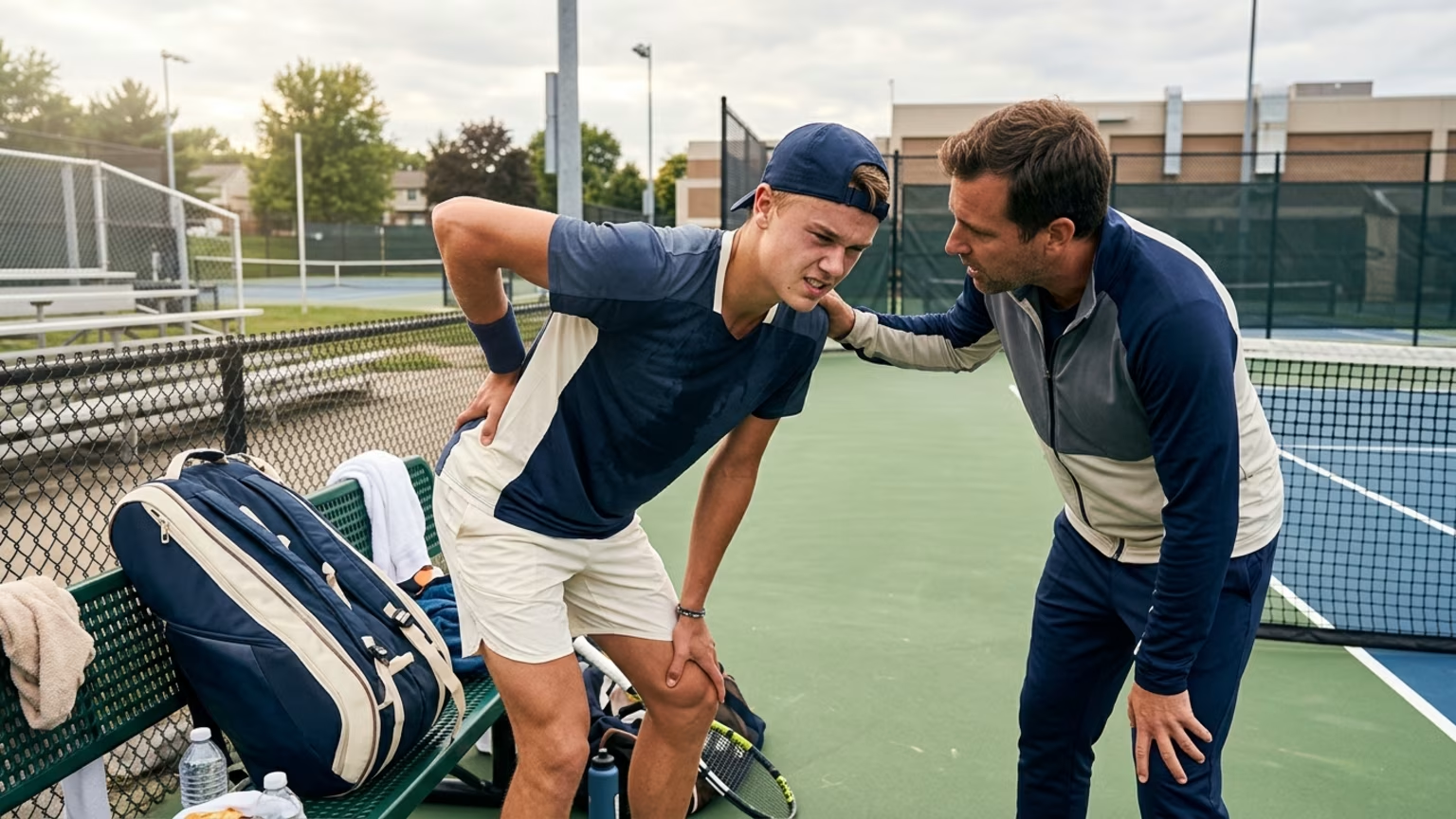
Holger Rune withdrew from the European Open with a back problem. The facts behind his decision and a grounded perspective for recreational players.

The Dink’s October 17 guide emphasizes deep returns, ball-height decisions and positioning against faster pickleball opponents.

A new report outlines padel and tennis gear trends. Learn how to assess adjustable rackets, sensor feedback and smart-court claims.
Read practical guidance for better movement, smarter preparation and a game that keeps working for you.
explore the Blog
