

Recent Italian data reports padel injury rates have surpassed tennis. Learn why middle-aged recreational players are at risk and how to prepare your body.




According to newly reported Mater Domini data, padel now records approximately 2.75 musculoskeletal injuries per 1,000 hours of play. That specific statistic materializes on the court every single evening. A 48-year-old manager shuts down a laptop, drives straight to a local club, and steps directly into a high-intensity match without preparing. Recent Italian coverage highlights this exact scenario, identifying men and women aged approximately 45 to 50 who spend the workday sitting as a particularly exposed recreational profile.
Padel is incredibly accessible, but that easy learning curve masks a highly demanding athletic environment. The body absorbs repeated explosive efforts during sudden changes of direction, hard stops, and aggressive overhead swings. Without specific physical preparation, players expose themselves to repeated minor trauma that can eventually force them to stop playing. According to the Italian coverage, this lack of conditioning frequently results in both overuse issues and sudden acute injuries.
Recreational players who transition directly from a sedentary desk to an intense match place immense stress on cold muscles and stiff joints. The physical forces transmitted through synthetic courts demand a high level of conditioning from the lower body. At the same time, repetitive overhead strokes like the smash and bandeja heavily tax the shoulder and elbow. Treating these demands with respect is an essential component of athletic longevity.
The report highlights lateral epicondylitis and shoulder issues. Calf strains, Achilles-tendon ruptures, knee problems, and elbow injuries are also common. Alessandro Corda, a physiotherapist with more than 25 years of clinical experience, warns that players should not mistake the social nature of the sport for a low physical demand. Corda is the founder of Studio Alco, an outpatient clinic in Pavia that developed into a multidisciplinary facility in 2013. His team has launched a dedicated Clinica del Padel focused specifically on prevention, functional diagnosis, and rehabilitation.
Understanding the true risk requires a close look at recent data comparisons. The Mater Domini reporting cited in Italian coverage states that padel records about 2.75 musculoskeletal injuries per 1,000 hours of play. The same report places padel above tennis in its comparison of racquet sports by musculoskeletal-injury risk. The country now has 10,352 padel courts, and this expanding participation is clearly creating new demand for sport-specific clinical services.
Other recent evaluations provide further context for these numbers. A separate 2026 secondary report describes a scoping review that synthesized 14 studies involving 3,581 padel players. That review found roughly 3 injuries per 1,000 hours and 8 injuries per 1,000 matches. In contrast, the same secondary report notes that the literature placed tennis injury incidence across a wide range of approximately 0.04 to 3 injuries per 1,000 hours. This variance illustrates why comparisons depend heavily on how populations and exposure are measured.
The headline comparison suggests padel has surpassed tennis in injury rates. However, actual injury prevalence changes based on age, skill level, and court surface. The precise tennis benchmark used in the Mater Domini comparison was not publicly provided in the accessible article. The data clearly show that unprepared athletes face a measurable risk of musculoskeletal issues on the court. Understanding these statistics helps players of all levels prioritize proper neuromuscular training.
While padel, tennis, and pickleball share many similarities, each sport places distinct loads on the human body. The Mater Domini data emphasize the specific toll of padel, where players constantly execute repetitive overhead strokes in tight quarters. The sport requires frequent deceleration and twisting against glass walls, which heavily loads the knees and Achilles tendons. These biomechanical realities explain why Studio Alco combines musculoskeletal ultrasound, biomechanical education, and strengthening programs designed around specific padel movements.
Tennis demands different movement patterns over a much larger court area. Players generate significant force from the baseline and often reach higher top speeds during long sprints. This longer acceleration distance changes how forces are distributed through the lower legs. While tennis players experience overuse injuries, the sheer volume of overheads in a single padel match presents a unique challenge for the upper body.
In our experience, pickleball creates an equally demanding physical environment that requires serious respect. As one of our team members shared, "When I first started playing pickleball, I noticed how many people skipped warming up entirely. They would jump straight out of their cars and right up to the kitchen line. I tried doing that and immediately pulled a calf muscle."
Their experience continues, "Pickleball requires just as much explosive lateral movement as tennis, just in a tighter space. Since then, I always spend five minutes doing dynamic lunges and ankle rolls. It changes everything about how confident I feel pushing off the baseline." A proper preparation routine makes switching between courts much safer for adult athletes.
Players can act on these findings by treating their transition from the office to the court as a fundamental preparation problem. A brief dynamic warm-up before matches is a sensible, low-cost response that physically prepares the body for sudden athletic movements. Adding simple court readiness routines before picking up a racquet helps mitigate the risks identified in the Italian report. You do not need a complicated, hour-long stretching session to see a tangible benefit.
Focus your off-court conditioning on the specific areas highlighted by the recent data. Adult players should prioritize regular calf and Achilles loading exercises, particularly if they spend most of their workday sitting. Forearm and shoulder strengthening is also a highly effective complement to your weekly routine. Building physical capacity in these tissues helps the body handle the repetitive stresses of serving, smashing, and sudden braking.
If you experience persistent tendon pain, loss of grip strength, or a sudden calf snap, seek an assessment by a qualified sports-medicine professional immediately. Pushing through acute pain often turns minor trauma into a chronic issue that keeps you off the court for months. By gradually increasing your playing volume and prioritizing targeted preparation, you can enjoy a highly capable life on the court. Evercourts believes that replacing fear with practical preparation is the smartest way to maintain athletic longevity.
Follow Evercourts for practical insights on tennis, pickleball and padel performance, movement, recovery and healthy ageing. Stay connected for new articles, research-led guidance and ideas to help you play well and keep playing for years.


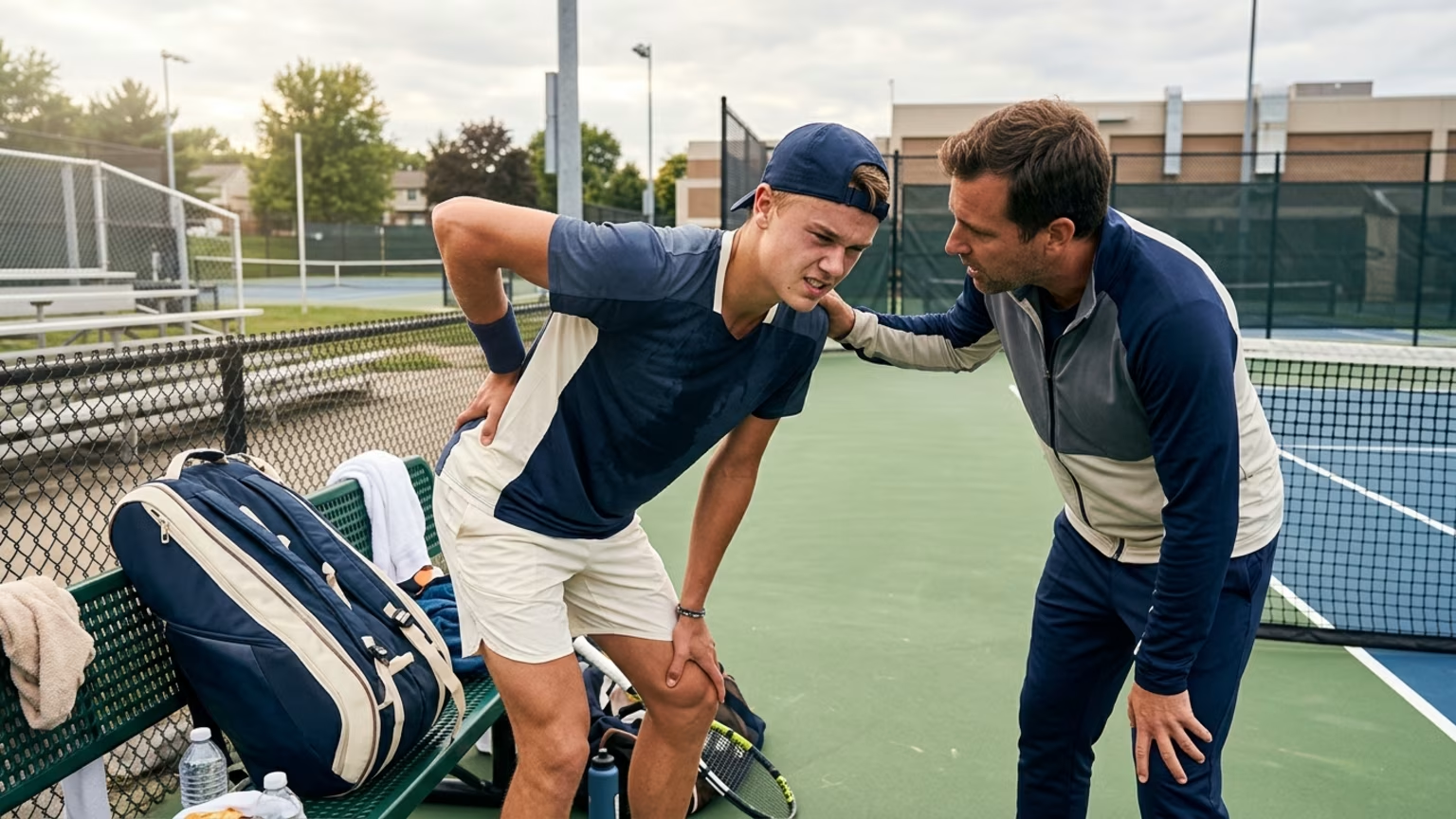
Holger Rune withdrew from the European Open with a back problem. The facts behind his decision and a grounded perspective for recreational players.

The Dink’s October 17 guide emphasizes deep returns, ball-height decisions and positioning against faster pickleball opponents.

A new report outlines padel and tennis gear trends. Learn how to assess adjustable rackets, sensor feedback and smart-court claims.
Read practical guidance for better movement, smarter preparation and a game that keeps working for you.
explore the Blog
