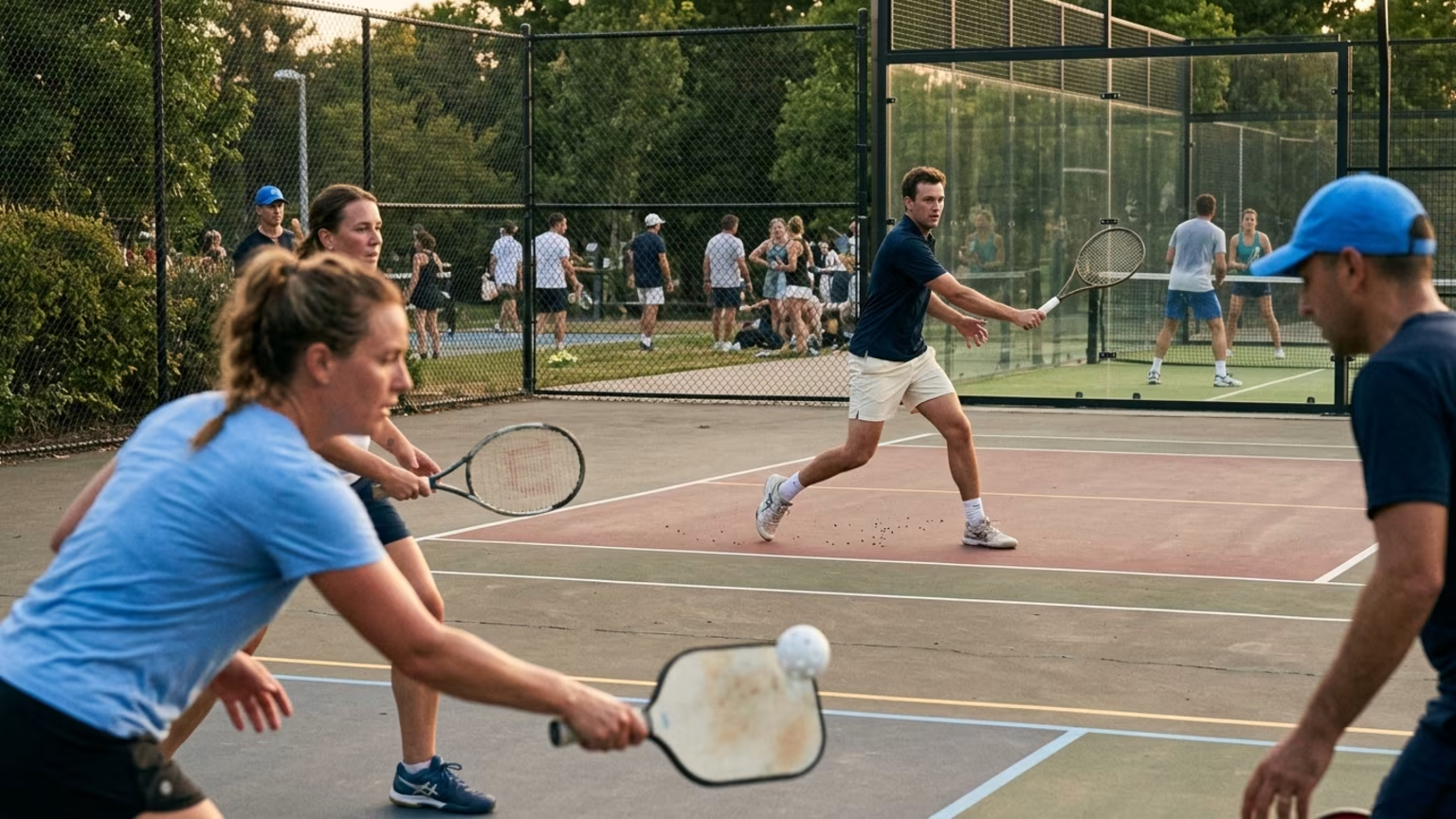

Compare the physical demands of tennis, pickleball, and padel. Choose the right court sport to protect your joints and support athletic longevity.




Secondary reports citing the Sports & Fitness Industry Association showed U.S. pickleball participation reaching 24.3 million players in 2025, but this massive influx quickly proved that smaller courts do not eliminate athletic strain. A new player assumes the tight space guarantees an easy session, only to feel the burn of repeated lateral lunges immediately.
The sheer volume of new participants entering racquet sports brings a hidden physical cost. Players often assume that smaller courts automatically reduce the workload on their joints and muscles. This assumption leads to poor physical preparation and subsequent stiffness after local matches. The reality is that every swing and stop demands serious structural support from your entire body.
When you swing a racquet or paddle, your legs execute intense deceleration phases to keep you balanced. Your ankles, knees, and hips absorb multiple times your body weight during rapid direction changes. The lateral forces required to defend the baseline or net remain high regardless of the specific sport. Failing to prepare for these forces can derail your season quickly.
When I first started playing pickleball, I noticed how many people skipped warming up entirely. They would jump straight out of their cars and right up to the kitchen line. I tried doing that and immediately pulled a calf muscle. Pickleball requires just as much explosive lateral movement as tennis, just in a tighter space.
Since then, I always spend five minutes doing dynamic lunges and ankle rolls. It changes everything about how confident I feel pushing off the baseline. Establishing this type of reliable preparation routine is a foundational step for athletic longevity.
The recent surge in racquet sports participation provides clear data on player preferences. A secondary report citing the U.S. Tennis Association noted that U.S. tennis participation rose 54 percent from 2019 to 2025. This growth added 1.6 million new tennis players in 2025 alone. Tennis clearly maintains a massive draw for athletes seeking a traditional open-court challenge.
Pickleball shows an even steeper trajectory based on recent industry reports. Secondary reports citing the Sports & Fitness Industry Association put U.S. pickleball participation at 24.3 million players in 2025. That figure represents a 22.8 percent increase from 2024 and a 171.8 percent surge over three years. This rapid expansion creates a high volume of new players facing unfamiliar physical demands.
The data also reveals how these millions of pickleball players engage with the game. The same reporting separated the 2025 pickleball participation into approximately 16.8 million casual players and 7.48 million core players. Casual participants play one to seven times annually, while core players hit the court at least eight times a year. This distinction is crucial because frequent core play requires a much higher standard of physical maintenance.
While padel lacks the same centralized U.S. tracking, international reports highlight its massive global footprint. Published estimates vary widely, but one report citing the International Padel Federation pointed to more than 35 million active players worldwide in 2025. Another secondary report estimated roughly 19.4 million global padel players based on different definitions.
Infrastructure development further confirms the rising workload across these expanding sports. The International Padel Federation-related figures cited in secondary reporting included more than 24,600 clubs globally in 2025. These reports also counted 77,300 global padel courts, with a year-over-year court growth of 15.2 percent. Furthermore, the Lawn Tennis Association reported that 860,000 adults and juniors played padel at least once in Great Britain in 2025.
Tennis requires athletes to manage the most expansive physical space of the three sports. Players must sustain long runs, execute aggressive stops, and recover quickly to the center. This wide playing area demands high cardiovascular endurance and robust lower-body strength. Anyone looking to understand court positioning in tennis, pickleball, and padel will notice that tennis requires the longest continuous sprint efforts.
The sheer distance covered during a competitive tennis match easily surpasses the requirements of smaller courts. This sustained effort forces your heart rate to stay elevated for prolonged periods. You must maintain excellent core stability to transfer power efficiently from your legs to your racquet. Neglecting this baseline fitness makes late-match execution incredibly difficult.
Pickleball confines the action to a smaller area, but that compactness creates a deceptive workload. The non-volley zone forces players into rapid, reactive exchanges that test joint stability and reflexes. Doubles teams must move laterally in perfect synchronization to defend the net. Practicing specialized court movement playbook footwork skills is essential to avoid lower-extremity injuries in these tight spaces.
Padel introduces a completely different mechanical challenge through its enclosed walls. Players must track rebounds, rotate their bodies swiftly, and work cooperatively with a partner. The constant need to pivot and change direction places unique rotational stress on the hips and lower back. This format requires excellent anticipation rather than just pure straight-line speed.
Because the ball remains in play longer due to the glass walls, padel rallies often outlast those in other racquet sports. This continuous engagement demands immense mental focus and physical endurance. Your knees bear a significant load as you squat low to dig out difficult rebounds. Building resilient leg muscles is the only way to handle these extended points safely.
Transitioning between these sports requires careful management of your weekly athletic volume. A player cannot simply trade a heavy tennis day for a padel day without feeling the cumulative fatigue. You must acknowledge how aging changes racquet sports performance and adjust your rest periods accordingly. Cross-training successfully means treating each sport as a distinct physical discipline rather than a casual substitute.
Many ambitious athletes try to cram multiple sports into a single weekend. This approach often ignores the compounding strain placed on your Achilles tendons and shoulder joints. A smarter strategy involves scheduling your most demanding court sessions at least forty-eight hours apart.
Building a sustainable rotation means respecting the unique demands of each game. Tennis will heavily tax your aerobic system and require broad groundstroke mechanics. Pickleball will challenge your fast-twitch muscle fibers through constant starting and stopping near the net. Padel will test your agility and rotational strength as you manage complex wall rebounds.
The remarkable participation growth across tennis, pickleball, and padel proves that racquet sports are a central part of healthy aging. The addition of millions of new players highlights a growing need for sustainable physical habits. You cannot control the specific dimensions of the court or the speed of your opponent. You can only control how effectively you prepare your joints for the workload.
Your first step to sustaining this activity is implementing a strict pre-match routine. Always complete a dedicated 12-minute court-ready warm-up before hitting your first ball. Focus on dynamic lateral movements, calf stretches, and rotational mobility to prepare your body for sudden stops. Treating your warm-up as a non-negotiable requirement is the most reliable way to stay active for years to come.
Follow Evercourts for practical insights on tennis, pickleball and padel performance, movement, recovery and healthy ageing. Stay connected for new articles, research-led guidance and ideas to help you play well and keep playing for years.


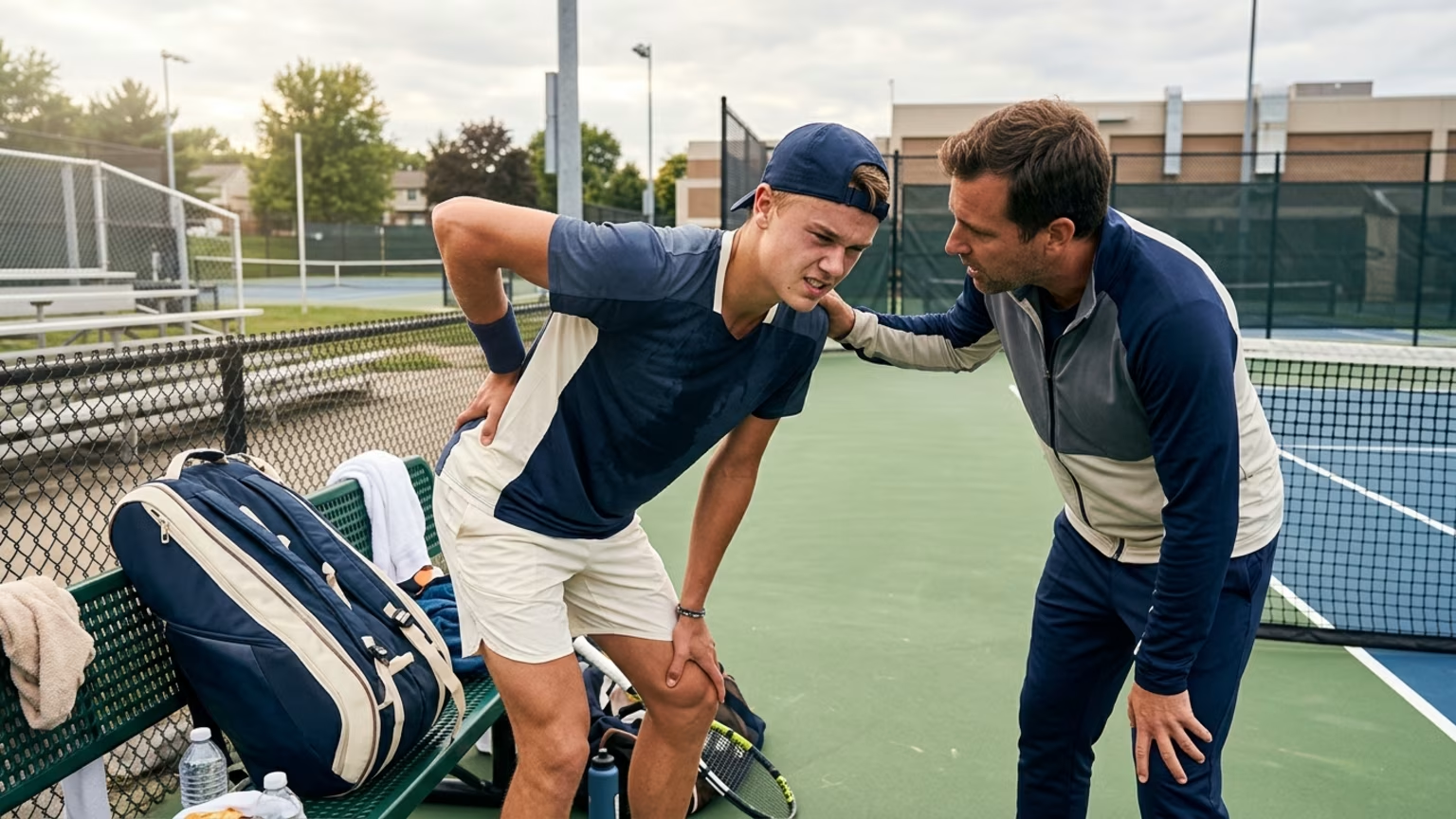
Holger Rune withdrew from the European Open with a back problem. The facts behind his decision and a grounded perspective for recreational players.

The Dink’s October 17 guide emphasizes deep returns, ball-height decisions and positioning against faster pickleball opponents.

A new report outlines padel and tennis gear trends. Learn how to assess adjustable rackets, sensor feedback and smart-court claims.
Read practical guidance for better movement, smarter preparation and a game that keeps working for you.
explore the Blog
