

Learn how to build a flexible weekly racquet sports schedule that balances tennis, padel, or pickleball matches with rest, strength training, and real life.




"How do I fit enough court time into my busy week without running my body into the ground?" You build a flexible seven-day schedule that varies intensity and prioritizes recovery over rigid match counts. In 2025, U.S. pickleball participation reached 24.3 million players according to SFIA data cited by Pickleball Cosmos. This massive growth means millions of adults are now trying to balance regular matches with work, family, and physical recovery.
The short answer is that a universal perfect weekly number simply does not exist. Adult recreational players frequently try to force three or four high-intensity matches into a single week. However, the World Health Organization recommends 150 to 300 minutes of moderate-intensity aerobic activity or 75 to 150 minutes of vigorous activity each week for adults. Focusing on these general movement targets is far more important than logging a specific number of court appearances.
The sheer volume of adults returning to racquet sports makes this schedule management highly relevant. Private Club Marketing reports that U.S. tennis participation reached 27.3 million in 2025. This impressive figure represents a 54 percent increase since 2019 and marks a sixth consecutive year of growth. As more adults find their way to local clubs, many struggle to handle the accumulated physical stress of frequent match play.
It is vital to understand that weekly minutes on the court do not equal weekly physical stress. Two playing sessions with the exact same duration can create vastly different physical demands. A grueling competitive singles match will require much more recovery time than a relaxed game of social doubles. You should view your weekly schedule as a highly flexible container rather than a fixed, unchangeable contract.
Instead of committing to play every single day, you can build a more sustainable routine. Your week should include varied intensities that leave room for complete rest when you need it most. By planning your physical workload carefully, you can enjoy the court without constantly fighting through exhaustion. This measured approach prevents the fatigue that often leads to prolonged absences from the sport.
Soreness often occurs when we stack too many high-demand sessions together without adequate rest. A highly practical solution is to intentionally vary your daily session intensity throughout the week. You might plan one high-demand competitive match, one moderate technical practice, and one low-demand social game. This rotation gives your joints time to recover while keeping you connected to your local playing community.
"I remember finishing a tough two hour padel match on a cold Tuesday night and waking up the next morning feeling like my lower back was locked in concrete. For a long time, I just accepted this as the price of playing hard in my forties. But once I started spending just ten minutes on targeted hip mobility before heading to the club, the stiffness almost completely vanished. It taught me that we do not have to accept pain as a default state of aging."
To maintain a sustainable court schedule, you must pair your playing time with consistent physical preparation. An overview indexed by PEDro found that physical activity containing resistance training at least twice weekly was beneficial for reversing frailty. This conclusion was drawn from an extensive review of 28 primary studies involving 3,246 participants. Adding two basic strength sessions to your weekly routine is a proven strategy for maintaining athletic longevity.
A useful self-monitoring system is to rate each planned session by its intended physical demand. By categorizing your upcoming matches as low, moderate, or high intensity, you can avoid dangerous scheduling overlaps. A tournament-based study examined injury prevalence among Korean recreational pickleball players using 2025 data, highlighting the constant need to monitor your playing loads. If you notice that pain begins to change your movement patterns, you should seek qualified medical advice.
Every racquet sport places very unique physical demands on your body and energy systems. Tennis usually requires the highest continuous aerobic output, forcing players to cover significant distances during long baseline rallies. Padel demands explosive changes of direction, frequent jumping, and heavy rotation when playing balls off the glass walls. Pickleball involves frequent bending and rapid lateral shifts, which heavily tax the knees and lower back.
Many older adults view pickleball as a gentle activity, but it still requires a solid foundation of functional strength. SFIA data shows U.S. pickleball participation grew rapidly from 4.2 million players in 2020 to 19.8 million in 2024. As players flock to these smaller courts, many incorrectly assume they can play multiple times daily without physical preparation. You must adjust your weekly strengthening routine to match the sport you play most often.
The World Health Organization explicitly advises older adults to prioritize multicomponent physical activity emphasizing functional balance and strength. Their guidance suggests performing this specific type of training on three or more days per week for adults aged 65 and older. While a 2026 randomized trial from The Chinese University of Hong Kong reported improvements in pre-frailty after an eight-week pickleball intervention, this involved a structured program. The trial proves that guided activity helps older adults, but it does not mean unrestricted daily play is safe for everyone.
Building strength that transfers to the court ensures you can safely enjoy whichever sport you prefer. A dedicated tennis player might focus heavily on shoulder stability and endurance. Meanwhile, a dedicated pickleball player might spend more time building quad strength to support constant lunging. Recognizing these sport-specific differences is a critical step toward preserving your health over the long term.
Life will inevitably interrupt even the most thoughtfully designed weekly training schedule. When work travel, poor sleep, or family commitments consume your energy, the sensible adjustment is to modify your next session. You can easily change a hard singles match into a relaxed doubles game without missing your time at the local club. Modifying the format of your play is always better than abandoning your weekly physical activity entirely.
If you feel unusually tired after a stressful week, you should strongly consider prioritizing a dedicated recovery day. You might choose walking, easy stationary cycling, or gentle mobility work instead of attending a scheduled tournament practice. Remember that more play is not automatically better when your body is already under heavy physical or mental stress. Protecting your long-term playing routine means having the discipline to rest when necessary.
You should also communicate with your playing partners about your fluctuating physical capacity. Telling your doubles partner that you need a lighter, less aggressive session helps manage competitive expectations on the court. Healthy aging requires us to listen to our bodies rather than strictly following a rigid calendar. True consistency comes from adapting your sport to your current energy levels, week after week.
Designing a sustainable schedule is truly about balancing the sports we love with the complex realities of adult life. While millions of players juggle busy careers and crowded courts, true longevity comes from prioritizing flexible recovery over a rigid match count.
Follow Evercourts for practical insights on tennis, pickleball and padel performance, movement, recovery and healthy ageing. Stay connected for new articles, research-led guidance and ideas to help you play well and keep playing for years.


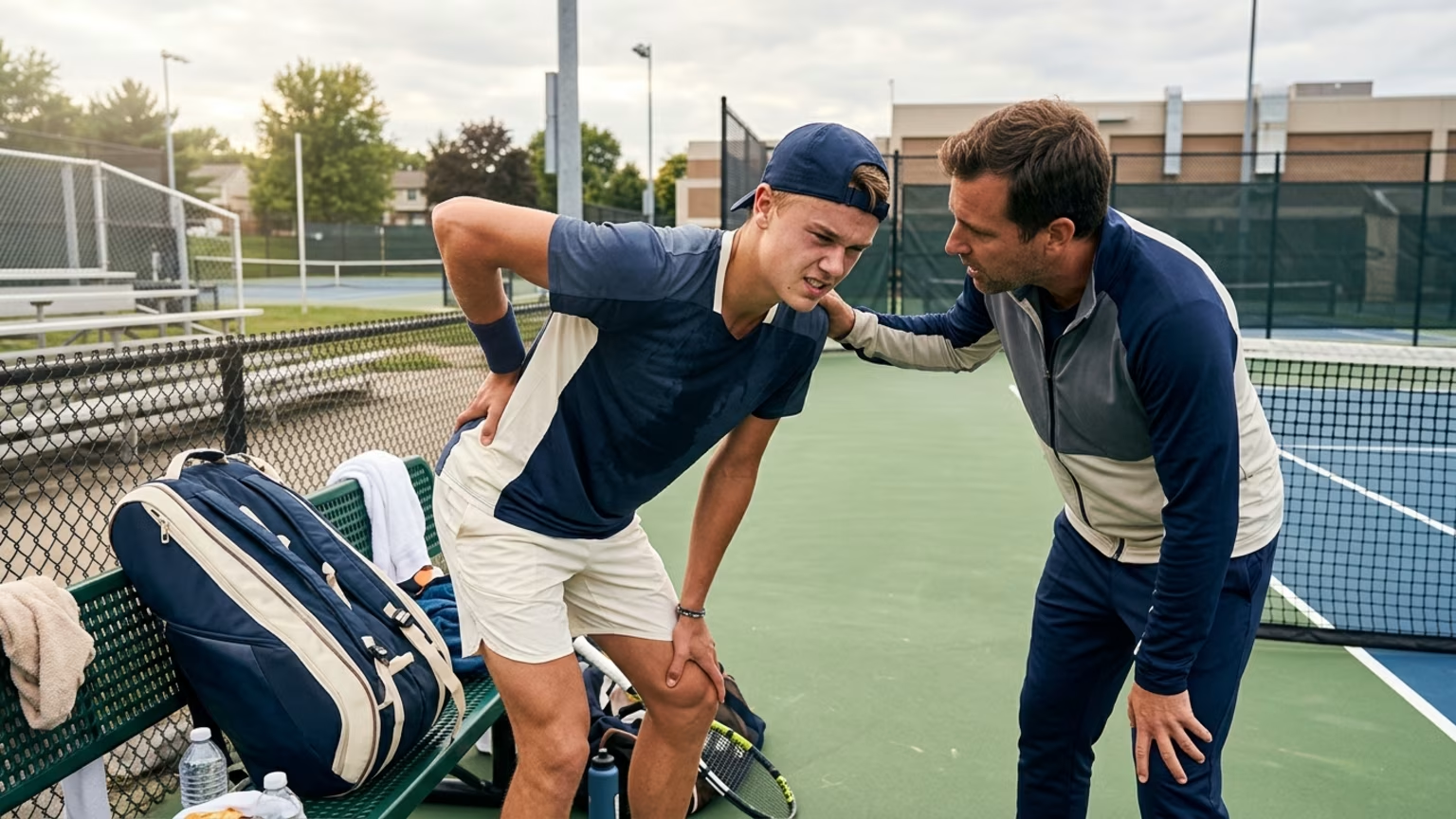
Holger Rune withdrew from the European Open with a back problem. The facts behind his decision and a grounded perspective for recreational players.

The Dink’s October 17 guide emphasizes deep returns, ball-height decisions and positioning against faster pickleball opponents.

A new report outlines padel and tennis gear trends. Learn how to assess adjustable rackets, sensor feedback and smart-court claims.
Read practical guidance for better movement, smarter preparation and a game that keeps working for you.
explore the Blog
