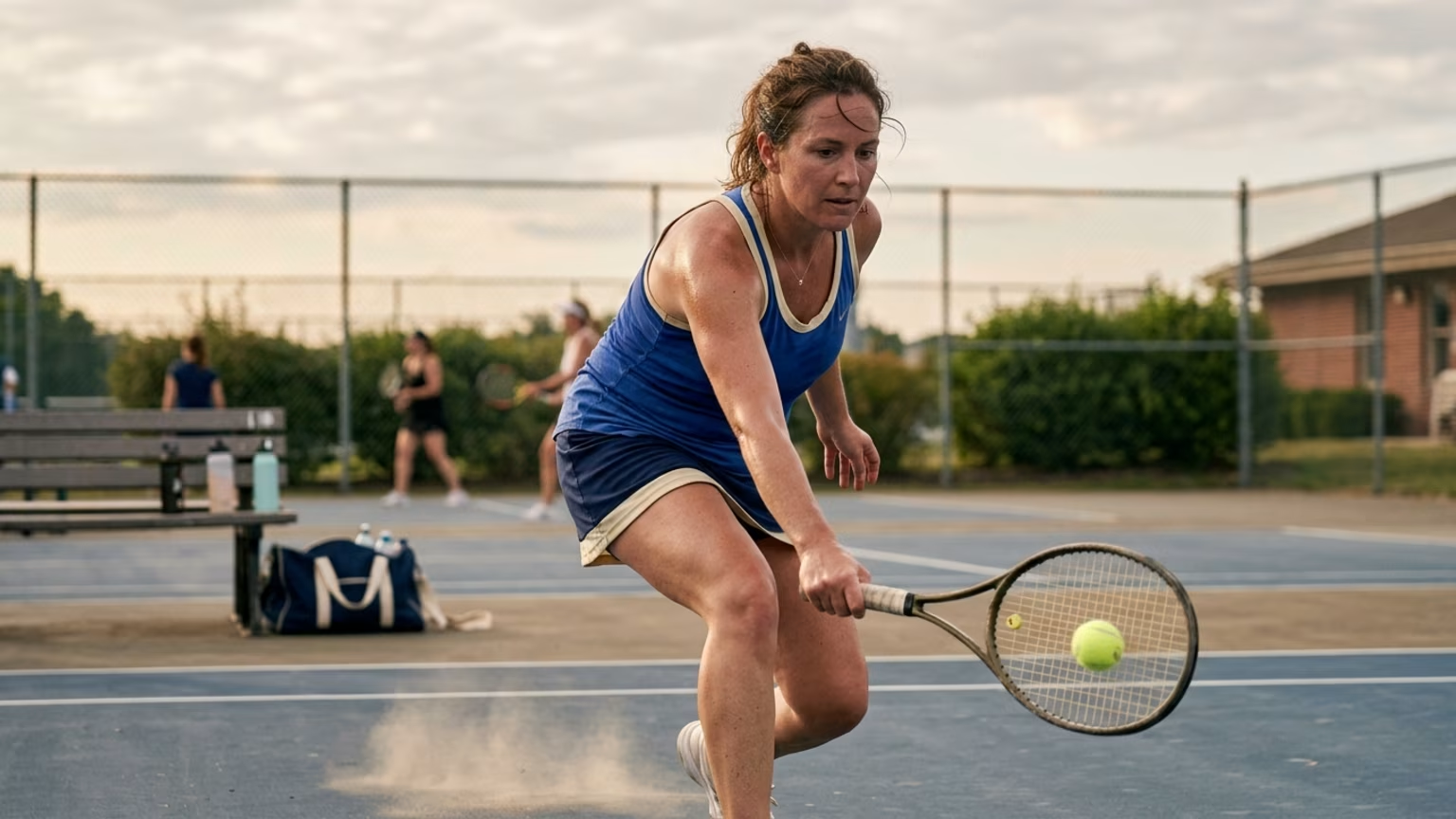

Discover a practical framework for balancing intense match play with low-intensity active recovery sessions to keep you healthy and on the court for life.




You walk onto the court with freshly tied shoes, a new overgrip, and a clear two-hour block for your league match. The air is crisp, your warm-up feels sharp, and your baseline energy is entirely normal. This is the traditional approach to managing your schedule as an adult recreational player. You show up with intention, execute your strategic game plan, and play the competitive session exactly as you planned it.
High-intensity court time aggressively challenges your aerobic conditioning, decision-making skills, and explosive capabilities. This rigorous format reliably contributes to common weekly activity targets. For adults aged 18 to 64, public health guidance recommends at least 150 minutes of moderate activity or 75 minutes of vigorous activity each week. The guidance also advises incorporating major muscle strength work on two days. A grueling competitive singles match serves as a massive deposit into that vigorous activity bucket.
You should confidently commit to the full competitive session when your sleep is adequate and you have no meaningful joint pain. The weather must also be highly manageable for intense physical exertion. Environmental stress should never be treated as a misguided test of mental toughness. The Centers for Disease Control and Prevention recommends seeking shade, taking breaks, and moving outdoor activity to cooler times when heat risk is high.
Proper physical preparation ensures you can safely complete these highly demanding matches. The United States Tennis Association recommends beginning hydration long before competition and drinking continuously during play. This specific guidance differentiates between lighter and heavier sweaters, highlighting that individual hydration needs naturally vary. When the conditions are safe and your body feels ready, the full match remains a brilliant cornerstone of a competitive racquet sports routine.
When your weekly schedule is packed or cumulative fatigue sets in, the answer is not automatically a completely sedentary rest day. The modified session offers a highly flexible alternative that keeps you moving well. Instead of enduring a grueling match, you substitute 20 to 40 minutes of easy hitting. This involves cooperative rallies, a purely conversational pace, and a deliberate lack of scorekeeping pressure.
This intelligent option bridges the gap between total inactivity and a grueling maximum effort. The National Academy of Sports Medicine distinguishes a full rest day from active recovery. A true rest day removes planned training stress entirely to let your nervous system heal. Active recovery uses easy movement without adding a meaningful physical training challenge. Modifying your court time turns a potentially exhausting workout into a highly effective recovery tool.
Personal experience powerfully reinforces the value of selectively dialing back your weekly intensity. As one of our team members recently noted, "A few years ago, I realized my tennis serve speed was dropping, and my shoulder was constantly throbbing after matches. Instead of pushing through the pain, I took a month to rebuild my mechanics and focus on rotator cuff endurance."
They continued, "I stopped trying to hit flat aces and developed a much heavier kick serve. My win rate actually went up, and my shoulder stopped hurting. Sometimes longevity means outsmarting your own ego on the court."
Choosing to step down the intensity periodically also heavily protects your long-term motivation. A summary of self-determination-theory research links autonomy, competence, and relatedness with greater enjoyment and engagement in physical activity. Giving yourself the choice to hit cooperatively with a friend fulfills that deep need for social connection. It keeps you fully engaged with the sport without requiring you to empty your physical tank every single week.
Modifying a session looks distinctly different depending on the specific mechanical demands of your primary sport. The inherently explosive nature of tennis creates incredibly high peak loads on the vulnerable lower joints and serving shoulder. Swapping a full competitive singles match for cooperative groundstrokes actively prevents repetitive joint strain while preserving your baseline footwork timing. You still thoroughly practice your critical eye coordination without risking sudden muscular inflammation.
Pickleball presents a completely different mechanical challenge built primarily around rapid rapid movements and short sprints. The ease and accessibility of the sport often tempts players into accumulating hours of consecutive open play matches. Replacing an afternoon of competitive open play with targeted dinking drills heavily protects the knees from constant aggressive braking. Building a longevity game plan requires actively managing this subtle court volume creep.
Padel requires intense multidirectional movement and highly complex defensive glass work. The heavy rotation required for aggressive overheads and low defensive lunges can severely tax the lower back over time. A properly modified padel session allows players to practice lob placement and wall positioning at a casual walking pace. This intelligent approach keeps your tactical mind sharp while saving your vital rotational power for actual tournament days.
Regardless of your specific sport, you must clearly recognize when modifying your session is no longer sufficient. One established exercise guide advises adjusting your plan when pain persists, performance declines, or fatigue heavily disrupts daily life. You must never attempt to train through sharp or worsening joint pain. University of Wisconsin Milwaukee heat-safety guidance lists dizziness, headache, cramps, and an unusually rapid heart rate as major warning signs. Confusion or a total failure to sweat indicates a potentially serious medical emergency requiring immediate attention.
When comparing the full competitive match to the modified easy session, the low-intensity alternative is the clear winner for athletic longevity. Hard competitive play absolutely provides the physical stimulus needed for peak match fitness. However, the consistent willingness to modify your schedule is what actually keeps adult players off the physical therapy injury list year after year.
You cannot possibly sustain a rigid playing schedule if every single court outing leaves you physically depleted. Balancing intense match play with sustainable strength programs requires intelligently managing your total weekly physiological stress. Swapping a highly demanding match for easy cooperative hitting allows you to accumulate hours on court without overloading your vulnerable joints. It definitively proves that smart consistency matters far more than blind weekly intensity.
The pressure to play perfectly every time you step onto the court often leads to severe mental burnout. Allowing yourself the freedom to hit softly on a tired Tuesday ensures you will still be healthy for your league match on Saturday. The most successful adult players clearly recognize that their physical energy naturally fluctuates based on normal life commitments. Adjusting your exertion levels to safely match your daily physical capacity is the true mark of an experienced athlete.
True court performance for adult recreational players is measured in healthy decades of play rather than single set victories. Adapting your weekly court schedule around real life demands is the smartest tactical play you can possibly make. The evercourts team knows that actively listening to your body will always be your absolute greatest competitive advantage.
Follow Evercourts for practical insights on tennis, pickleball and padel performance, movement, recovery and healthy ageing. Stay connected for new articles, research-led guidance and ideas to help you play well and keep playing for years.


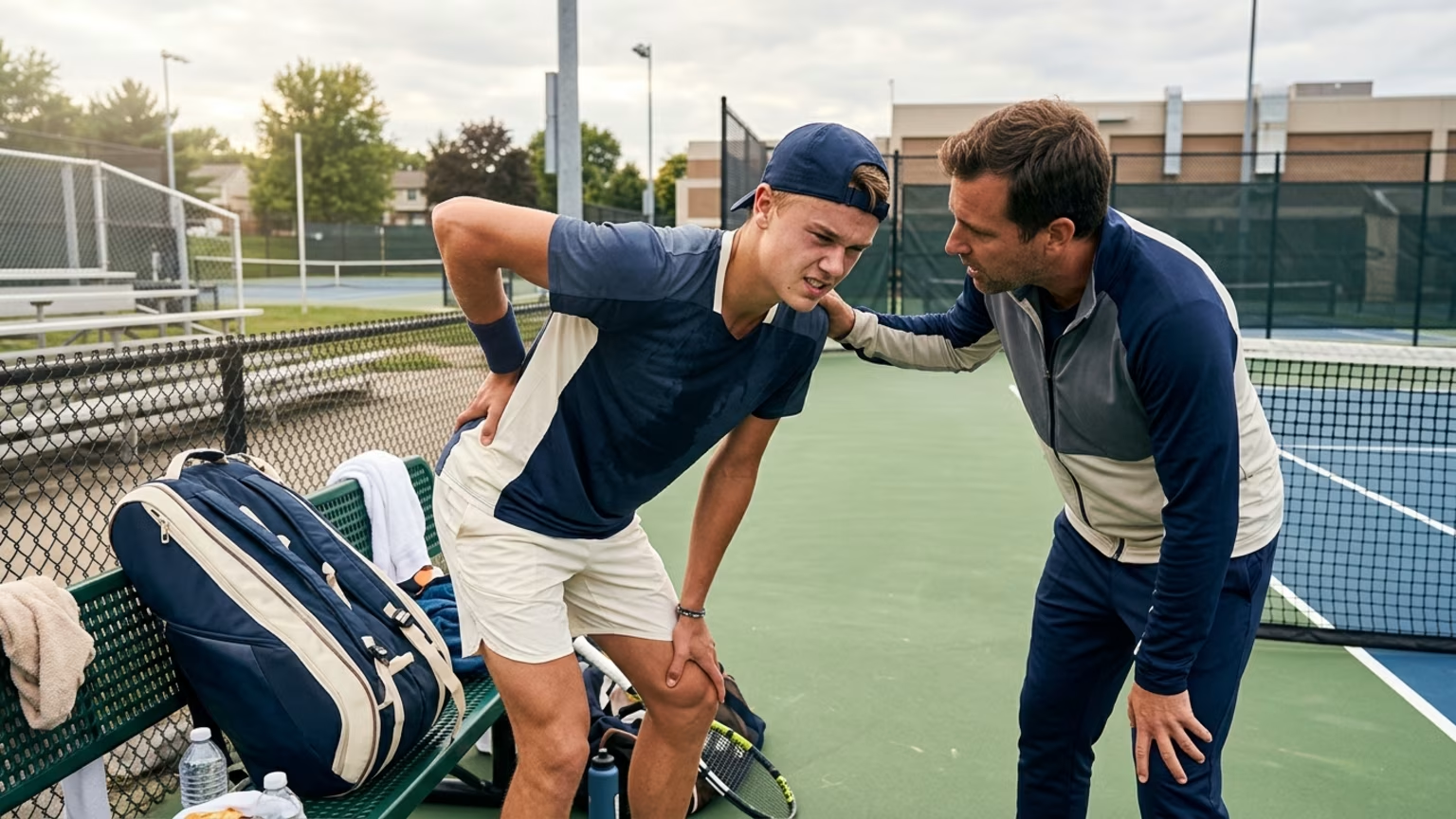
Holger Rune withdrew from the European Open with a back problem. The facts behind his decision and a grounded perspective for recreational players.

The Dink’s October 17 guide emphasizes deep returns, ball-height decisions and positioning against faster pickleball opponents.

A new report outlines padel and tennis gear trends. Learn how to assess adjustable rackets, sensor feedback and smart-court claims.
Read practical guidance for better movement, smarter preparation and a game that keeps working for you.
explore the Blog
