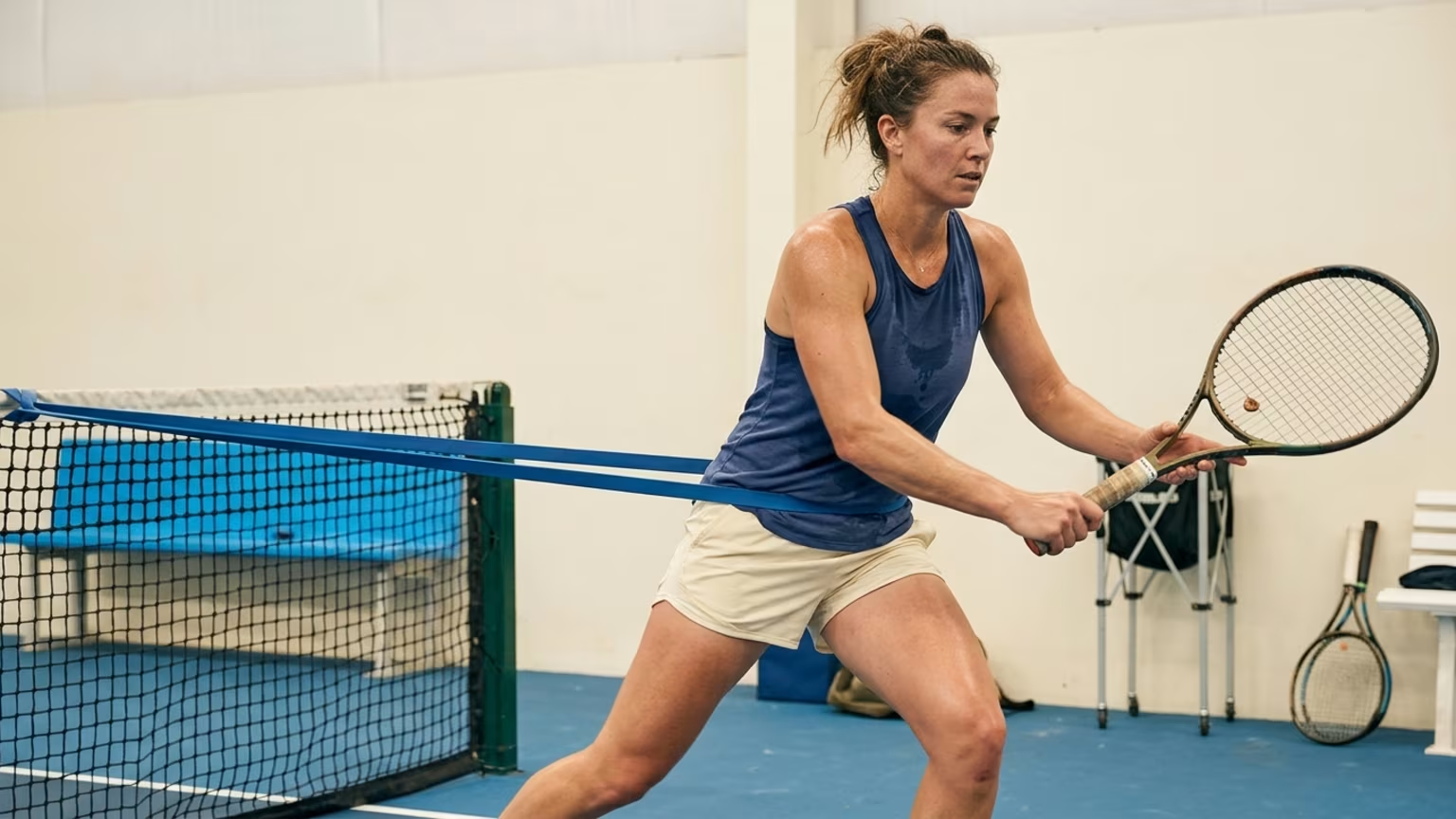

Learn how moderate resistance training and functional movements build the specific strength required for durable racquet sports performance.




Chasing a heavier bench press will not fix your late-match footwork. The gym habits you built decades ago often fail to translate to the specific demands of modern racquet sports. In July and August 2026, researchers published several major reviews examining how older adults respond to different resistance training interventions. These findings clarify exactly what players need to maintain athletic longevity on the court.
A wave of sports science publications recently provided fresh clarity on healthy aging and strength preservation. A systematic review published in July 2026 focused on older adults experiencing age related loss of strength. This common condition is formally known in clinical settings as dynapenia. The researchers found that moderate and high intensity resistance training is highly effective for improving functional performance and reducing strength decline.
Another July 2026 meta-analysis summarized by PEDro examined physical function in older adults. The analysis confirmed that regular resistance training significantly improved handgrip strength and lower-limb force. It also improved balance, gait speed, and stair-climbing ability across the studied populations. These are the exact physical traits required to push off for a wide volley or change directions during a baseline rally.
A subsequent systematic review in August 2026 expanded on these foundational concepts. Researchers evaluated eccentric training against traditional resistance protocols to measure outcomes across strength, power, and functional performance. These ongoing studies align perfectly with established World Health Organization guidelines. The WHO explicitly recommends muscle-strengthening activity that involves all major muscle groups on at least two days per week.
These verified findings offer a refreshing perspective for older adults who feel intimidated by heavy weightlifting. The research confirms that you do not need to lift massive weights to see measurable improvements in your physical function. Consistent application of moderate resistance forces your muscles to adapt and grow stronger over time. This scientific consensus gives racquet sports players a clear mandate to prioritize sustainable habits over extreme gym challenges.
Building a routine around these scientifically validated principles yields far better results than random gym workouts. You do not need to train with professional intensity to see significant improvements in your court movement. Consistent exposure to moderate resistance is often enough to preserve the muscle mass required for competitive play.
Professional athletes structure their entire week around a heavily periodized conditioning schedule. Adult recreational players do not have the time or the recovery capacity to manage a professional workload. You must focus entirely on movements that actually help you hit a tennis ball, reach for a pickleball drop, or dig out a low padel shot. The ultimate goal is durable performance rather than impressive weightlifting numbers.
General fitness routines often prioritize linear movements like standard squats or stationary presses. Racquet sports require you to move laterally, rotate violently, and stop abruptly while maintaining your balance. The WHO guidance notes a key difference between basic general muscle strengthening and multicomponent activity for older adults. This multicomponent approach combines functional strength with balance-oriented work to support dynamic movement. Incorporating routine balance work into your schedule makes a massive difference in how well you stop and start.
In our experience at evercourts, fatigue management dictates your movement quality far more than sheer physical exertion. "I used to think a tough conditioning block was the only way to improve my court endurance. Then I started tracking my sleep. I noticed that on days I slept less than six hours, my reaction time at the net was noticeably sluggish, and I felt gassed by the second set."
We adjusted our approach to prioritize readiness over pure workout volume. "Prioritizing consistent rest did more for my late match stamina than any extra sprints ever did. Recovery is the true foundation of performance." You must view your court sessions and gym work as a single interconnected system rather than competing priorities. When you understand how aging changes racquet sports performance, you can prioritize rest and functional training over complete exhaustion.
A practical strength framework for racquet sports focuses heavily on the lower body. You need lower-limb strength to brake abruptly and accelerate toward short balls without hesitation. Developing the capacity to decelerate safely is just as important as the ability to sprint forward. Eccentric training and controlled step-downs help your muscles handle the violent stops required on hard courts.
Strong legs also provide the stable base required for consistent shot execution during long rallies. When your lower body fatigues, you inevitably start using your arm to generate pace. This mechanical breakdown places unnecessary stress on your elbow and shoulder joints. Building resilient leg strength ensures you can maintain proper technique throughout an entire three-set match.
Trunk control is equally critical because it allows you to transfer force efficiently and resist unwanted rotation. Your midsection must brace against the impact of the ball while simultaneously driving your swing. Traditional gym exercises like generic sit-ups rarely mimic the rapid twisting required to hit a heavy cross-court forehand. You should incorporate exercises that challenge your core in multiple planes of motion.
The ability to resist rotation is often overlooked in traditional abdominal routines. Anti-rotation exercises teach your core musculature to stabilize your spine when you are pulled wide off the court. This stability is absolutely vital for players who want to avoid lower back stiffness after a busy weekend. A strong trunk essentially acts as a protective cylinder for your spine during explosive movements.
Your upper body training should prioritize shoulder maintenance and grip capacity. The recent reviews highlight how crucial handgrip strength remains as you age. A weak grip makes paddle control difficult and forces your elbow and shoulder to absorb more shock upon impact. You can build reliable grip endurance through loaded carries or by using thicker handles during your workouts.
Shoulder health relies heavily on the small stabilizing muscles of the upper back. Heavy bench presses do very little to protect your rotator cuff from the repetitive stress of serving. You must incorporate pulling movements and external rotation exercises to balance the forward posture typical of racquet sports. Healthy shoulders allow you to swing freely without constantly worrying about morning soreness.
The baseline requirement for healthy aging is surprisingly straightforward. The WHO advises that adults should complete strengthening activities on a minimum of two days a week. We recommend managing your weekly strength training and court time by separating heavy resistance work from intense match days. Stacking your gym sessions properly ensures you have fresh legs when it matters most.
Many adult players mistakenly cram a heavy leg session and a hard league match into the same 24-hour window. Spacing these efforts out preserves both muscle function and joint health over the long term. This balanced approach helps you meet the WHO activity guidelines without compromising your weekend tournament readiness. It is entirely possible to build significant functional strength without feeling permanently sore.
Adapting your schedule requires an honest assessment of your current physical capacity and court commitments. If you play competitive matches three times a week, your gym sessions must focus on maintenance and mobility. If you are in an offseason period, you can safely increase the intensity of your resistance training. The most effective athletic longevity plan is the one you can sustain consistently throughout the calendar year.
Tracking your progress is just as important as showing up for your scheduled workouts. You do not need complex spreadsheets to monitor your baseline strength improvements. Simply paying attention to how your legs feel during the third set of a tough match provides excellent feedback. When your recovery improves and your late-match movement feels sharper, you know your two weekly gym sessions are working.
Over the next few seasons, expect adult training programs to shift away from generalized fitness routines. Players will increasingly adopt regimens that mimic the acceleration, deceleration, and rotational demands of their specific sport. The days of evaluating athletic readiness solely by stationary barbell lifts are coming to an end.
As sports science continues to highlight the value of multicomponent strength work, racquet sports players will build routines that actually translate to their weekend matches. Chasing a heavier bench press might feel rewarding in the gym. True athletic longevity comes from building the strength to reach, stop, and swing confidently for years to come.
Follow Evercourts for practical insights on tennis, pickleball and padel performance, movement, recovery and healthy ageing. Stay connected for new articles, research-led guidance and ideas to help you play well and keep playing for years.


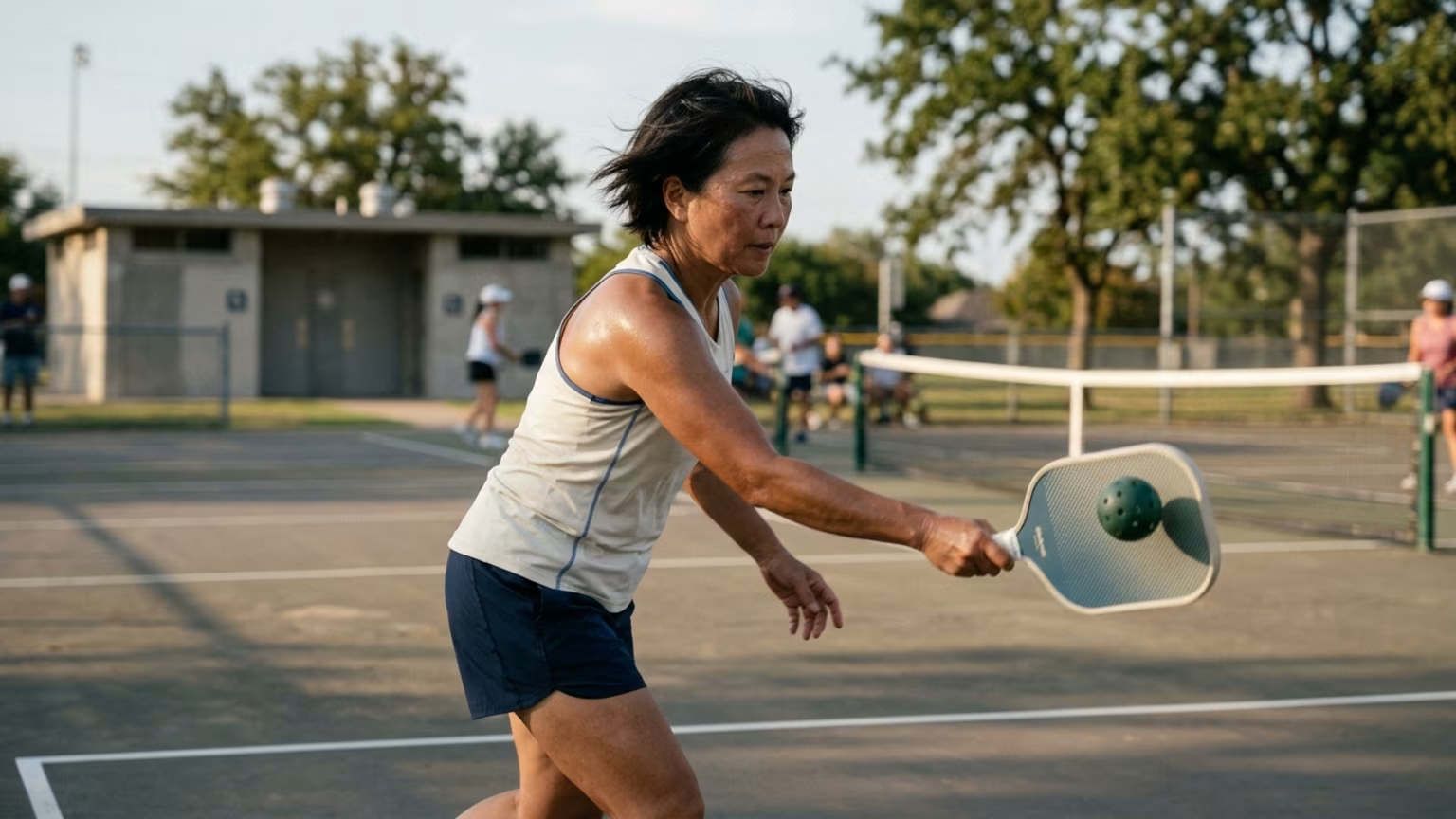
A recent live-play test of a silent pickleball highlights its value for practice, but standard balls still perform better for match play and power control.

An evidence check on sports supplements like tart cherry juice. Learn why racquet sports players should prioritize core nutrition over functional foods.
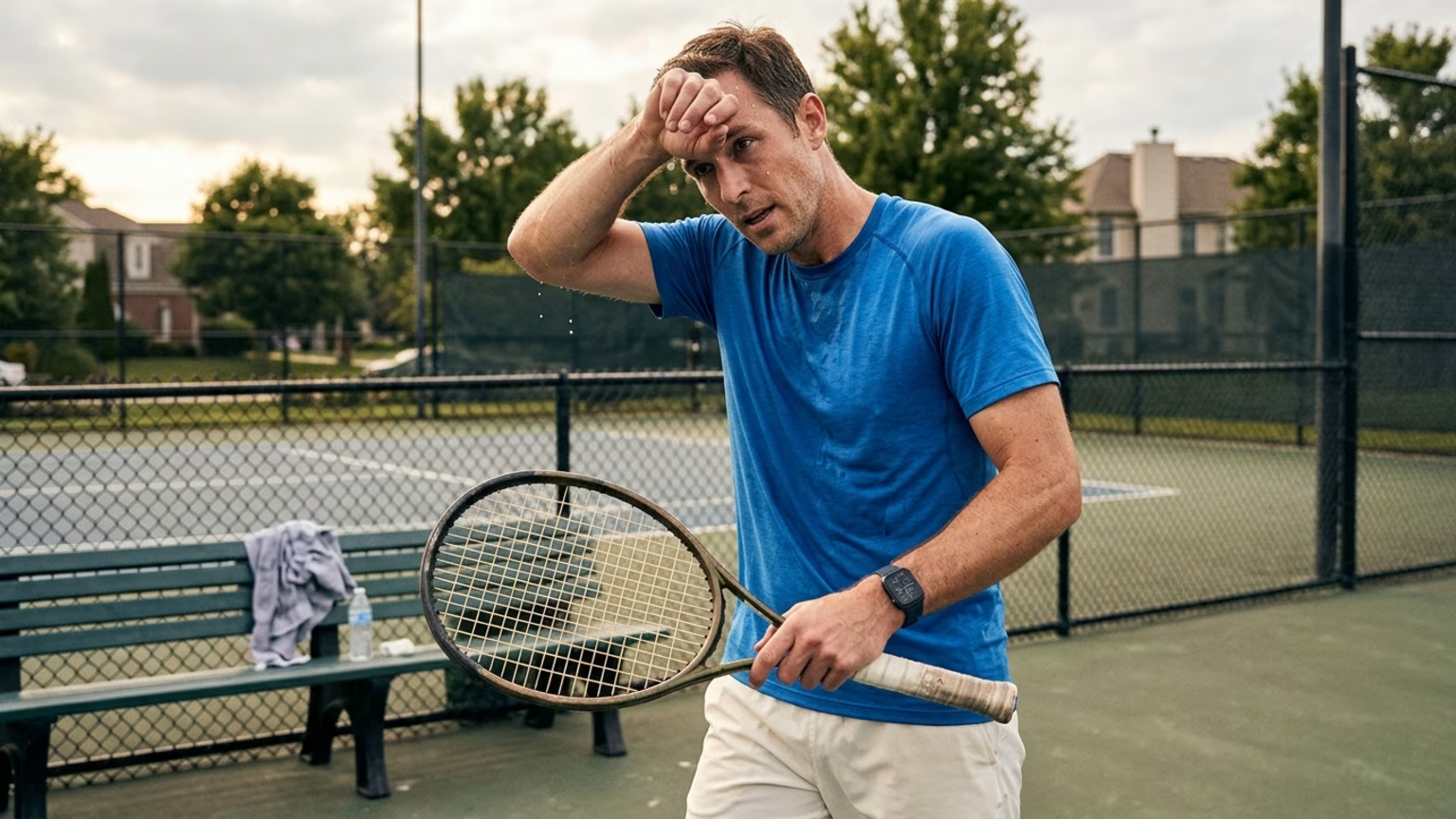
In late 2026, Oura analyzed wearable data to see how recreational tennis impacts heart health and recovery. Learn what this means for your athletic longevity.
Read practical guidance for better movement, smarter preparation and a game that keeps working for you.
explore the Blog
