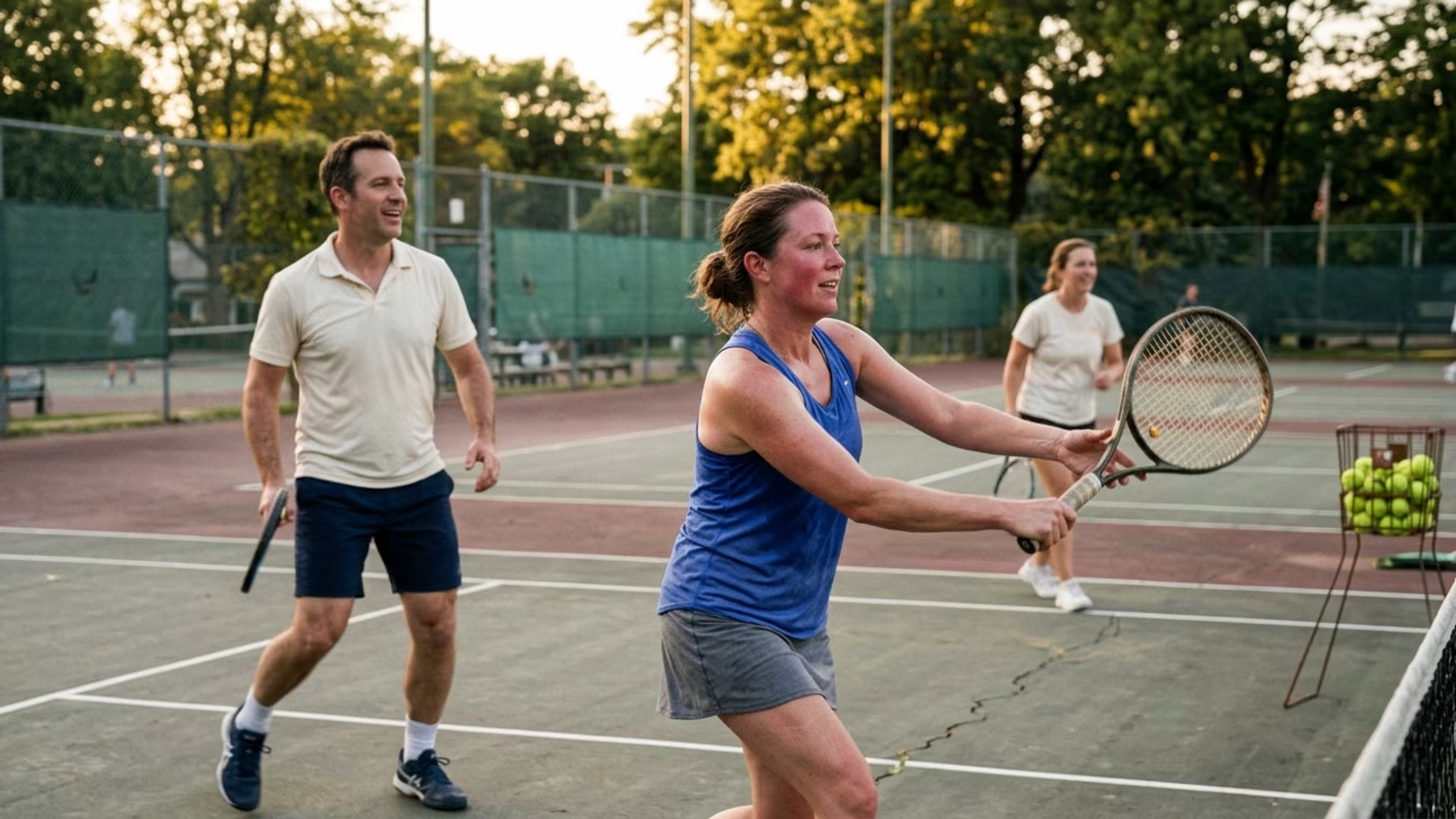

Learn how to evaluate a tennis, pickleball, or padel club based on coaching quality, facility maintenance, and long-term support for your athletic longevity.




Sarah scanned the crowded facility, realizing she could not find a single open court or a partner who matched her newly adapted playing pace. The United States Tennis Association reports a 33% participation growth over four years, explaining the severe congestion at local venues. However, finding a club that actually supports your long-term court life requires evaluating much more than basic court availability and monthly membership fees.
We often underestimate the immense physical stress our bodies endure during a standard match. Every time you step onto the court, you subject your joints to rapid decelerations, deep lateral lunges, and explosive overhead extensions. These repeated actions create a heavy workload for your ankles, knees, and shoulders, particularly as we get older. A quality facility must act as a support system to help you manage this constant physical toll.
I remember finishing a tough two hour padel match on a cold Tuesday night and waking up the next morning feeling like my lower back was locked in concrete. For a long time, I just accepted this as the price of playing hard in my forties. But once I started spending just ten minutes on targeted hip mobility before heading to the club, the stiffness almost completely vanished. It taught me that we do not have to accept pain as a default state of aging.
This personal realization highlights why your chosen facility matters so much. A club that provides adequate space for a proper routine makes a massive difference in how your body feels. Evaluating a club means looking for dedicated warm-up spaces that improve court performance, knowledgeable staff, and well-maintained surfaces. When you prioritize a supportive environment, you actively invest in your athletic longevity.
The demand for playing spaces is expanding rapidly across all major court activities. In 2025, more than 27.3 million people played tennis in the United States, with almost 40% playing in public parks. Meanwhile, figures attributed to the Sports & Fitness Industry Association note that U.S. pickleball participation reached 24.3 million players in 2025. That same report highlights how this participation increased 22.8% from 2024 and 171.8% over three years.
This massive influx places heavy pressure on both public parks and private facilities. The U.S. pickleball location database Pickleheads reportedly added more than 2,300 places to play in 2025, bringing the total to 18,258 locations. Padel is seeing similar international momentum, with one industry report stating that 7,898 courts and 4,969 clubs were added globally in 2025. This rapid construction brought the worldwide total to 58,334 courts, completely changing the landscape for players seeking premium access.
Understanding these figures helps us recognize why court availability alone is an inadequate measure of a club. The USTA’s strategy connects playable hours and facility upgrades directly to technology and programming. They also emphasize coaching and proper equipment as vital components of sustainable growth. You need a facility that uses effective booking technology to handle this volume fairly, ensuring you can actually play when your schedule allows. This reliable access is a key part of building a tournament calendar that protects your recovery. One club-management industry source argues that community and matchmaking features should complement these booking tools to maintain player engagement.
We also must consider the health metrics tied to long-term play. A 2018 observational study associated racquet-sport participation with a lower risk of cardiovascular-disease mortality and a 47% lower risk of all-cause mortality. Furthermore, a recent study of an eight-week pickleball program reported improvements in functional fitness, quality of life, and pre-frailty status among community-dwelling older adults. Conversely, a study reviewed by the Orthopaedic Carolina Research Institute found that more than eight in ten pickleball-related Achilles ruptures occurred in patients over 50. This data proves that joining a club with structured programming and proper age-aware coaching is essential for staying healthy.
Tennis, pickleball, and padel each present unique physical challenges that a great facility must accommodate. Tennis demands exceptional endurance and the ability to stabilize the body across a massive playing surface. The sport places heavy rotational stress on the core during groundstrokes, alongside large impacts on the lower body during serves. The USTA set a goal to reach 35 million players and 350,000 courts by 2035, meaning facilities must scale up their physical footprint carefully. A capable tennis club will offer structured adult pathways, like the USTA’s 2025 League National Championships. That specific championship provided organized divisions for ages 18-and-over, 40-and-over, and 55-and-over.
You should also evaluate how a club maintains its physical infrastructure to support these varied movements. Players can ask whether a tennis facility follows recognized guidelines or has undergone independent court assessment. Understanding the surface quality helps you determine if the club prioritizes player safety and joint health over minimal maintenance costs.
Pickleball condenses explosive, multi-directional movement into a smaller space, demanding rapid weight shifts. Because of the quick starts and stops, players place severe stress on their calves and Achilles tendons. We know that older recreational players face meaningful injury risks when they return to explosive movement without adequate preparation. Therefore, a good pickleball facility will prioritize progressive instruction and warmups rather than funneling beginners into high-intensity open play. Look for clubs that encourage players to substitute appropriate exercises for racquet sports training to prepare the body for these sudden movements.
Padel introduces heavy reliance on glass walls, forcing players to absorb low impacts while constantly twisting to retrieve balls. With separate estimates placing global padel participation at 19.4 million players and up to 35 million active players, many clubs are rushing to install courts. A sustainable padel venue will focus heavily on proper turf maintenance and sand distribution to prevent slipping. You should ask management how often they sweep the turf and check the mesh fencing for safety. Evaluating these maintenance details ensures the facility protects your joints from unpredictable traction.
Across all three sports, a club must support players who want to adjust their intensity over time. This means finding a venue that offers well-structured doubles options, returning-from-injury pathways, and coaches who understand load management. When reviewing a facility, checking their approach to choosing the right competition events can reveal how well they cater to adult recreational players. A club that offers varied, age-appropriate leagues will keep you engaged and healthy for years to come. Ultimately, the best facilities understand that athletic longevity relies on adaptable programming just as much as physical court availability.
Securing a club membership is an investment in your physical capabilities and your social life. Instead of focusing entirely on monthly fees or the sheer number of courts, evaluate the facility based on its ability to support your long-term athletic journey. You need an environment that provides fair access, capable coaching, and a culture that welcomes players at every stage of life. A supportive venue will help you modify your game safely when challenges arise, rather than pushing you out.
To make the right choice, you must test the prospective club under realistic, everyday conditions before signing a contract. Schedule a visit during peak evening hours to observe how the booking system handles high traffic and whether players can actually find open space. Ask the coaching staff about their pathways for returning players, and check if the facility actively promotes social integration for new arrivals. By asking these targeted questions today, you can find a club that you will still look forward to visiting five years from now.
Follow Evercourts for practical insights on tennis, pickleball and padel performance, movement, recovery and healthy ageing. Stay connected for new articles, research-led guidance and ideas to help you play well and keep playing for years.


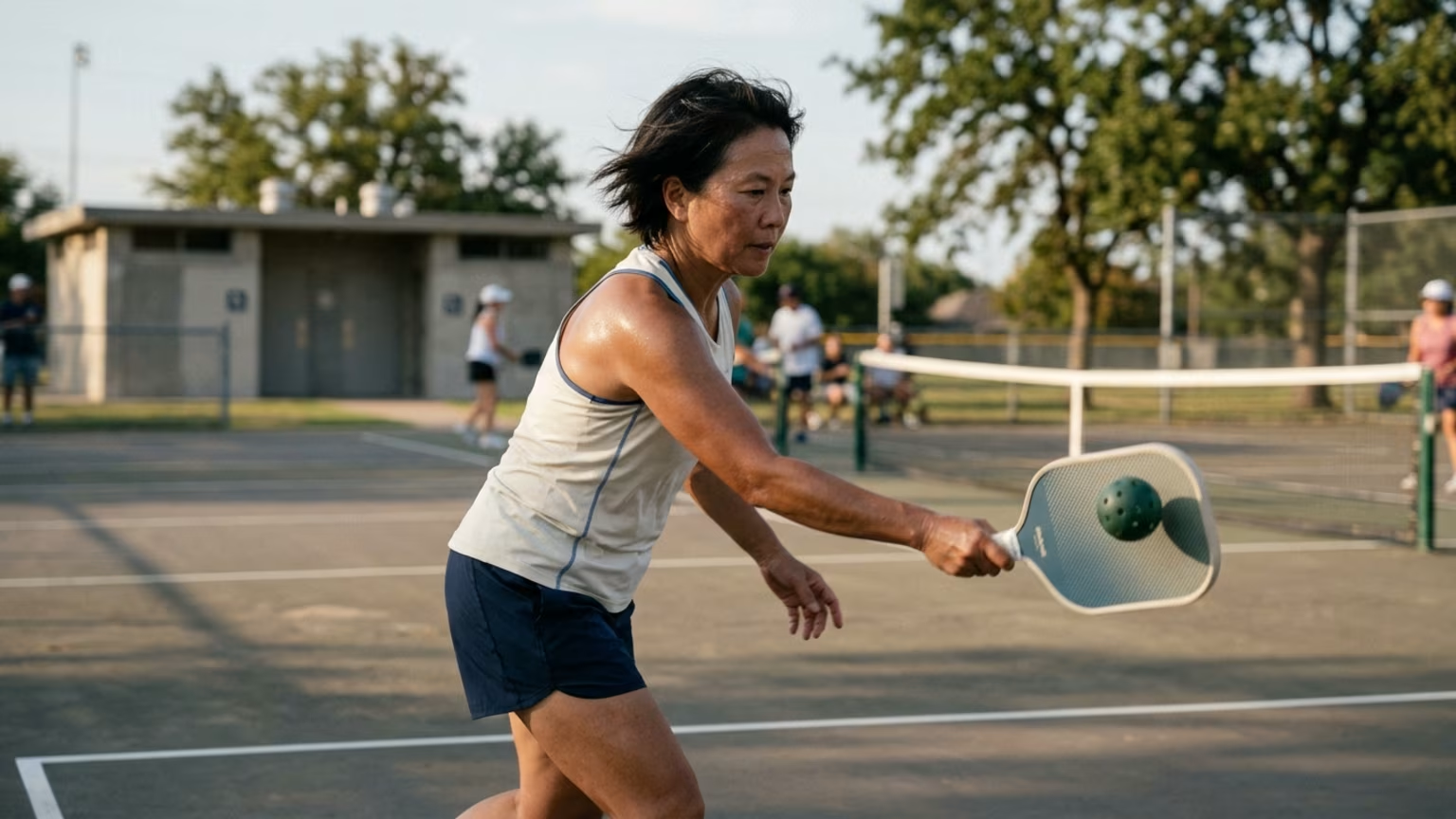
A recent live-play test of a silent pickleball highlights its value for practice, but standard balls still perform better for match play and power control.

An evidence check on sports supplements like tart cherry juice. Learn why racquet sports players should prioritize core nutrition over functional foods.
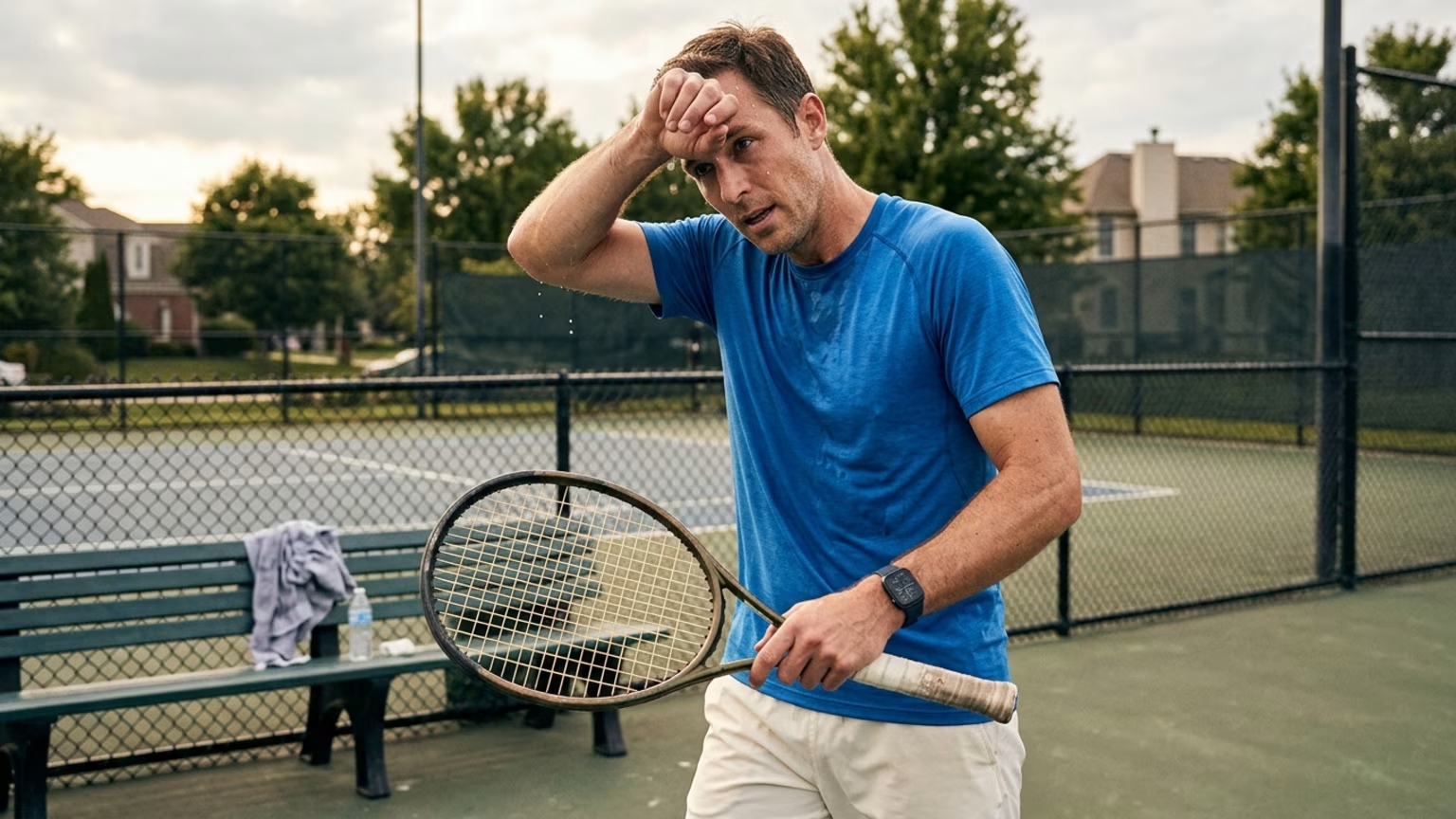
In late 2026, Oura analyzed wearable data to see how recreational tennis impacts heart health and recovery. Learn what this means for your athletic longevity.
Read practical guidance for better movement, smarter preparation and a game that keeps working for you.
explore the Blog
