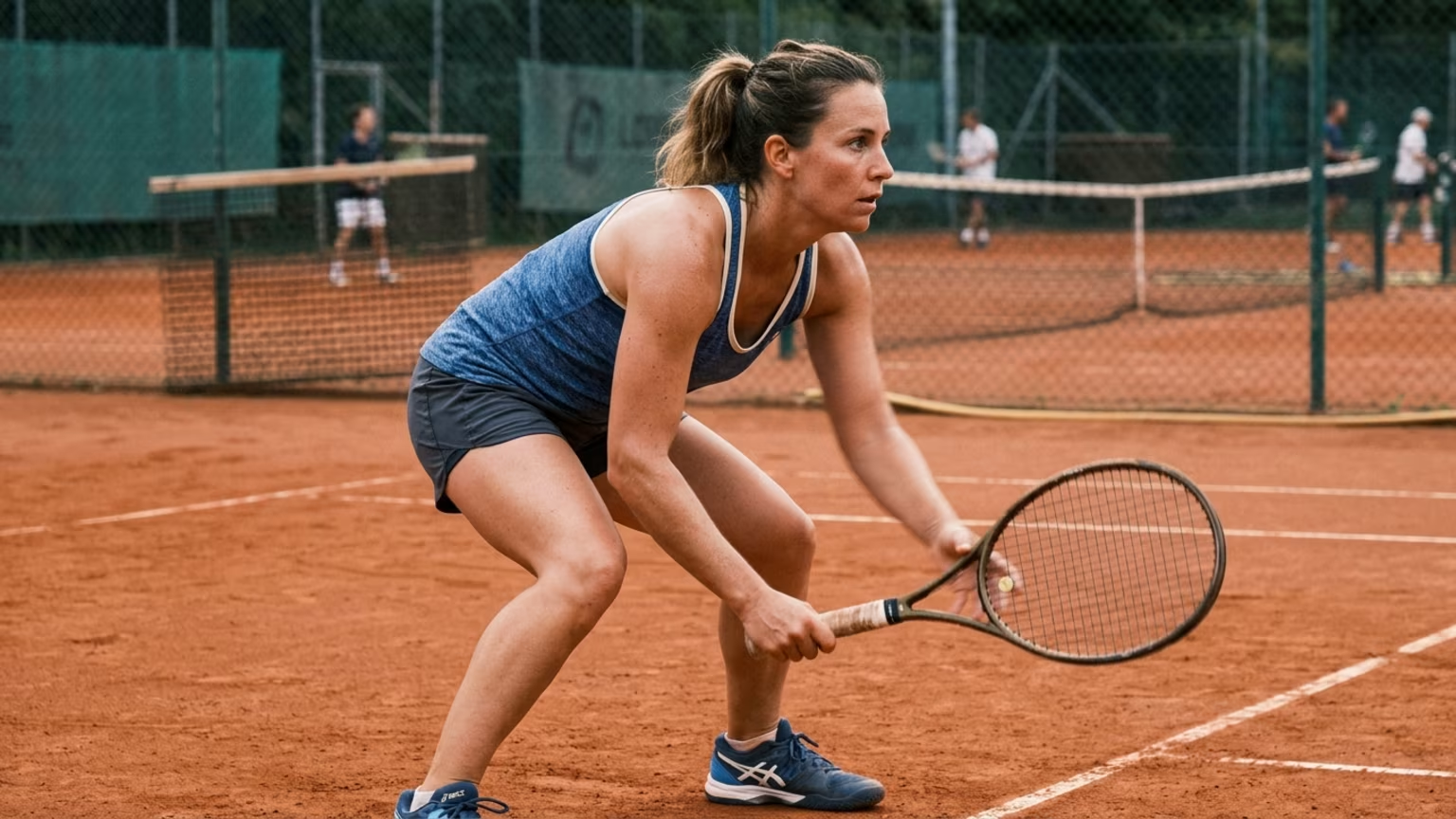

Raw reaction time is not enough for older racquet sports players. Learn to read early physical cues and anticipate shots to improve your athletic longevity.




Four stages define the entire process of anticipating a shot in racquet sports. Mastering these steps allows you to read the game effectively rather than scrambling late. You have heard it a million times: getting older means your reaction time will inevitably ruin your court play. Here is why that is outdated.
Reaction speed is only the final fraction of any movement sequence. Real athletic longevity comes from training your brain to recognize patterns early. Players who focus on anticipation can consistently arrive at the ball on time. This proactive approach replaces desperate lunges with calm and calculated movement.
Players who solely rely on quick hands eventually hit a performance ceiling. This ceiling becomes more obvious as you progress to higher levels of competition. Older adults often find themselves easily beaten by younger players when relying entirely on raw speed. Shifting your focus toward cognitive prediction solves this age gap.
For decades coaches treated court speed as a pure measure of youthful reflexes. Players were told to bounce tennis balls off uneven surfaces to build faster hands. This advice started because society often links physical decline exclusively to slowing twitch fibers. It is entirely understandable why adult players believe they just need quicker hands.
When passing shots constantly fly by you at the net, it feels like a reflex issue. We all want a simple fix to keep up with faster rallies. However, isolating your reflexes ignores the complex visual information happening during a real match. Speed without accurate context often leads to rushing in the wrong direction.
Many players spend significant time on physical conditioning hoping it will magically improve their net game. They invest in agility ladders or weighted vests to squeeze out a marginal speed increase. While general fitness is crucial, these generic tools do not teach you how to read the actual sport. They build a faster athlete without building a smarter court player.
At evercourts, we know that looking strictly at court speed often hides the real issues. As one team member shared, "I used to think a tough conditioning block was the only way to improve my court endurance. Then I started tracking my sleep. I noticed that on days I slept less than six hours, my reaction time at the net was noticeably sluggish, and I felt gassed by the second set."
"Prioritizing consistent rest did more for my late match stamina than any extra sprints ever did. Recovery is the true foundation of performance." This realization proves that many factors influence how fast we feel on the court. Trying to force speed through generic reaction drills is often the wrong approach entirely.
The research tells a very different story about how court athletes actually process information. A practical anticipation framework can therefore be organized into four stages, according to recent padel coaching material. First, you must establish the opponent's preparation. Next, you identify the racket-face and body-position information available before contact.
The third stage requires you to estimate the most likely shot options. Finally, you choose a movement or response based on those educated guesses. Reading these physical cues gives you a massive head start on the ball. You stop waiting for the ball to cross the net before making your initial move.
Specific postural hints provide excellent clues about an opponent's intentions. An open shoulder position tends to indicate a cross-court shot, according to the padel coaching source. Conversely, a closed shoulder position tends to indicate a down-the-line shot. These subtle body angles appear well before the racket ever meets the ball.
The racket itself provides another crucial layer of predictive information. The same padel coaching source notes that an open racket face may signal a lob or lofted ball. Meanwhile, a neutral or closed face may signal a flatter drive. The padel coaching source calls shoulder position the most reliable of the cues it discusses, while also combining that cue with racket-face angle and footwork.
Understanding these mechanics allows you to improve reaction time by reading the game earlier. This style of play heavily supports healthy aging by reducing unnecessary joint strain. Early preparation always beats late desperation when defending against aggressive shots. Practicing this sequence transforms how your brain handles fast rallies.
Instead of feeling overwhelmed by ball speed, your mind breaks the event into manageable chunks. You start recognizing familiar physical patterns in your regular hitting partners. This mental clarity prevents the frantic scrambling that so often causes sudden injuries. You dictate the pace by arriving early and balanced.
You do not need expensive technology to train these critical anticipation skills. Low-cost solo exercises include bouncing a ball against a wall at varying angles and catching it on the rebound, according to recent accelerometry insights. The changing rebound direction creates an unpredictable visual-motor task without specialized equipment. You simply need a quiet space and a standard ball.
If you play pickleball, wall drills are incredibly effective for building this control. A wall-based pickleball drill recommends standing approximately six feet from a wall and performing successive punch volleys. You begin first at a steady rhythm and then at faster speeds while maintaining control, as outlined in a recent pickleball training article. This specific exercise forces you to manage speed while staying physically balanced.
Partner exercises offer another fantastic way to practice reading early cues. Coaching material recommends a shadow exercise in which a partner performs serving or swing motions without hitting the ball. During this drill, the player calls cross or line before the swing is completed. Making this verbal commitment forces you to trust your visual read.
Working with a partner significantly accelerates your ability to read these physical hints. When your practice partner shadows a swing, you get an isolated view of their body mechanics. You can clearly see how their shoulder rotation correlates with the eventual paddle path. Removing the actual ball flight takes the pressure off and lets your eyes focus entirely on their setup.
Another suggested exercise has the player spend an entire point watching the opponent rather than tracking the ball until contact. The primary goal is noticing preparation and body-language information. A separate pickleball training article breaks fast-play performance into visual processing, decision-making, and movement execution. It recommends drills in which the player must choose among responses such as blocking, punching, or resetting.
Timing your initial movement is just as important as predicting the shot direction. In pickleball, one suggested exercise asks the player to split-step at the opponent's contact rather than after the ball has begun traveling. This allows you to train the first step of your reactions with maximum efficiency. Moving as contact occurs ensures you are balanced when the trajectory is finally revealed.
The New Golden Rule: Do not try to move faster than the ball, but rather learn to read the player hitting it. Chasing pure reflex speed is a losing battle as we gather more years on the court. However, your ability to recognize patterns and read physical cues only gets sharper with experience. This mental advantage is a cornerstone of athletic longevity for any serious player.
Implementing a solid anticipation framework will drastically cut down on court fatigue. To track how these changes impact your body, consider keeping a recovery log. You will likely notice fewer desperate lunges and less lingering joint stiffness. Playing smarter physically protects your body for all your upcoming seasons.
We return to those four crucial stages of anticipation that we discussed earlier. Establishing preparation, reading the racket, estimating options, and choosing a response define great court play. You do not have to settle for feeling slow at the net. Those four stages provide the blueprint for staying highly competitive at any age.
Follow Evercourts for practical insights on tennis, pickleball and padel performance, movement, recovery and healthy ageing. Stay connected for new articles, research-led guidance and ideas to help you play well and keep playing for years.


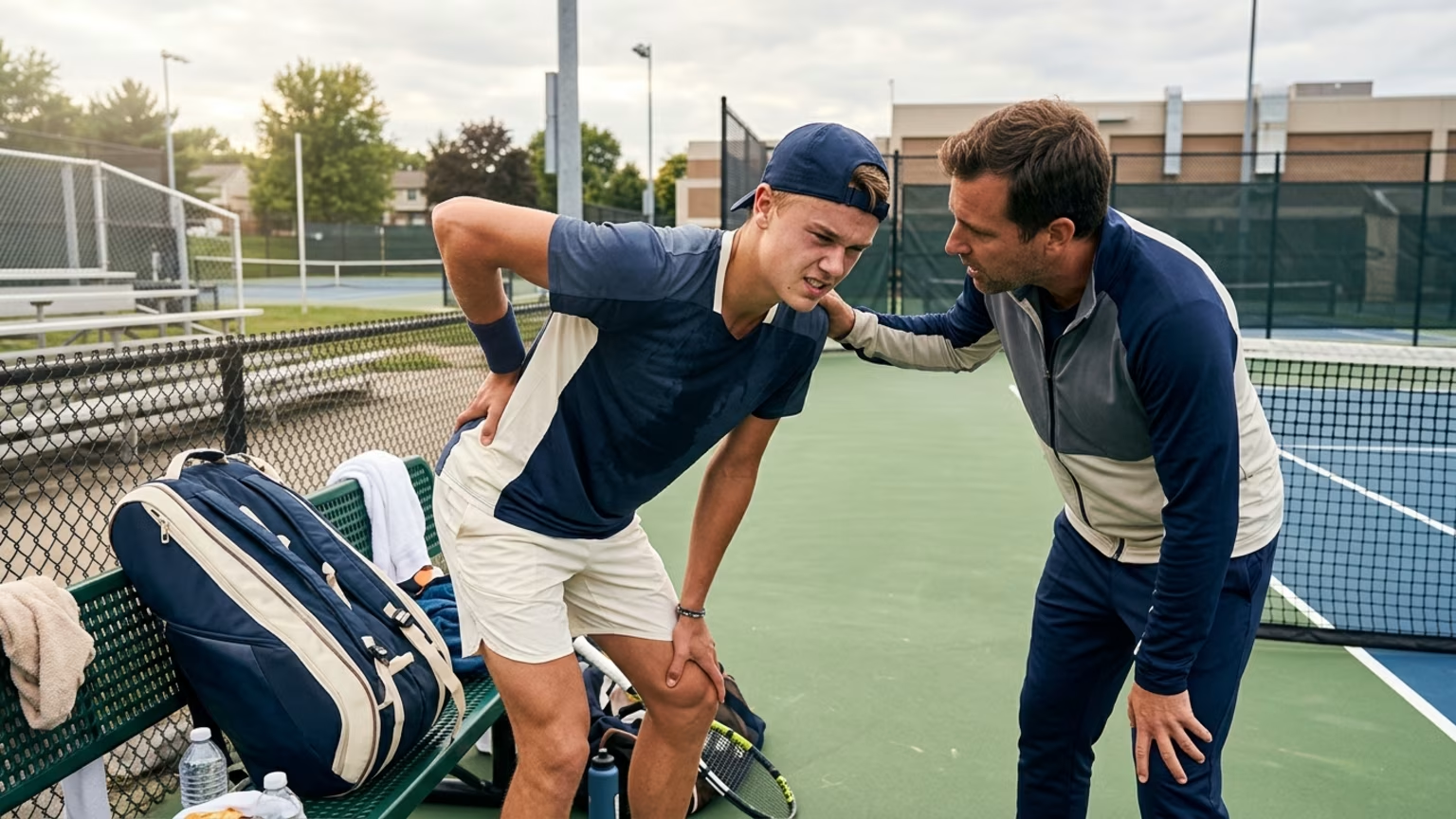
Holger Rune withdrew from the European Open with a back problem. The facts behind his decision and a grounded perspective for recreational players.

The Dink’s October 17 guide emphasizes deep returns, ball-height decisions and positioning against faster pickleball opponents.

A new report outlines padel and tennis gear trends. Learn how to assess adjustable rackets, sensor feedback and smart-court claims.
Read practical guidance for better movement, smarter preparation and a game that keeps working for you.
explore the Blog
