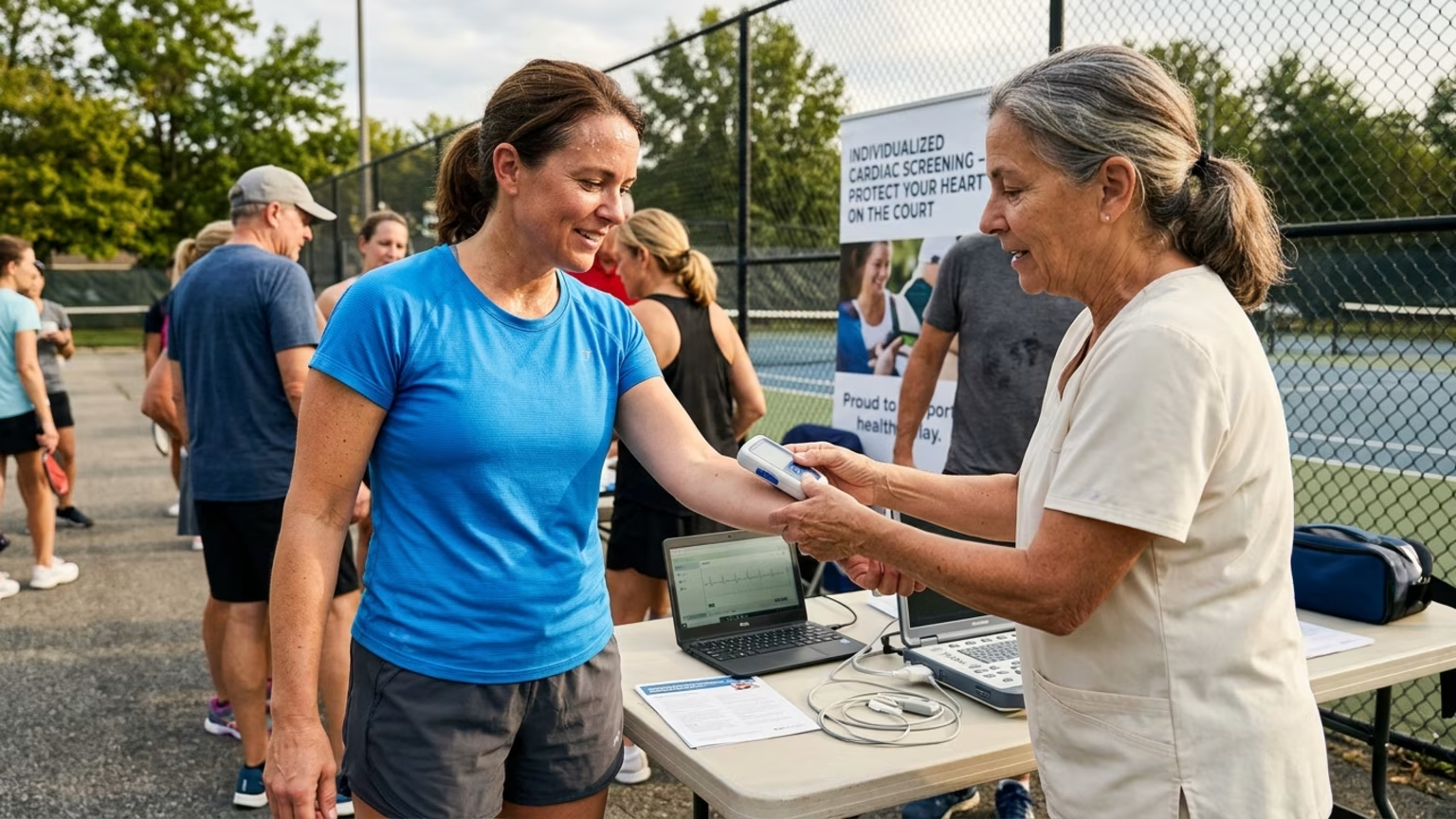

The 2026 EAPC Sports Cardiology symposium highlighted individualized cardiovascular screening and shared decision-making for aging racquet sports players.




On September 1, 2026, the European Association for Preventive Cardiology held its "Sports Cardiology 2026" symposium at the Technical University of Munich. Approximately 190 people attended the event in person or online at Campus Olympiapark. The comprehensive program directly addressed cardiovascular disease in athletes and the process of safely returning to sport. Rather than solely focusing on exercise capacity, the international group examined how to properly manage active players with cardiac conditions.
The Munich symposium highlighted a clear shift toward tailored cardiovascular management. Professor Martin Halle noted that managing cardiovascular conditions in athletes increasingly requires individualized decisions. He also stressed the importance of close cooperation between research and clinical practice. Professor Antonio Pelliccia reinforced this during his keynote address on shared decision-making.
Pelliccia focused on how medical recommendations can be developed jointly with athletes and clinicians. The program bridged scientific evidence with clinical choices for masters athletes. Presenters examined the development of sports-cardiology guidance from recent years. This included reviewing the 2020 European Society of Cardiology recommendations through the 2025 American College of Cardiology recommendations.
The event extensively covered the 2026 EAPC/ACC clinical consensus statement. This key literature details abnormal cardiovascular findings in masters athletes. These conditions include atrial fibrillation, bradyarrhythmias, ventricular arrhythmias, and exercise-induced arrhythmogenic cardiomyopathy. The consensus also addresses coronary atherosclerosis, aortic dilation, and myocardial fibrosis.
The consensus indicates that masters athletes can have a higher prevalence of some cardiovascular abnormalities than less-active peers. This elevated prevalence appears despite these athletes often having very high fitness levels. A contemporary review describes acquired coronary artery disease as a dominant cardiovascular concern in masters athletes. This highlights the need for careful screening as adult players age.
Elite players have dedicated medical teams tracking their workload and heart health. Adult recreational players usually navigate their athletic longevity with much less guidance. Older players often assume that passing a basic physical means they are completely cleared for high-intensity tennis or padel. However, a 2026 review emphasizes that masters-athlete assessment should be individualized and symptom-guided.
This review recommends incorporating cardiovascular-risk assessment and the optimization of traditional risk factors. Experts advise utilizing sport-specific exercise testing and advanced imaging when clinically appropriate. They caution against treating one specific test as a standalone gatekeeper for continued sports participation. Treating new symptoms as a medical issue is essential before returning to intense tournament play.
High fitness does not equal low risk. Many older players report unexplained performance changes or exertional symptoms without knowing how to proceed. The 2026 review advises that many masters athletes with abnormal findings can continue exercising. This requires expert assessment, individualized exercise recommendations, and shared decision-making.
This collaborative approach is not equivalent to automatic clearance for unrestricted competition. It means players must adapt their training based on expert clinical guidance. Even when a cardiac evaluation is reassuring, players must manage their musculoskeletal load carefully. Older athletes need gradual increases in court time to stay healthy.
I remember finishing a tough two hour padel match on a cold Tuesday night and waking up the next morning feeling like my lower back was locked in concrete. For a long time, I just accepted this as the price of playing hard in my forties. But once I started spending just ten minutes on targeted hip mobility before heading to the club, the stiffness almost completely vanished. It taught me that we do not have to accept pain as a default state of aging.
Proper recovery is just as vital as cardiovascular safety. Players can manage their court workload to prevent injuries while staying active. A smart routine ensures safe progression after an abnormal health finding. It also helps preserve long-term mobility on the court.
Observational research strongly associates racquet sports participation with healthy aging. A British cohort of 80,306 adults followed for roughly nine years reported significant longevity markers. Researchers noted a 47% lower all-cause mortality risk among racquet-sport participants compared with non-participants. They also reported a 56% lower cardiovascular-mortality risk for the active group.
These impressive figures represent associations rather than guarantees. They cannot prove that racquet sports alone caused the health difference. However, they certainly reinforce the tremendous value of staying active on the court. Consistent play remains one of the best habits for long-term health.
The increasing popularity of these sports brings fresh challenges for older adults. This is particularly clear in the rapid expansion of pickleball. Reporting based on an analysis of emergency-department data estimated 125,000 pickleball-related emergency-room visits among adults aged 50 and older. This total occurred between 2018 and 2025.
People aged 65 and older accounted for half of those injury visits. Balancing these statistics against the mortality benefits requires a smart approach. Players should focus on choosing racquet sports events wisely and pacing their match play. Consistent preparation can help minimize these physical setbacks.
The trends emerging from the 2026 symposium point toward more nuanced care for adult athletes. The sports medicine community is moving away from blanket exercise restriction for older players. We expect clinical assessments over the coming year to rely heavily on individualized evaluations. This symptom-guided approach will likely replace rigid checklists for pre-participation clearance.
Players stepping up to higher-intensity leagues will benefit from proactive discussions with their clinicians. Shared decision-making allows players to weigh personal goals against known risks safely. Ultimately, the priority remains keeping athletes active through careful medical support. You can find more resources for court athletes to help you manage your performance goals.
Follow Evercourts for practical insights on tennis, pickleball and padel performance, movement, recovery and healthy ageing. Stay connected for new articles, research-led guidance and ideas to help you play well and keep playing for years.


Understand tennis shoulder demands, the role of whole-body preparation, the limits of prevention claims and when persistent pain needs professional attention.
A practical strength framework for tennis, pickleball and padel, with movement-based exercise options, evidence limits and guidance on seeking help.
Why a specialist urges assessment for persistent pain, and how guided tendon rehabilitation differs from resting or playing through symptoms.
Read practical guidance for better movement, smarter preparation and a game that keeps working for you.
explore the Blog
