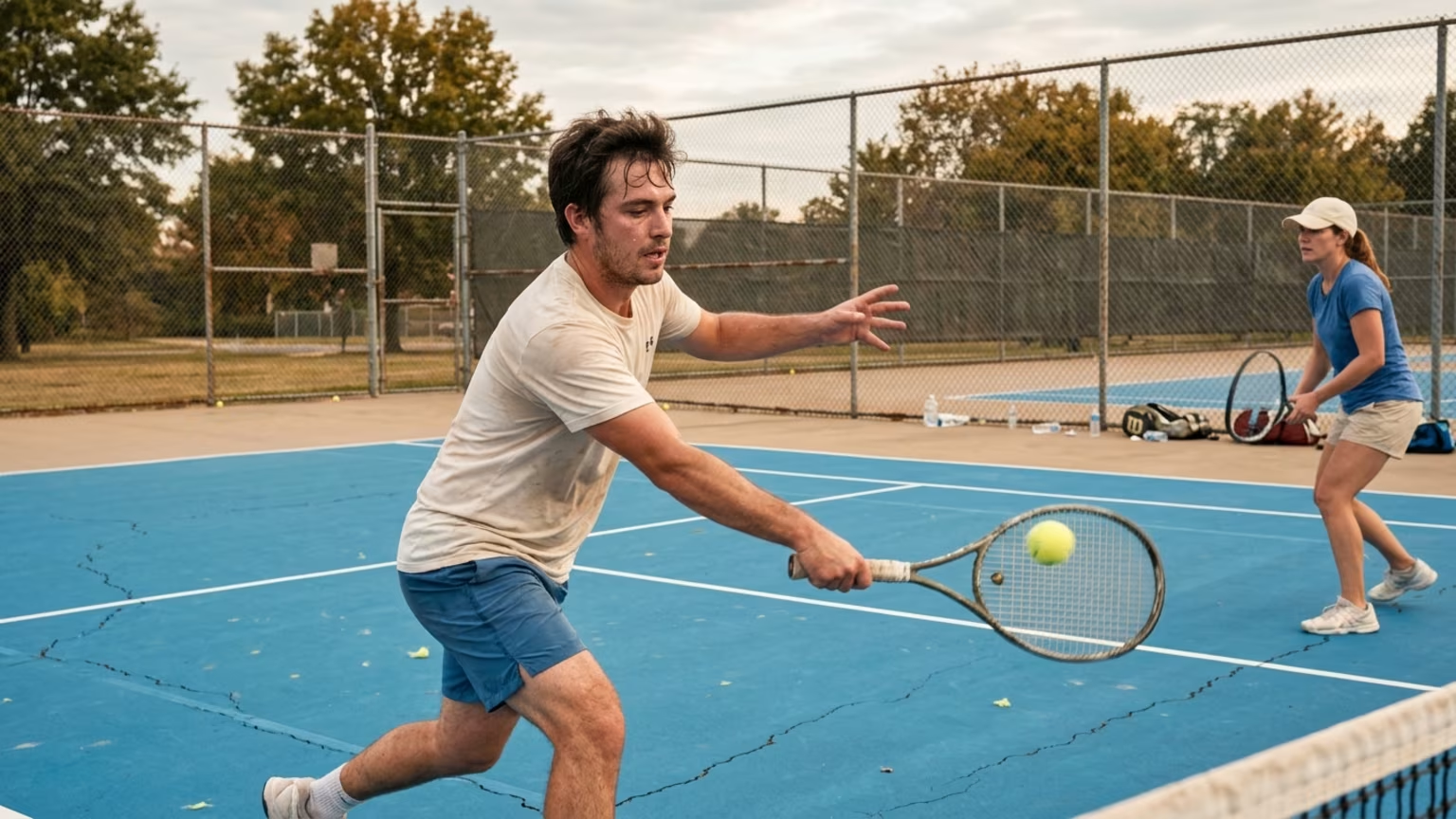

The recent Canadian Open withdrawals and PTPA workload data highlight critical recovery and longevity lessons for adult racquet sports players.




The Montreal and Toronto tournament sites saw empty practice courts and adjusted brackets ahead of opening day. On August 10, 2026, the Professional Tennis Players Association said a series of withdrawals from the 2026 Canadian Open highlighted the injury risks associated with tennis’s long season and expanded top-level tournament schedule. Sixteen players withdrew before main-draw play began. The advocacy group stated that recovery time is shrinking and injuries are occurring earlier in the year.
The sheer volume of absences caught the attention of fans and tournament directors alike. According to Reuters, the men’s event in Montreal lost world No. 1 Jannik Sinner, 24-time Grand Slam champion Novak Djokovic, and Carlos Alcaraz. Alcaraz was sidelined by a wrist injury. Canadian player Félix Auger-Aliassime also withdrew before his opening match because of a back injury.
The women’s tournament faced similar challenges with its player roster. Reuters reported that defending champion Victoria Mboko, Wimbledon finalist Karolina Muchova, Emma Raducanu, and Jasmine Paolini were among the injured absentees. Tennis365 reported that eight men and eight women withdrew from the combined event. The tournament was split geographically in 2026.
The debate centers on a calendar change implemented across the tour. The ATP expanded seven of its nine Masters 1000 tournaments to 12-day events under its OneVision strategic plan. The 2025 calendar was the first season in which the longer format was used across those events. The Professional Tennis Players Association argues that this longer format reduces the time players have available to rest, train, and travel between tournaments.
Event organizers offered a different perspective on the withdrawals. Canadian Open tournament director Valerie Tétreault said the tournament respected players’ health decisions. She also argued that repeated late withdrawals raised a broader issue for tennis. Tétreault said Masters 1000 events are among the tour’s flagship competitions and spectators reasonably expect leading players to participate.
The tournament director noted that organizers were discussing the issue with the ATP. The tension between player health and commercial interests is becoming harder to ignore. The advocacy group explicitly stated that short-term commercial interests cannot come at the expense of player health. Both sides are trying to find a balance that protects athletes and entertains fans.
Recreational players might not travel to Montreal for professional events. The underlying challenge of balancing training stress, competition, travel, and recovery is highly relevant for adult athletes. The professional story supports a careful approach to physical longevity. We can apply these workload principles to build a sustainable racquet sports routine.
A few years ago, I realized my tennis serve speed was dropping, and my shoulder was constantly throbbing after matches. Instead of pushing through the pain, I took a month to rebuild my mechanics and focus on rotator cuff endurance. I stopped trying to hit flat aces and developed a much heavier kick serve. My win rate actually went up, and my shoulder stopped hurting.
Sometimes longevity means outsmarting your own ego on the court. Adult players should treat recovery time as an active part of their training plan. It is unwise to view rest simply as leftover time between matches. Managing these variables is key for healthy aging and athletic longevity.
You can build a sustainable routine by avoiding consecutive days of heavy physical stress. Players preparing for local leagues should plan lighter sessions after demanding match blocks. It is unrealistic to maintain maximum intensity every day of the week. Monitoring your total workload helps prevent the fatigue that leads to movement errors.
We recommend tracking several different dimensions of your court time. Match duration, high-intensity drills, serving volume, and strength training all contribute to your total physical load. A simple weekly log can reveal when multiple physical stressors are accumulating. This tracking helps you distinguish ordinary post-exercise fatigue from true structural pain.
You should never automatically combine a long singles match, a high-volume serving session, and heavy upper-body strength work. Spacing out these demands protects your joints and keeps your muscles fresh. Players returning from injury should always coordinate their progression with a qualified clinician. A gradual ramp-up is especially important when managing age-related changes in strength and mobility.
We frequently see adult players ignore early warning signs of joint stress. A minor wrist ache can easily become a chronic issue if you ignore basic recovery principles. When you return to the court after a long break, you need a structured return plan. Trying to mimic the volume of professional athletes will only accelerate wear and tear.
Effective workload management requires you to prioritize quality over sheer volume. Hitting a hundred serves with poor mechanics is far worse than hitting thirty focused reps. Rest days are when your body actually builds the strength you need for match day. Incorporating a proper cool-down routine helps clear metabolic waste and prepares you for the next session.
The professional injury data provides context for these high-profile withdrawals. The Professional Tennis Players Association said its analysis covered more than 30,000 professional matches across all levels of tennis. This data spans an eight-year period. The association launched this project three years earlier with its medical director.
The specific findings point toward a sharp rise in physical issues. According to the advocacy group, upper-body injuries increased 42% in the first quarter of 2026 compared with the same period in 2025. The association also said arm injuries were up 112% in 2026 compared with the 2025 average. These specific figures show a distinct trend in upper-body fatigue.
The withdrawals from the Canadian event reflect varied physical complaints. Alcaraz cited a wrist issue, Auger-Aliassime reported a back injury, and Sinner experienced right-knee trouble. Sinner subsequently withdrew from the Cincinnati Open, citing a right-knee problem. This sequence shows how compressed schedules can compound physical challenges for athletes.
While the exact causes of individual injuries vary, the aggregate numbers tell a clear story about modern court stress. Professional athletes are facing greater demands on their shoulders, arms, and wrists. Recreational players often experience similar upper-body strains when they drastically increase their serving volume. Understanding this data can help you survive heavy workloads and prioritize rest.
The debate over the tennis calendar is likely to intensify throughout the current season. The Professional Tennis Players Association called for a data-driven approach to restructuring the tour calendar. The group wants fewer mandatory tournament commitments and a stronger player role in calendar decisions. They also requested consideration of reversing the 12-day Masters 1000 format.
The association outlined the problem clearly to the media. “The evidence is clear: the season is too long, recovery time is shrinking, and injuries are occurring earlier and becoming more severe,” the group told Reuters. Event organizers will need to weigh these medical concerns against spectator expectations. Masters 1000 events rely on the presence of star athletes to drive commercial success.
We expect ongoing discussions between player advocates and tournament directors in the coming months. If top athletes continue to skip major mandatory events, organizers may be forced to condense the schedule. Recreational players can watch this structural debate while applying the core lessons to their own routines. Smart load management is essential whether you play in stadium courts or local parks.
Athletic longevity requires an honest assessment of your physical limits and recovery needs. The most effective court athletes know when to push hard and when to schedule rest. Paying attention to your own physical feedback will keep you competing smoothly all year. At evercourts, we believe smart planning is your best tool for a healthy racquet sports season.
Follow Evercourts for practical insights on tennis, pickleball and padel performance, movement, recovery and healthy ageing. Stay connected for new articles, research-led guidance and ideas to help you play well and keep playing for years.


Holger Rune withdrew from the European Open with a back problem. The facts behind his decision and a grounded perspective for recreational players.

The Dink’s October 17 guide emphasizes deep returns, ball-height decisions and positioning against faster pickleball opponents.

A new report outlines padel and tennis gear trends. Learn how to assess adjustable rackets, sensor feedback and smart-court claims.
Read practical guidance for better movement, smarter preparation and a game that keeps working for you.
explore the Blog
