

World No. 1 Jannik Sinner underwent knee tests at J Medical after his US Open withdrawal. Learn how adult racquet sports players can apply his strategy.




On Tuesday, August 25, 2026, World No. 1 Jannik Sinner walked back into J Medical in Turin. He arrived for new examinations on his right knee after an unresolved injury forced him out of the US Open. According to ESPN, Sinner had not played a competitive match since his Wimbledon victory in July. Now, his team is focused on evaluating his recovery rather than forcing a rushed comeback.
The knee issue had already kept Sinner out of major summer events in Montreal and Cincinnati. He and his team eventually returned to the practice court in Monte Carlo to test his physical readiness. However, they quickly concluded that he needed more time to recover from the nagging injury. Sinner stated that the decision was made alongside his medical staff to avoid turning an unresolved problem into something more serious.
Italian and international reports confirmed there was no fixed comeback date at the time of the August 25 assessment. Instead, his rehabilitation plan alternated light court work with continuous medical visits to monitor joint inflammation. Punto de Break reported speculation that the issue might involve an overloaded tendon. The same reports mentioned possible shockwave therapy, but the exact anatomical diagnosis remains publicly unconfirmed by his medical staff.
The choice to withdraw from a Grand Slam underscores a highly disciplined approach to injury management. Many athletes feel immense pressure to compete during the lucrative North American hard-court swing. By stepping back, Sinner prioritized his long-term physical health over immediate ranking points. This cautious mindset prevented a potentially minor overload issue from escalating into a catastrophic joint injury.
The gap between professional medical care and weekend league preparation is massive. Most recreational tennis, pickleball, and padel players rush their return to meet a specific league or tournament deadline. Sinner's process illustrates a much smarter approach based on flexible readiness and constant reassessment. His medical team prioritized symptom-guided loading and the willingness to delay competition when the joint was not fully ready.
A few years ago, I realized my tennis serve speed was dropping, and my shoulder was constantly throbbing after matches. Instead of pushing through the pain, I took a month to rebuild my mechanics and focus on rotator cuff endurance. I stopped trying to hit flat aces and developed a much heavier kick serve. My win rate actually went up, and my shoulder stopped hurting. Sometimes longevity means outsmarting your own ego on the court.
Adult racquet sport players should view their own comeback as a staged progression rather than a fixed calendar date. You can start with easily controlled activities before testing explosive lateral drills. Track how your knee responds both during the session and the morning after. Any worsening pain, swelling, or loss of confidence means you should reconsider your timeline. You want to execute a safe return to competitive court play without risking further damage.
Recreational players must learn to interpret their physical feedback accurately during rehabilitation. Sinner returning to court before withdrawing does not mean amateur players should test injured joints in heavy competitive matches. Instead, controlled exposure simply provides data to show if court readiness has been achieved. When symptoms return, you must seek clinical guidance and decide whether to rest or adapt your playing schedule.
Racquet sports demand rapid deceleration, emergency braking, and explosive directional changes. These movements place immense stress on the patellar tendon and surrounding knee structures. If you attempt to replicate these movements before your inflammation has settled, you risk chronic pain. Patience during the recovery window is essential for any player hoping to maintain their athletic capabilities for years.
While J Medical has not released an official timeline, outside specialists offer perspective on similar overload injuries. Punto de Break referenced specialist estimates of a recovery period lasting a little more than a month for comparable knee issues. Other sources suggest a possible two-to-three-week path toward availability if the rehabilitation progresses perfectly. These remain unconfirmed estimates rather than an official timetable for the world number one.
Even without exact metrics, the pattern of Sinner's absence tells a clear story about load management. Missing Montreal, Cincinnati, and the US Open shows that this injury disrupted consecutive major stages of the hard-court season. This conservative management stands in sharp contrast to players who try to play through severe discomfort. Taking time away is a critical investment in healthy aging for any athlete.
The timing of his absence also impacted the broader competitive landscape in men's tennis. Sinner withdrew right as the US Open draw was finalizing, severely weakening the men's singles field. His exit also paused his expected rivalry with Carlos Alcaraz, whose fitness status was also receiving widespread attention. This situation highlights how heavily professional players weigh the long-term risks of playing compromised, similar to how Alcaraz managed his own past wrist issues.
Players looking to avoid similar setbacks should adopt proactive training habits off the court. Building strength and stability around the joints can help withstand the heavy demands of modern racquet sports. Following a dedicated knee protection plan can reduce the likelihood of overload injuries. Physical preparation is always more effective than reacting to an injury after it happens.
Looking forward, reports mention the upcoming Asian swing as a potential return window for the Italian champion. Tournaments in Beijing and Shanghai are considered realistic targets if his knee progresses well through rehabilitation. However, these destinations remain contingent on his daily physical response rather than locked competitive commitments. The focus remains entirely on how the joint tolerates progressive loading on hard courts.
The remainder of the ATP season will show whether this conservative approach successfully resolves his knee inflammation. We expect his medical team to maintain their disciplined testing and adjust his schedule based entirely on clinical feedback. For adult players dealing with their own joint issues, this is the ideal blueprint to follow. Respect the rehabilitation process, monitor your body closely, and let your physical readiness dictate your return to the court.
By removing the pressure of arbitrary deadlines, you allow your body the time it actually needs to heal. Every amateur athlete can benefit from treating their recovery with the same respect as a touring professional. Stay patient, trust the process, and your time back on the court will be far more rewarding. Evercourts remains committed to bringing you practical, research-backed advice to help you perform better and play longer.
Follow Evercourts for practical insights on tennis, pickleball and padel performance, movement, recovery and healthy ageing. Stay connected for new articles, research-led guidance and ideas to help you play well and keep playing for years.


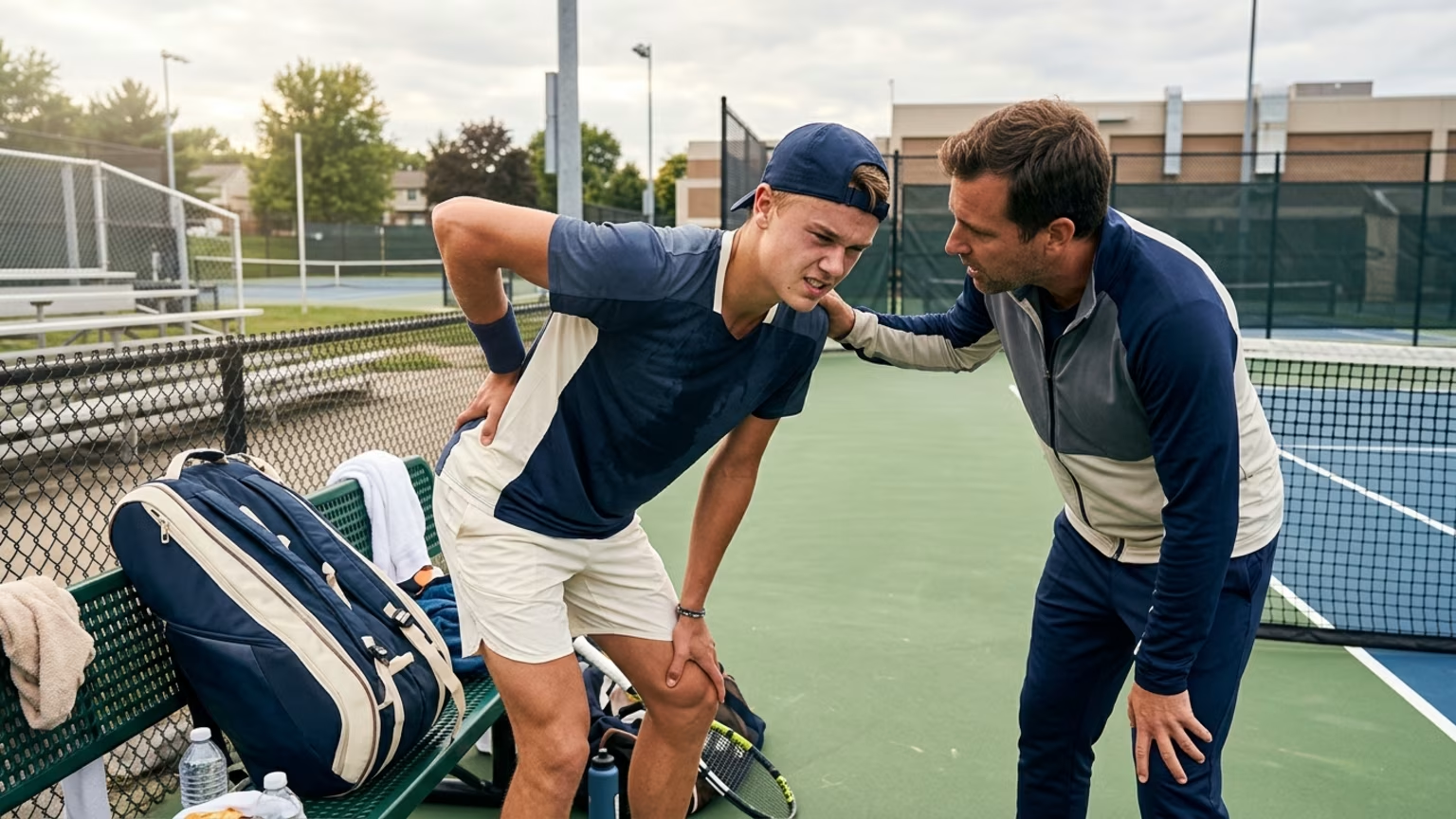
Holger Rune withdrew from the European Open with a back problem. The facts behind his decision and a grounded perspective for recreational players.

The Dink’s October 17 guide emphasizes deep returns, ball-height decisions and positioning against faster pickleball opponents.

A new report outlines padel and tennis gear trends. Learn how to assess adjustable rackets, sensor feedback and smart-court claims.
Read practical guidance for better movement, smarter preparation and a game that keeps working for you.
explore the Blog
