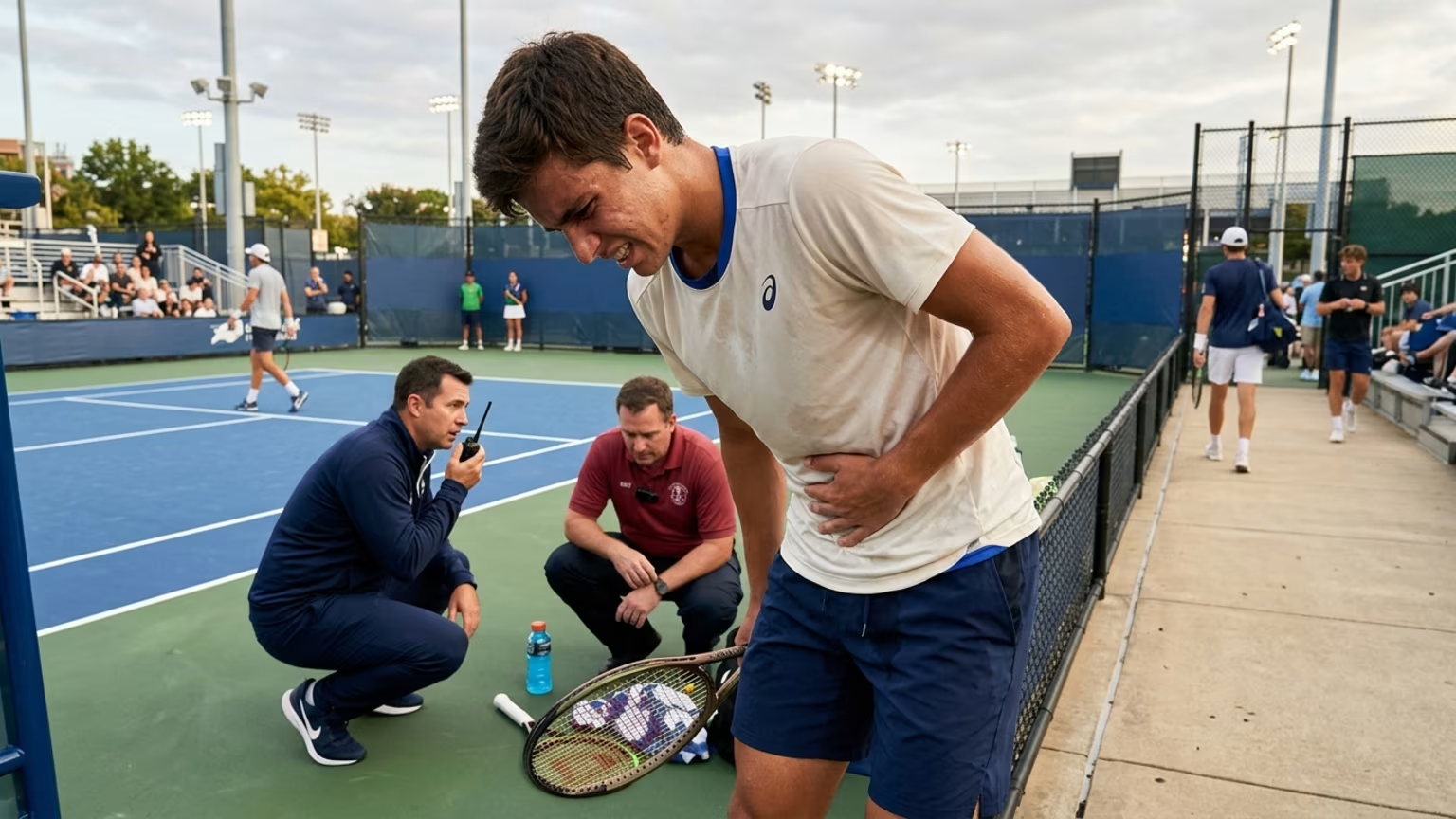

João Fonseca withdrew from the 2026 US Open with an abdominal injury. Learn how proper trunk conditioning and load management support your athletic longevity.




You toss the ball into the late afternoon sun, arch your back, and feel a sudden pull deep in your side. That single moment of sharp trunk pain forces a quick choice between finishing the match or packing up your gear. Professional players face this exact tension on the biggest stages. This week, rising star João Fonseca withdrew from the 2026 US Open after tests and the start of treatment for an abdominal injury showed he needed more time to recover.
The ATP identified Fonseca as the No. 26 player in the PIF ATP Rankings at the time. His abdominal problem surfaced around Cincinnati. He won his opening match there against Botic van de Zandschulp before withdrawing ahead of his scheduled contest with Christopher O'Connell. The public record does not establish the precise diagnosis or prove that serving volume or rotational overload caused the injury.
However, ge reported that back, right-wrist, right-shoulder, and abdominal problems had all interrupted his season. Fonseca said the withdrawal was not easy and that his team would keep working toward his return. Adult recreational players should take notes here. Managing physical setbacks correctly is vital for maintaining your court presence over time.
This court-ready protocol helps you build resilient trunk capacity without unnecessary fitness gimmicks. A strong core is not about aesthetics or doing hundreds of daily crunches. It is about controlling rotation and resisting unwanted extension during fast play. This approach supports athletic longevity by preparing your tissues for the precise demands of racquet sports.
Rotational power in tennis and padel comes from the ground up. Your trunk acts as a vital transmission system connecting your legs to your racquet. When that transmission system lacks capacity, players often experience compensatory tightness and eventual tissue failure. Conditioning this area correctly ensures you can generate power without sacrificing structural health.
Adult players often try to play through discomfort to honor league commitments or tournament schedules. This protocol actively discourages that dangerous habit. Instead, it provides a structured method for managing workload and returning to the court safely. It focuses on steady progress and measurable body capacity over ego.
A sensible program develops several functions rather than treating the core as a simple collection of abdominal muscles. Start with anti-extension control using basic dead-bug variations on the floor. Introduce anti-rotation control through movements like the cable Pallof press. Add side planks for lateral trunk endurance before attempting heavy rotational exercises.
Controlled rotation should only be introduced when basic stability feels completely comfortable. Your hips and lower body must also be strong so the trunk does not absorb every movement demand. This steady progression builds real functional capacity over time. Anyone experiencing persistent abdominal pain should always consult a qualified clinician first.
Do not combine a long period away from the court with a sudden high-volume serving session. A gradual progression begins with shorter blocks and moderate effort. Ensure full recovery between sets to prevent excessive fatigue. Reduce your volume immediately if symptoms or unusual trunk fatigue appear.
Players must track more than just the number of serves they hit. Useful metrics include total court time, approximate intensity, match volume, and overall sleep quality. Monitoring these factors helps you establish a better athletic recovery routine. Consistency matters much more than occasional high-intensity training spikes.
Mild tightness is not automatically an injury. It is simply a signal to reduce intensity and reassess your recent workload. Sharp localized pain deserves far more caution than ordinary soreness. Pay attention to how your body responds during acceleration and changes of direction.
A player who feels abdominal pain while serving or rotating should stop the provoking activity immediately. Continuing to test a painful movement in a match only increases the risk of severe tissue damage. Learning how to assess physical readiness protects you from avoidable setbacks. Respect what your symptoms are telling you.
League matches and tournaments create massive pressure to continue playing. They are terrible settings for discovering whether an injured trunk can tolerate maximal serving. A player who cannot practice comfortably at lower intensities should not assume competition will be safer. Tournaments often push athletes to ignore warning signs for the sake of a single result.
Fonseca’s withdrawal perfectly illustrates the wisdom of prioritizing recovery over risky tournament play. The available reports describe when his symptoms appeared and his decision to withdraw. The public record does not establish the precise diagnosis or prove that serving volume caused the injury. However, his choice to step back remains a valuable lesson for adult players.
Your return to the court should follow a highly structured path. Begin with pain-free daily movement before attempting easy groundstrokes and light court footwork. Progress to controlled serving at reduced volume once you feel completely confident. Only move to higher-intensity open-court rotation when those earlier stages cause no discomfort.
Following a complete guide to returning to court after an injury will keep you safe. Practice sets must come before actual competitive play. The key principle is that match intensity should always follow practice tolerance. Let your body adapt safely over several weeks.
Racquet sports share many similarities but place unique demands on the human body. You cannot assume that fitness in one sport transfers perfectly to another without adjustments. Every player should modify this protocol based on their primary game.
Tennis places a massive emphasis on overhead serving and full-court rotation. The kinetic chain relies heavily on the abdomen to transfer power from the legs to the upper body. Tennis players must prioritize anti-extension exercises and strict serve-volume management. You must monitor your abdominal fatigue closely during long three-set matches.
The serve uniquely stretches the anterior trunk before violently contracting it during contact. This repetitive whiplash effect demands exceptional tissue tolerance. Older tennis players should warm up the trunk thoroughly before hitting a single practice serve. Rushing the warm-up process drastically increases your risk of sudden strains.
Pickleball involves smaller court dimensions and different foundational stroke patterns. Players face frequent low reaching, rapid braking, and sudden directional changes at the kitchen line. Core conditioning for pickleball should emphasize lateral stability and quick rotational control. Focus on lower-body strength to protect the trunk during constant squatting and lunging.
Dinking rallies require prolonged periods of isometric trunk holding. Your core must stabilize your spine while you maintain a low athletic stance. Training for pickleball requires high muscular endurance rather than explosive maximal strength. Prioritize high-repetition stability exercises to mimic these specific court demands.
Padel combines repetitive overhead smashes with unpredictable glass rebounds. The sport forces players into extreme rotational angles while tracking lobs and defending the back wall. Padel players need exceptional rotational endurance to handle these unique biomechanical demands. Conditioning must include dynamic movements across multiple planes to prepare the trunk for sudden reactions.
The heavy use of the vibora and bandeja strokes creates unique asymmetrical loading patterns. You are constantly twisting backward while moving laterally to track the ball. This requires profound eccentric strength in the oblique muscles. Padel athletes must ensure both sides of their trunk receive equal conditioning attention.
Follow Evercourts for practical insights on tennis, pickleball and padel performance, movement, recovery and healthy ageing. Stay connected for new articles, research-led guidance and ideas to help you play well and keep playing for years.


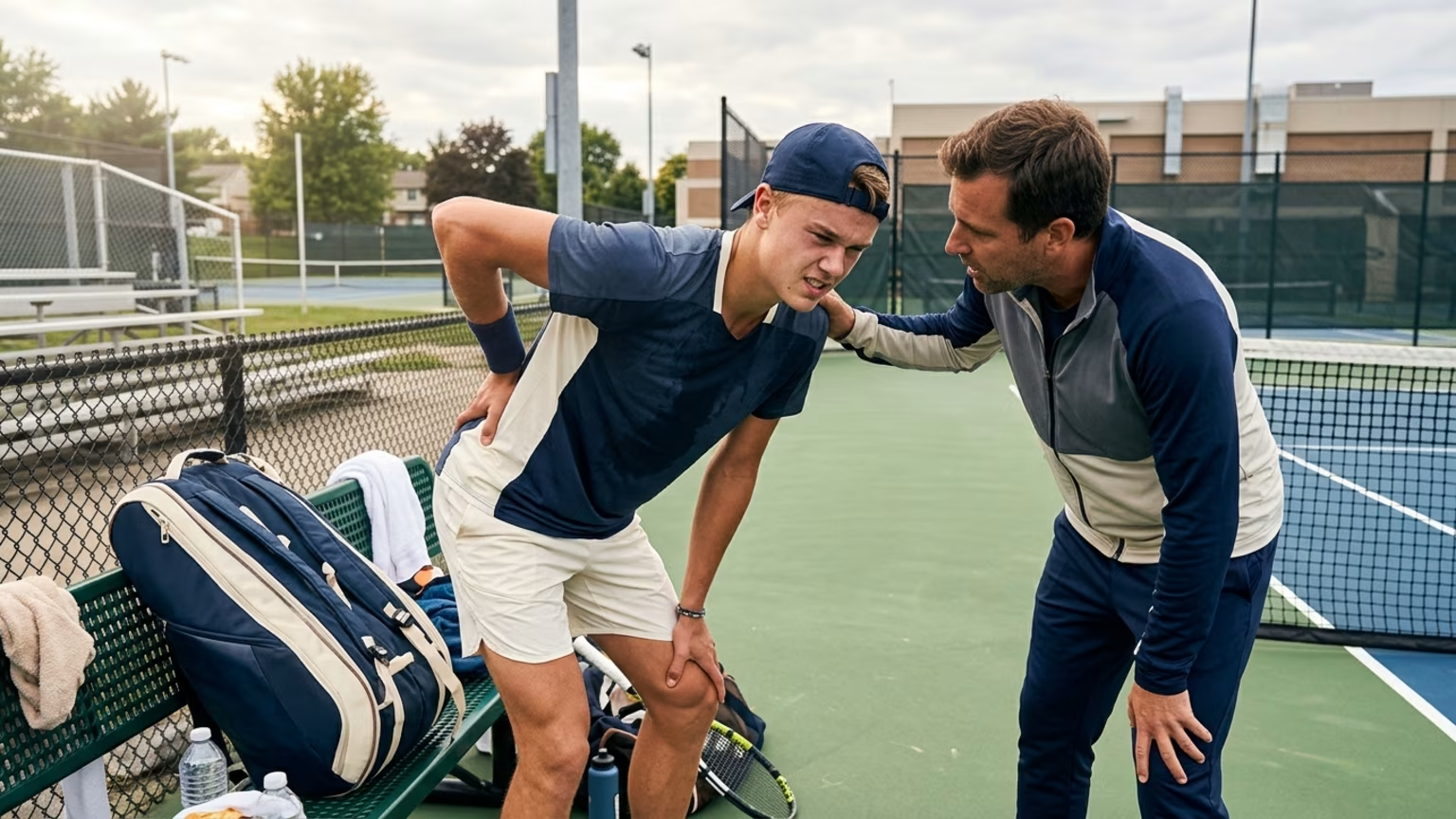
Holger Rune withdrew from the European Open with a back problem. The facts behind his decision and a grounded perspective for recreational players.

The Dink’s October 17 guide emphasizes deep returns, ball-height decisions and positioning against faster pickleball opponents.

A new report outlines padel and tennis gear trends. Learn how to assess adjustable rackets, sensor feedback and smart-court claims.
Read practical guidance for better movement, smarter preparation and a game that keeps working for you.
explore the Blog
