

Jordan Thompson's uncertain back surgery recovery proves why recreational racquet sports players must decouple basic conditioning from court readiness.




Jordan Thompson has not played competitive tennis since a second-round loss to Nuno Borges at the 2026 Australian Open. Following continuing problems involving the S1 nerve, the 32-year-old Australian underwent back surgery in May 2026. Thompson recently told Channel 9 that doctors gave him a possible absence ranging from three to 18 months. This unusually broad window means his actual return date remains highly uncertain.
The spinal operation was just one part of a complex physical interruption for the experienced player. AAP and PerthNow reported that Thompson underwent three separate elbow, toe, and back procedures within a three-month period. Thompson described his recent postoperative period as a long four months and noted that he has not seen many benefits yet. However, he did state that improvements were beginning slowly.
Despite his progress, his daily routine highlights a strict separation between basic physical activity and racquet sports. He said he had only recently restarted gym work and swimming. Crucially, the Australian confirmed he had not yet resumed hitting tennis balls. This sequence clearly shows how medical clearance for light conditioning arrives long before a player is ready for court impact.
Rebuilding a player's physical foundation requires respecting these distinct stages of rehabilitation. Thompson’s current daily structure focuses entirely on controlled, linear movements rather than the unpredictable demands of a match. This cautious approach is common when dealing with nerve-related back issues. Medical professionals typically delay rotational sports until the underlying neurological symptoms fully stabilize.
Adult recreational players often fall into the trap of using a fixed calendar to dictate their comeback from surgery. Thompson’s experience shows that being several months removed from an operation does not automatically mean a player is ready to hit. General fitness improvements do not equal sport-specific readiness. If you can swim or lift weights comfortably, you still might not possess the rotational stability required for a high-intensity sport.
When returning from any significant layoff, athletes must respect the unique demands of the court. When I first started playing pickleball, I noticed how many people skipped warming up entirely. They would jump straight out of their cars and right up to the kitchen line. I tried doing that and immediately pulled a calf muscle.
Pickleball requires just as much explosive lateral movement as tennis, just in a tighter space. Since then, I always spend five minutes doing dynamic lunges and ankle rolls. It changes everything about how confident I feel pushing off the baseline. The exact same caution applies to players working through a prolonged medical absence.
You must actively rebuild your physical resilience before entering a competitive match. Reviewing a complete return to play recovery guide can help structure those critical early sessions. Basic mobility work sets the foundation for more explosive lateral drills. You cannot rush the transition from the gym to the baseline without risking a severe setback.
Patience remains the most valuable tool in any adult player's rehabilitation plan. Early rehabilitation activity is not proof that your body can handle the sudden stops and starts of competitive padel or tennis. Instead of copying a professional athlete's exact schedule, you should follow individualized guidance from a qualified physical therapist. Any plan for returning to competition after injury must prioritize symptom resolution over arbitrary deadlines.
Separating basic health from athletic performance prevents frustrating setbacks. Many players mistakenly believe that walking without pain means they can immediately serve or hit heavy groundstrokes. As Thompson's current routine demonstrates, a structured progression ensures the spine can handle increasing loads safely. Following a racquet sports progression is the smartest way to bridge the gap between initial healing and full match readiness.
It is incredibly common for players to feel restless when restricted to basic conditioning exercises. Watching your peers play local league matches while you are limited to swimming laps can test your mental discipline. However, sticking to your prescribed physical therapy limits is exactly what protects your joints from premature stress. You are investing time now to protect your movement capabilities for the next decade.
The projected absence of three to 18 months is a massive span for an active professional player. This timeframe halts significant momentum for Thompson, who reached a career-high singles ranking of No. 26 in 2024. According to Tennis World, he captured his only reported ATP singles title at the 2024 Los Cabos Open by defeating Casper Ruud in the final. The ongoing layoff temporarily pauses what has been a highly productive phase of his career.
Beyond his singles success, his absence impacts the elite doubles circuit. He holds eight doubles titles in total. The Australian paired with Max Purcell to win the 2024 US Open men’s doubles title, as noted in a recent ESPN report. Taking up to 18 months away from the tour means missing multiple Grand Slam events and major ranking opportunities.
The broad timeline provided by his doctors underscores the unpredictable nature of nerve regeneration surgeries. Forecasting a return to professional tennis is nearly impossible when recovery relies on nerve healing rather than simple tissue repair. A variance of 15 months between the shortest and longest medical estimate reflects an extreme degree of clinical uncertainty. This data point alone should convince amateur players to stop forcing their own bodies onto strict recovery schedules.
This wide timeline is fundamentally different from a standard muscle tear recovery. A standard orthopedic injury often comes with a highly predictable rehabilitation timeline based on thousands of similar cases. Spinal nerve issues require doctors to monitor individual neurological responses on a month-to-month basis. Professional athletes and their coaching teams must adjust their expectations continuously as new physical benchmarks are either met or missed.
We expect to see more professional athletes openly discussing staged, multi-month rehabilitation sequences over the next season. The traditional expectation for a rapid post-surgery comeback is fading. Medical teams are increasingly advising extended, symptom-led recoveries rather than rigid calendar promises. This shift toward patience and gradual reloading will redefine how injuries are managed on the tour.
Recreational players should adopt this exact same mindset for their own physical longevity. Rushing back to the court to meet a personal deadline only increases the risk of aggravating a sensitive surgical site. The coming year will likely feature more medical transparency from top players dealing with complex nerve issues. Treating every recovery as an individualized progression is the best way to ensure you keep playing for years.
Follow Evercourts for practical insights on tennis, pickleball and padel performance, movement, recovery and healthy ageing. Stay connected for new articles, research-led guidance and ideas to help you play well and keep playing for years.


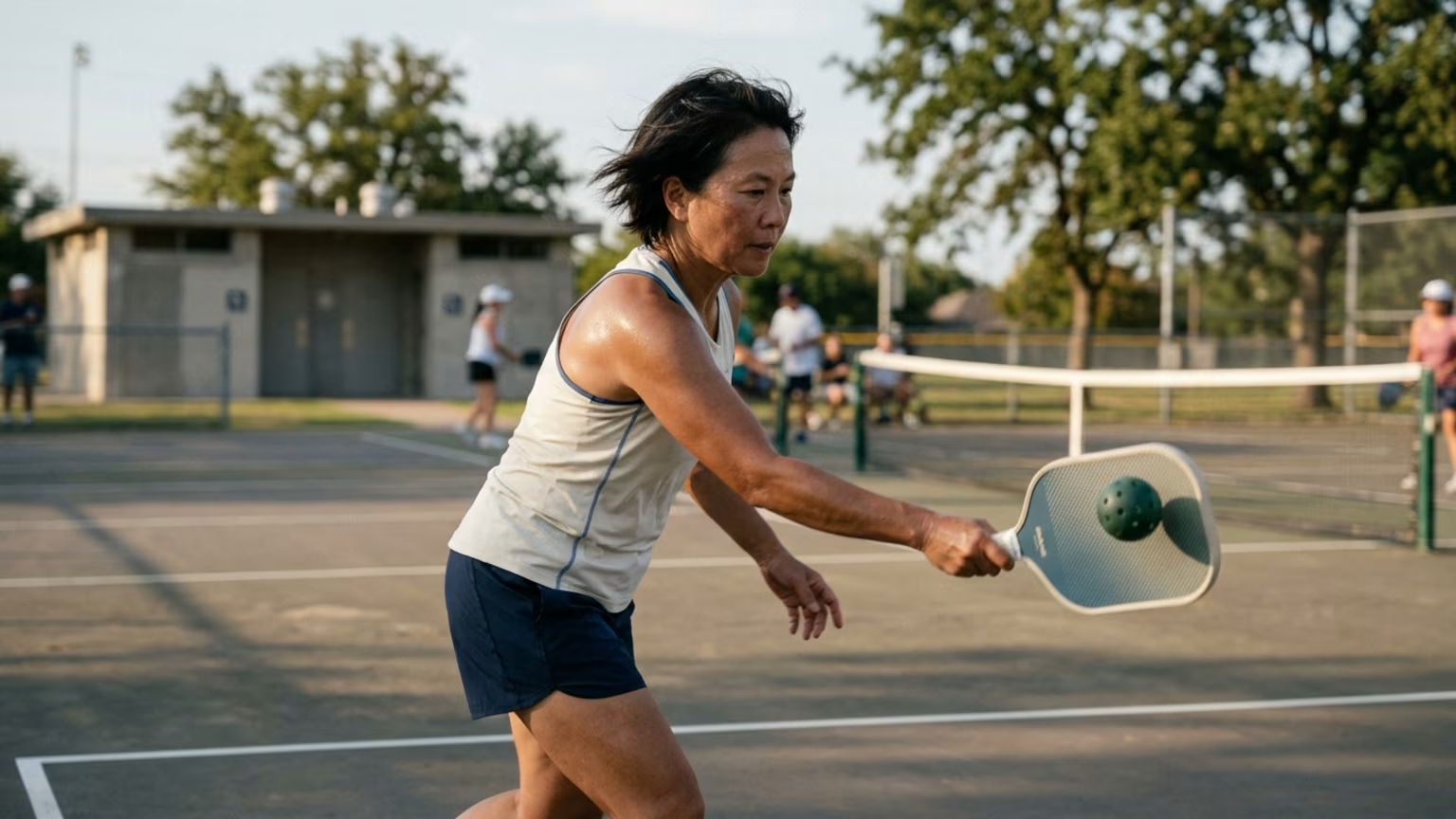
A recent live-play test of a silent pickleball highlights its value for practice, but standard balls still perform better for match play and power control.

An evidence check on sports supplements like tart cherry juice. Learn why racquet sports players should prioritize core nutrition over functional foods.
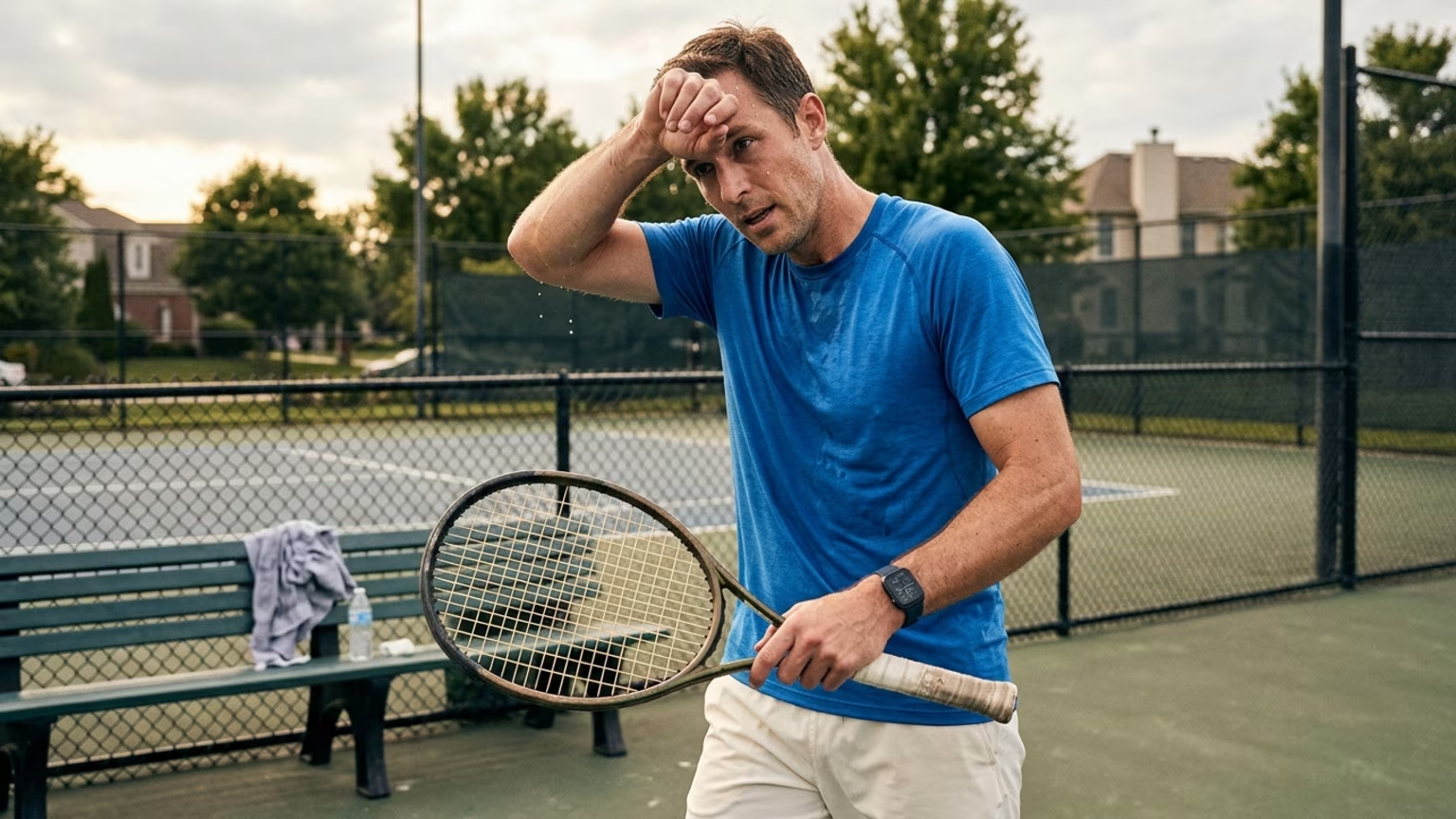
In late 2026, Oura analyzed wearable data to see how recreational tennis impacts heart health and recovery. Learn what this means for your athletic longevity.
Read practical guidance for better movement, smarter preparation and a game that keeps working for you.
explore the Blog
