

Kaizen Fitness Center highlights a major shift in racquet sports. Learn how 24.3 million players are driving the demand for integrated athletic recovery.




After spending three years planning a comprehensive athletic destination, founder Ryan Poolay is preparing to open Kaizen Fitness Center to support a U.S. pickleball participant base that reached an estimated 24.3 million in 2025.
The planned arrival of this massive wellness center at Bayshore Mall in Glendale highlights a critical shift in how athletes view longevity. Modern court sports demand relentless starting and stopping during long competitive sessions. Every sudden deceleration requires the lower body to absorb high impact forces. This repeated stress places a heavy toll on the joints and connective tissues over a long season.
Players need more than just open play to stay healthy on the hard courts. Kaizen plans to offer two full-size gymnasiums and dedicated indoor pickleball courts to help athletes manage this workload. Combining actual play spaces with targeted physical preparation is essential for adult recreational players. Continuous improvement requires acknowledging the sheer physical cost of frequent competition.
The facility will also feature a 90-foot indoor turf training area alongside its indoor courts. This space could support the crucial acceleration work and movement drills needed to build resilience. Athletes often neglect change-of-direction training when they lack the proper environment. Having access to a long turf section encourages players to warm up properly before matches.
A balanced routine requires structured strength training to handle these physical demands. Plans for the new Wisconsin facility include Olympic lifting platforms and dedicated group-training spaces. Athletes can use these areas to develop the lower-body strength required for essential footwork skills. Connecting court access directly to heavy strength equipment makes off-court preparation highly practical.
The founders recognized that multi-sport environments naturally encourage better cross-training habits. Incorporating basketball and volleyball courts alongside dedicated indoor pickleball courts creates diverse movement opportunities. Playing different sports prevents the overuse injuries that plague single-sport athletes. Moving laterally in basketball can genuinely improve a player's defensive footwork on the tennis court.
The numbers behind racquet sports indicate a massive need for integrated physical support. A report citing Sports & Fitness Industry Association data estimated that the U.S. pickleball base grew from 4.2 million in 2020 to 24.3 million in 2025. That represents an astonishing increase of 22.8% from the prior year alone. Within that massive total are approximately 7.48 million core players who step onto the court at least eight times annually.
These millions of active athletes require adequate infrastructure to play safely and recover properly. A lack of dedicated facilities often forces players onto poorly maintained surfaces with limited recovery options. The rapid expansion of the sport has recently started to stabilize according to recent data. The same organization reported a 1.3% growth rate for pickleball in the first half of 2026.
This initial moderation follows five consecutive years of aggressive expansion across the country. As participation numbers steady, the focus naturally shifts toward retaining players and keeping them healthy. Facilities are adapting their core services to meet the specific requirements of these committed athletes. The upcoming Glendale center is actively hiring personal trainers and pickleball instructors ahead of its late fall 2026 opening.
The visual and social environment of a club directly impacts how often athletes return. TKWA designed the Wisconsin facility with a mid-century-modern sensibility that is reinterpreted through a contemporary lens. Designer Lisa Stafford noted that the project was rooted in nurturing a strong sense of community. When athletes feel welcome in a space, they are far more likely to stick to their conditioning routines.
Construction by Kelly Construction is currently underway to bring this ambitious vision to life. The facility will feature equipment from True Fitness, Woodway Treadmills and Les Mills. Supplying top-tier training tools ensures that the 50,000-square-foot space offers genuine value beyond casual recreation. High-quality treadmills and group exercise spaces are vital for building cardiovascular endurance away from the courts.
Providing professional guidance ensures that players receive the structural support necessary for sustained participation. Kaizen will also include changing rooms, lockers and dry saunas to aid the physical repair process. The facility's cafe is expected to serve matcha, tea, smoothies and protein shakes. Access to these resources helps players plan recovery weeks without losing fitness during busy competitive seasons.
The rising popularity of multiple racquet sports creates varied physical workloads for modern athletes. Pickleball requires short sprints and frequent lunging at the non-volley zone. This stop-and-start pattern heavily taxes the knees, ankles and Achilles tendons over time. The 7.48 million core pickleball players need targeted mobility work to manage these specific joint stresses.
Padel introduces a completely different set of physical demands due to the surrounding walls. Players must execute rapid rotational movements and continuous multi-directional changes during extended rallies. The 2026 midyear update identified padel as the fastest-growing activity with a 14.5% participation increase. This surging player base will need specialized lateral agility conditioning to sustain performance and protect their hips.
Tennis demands the highest volume of overall ground coverage among the three primary court sports. Athletes must produce explosive power from the baseline while maintaining endurance over long matches. The constant bounding and heavy serving motions put immense pressure on the shoulders and lower back. Older adults transitioning into tennis must build significant foundational strength to handle these specific repetitive loads.
The physical load on a tennis player differs dramatically from the stresses of pickleball. Tennis requires lunging deep into corners, pushing off violently, and recovering back to the center rapidly. This extreme range of motion requires excellent flexibility and immense eccentric strength in the quadriceps. Olympic lifting platforms are ideal for developing the explosive power needed to sustain these intense baseline rallies.
Padel players face unique challenges because the court dimensions force incredibly fast reaction times. The walls keep the ball in play longer, which significantly extends the duration of average rallies. Athletes need exceptional core strength to constantly twist and reach for low balls off the glass. Utilizing group-training spaces for dedicated Pilates sessions can dramatically improve a padel player's trunk stability.
Adapting your movement to singles and doubles across any of these sports requires careful physical preparation. Facilities offering comprehensive strength equipment and turf areas allow athletes to train for their specific sport. A tennis player might prioritize heavy leg presses, while a padel player focuses on rotational core stability. Combining dedicated courts with specialized fitness zones helps athletes address the unique challenges of their preferred game.
The integration of courts and conditioning spaces provides a clear blueprint for athletic longevity. You do not need a 50,000-square-foot facility to apply these crucial principles to your own routine. The data clearly shows that millions of recreational players are pushing their bodies incredibly hard. Taking care of your joints must become as habitual as scheduling your next league match.
Start treating your off-court habits with the same respect you give your game strategy. Relying solely on playing matches to stay in shape eventually leads to physical breakdowns. Your body requires deliberate maintenance to withstand the sudden stops and starts of racquet sports. Building a complete routine ensures you can keep stepping onto the court for years.
Before you even step on the court, you must prepare your tissues for explosive movement. A dynamic warmup is not optional if you want to maintain your athletic longevity. Spend five minutes performing lunges, leg swings and arm circles to increase blood flow. This small investment of time drastically reduces your risk of acute muscle strains during the first set.
Nutrition plays an equally important role in managing high physical workloads week after week. The concept behind Kaizen's cafe highlights the importance of immediate post-match fueling. Consuming a proper balance of carbohydrates and proteins helps your muscles recover from heavy exertion. You can easily replicate this by bringing a high-quality shake to the courts in your gym bag.
Implement a structured post-match cooldown phase immediately after you finish playing today. Spend ten minutes walking to gradually lower your heart rate and flush out metabolic waste. Follow this with targeted hydration and a protein-rich beverage before you leave the venue. This simple routine accelerates muscle repair and ensures you are fully ready for your next session.
Follow Evercourts for practical insights on tennis, pickleball and padel performance, movement, recovery and healthy ageing. Stay connected for new articles, research-led guidance and ideas to help you play well and keep playing for years.


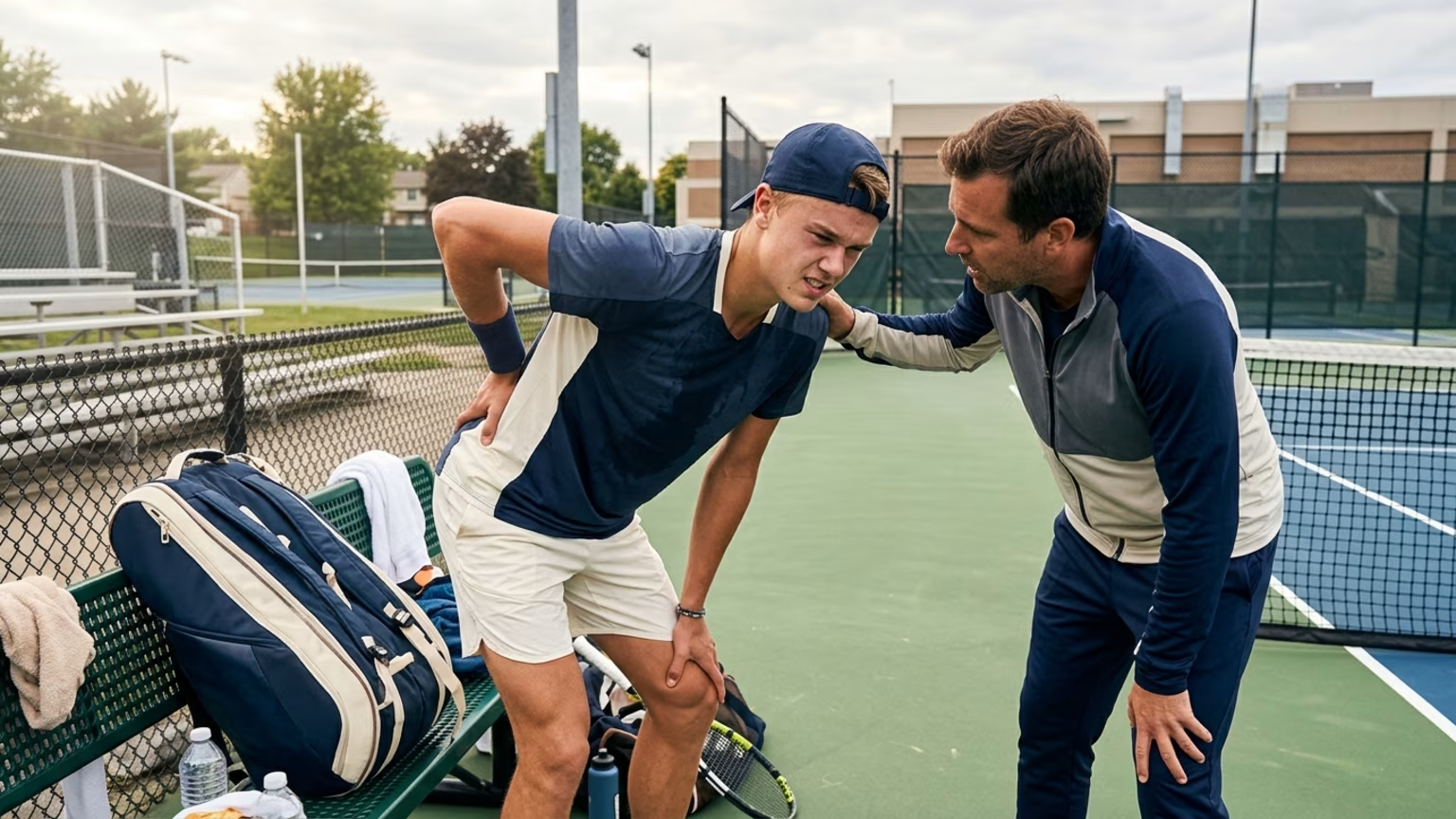
Holger Rune withdrew from the European Open with a back problem. The facts behind his decision and a grounded perspective for recreational players.

The Dink’s October 17 guide emphasizes deep returns, ball-height decisions and positioning against faster pickleball opponents.

A new report outlines padel and tennis gear trends. Learn how to assess adjustable rackets, sensor feedback and smart-court claims.
Read practical guidance for better movement, smarter preparation and a game that keeps working for you.
explore the Blog
