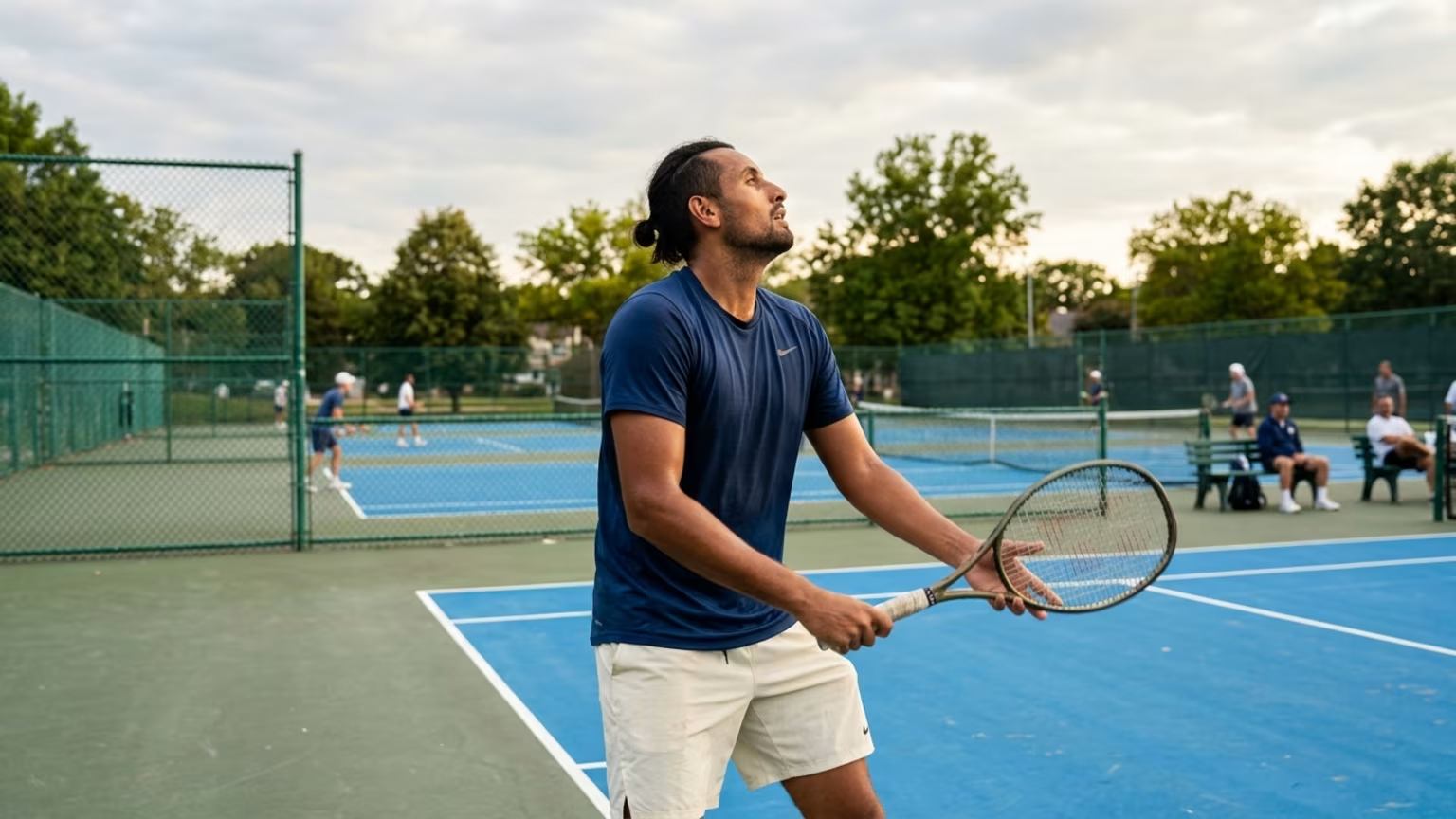

Nick Kyrgios is cleared to return after an anti-doping case, but his recurring knee and wrist injuries remain the biggest hurdle to his tennis comeback.




Raw talent is often mistaken for career longevity. The reality is that the best shot in the world matters very little if you are not physically permitted on the court to hit it. On September 3, 2026, Nick Kyrgios, aged 31, became officially eligible to return to professional tennis. His clearance followed the conclusion of a one-month suspension. The International Tennis Integrity Agency provisionally suspended him on August 4, 2026. This administrative action was the result of a positive test for a cocaine metabolite.
The sample in question was collected during the Mallorca Open in June 2026. Kyrgios told investigators that he used the substance socially at a nightclub in Magaluf. This occurred in the early hours of June 20 before he was scheduled to play. The suspension and subsequent clearance generated significant headlines across the sport. However, the larger story for players is how administrative availability intersects with physical health. Being legally permitted to play is only the first hurdle.
The swift resolution of this case hinged on the exact timing of the substance use. The ITIA accepted that the positive test resulted from out-of-competition use. An independent expert at a laboratory accredited by the World Anti-Doping Agency reviewed the case. This expert assessed Kyrgios's explanation as consistent with the concentration found in his sample. As a result, the ITIA formally accepted that the use occurred outside of competition parameters.
The default sanction for this type of violation was three months. However, the suspension was reduced to one month after Kyrgios entered an approved treatment program. ESPN reported that an in-competition positive could have exposed Kyrgios to a four-year ban. This stark contrast illustrates the critical importance of anti-doping frameworks. The distinction between in-competition and out-of-competition use drastically alters a player's career trajectory.
Kyrgios described the failed test as a huge mistake and a wake-up call, according to ESPN. While the suspension ended on September 3, 2026, the case carried immediate professional consequences. Kyrgios forfeited his ranking points from the Mallorca event. He also forfeited his tournament prize money. BBC reported the forfeited prize money as 6,570 euros, equivalent to approximately £5,650. He is now eligible to compete again, subject to completing his treatment program.
Administrative clearance is not the same thing as physical readiness. Kyrgios has dealt with recurring knee and wrist injuries in recent years. Both of these injuries eventually required surgery. A formal green light to play does not magically rebuild a player's joint health. For adult recreational players, this administrative news carries a very practical lesson about athletic longevity. Physical availability dictates everything else.
We often fixate on our skill levels while ignoring our actual availability. A few years ago, I realized my tennis serve speed was dropping, and my shoulder was constantly throbbing after matches. Instead of pushing through the pain, I took a month to rebuild my mechanics and focus on rotator cuff endurance. I stopped trying to hit flat aces and developed a much heavier kick serve. My win rate actually went up, and my shoulder stopped hurting. Sometimes longevity means outsmarting your own ego on the court.
Elite players face immense pressure to return quickly from setbacks. Club players do not have that excuse, yet we often rush back from our own injuries. Treating a return to the court after an injury as a staged process is vital for healthy aging. You might be cleared to hit lightly, but tolerating a full tournament schedule is an entirely different demand. Understanding this difference helps preserve your body for years to come.
Building schedules around sustainable participation is crucial for recreational competitors. Taking time to balance match play and strength training protects your long-term ability to compete. Persistent or recurring pain requires professional assessment rather than stubborn persistence. Players should not copy an elite athlete's recovery plan or assume that a specific surgery applies to them. The goal is to maintain your physical capacity to practice, compete, and recover consistently.
The statistics surrounding this absence show just how disruptive physical injuries can be. ESPN reported that Kyrgios played only three tournaments in each of the previous two years. His extremely limited schedule is directly linked to his recurring knee and wrist problems. Kyrgios stated that the injuries of the previous several years had taken a huge toll on him physically and mentally. Those prolonged physical absences clearly impacted his competitive standing.
Even before the suspension, his match volume was incredibly low. According to BBC reporting, Kyrgios had fallen to No. 918 in the world rankings. Furthermore, he had played only four singles matches during the entire 2026 season. BBC also reported that his last appearance was in men's doubles at Wimbledon. He and Alexander Bublik lost in the first round of that event. These numbers prove that formal eligibility does not automatically restore a player's competitive position. Proper recovery and reloading takes actual time on the court.
A low ranking after a prolonged absence describes competitive status rather than playing ability. Kyrgios retains immense on-court talent when he is healthy. However, his ranking shows that talent alone cannot maintain tour status without physical availability. This perfectly illustrates why preserving your health is just as important as perfecting your forehand. If you cannot stay on the court, your skills simply remain theoretical. Avoiding everyday exercise habits that cause injuries is a non-negotiable part of improving your game.
The upcoming season will test whether this administrative clearance translates into sustained match play. Returning from dual knee and wrist surgeries requires a cautious approach to court volume. We will likely see a very calculated schedule rather than an immediate return to full-time touring. The transition from practice hitting to competitive match play involves managing intense physical loads.
Players and fans alike must recognize that clearing an administrative hurdle is just one step. The true test lies in stringing together healthy matches without triggering old joint issues. A successful comeback is never about a single date on the calendar. It is a slow, methodical process of proving that the body can withstand the sport again.
Follow Evercourts for practical insights on tennis, pickleball and padel performance, movement, recovery and healthy ageing. Stay connected for new articles, research-led guidance and ideas to help you play well and keep playing for years.


Holger Rune withdrew from the European Open with a back problem. The facts behind his decision and a grounded perspective for recreational players.

The Dink’s October 17 guide emphasizes deep returns, ball-height decisions and positioning against faster pickleball opponents.

A new report outlines padel and tennis gear trends. Learn how to assess adjustable rackets, sensor feedback and smart-court claims.
Read practical guidance for better movement, smarter preparation and a game that keeps working for you.
explore the Blog
