

Learn how to manage energy and pace yourself during long, hot racquet sports matches using evidence-based tactics for tennis, pickleball, and padel players.




At the Memphis Classic, world No. 19 Ekaterina Alexandrova retired after collapsing during a three hour and 11 minute match played in 34°C heat. Her medical incident intensified wider concerns about player safety in extreme conditions. Managing physical output is clearly not just about raw fitness or outworking your opponent. You have just finished a brutal baseline rally in the midday sun, and your lungs are burning while your legs feel like wet concrete.
This energy management protocol helps you sustain your physical capabilities and make smart tactical decisions during grueling matches. The objective is to balance your effort, protect your body, and promote athletic longevity. Relying entirely on hustle often leads to unnecessary fatigue and poor shot selection. By treating your energy as a finite resource, you can continue enjoying racquet sports without running yourself into the ground.
A few years ago, I realized my tennis serve speed was dropping, and my shoulder was constantly throbbing after matches. Instead of pushing through the pain, I took a month to rebuild my mechanics and focus on rotator cuff endurance. I stopped trying to hit flat aces and developed a much heavier kick serve. My win rate actually went up, and my shoulder stopped hurting.
Sometimes longevity means outsmarting your own ego on the court. Finding the right balance requires you to understand how your habits dictate your physical longevity during intense tournament blocks.
The physical demands of modern racquet sports are increasing rapidly. A 2023 Associated Press analysis found that every Grand Slam had been getting hotter over time. Professional events are adapting to this changing climate in significant ways. The WTA introduced a heat rule as early as 1992.
Under the ATP 2026 procedures, a 10 minute cooling break is available when the wet bulb globe temperature reaches 30.1°C. Play is completely suspended when that measurement exceeds 32.2°C. Recreational players must adopt a similarly systematic approach to match energy and manage their active schedules accordingly.
Extreme conditions force players to adjust their movement and shot selection drastically. Christopher Tyler of the University of Roehampton says extreme heat increases actual and perceived strain, pushing players toward shorter, riskier points. You do not have to sprint for every single ball. You can divide your match intensity into three distinct gears.
First, use a control gear with high margin shots and efficient movement. Second, apply a pressure gear with increased ball speed when your opponent is vulnerable. Finally, use a commitment gear for full acceleration on critical points like a break opportunity.
Strategic pacing can occasionally mean sacrificing a short term battle for long term survival. Casper Ruud famously lowered his intensity in a fourth set to reduce his pulse and body temperature before a possible decider. He lost that fourth set six games to zero but reached the final set with additional energy.
You do not need to deliberately lose sets in your weekend league. You should simply identify moments where backing off slightly will preserve your stamina for the most important games. This mindset is essential for managing your mobility under creeping fatigue.
Ignoring physical warning signs during a match is incredibly dangerous. Novak Djokovic lost a more than two and a half hour Cincinnati match to Thiago Tirante and attributed the difficulty partly to heat and humidity. At the 2025 Wuhan Open, officials suspended play when the temperature exceeded 87°F and humidity exceeded 60 percent.
During the 2025 Shanghai Masters, Jannik Sinner retired with severe cramps in conditions above 93°F and 80 percent humidity. When professional athletes struggle to finish matches, amateur players must respect the conditions and stop playing if they feel unusual weakness or confusion.
Make your between point routine consistent and physically economical. Professional players use these brief seconds to physically and mentally reset. Walk rather than rush to the baseline, take a controlled breath, and use one short tactical cue. The same principle applies to your changeovers.
Drink appropriately, settle your breathing, and limit yourself to one clear tactical adjustment. Do not replay the previous point while preparing for the next one.
Proper hydration requires more than just drinking as much water as possible. Tyler recommends replacing 1.5 times the fluid lost during a match, with loss estimated from pre match and post match body mass. Gulping too much water can actually cause stomach distress. Find a manageable hydration rhythm that matches your personal sweat rate and tolerance.
Every racquet sport taxes your body in slightly different ways. You must tailor your pacing strategy to match the exact biomechanical demands of your chosen court. What works on a massive grass court will not apply perfectly to a tight enclosed space.
Tennis players generally must continue covering the court at high speed to remain competitive. Heat can be especially punishing on hard courts. Attack a short ball when the opponent is out of position rather than forcing low percentage winners from the baseline. Use height and depth when defending instead of turning every exchange into a frantic sprint.
Pickleball involves explosive lateral movements and rapid transitions to the kitchen line. Use controlled placement and smart court positioning to create pressure without repeatedly attempting explosive drives. Communicate early with your doubles partner so you both move together. This prevents you from covering unnecessary space and wasting valuable energy during a long rally.
Padel requires relentless bursts of energy and constant rebounding off the glass. Use lob shots to buy yourself time to breathe and reset your court position safely. Allow the ball to hit the back wall instead of rushing forward to take it early. This measured approach keeps your heart rate stable during long rallies and prevents sudden exhaustion.
Use this summary to manage your energy before and during your next heavy match.
Once you implement these steps, those brutal midday rallies will no longer leave your legs feeling like wet concrete.
Follow Evercourts for practical insights on tennis, pickleball and padel performance, movement, recovery and healthy ageing. Stay connected for new articles, research-led guidance and ideas to help you play well and keep playing for years.


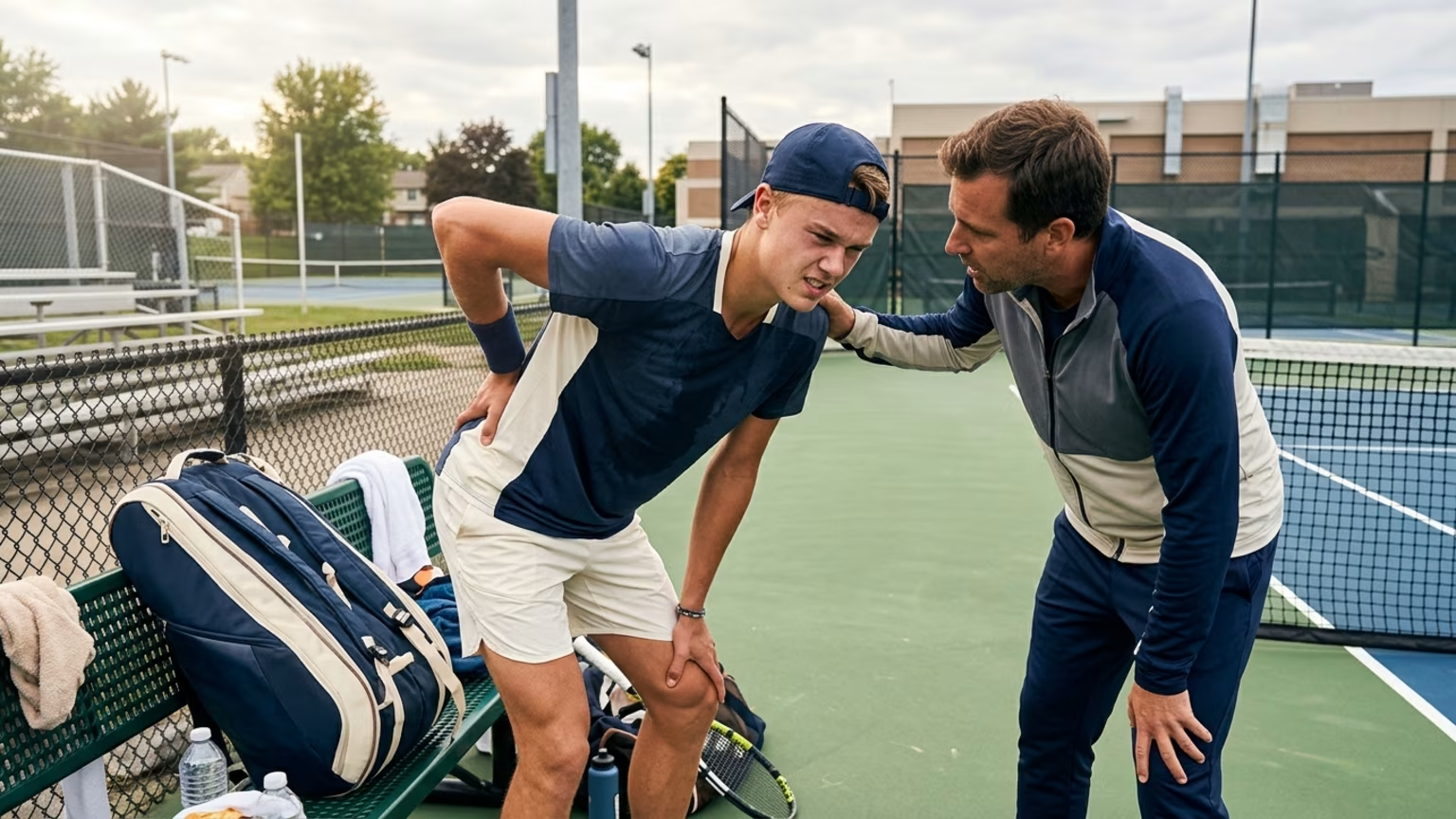
Holger Rune withdrew from the European Open with a back problem. The facts behind his decision and a grounded perspective for recreational players.

The Dink’s October 17 guide emphasizes deep returns, ball-height decisions and positioning against faster pickleball opponents.

A new report outlines padel and tennis gear trends. Learn how to assess adjustable rackets, sensor feedback and smart-court claims.
Read practical guidance for better movement, smarter preparation and a game that keeps working for you.
explore the Blog
