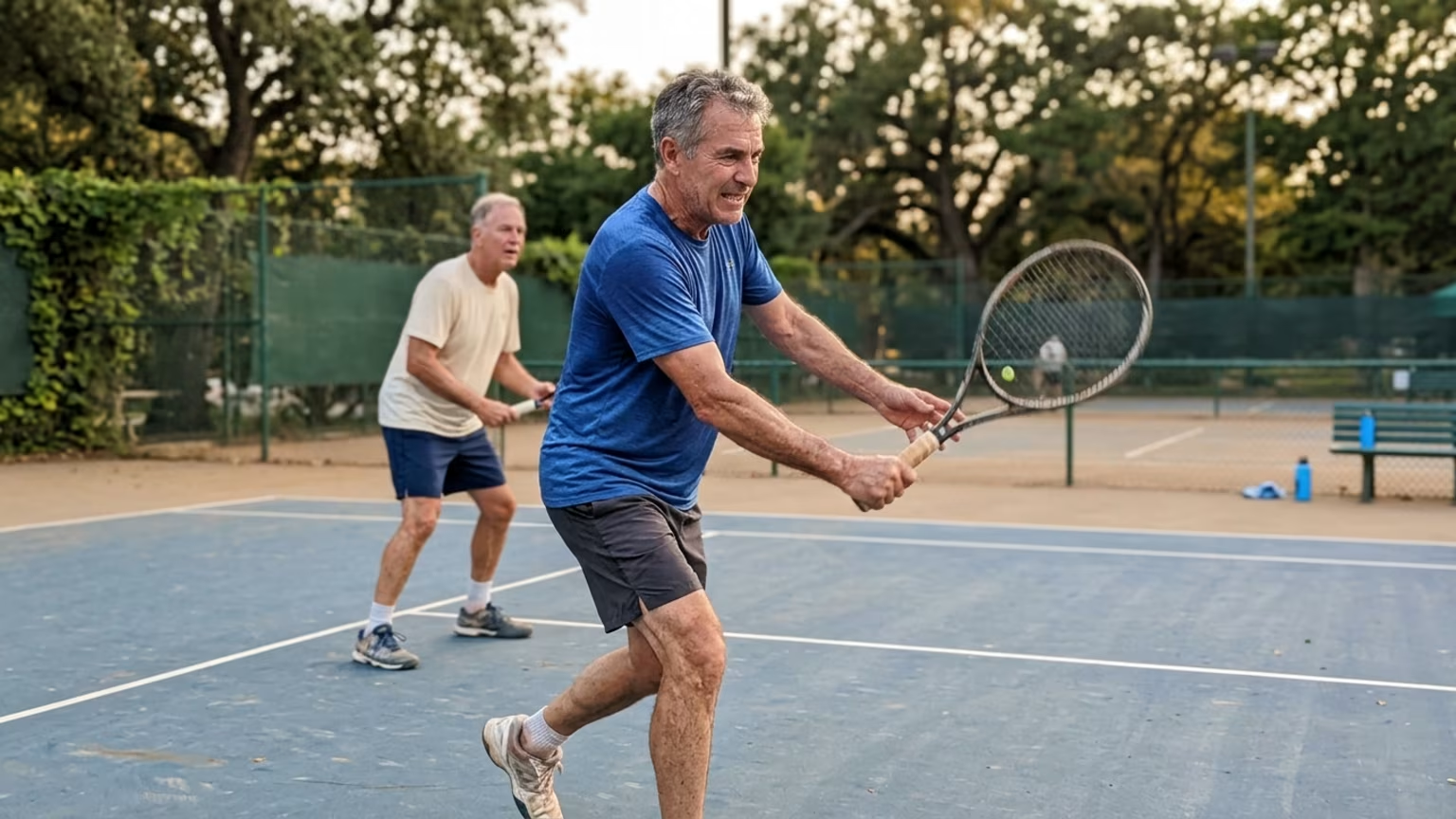

Learn how adult players can maintain court performance and athletic longevity by managing training volume, progressive strength, and sport-specific skill practice.




A medical summary recorded 397 pickleball-related fractures from 2002 through 2022. This represents a staggering 90-fold increase over that specific time period. This massive spike in emergency room visits is frequently blamed on players simply getting older. The truth is much less dramatic and far more manageable.
Spiking injury rates reflect poor workload management rather than inevitable physical decline. Getting older does not automatically mean your court performance must suffer. Players usually stop improving because they refuse to change their training habits. Athletic longevity comes from intentionally adjusting your approach to the game.
The fitness industry frequently sells extreme protocols to older adults. Influencers market heavy lifting routines as universal solutions for court sports. They promise that maximum-effort strength sessions will instantly cure every ache. These programs completely ignore the specific movement demands of racquet sports.
Adult recreational players do not need to train like professional bodybuilders. The reality is that consistency beats exhaustion every single time. Extreme gym workouts leave players too fatigued for meaningful technical practice. Overloading your nervous system prevents you from recovering before your next match.
A sustainable routine is far more effective than short bursts of extreme effort. You need practical workload progression and high movement quality. Our team at Evercourts consistently sees players thrive when they prioritize smart mechanics over sheer force. You can maintain your competitive edge by adapting your strategy sensibly.
"A few years ago, I realized my tennis serve speed was dropping, and my shoulder was constantly throbbing after matches. Instead of pushing through the pain, I took a month to rebuild my mechanics and focus on rotator cuff endurance. I stopped trying to hit flat aces and developed a much heavier kick serve."
"My win rate actually went up, and my shoulder stopped hurting. Sometimes longevity means outsmarting your own ego on the court."
Science confirms that measurable progress remains highly possible for adult athletes. A recent meta-analysis evaluated 41 randomized controlled trials involving 3,141 older adults. Researchers found that resistance exercise significantly improved muscle-specific strength in these participants. This benefit is clear, but the required approach varies heavily between individuals.
The analysis reported a standardized mean difference of 0.61 for strength improvements. It also showed a 95% confidence interval of 0.27 to 0.94. However, the studies demonstrated an I² heterogeneity value of 81%. This high variation proves there is no single standardized program that works perfectly for everyone.
A separate network meta-analysis reviewed 34 randomized controlled trials involving 1,746 middle-aged and older adults. It examined how resistance-training intensity and frequency relate to bone mineral density. Moderate-intensity sessions performed three times weekly ranked highly for several skeletal sites. High-intensity resistance exercise twice weekly ranked highly for total-body bone mineral density.
The specific demands of your sport also dictate your physical risks. A systematic review examined eight studies involving 2,022 padel players aged 31 to 57. It reported an injury rate of three injuries per 1,000 training hours. That number jumped significantly to eight injuries per 1,000 matches.
The padel review identified the elbow as the most frequently injured area. The knee, shoulder, and lower back were the next most common problem spots. Unpredictable match movements create a higher physical risk than controlled training drills. This data proves why structured preparation is essential for sustained performance.
The best alternative to extreme fitness trends is simple progression. Start by tracking what you can perform with strict technical control. Prioritize fundamental movements like split squats, hinges, pushes, and rotational exercises. Gradually increase the resistance or complexity only when your form remains perfectly solid.
Strength training provides force production, but actual play requires timing and perception. A recent review found low-certainty evidence that neuromuscular training might improve tennis stroke velocity. The same review reported inconsistent findings for serve accuracy and agility. Getting stronger does not automatically guarantee you will hit a better serve.
Skill practice must remain a separate and dedicated priority in your schedule. General conditioning cannot replace the specific timing required for competitive matches. Physical improvements and skill improvements are not perfectly interchangeable. You need to balance your gym time with intentional court practice.
Building a sustainable tournament calendar helps protect your recovery while maintaining your skills. You must manage your court exposure strictly as a training load. Adding too many sessions too quickly is a direct path to physical setbacks. The enthusiasm for the sport often causes players to ignore their warning signals.
A peer-reviewed study of Korean pickleball players showed a clear behavioral pattern. Greater weekly playing volume was independently associated with injury occurrence. A medical summary cited 1,110 cases representing 66,350 pickleball-related injuries from 2013 through 2022. Most of these recorded injuries occurred among players aged 65 to 80.
Abrupt workload spikes are usually the trigger for these joint issues. Monitoring your hours helps you maintain a reliable match-day protocol. Instead of rushing back to high volume, gradually build your physical tolerance. Monitor your court hours carefully when changing your playing frequency.
A return from illness or travel should begin well below your previous intensity. Adjust your warm-up to prepare your body for specific movement demands. Controlled lateral braking prevents the joint stress that often sidelines older adults. Poor posture and sloppy footwork will eventually erode your match capabilities.
Treat your movement quality as a primary performance variable during every session. A technically clean split step is more useful than endless exhausted repetitions. Customizing your workload to your specific sport helps you play for the long game. Smart conditioning bridges the gap between gym strength and court agility.
Short and fully recovered acceleration efforts preserve your overall movement speed safely. Avoid turning every single practice into an exhausting conditioning test. Use muscle soreness and recovery status as practical feedback for your schedule. Persistent pain or declining movement quality means you need a dedicated recovery day.
The true measure of a seasoned player is not how hard they can push their body, but how intelligently they can preserve it for tomorrow's match.
Follow Evercourts for practical insights on tennis, pickleball and padel performance, movement, recovery and healthy ageing. Stay connected for new articles, research-led guidance and ideas to help you play well and keep playing for years.


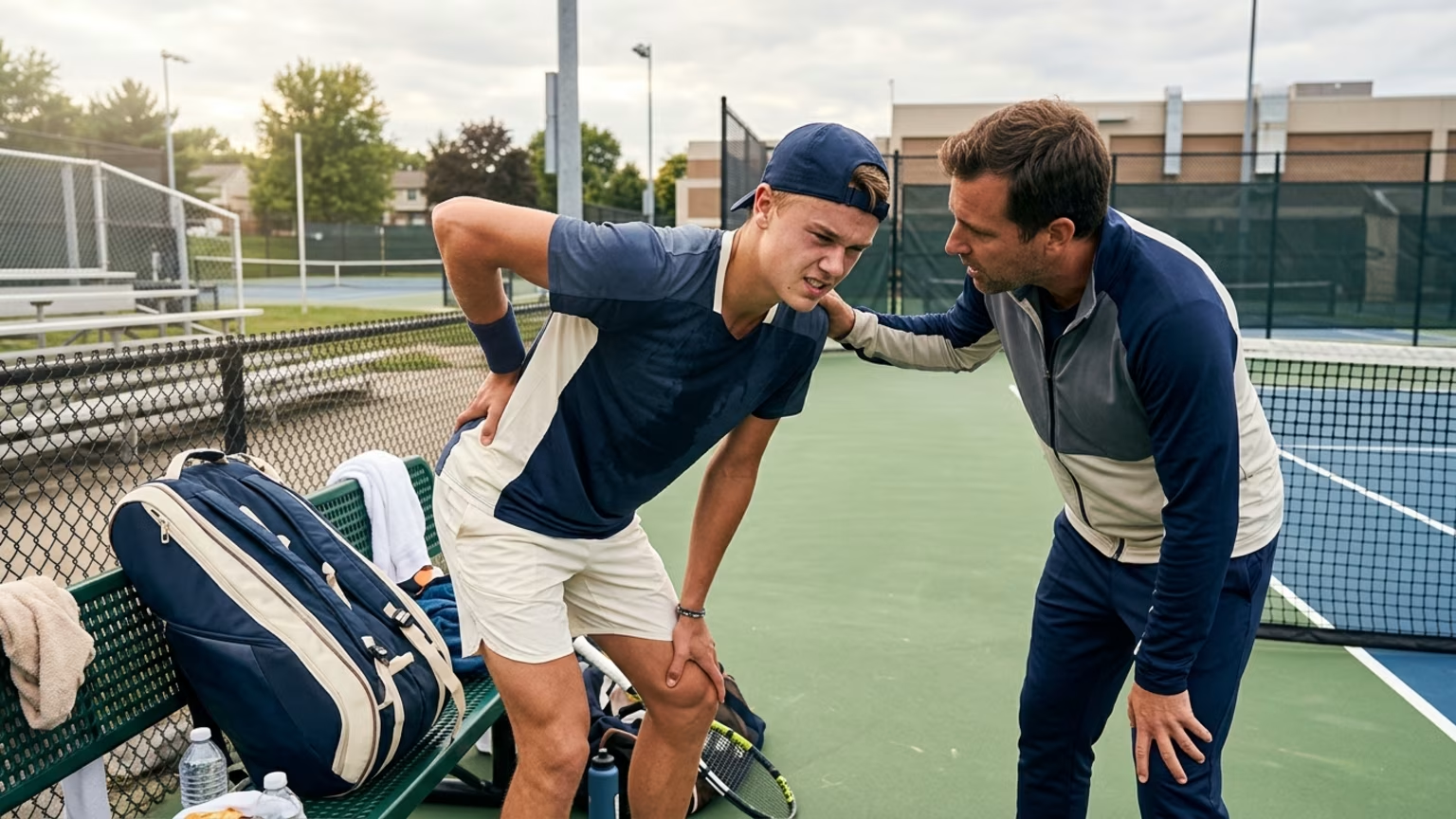
Holger Rune withdrew from the European Open with a back problem. The facts behind his decision and a grounded perspective for recreational players.

The Dink’s October 17 guide emphasizes deep returns, ball-height decisions and positioning against faster pickleball opponents.

A new report outlines padel and tennis gear trends. Learn how to assess adjustable rackets, sensor feedback and smart-court claims.
Read practical guidance for better movement, smarter preparation and a game that keeps working for you.
explore the Blog
