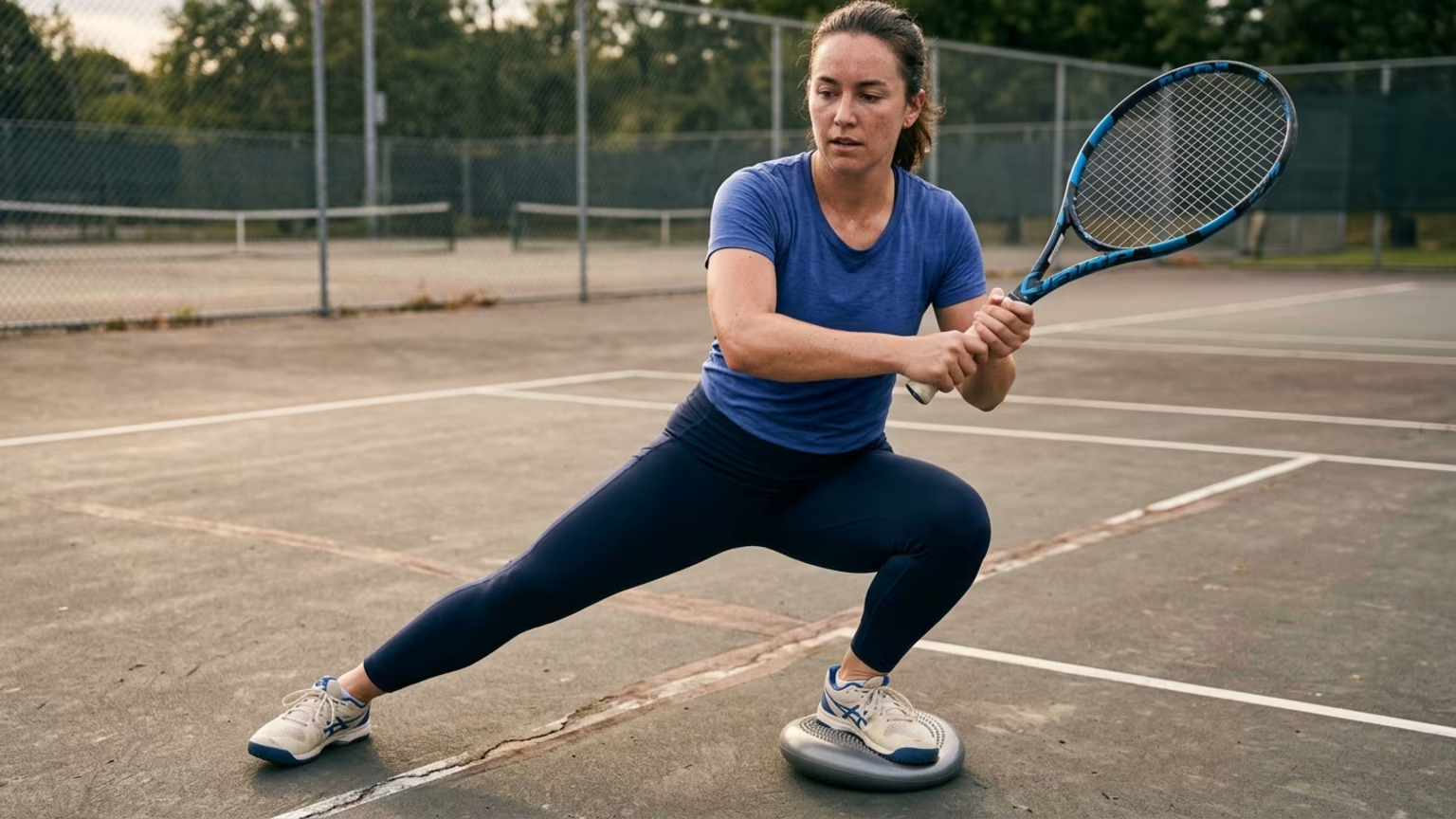

Learn why passive stretching isn't enough for tennis and pickleball. Discover a joint-by-joint active stability routine designed for adult racquet players.




A player drops their bag by the fence and immediately rests a leg on the nearest bench. They hold a deep hamstring stretch for two minutes while chatting about the upcoming match. Then they step onto the court and try to sprint for a sudden drop shot. The disconnect between static stretching and explosive movement happens on courts everywhere.
Passive stretching alone will not make you a better racquet sports player. The prevailing fitness culture insists that forcing your joints into extreme flexibility is ideal. In reality, maximizing your passive range of motion does not translate to moving quickly or braking safely. If you lack the active strength to control your joints under speed, extra flexibility simply creates a larger range of motion for potential injury.
When I first started playing pickleball, I noticed how many people skipped warming up entirely. They would jump straight out of their cars and right up to the kitchen line. I tried doing that and immediately pulled a calf muscle.
Pickleball requires just as much explosive lateral movement as tennis, just in a tighter space. Since then, I always spend five minutes doing dynamic lunges and ankle rolls. It changes everything about how confident I feel pushing off the baseline.
Online marketing often sells extreme mobility programs with the promise of endless flexibility. Creators post videos of deep squats and splits while suggesting this ensures safe court movement. The reality for an adult playing tennis, pickleball, or padel is completely different. We need the ability to repeatedly accelerate, decelerate, execute split steps, and control single-leg recoveries.
Passive mobility is simply how far a joint can be moved by an outside force. Active mobility is how far you can move and control that joint using your own muscles. Racquet sports demand stability and control while the body is loaded and reacting rapidly. A player might reach a deep lunge when completely relaxed on the living room floor.
That flexibility matters very little if they lack the hip and knee strength to exit that position during a rally.
Research supports a clear shift away from passive stretching right before explosive activity. A 2026 systematic review found that static stretching was associated with small negative effects on performance. Specifically, the review noted a pre-to-post change of -0.88% in performance metrics after static stretching compared with control conditions. The same review reported that dynamic stretching produced small performance improvements of approximately 0.55%.
The timing and duration of stretches also matter immensely for adult players. The review found that static stretching lasting more than 60 seconds produced the largest flexibility improvements. However, this prolonged stretching also carried a small subsequent performance decline. This means long passive stretching right before a high-speed match is not an effective readiness strategy.
Another review confirmed that routine static stretching before or after exercise lacks clear evidence of reducing overall exercise-related injury rates. Stretching alone is not a comprehensive injury-prevention tool for active adults. A more effective approach integrates off-court mobility training that blends active movement with muscular effort. Loaded stretching and strength training can increase range of motion while simultaneously building necessary force.
Instead of sitting on the floor pulling your hamstrings, you need an equipment-light routine that builds usable stability. This approach uses your body weight to rehearse the exact demands of racquet sports. You can perform these exercises at home or right beside the court before you play. The objective is to raise your body temperature and prepare your joints for multi-directional movement.
Start with a pre-court dynamic sequence to establish your active mobility base. Begin with a light jog in place for 60 seconds to prepare your cardiovascular system. Next, stand facing a wall and perform eight ankle rocks per side. Drive your knee over your toes without collapsing your foot inward.
Follow this with supported leg swings, moving forward and backward before switching to side swings. Stop just before you lose pelvic control. Move directly into walking lunges where you step forward, lower under control, and rotate gently toward the front leg. Follow this with a few repetitions of a controlled squat-to-stand movement.
Finally, rehearse your lateral shuffle and split-step for two rounds of 20 seconds. This specific rehearsal emphasizes quiet landings and readies your body for sudden changes of direction. This entire sequence takes roughly six to eight minutes to complete. It provides immediate preparation without compromising your reactive power output.
To complement your pre-match preparation, schedule two separate days a week for active strength work. Split squats are an excellent way to develop strength in a staggered stance. You can hold a chair or a fence if you need help with balance. Perform six to ten repetitions on each side while lowering yourself slowly.
Single-leg Romanian deadlifts also train you to hinge at the hip while keeping your pelvis perfectly level. Reach your free leg backward while hinging at the hip, and use a wall for support as needed. A light backpack or water bottle can add resistance once the bodyweight version feels easy.
Calf raises with a slow lowering phase build essential resilience for your lower legs. Stand near a wall for balance. Rise under control, pause briefly, and lower yourself slowly. Perform ten to fifteen repetitions on each side to fortify your Achilles tendons.
Upper body strength and core control remain vital for safe racquet mechanics. Elevated push-ups against a wall or bench provide the necessary pressing strength for shoulder stability. Resistance band rows teach you to pull your elbows back securely without shrugging your shoulders. Adding a 30-second side plank helps transfer force safely between your upper and lower body.
Neuromuscular control allows you to brake safely when chasing down a wide shot. Practice single-leg balances near a wall for 30 seconds per leg. Make the balance more difficult by reaching your free foot forward, sideways, and backward. The goal is to keep your standing knee aligned without letting it collapse inward.
Step-and-stick deceleration drills build confidence in your ability to stop fast on the court. Take three quick steps, plant firmly on one leg, and hold that landing completely still for two seconds. Focus heavily on a quiet and stable braking action rather than moving at maximum speed. Mastering controlled braking is often more valuable than raw sprinting speed for adult players.
Wall-supported hip airplanes offer an excellent way to train rotational stability. Hinge forward slightly on one leg, and rotate your pelvis open and closed while holding a support. Keep this movement small and highly controlled to protect your lower back. You can also add low lateral hops by jumping a short distance side to side and landing softly.
When you feel ready to progress your routine, change only one variable at a time. Move from two-leg exercises to split-stance positions before attempting single-leg variations. Add speed to your movements only after the slow version is completely controlled. A player should be able to own the landing before trying to make the movement faster.
This structured progression is especially important for older players. The practical objective is not simply gaining more range of motion. The goal is preserving your ability to produce, absorb, and redirect force efficiently. This sensible approach keeps you playing confidently week after week.
If you enjoy passive stretching, reserve it for the hours after you finish playing. You can use relaxed static holds for your calves, hip flexors, and hamstrings once the match is over. Hold each position for up to 60 seconds while breathing normally and stopping well short of pain. This keeps your high-intensity preparation active while using passive methods solely for dedicated flexibility goals.
For adult athletes, managing training volume is just as important as the exercises themselves. Progress slowly by adding repetitions before you ever consider adding weight. Organizing a sensible weekly racquet sports routine helps balance mobility work with court time effectively. Always prioritize moving well over forcing extreme ranges of motion.
Active stability and strength-through-range prepare adult racquet players for the true demands of the court by replacing passive flexibility with the dynamic control required to move safely and play longer.
Follow Evercourts for practical insights on tennis, pickleball and padel performance, movement, recovery and healthy ageing. Stay connected for new articles, research-led guidance and ideas to help you play well and keep playing for years.


Holger Rune withdrew from the European Open with a back problem. The facts behind his decision and a grounded perspective for recreational players.

The Dink’s October 17 guide emphasizes deep returns, ball-height decisions and positioning against faster pickleball opponents.

A new report outlines padel and tennis gear trends. Learn how to assess adjustable rackets, sensor feedback and smart-court claims.
Read practical guidance for better movement, smarter preparation and a game that keeps working for you.
explore the Blog
