
Understand how recent sports science explains change of direction, and see why efficient deceleration is the key to healthy aging in modern racquet sports.




On July 31, 2026, Science of Multispeed published a detailed analysis of the biomechanical demands of changing direction. The operational tension in racquet sports peaks in the exact fraction of a second before a stroke. Players must instantly absorb massive momentum before pushing back toward the center of the court. This new research confirmed that efficient movement relies on preparing the body, reducing momentum, redirecting the center of mass, and accelerating again.
The ability to repeat these physical tasks over several sets often determines the outcome of a match. Most adult competitors spend hours refining their swing mechanics while entirely ignoring their braking capacity. Efficient deceleration dictates how quickly you can return to a neutral position. Improving this specific skill is essential for players who want to maintain their physical capabilities across a long season.
The core facts of the recent publications clarify how the body handles rapid stops. A typical change of direction can be divided into an initiation phase, a preparation phase in which the player decelerates, and an execution phase in which the plant step redirects the body. A 2025 systematic review summarized by DJP Athlete on July 17, 2026, identified several vital contributors to this process. These include braking and propulsive forces, trunk position, center-of-mass height, and lower-limb power.
The angle of movement directly influences the physical requirements placed on the body. Moving at 45, 90 or 180 degrees requires varying combinations of braking force, trunk control, joint power and lateral stability. A drill that improves a player’s ability to make a shallow cut should not automatically be assumed to transfer perfectly to a sharp court movement. The preparation phase is never wasted time because it is the exact mechanism that makes the next push-off possible.
The DJP Athlete analysis also recommends building eccentric strength in the hips and knees to manage these demands. Exercises such as controlled single-leg Romanian deadlifts, split squats, and Nordic hamstring exercises were highlighted. These targeted movements help develop the structural integrity required to absorb momentum safely. Stronger lower limbs allow athletes to maintain appropriate trunk inclination and a lower center of mass during sudden directional shifts.
Professional athletes often train for extreme speed and highly reactive cutting under massive loads. Adult recreational players focusing on healthy aging should view movement training through a much more deliberate lens. Sidea Ita published guidance on July 15, 2026, recommending a highly progressive approach for deceleration training. This approach begins with low-speed linear braking before gradually adding speed, stopping distance, exit angle, and decision-making demands.
Managing intense court sessions requires looking far beyond basic physical drills. "I used to think a tough conditioning block was the only way to improve my court endurance. Then I started tracking my sleep. I noticed that on days I slept less than six hours, my reaction time at the net was noticeably sluggish, and I felt gassed by the second set."
"Prioritizing consistent rest did more for my late match stamina than any extra sprints ever did. Recovery is the true foundation of performance." Understanding the recovery cost of racquet sports movement helps players handle intense multidirectional footwork. These repeated landing demands place substantial mechanical stress on the lower limbs and lumbopelvic region.
To safely build capacity, recreational players must implement practical movement progressions that respect tissue tolerance. TennisYard published a coaching analysis on July 27, 2026, regarding the fundamental mechanics of the split step. They recommend a small, well-timed split-step landing around the opponent’s contact, followed by a short first step. This creates a balanced posture where the athlete is not already committed to a single predetermined direction.
Developing essential footwork skills requires starting slowly with static timing exercises. Players should begin in a comfortable athletic stance, make a small unweighting action, and land softly. The objective is not height but arriving in a balanced position from which either foot can move first. Visual cues from a partner can then be added before introducing a live ball.
The lateral push can be practiced by stepping sideways, stopping, holding the position, and returning under control. This push-and-stick drill ensures movement comes from the hips rather than reaching with the upper body. Players can then progress to taking two or three short lateral steps before braking to a complete halt. Finally, a shadow stroke can be added at the end of the movement to simulate match conditions.
Crossover recovery steps are incredibly useful when a simple lateral shuffle becomes inefficient. Players should begin with a deliberate walking crossover to maintain a tall trunk and finish in a balanced stance. Next, travel two or three crossover steps, separate the feet, and settle into an athletic ready position. Finally, move laterally with a crossover, begin braking early, and finish with a stable adjustment step.
Controlled stops should also be trained progressively to ensure proper joint mechanics. A player can march forward for a few steps, stop, and keep the knees softly flexed. They can then transition from walking to easy jogging, increasing the stopping distance before adding any significant speed. This follows the fundamental principle of developing braking control before attempting more demanding entry velocities.
The data from the July 31, 2026, Science of Multispeed report provides vital statistical context. General change-of-direction tasks can involve ground-contact times of approximately 0.15 to 0.50 seconds. Within this incredibly brief window, reported ground-reaction forces may reach roughly two to five times body weight. This massive structural load depends heavily on entry velocity, direction, and the physical capacity of the athlete.
These figures demonstrate precisely why proper deceleration technique is vital for ongoing athletic participation. Without adequate preparation, these massive forces are absorbed entirely by unprepared joints and connective tissues. A lower center of mass, appropriate trunk inclination, and the ability to produce braking force are absolutely critical. These specific physical factors are directly associated with the faster and safer completion of change-of-direction tasks.
Over the next season, racquet sports training will increasingly prioritize efficient deceleration over raw sprinting speed. Coaches will implement more controlled landing drills to build vital eccentric strength in the hips and knees. Exercises like controlled single-leg Romanian deadlifts and split squats will become standard foundational practice for adult players. The professional focus will firmly shift to movement quality, dynamic balance, and the ability to control momentum.
Players who understand how to absorb momentum will enjoy longer matches and better post-match recovery routines. Earning speed through control allows you to move quickly without turning every late ball into an emergency stop. The most capable athletes on the court are often those who manage their brakes most efficiently. Start your next warm-up by practicing five slow lateral pushes and controlled stops in each direction.
Follow Evercourts for practical insights on tennis, pickleball and padel performance, movement, recovery and healthy ageing. Stay connected for new articles, research-led guidance and ideas to help you play well and keep playing for years.


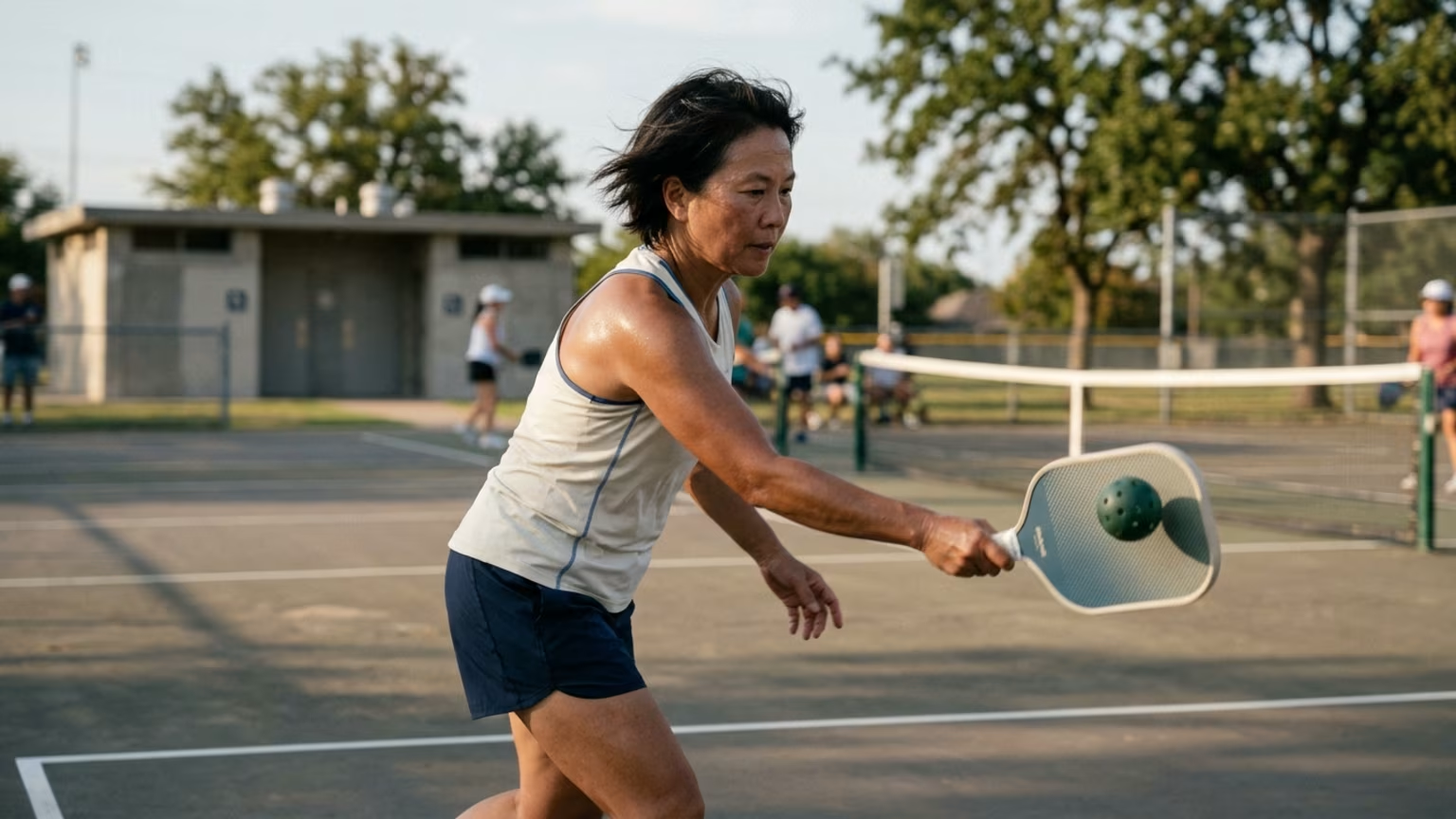
A recent live-play test of a silent pickleball highlights its value for practice, but standard balls still perform better for match play and power control.

An evidence check on sports supplements like tart cherry juice. Learn why racquet sports players should prioritize core nutrition over functional foods.
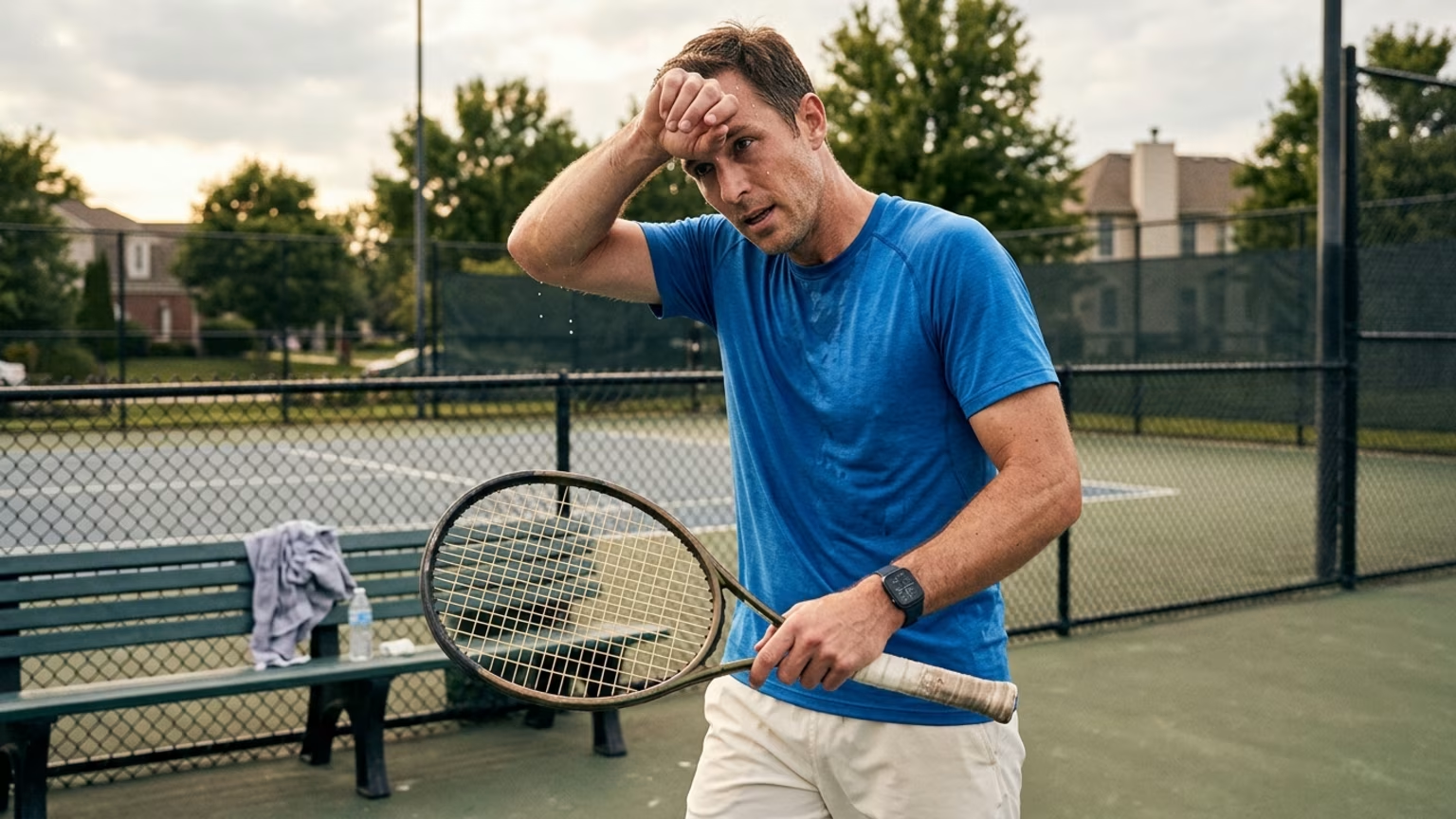
In late 2026, Oura analyzed wearable data to see how recreational tennis impacts heart health and recovery. Learn what this means for your athletic longevity.
Read practical guidance for better movement, smarter preparation and a game that keeps working for you.
explore the Blog
