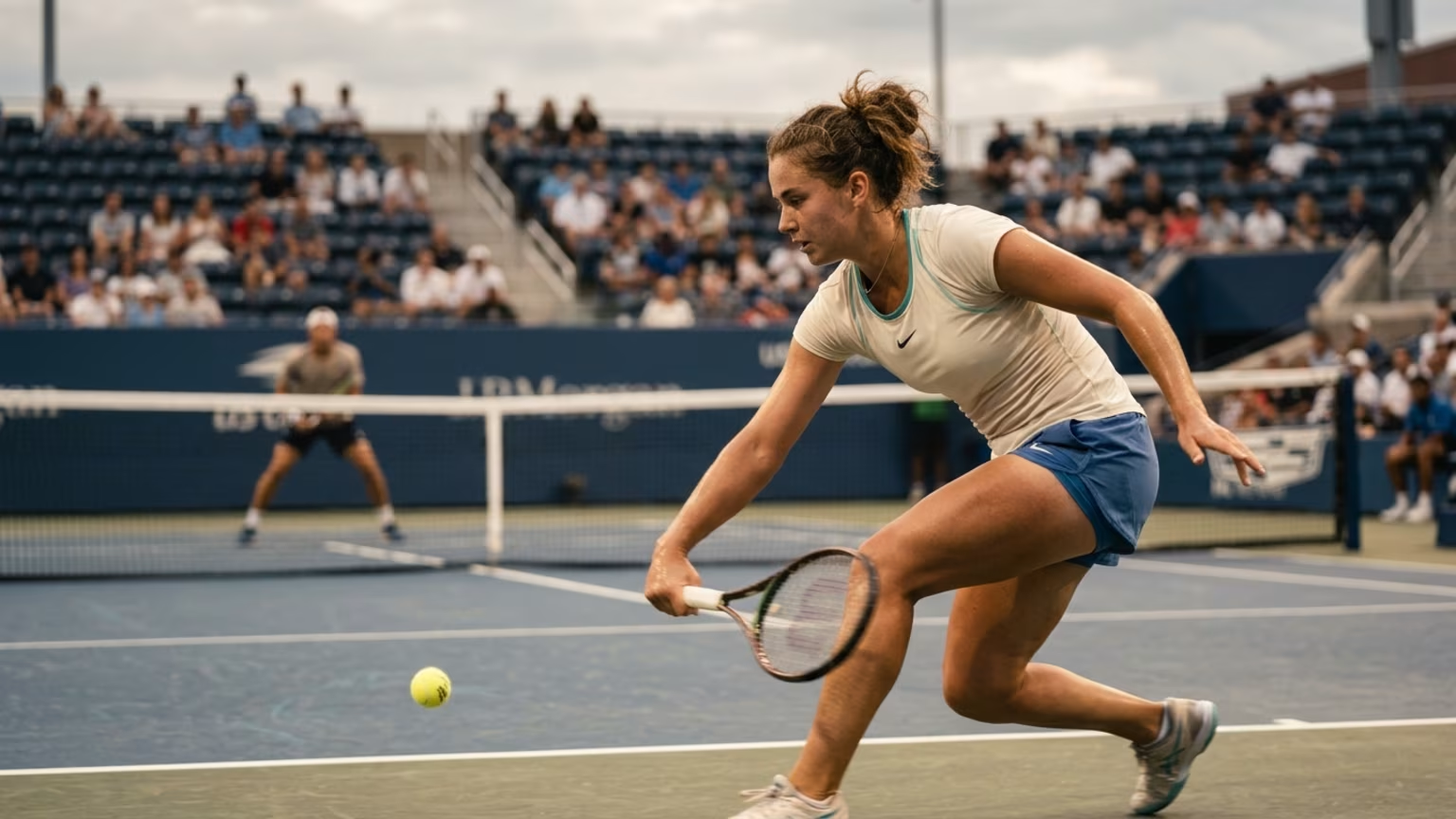

Mount Sinai returns as the US Open's official health care partner in 2026. Discover how onsite diagnostic services shape player health and healthy aging.




The hard courts in Queens run hot during late August practice sessions. Professional players carefully manage their final preparations under the intense late summer sun. On August 20, 2026, Mount Sinai announced it is returning as the official health care partner of the US Open Tennis Championships. The 2026 tournament marks the institution's 14th consecutive year providing specialized medical support for competitors.
This partnership operates as a fully integrated medical system rather than a simple first aid station. Mount Sinai brings a comprehensive clinical team directly to the USTA Billie Jean King National Tennis Center. The medical staff includes orthopedic surgeons, sports medicine physicians, emergency medicine doctors, and musculoskeletal radiologists. This diverse group manages both acute tournament injuries and routine player maintenance.
For the 12th consecutive year, the institution is providing onsite diagnostic services to support player care. Clinicians use a portable GE Healthcare LOGIQ e ultrasound device right at the point of care. Mount Sinai reports that its radiology team performs an average of 90 to 100 ultrasound examinations at the US Open each year. This capability allows tournament staff to triage musculoskeletal issues rapidly.
When a professional player requires a more detailed assessment, the medical team acts quickly. Staff can determine immediately if a player needs further imaging like an MRI. Players are sent to The Mount Sinai Hospital for these scans when required. The images can then be reviewed remotely at the tournament through a radiology workstation.
The tournament schedule itself requires high efficiency from these clinical teams. The 2026 US Open Fan Week runs from August 23 through August 29. The singles and doubles main draw follows immediately from August 30 through September 13. Mount Sinai will engage fans through an onsite booth, a children’s sports zone, and its “Play Well, Stay Well” campaign.
Professional athletes benefit immensely from immediate diagnostic imaging and a coordinated care pathway. An elite competitor who feels a sudden sharp pain can receive a rapid ultrasound and specialist consultation within minutes. Recreational tennis, pickleball, and padel players obviously do not have this luxury. Adult players must instead take responsibility for their own physical resilience through smart preparation.
Adult players must recognize when to step back and honestly assess a developing problem. In our experience, we have learned this lesson firsthand. "A few years ago, I realized my tennis serve speed was dropping, and my shoulder was constantly throbbing after matches. Instead of pushing through the pain, I took a month to rebuild my mechanics and focus on rotator cuff endurance."
"I stopped trying to hit flat aces and developed a much heavier kick serve. My win rate actually went up, and my shoulder stopped hurting. Sometimes longevity means outsmarting your own ego on the court."
Proper preparation can prevent many common musculoskeletal issues before they require any medical imaging. Baylor College of Medicine advises tennis players to use dynamic stretching and a proper warm up. The institution specifically recommends taking roughly 15 minutes to warm up before play. Players must maintain sound technique and actively avoid allowing their form to deteriorate with fatigue.
Melissa Leber, MD, will again serve as director of player medical services for the tournament. She notes that tennis is a sport people can enjoy through different life stages. Adjusting court coverage or taking an extra rest day is a sensible way to maintain athletic longevity. Incorporating a routine from a long term mobility framework builds better habits.
The demand for clear injury prevention guidance is growing steadily alongside the sport itself. The USTA reported that 27.3 million people played tennis in the United States in 2025. This impressive figure represents an increase of 1.6 million individuals from the previous year. A racket sports business publication also noted that 14.5 million of these individuals were core players who played at least 10 times during 2025.
Many of these active adults rely heavily on accessible local facilities for their weekly matches. The USTA stated that nearly 40 percent of U.S. tennis players in 2025 played in public parks. This participation boom reinforces exactly why understanding the physical demands of the game matters. Understanding pro tennis workload concerns can provide useful perspective on pacing yourself.
Research strongly associates regular play with positive long term health outcomes. A British Journal of Sports Medicine study discussed by Women’s Health followed 8,577 Danish residents between 1991 and 2017. The report noted that regular tennis players lived almost 10 years longer than sedentary counterparts. A separate 2018 study found that racquet sports participation was associated with a 47 percent lower risk of all cause mortality.
The same 2018 study noted a 59 percent lower risk of cardiovascular mortality. These striking statistics reflect observational associations rather than concrete clinical guarantees. Playing tennis does not automatically add a fixed number of years to your life. Reviewing a bone health and long term training guide can also support a resilient body.
The integration of rapid diagnostic technology into event operations will likely expand in the coming years. Tournaments are treating early intervention as a primary component of athlete performance and recovery. Fast answers from onsite ultrasound machines help players make objective choices about continuing a difficult match. This shift moves professional sports medicine away from reactive rest and toward precise musculoskeletal management.
Recreational players should observe this professional trend and apply the underlying logic to their own routines. You might not have a skilled radiology team waiting at your local park. However, you can still build a reliable care pathway by identifying a trusted physical therapist before an injury strikes. Taking control of your court health requires planning ahead and respecting your physical limits.
Evercourts believes that staying informed is your best defense against unnecessary time away from the sport. Prepare your body properly, manage your weekly workload, and respect the signals your joints give you. Keep moving well, and we will see you on the courts.
Follow Evercourts for practical insights on tennis, pickleball and padel performance, movement, recovery and healthy ageing. Stay connected for new articles, research-led guidance and ideas to help you play well and keep playing for years.


Holger Rune withdrew from the European Open with a back problem. The facts behind his decision and a grounded perspective for recreational players.

The Dink’s October 17 guide emphasizes deep returns, ball-height decisions and positioning against faster pickleball opponents.

A new report outlines padel and tennis gear trends. Learn how to assess adjustable rackets, sensor feedback and smart-court claims.
Read practical guidance for better movement, smarter preparation and a game that keeps working for you.
explore the Blog
