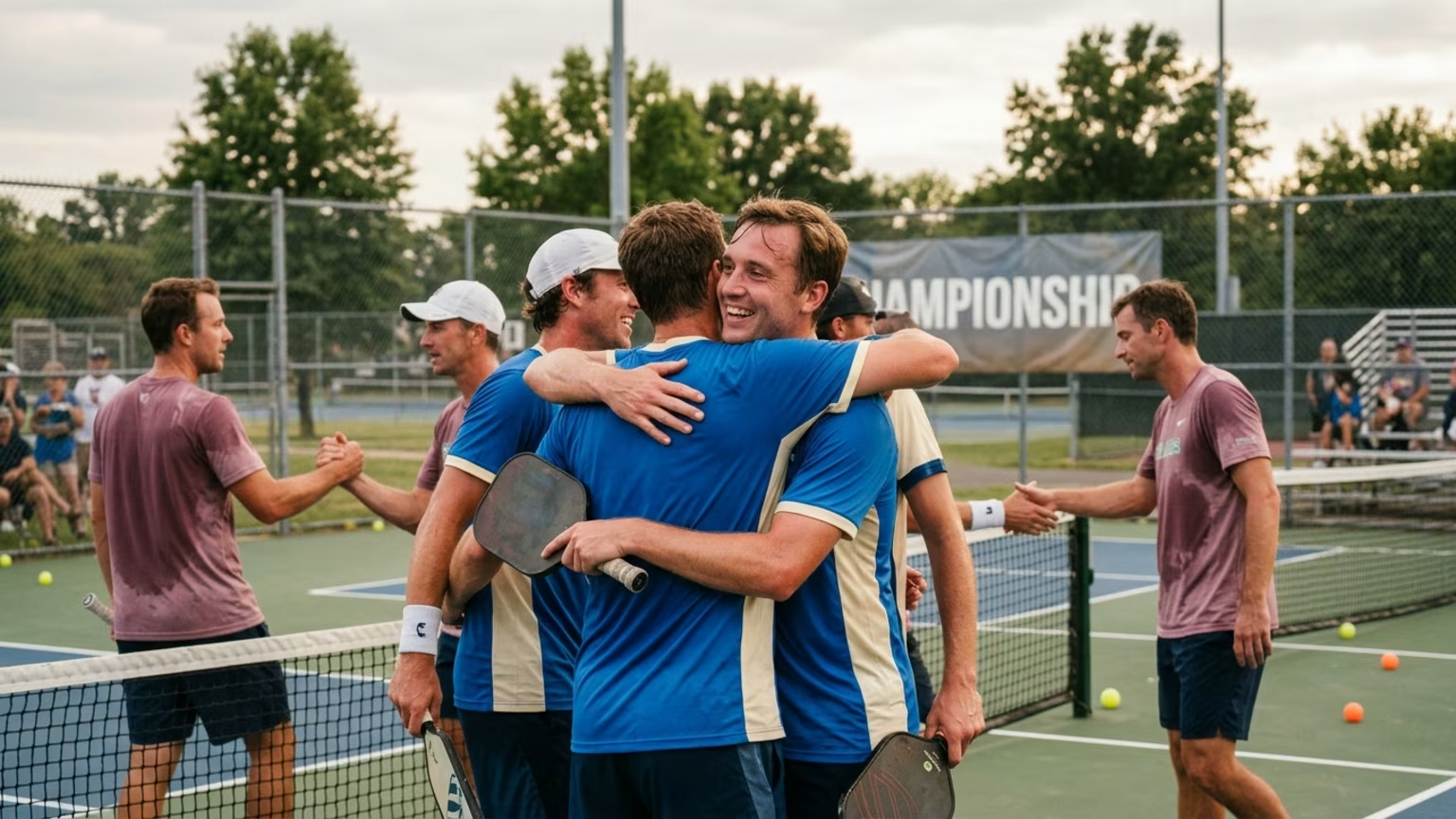

The New Jersey 5's secured their first MLP title through tactical consistency. Learn how smart spacing and movement patterns can support your athletic longevity.




The St. Louis pair of Patriquin and Tardio held a 30-4 record during the regular season, yet they finished just 4-4 during the championship weekend, according to Forbes. This sharp contrast reveals that a dominant prior partnership does not guarantee success under the intense pressure of professional finals. It shows that tactical adjustments and intelligent spacing often matter more than relying on familiar routines.
The New Jersey 5's won their first season-ending Major League Pickleball title by defeating the St. Louis Shock in a two-match sweep. The final was a matchup between the No. 1 seed, New Jersey, and the No. 2 seed, St. Louis. Securing this victory required the champions to navigate gender doubles, mixed doubles, and the demanding DreamBreaker singles tiebreak format. Players had to endure constant changes of direction, rapid starts, and sudden stops across all these disciplines.
When I first started playing pickleball, I noticed how many people skipped warming up entirely. They would jump straight out of their cars and right up to the kitchen line. I tried doing that and immediately pulled a calf muscle. Pickleball requires just as much explosive lateral movement as tennis, just in a tighter space.
Since then, I always spend five minutes doing dynamic lunges and ankle rolls. It changes everything about how confident I feel pushing off the baseline. Professional competitors like Christian Staksrud, who was named Finals MVP, face similar lateral stress on a much larger scale. Forbes noted his energy and composure during the deciding matches, which helped New Jersey overcome early deficits.
The New Jersey roster featured prominent athletes including Christian Staksrud and Noe Khlif. Hayden Howells and Anna Leigh Waters also anchored the championship team. They were joined by JW Johnson and Rane. This victory added New Jersey to a list of prior MLP champions from Columbus, Dallas, Chicago, and Los Angeles.
The championship weekend was highly competitive, as no player went undefeated. Anna Bright and Fahey led the weekend in points percentage at 64 percent, according to Forbes. However, New Jersey relied on timely execution and resilience rather than pure dominance. St. Louis opened the first women’s game with a 6-1 lead and eventually won 11-2 after benefiting from New Jersey errors.
Those early errors included netted drives from Jorja Johnson and pressing mistakes from Waters. New Jersey’s men initially moved ahead 4-1 in their game. St. Louis quickly recovered and won the men’s game to take a 2-0 match lead. New Jersey responded when the match turned to mixed doubles.
Anna Leigh Waters and Noe Khlif won 11-4 in their mixed doubles appearance. This was followed by an 11-8 victory from Fed and Jorja Johnson. The first match eventually went to a DreamBreaker, where St. Louis built an 18-15 lead. The St. Louis team later reached a tense 20-20 tie.
New Jersey gave Waters the ball, and she won two crucial points against Fahey to close out a 22-20 DreamBreaker. The second finals match followed a completely different scoring trajectory. New Jersey swept the gender doubles games with tight scores of 11-9 and 12-10. St. Louis answered by winning both mixed-doubles games with scores of 11-6 and 11-9.
This back-and-forth battle forced another deciding DreamBreaker tiebreak. New Jersey controlled this final sequence from the very outset. Hayden Howells and Waters each produced 3-1 turns for their team. Staksrud then blanked Hunter Johnson 4-0, moving New Jersey to a 14-6 lead.
New Jersey ultimately won that second DreamBreaker 21-9 to complete the finals sweep. Forbes also documented effective tactical communication during these critical moments. Howells told his partner that a specific opponent 'was their guy' during the men's game. Staksrud later pointed to a location in the Kitchen and said, 'that's where im' going.'
The semifinal match against the Brooklyn Pickleball Team offered another excellent example of tactical adjustment. New Jersey won the opening women’s game 11-2 and eventually took the men’s game 11-8. Brooklyn attempted a late comeback, but New Jersey stopped that run with strong defense before scoring the final three points. In the second semifinal match, New Jersey placed Waters and Khlif first in the mixed-doubles order, and they won 11-4.
The quick stops and lateral shifts seen in the Major League Pickleball finals mirror the physical demands of tennis and padel. All three sports place heavy loads on the lower body during sudden changes of direction. A 2026 health advisory from Mutual of Omaha identifies multiple lower-body risks for older players. The report highlights vulnerabilities in the ankle, knee, calf, and Achilles tendon.
Players also face fall-related injuries alongside stress to the hand, wrist, and shoulder. Managing these specific risks is a fundamental part of healthy aging on any court. Tennis requires players to sprint longer distances, while padel demands explosive jumps to defend the glass. Pickleball condenses these intense movements into a tighter space, amplifying the frequency of sudden stops.
Those looking to adapt their footwork effectively must account for these rapid shifts. Our team at Evercourts believes that physical preparation must match the specific stresses of your chosen sport. Players who adopt a consistent warm-up routine often experience better early-match movement. Mutual of Omaha recommends using court-appropriate shoes, pacing play, and building strength.
They also advise taking rest between games, hydrating well, and avoiding play through heat. Combining these routines helps players recover quickly from unexpected missteps during a rally. The broader trend implication is that longevity on the court depends on managing the total cost of play. A player who wins more points with better positioning may be able to sustain quality over a longer session.
Establishing higher-percentage targets often requires fewer emergency sprints from baseline to net. Maintaining physical capacities ultimately supports a safer, more efficient playing style.
The New Jersey 5's victory demonstrates that tactical discipline and partner communication are vital competitive tools. Adjusting matchups and defining clear spacing can reduce emergency sprints and protect joint health over long sessions. Useful partner language should identify targets clearly without wasting time. Staksrud’s recorded comment about where he intended to go is a perfect example of location-specific communication.
In club play, the goal is reducing uncertainty, rather than providing constant verbal encouragement. Clear spacing rules can also reduce the number of desperate lateral recoveries and painful collisions. To build a sustainable routine, focus on high-percentage patterns and deliberate targeting during matches. Brief communication between points helps partners align on strategy without demanding excessive physical output.
Players can manage their seasonal workload more effectively when they rely on strategy rather than sheer force. Remember how the St. Louis pair of Patriquin and Tardio saw their 30-4 regular-season dominance turn into a 4-4 championship weekend. That dramatic shift proves that even the most established routines must evolve when surface conditions, pressure levels, and opponents change. True athletic longevity comes from staying tactically adaptable and physically prepared for whatever the next match demands.
Follow Evercourts for practical insights on tennis, pickleball and padel performance, movement, recovery and healthy ageing. Stay connected for new articles, research-led guidance and ideas to help you play well and keep playing for years.


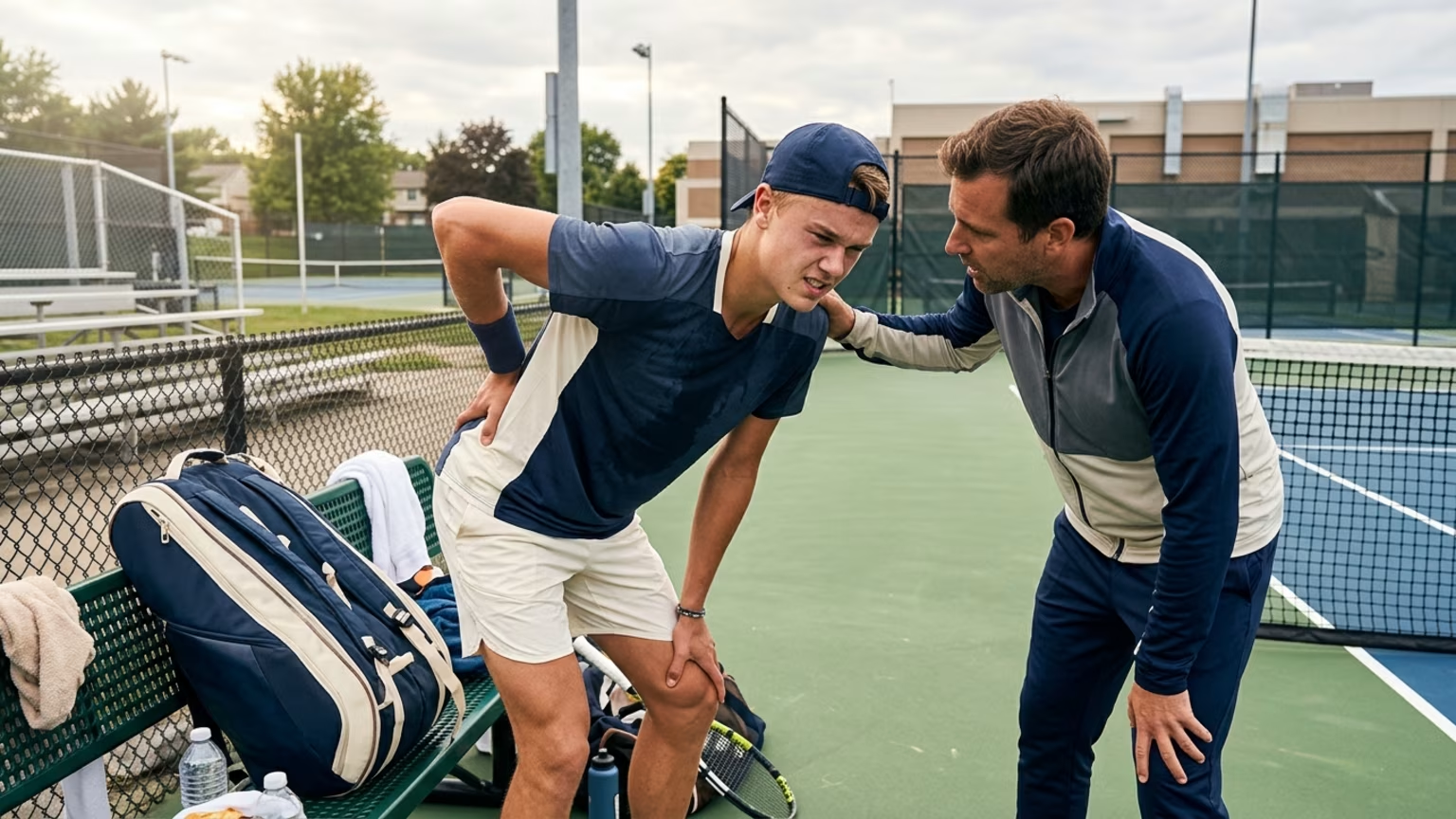
Holger Rune withdrew from the European Open with a back problem. The facts behind his decision and a grounded perspective for recreational players.

The Dink’s October 17 guide emphasizes deep returns, ball-height decisions and positioning against faster pickleball opponents.

A new report outlines padel and tennis gear trends. Learn how to assess adjustable rackets, sensor feedback and smart-court claims.
Read practical guidance for better movement, smarter preparation and a game that keeps working for you.
explore the Blog
