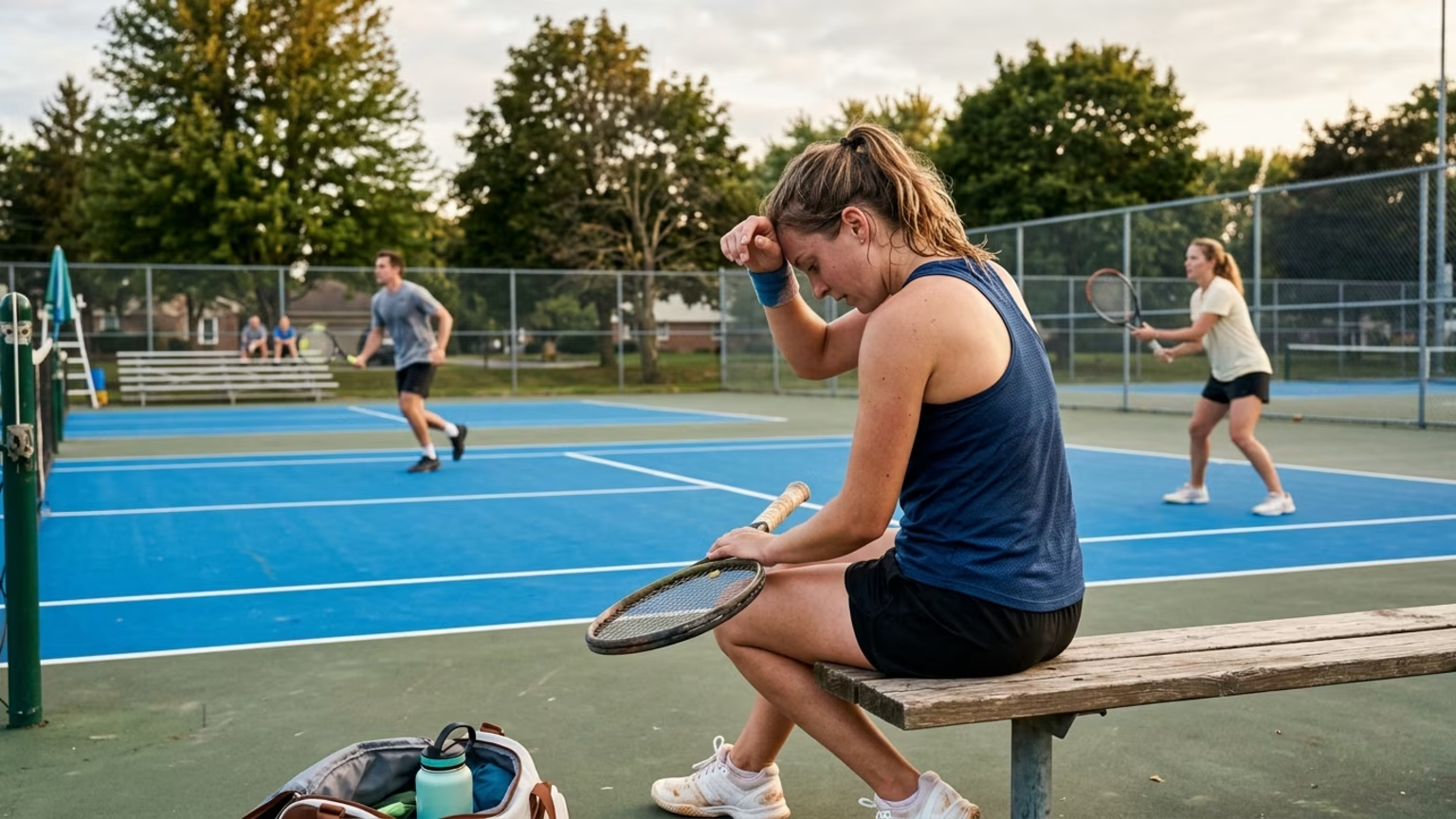

Packed 2026 ATP and WTA tournament schedules highlight why recreational tennis players must plan their hydration, cooldowns, and recovery between matches.




On October 4 in 2026, the professional tennis calendar delivered a packed schedule that forced athletes to manage quick turnarounds. The ATP China Open in Beijing and the Japan Open in Tokyo both staged major quarterfinal rounds on the exact same day. This dense scheduling created an environment where advancing required consistent performance across consecutive calendar days. Players facing these compressed timelines had to prioritize physical readiness to survive the late stages of the draw.
The reality of these tightly packed competition blocks highlights a fundamental challenge in racquet sports. A player might complete a demanding match only to face another opponent less than 24 hours later. This timeline leaves very little room for error in a physical maintenance routine. The events of that weekend serve as a clear reminder of how scheduling directly impacts physical readiness.
The ATP order of play document confirmed the Beijing tournament dates as September 30 through October 6. This late season event gathered a strong field of competitors at the National Tennis Center. According to a schedule preview from TennisConnected, the event hosted its men’s singles quarterfinals on that Sunday. The singles and doubles finals were then scheduled for October 6.
The financial stakes of the Beijing tournament added significant pressure to the physical demands. The official order of play listed the event purse at a substantial USD 4,089,385. Competing for this prize money requires sustained focus and physical resilience over multiple days. The schedule required athletes to string together victories without extended rest periods.
Simultaneously, a second major tournament applied similar scheduling pressure on its competitors. The BBC schedule page labeled the Tokyo event as the ATP Japan Open. The outlet confirmed the presence of men’s singles quarterfinals on that Sunday schedule. This parallel timeline forced multiple player fields to manage their energy reserves carefully.
While the available schedule coverage identifies these events and planned matches, it has clear limitations. The published schedules do not quantify specific match length or individual serve workloads. They also do not provide concrete data on how these factors affected player recovery outcomes. The documents simply establish the timeline of the planned competition.
The professional schedule places multiple match rounds across consecutive calendar days. Adult recreational players often face very similar structural challenges during weekend leagues. Competing in a Saturday morning match before playing again on Sunday is a common amateur experience. The physical toll of this amateur scheduling requires serious attention to body maintenance.
Many recreational players make the mistake of treating each tournament match as a completely isolated effort. They pour all their energy into the first round without considering the physical cost of the next day. A better approach involves viewing the entire weekend schedule as one continuous physical event. This mindset shift is essential for athletic longevity and consistent performance.
Recreational tournament players can apply professional pacing principles by planning their basic recovery needs in advance. Effective daily nutrition and real rest should begin before the first ball is even struck. Players must maintain consistent hydration throughout the day rather than just drinking water when thirsty. Proper fluid intake helps the body handle the stress of consecutive matches.
The time spent immediately after a match concludes is highly valuable for physical maintenance. Adult players should implement sensible active cooldowns before leaving the facility. Five to ten minutes of light movement can help the body transition out of a highly competitive state. Skipping this step often leads to increased stiffness before the next scheduled match.
Managing the hours between consecutive matches is just as important as the time spent on the court. Players need to establish dedicated rest periods when they are away from the competition venue. Reviewing a complete guide to recovery demands can help amateurs understand how much rest they actually require. Sitting in the sun to watch other matches can drain vital energy reserves.
A packed tournament weekend often tests mental focus just as much as muscular endurance. Players who ignore their recovery needs frequently experience a sharp drop in their tactical execution. Late reaction times and poor footwork are usually the first signs of accumulated physical fatigue. Addressing these issues early prevents small errors from costing a player the match.
Evercourts focuses on helping racquet sports players perform well today and keep playing for years. Amateurs should not treat elite athlete comebacks as a realistic guide for their own bodies. An adult playing in a weekend league has different baseline capabilities than a touring professional. Sensible planning and realistic expectations are the best tools for healthy aging in racquet sports.
Recent wearable technology data provides helpful context on the physical demands placed on amateur players. An article published in 2026 detailed an analysis of aggregated adult member data from Oura. The Oura data science team reviewed de-identified metrics from 11 different markets. They focused specifically on the period between July 17 and August 17 of 2026.
The analysis aimed to understand the true physical tax of recreational tennis play. The research team examined tennis related heart rate metrics and post match overnight recovery measures. This type of data helps paint a clearer picture of what the body actually experiences. It provides a contrast to the perceived exertion many players report after a match.
The findings from the wearable data challenge some common assumptions about amateur match intensity. The Oura analysis reported that average tennis workout intensity was predominantly aerobic. This means the body relies primarily on oxygen to sustain the physical effort over time. The constant movement around the court builds a solid foundation for cardiovascular health.
Interestingly, the report noted little evidence that most recreational players spent meaningful time in high intensity heart rate zones. Amateurs did experience short heart rate spikes during brief rallies or challenging sprints. However, these spikes did not translate into sustained periods of maximal cardiovascular strain. The overall physical load remained steady and manageable for most tracked individuals.
Understanding this aerobic baseline helps recreational players design better weekly routines. Athletes can structure their conditioning to support long periods of moderate effort. Heavy weightlifting might build strength, but steady endurance work directly supports tournament stamina. Aligning off court preparation with actual match demands is a key component of athletic longevity.
These findings are an analysis of specific member data and should be attributed solely to Oura. They do not represent a universal truth for every single recreational player on the court. Different playing styles and competitive levels will naturally result in different physical responses. Still, the data suggests that amateur matches are largely an endurance challenge rather than a maximum intensity sprint.
As the tournament season shifts into the next year, schedule congestion will remain a central operational challenge. Organizers will continue to balance large player fields with limited venue availability. This tension means players will still face tightly grouped matches and demanding physical turnarounds. Proper physical preparation will remain a non negotiable requirement for late stage tournament success.
Tournament directors at the amateur level are also taking note of these physical realities. Future amateur events may begin offering slightly more structured rest periods between rounds. Until those systemic changes happen, the responsibility for body maintenance falls entirely on the individual. Taking control of the rest intervals ensures players can compete safely and consistently.
Players and coaches will likely place even greater emphasis on structured downtime between matches. The ability to manage energy across a multi day event will dictate who reaches the finals. Touring professionals will refine their nutrition and sleep protocols to maximize every available hour of rest. The competitive advantage will go to those who manage their rest most efficiently.
Recreational players should watch how professional routines adapt to these tight scheduling windows. While amateurs lack professional medical teams, they can still adopt the basic principles of proactive rest. Planning hydration, scheduling quiet time, and prioritizing sleep are accessible strategies for any player. Managing the time off the court is the best way to ensure strong performance on it.
Follow Evercourts for practical insights on tennis, pickleball and padel performance, movement, recovery and healthy ageing. Stay connected for new articles, research-led guidance and ideas to help you play well and keep playing for years.


An evidence check on sports supplements like tart cherry juice. Learn why racquet sports players should prioritize core nutrition over functional foods.
In late 2026, Oura analyzed wearable data to see how recreational tennis impacts heart health and recovery. Learn what this means for your athletic longevity.
Recent guidelines emphasize gradual progression, dynamic warm-ups, and scheduled recovery to help adult racquet sports players maintain athletic longevity.
Read practical guidance for better movement, smarter preparation and a game that keeps working for you.
explore the Blog
