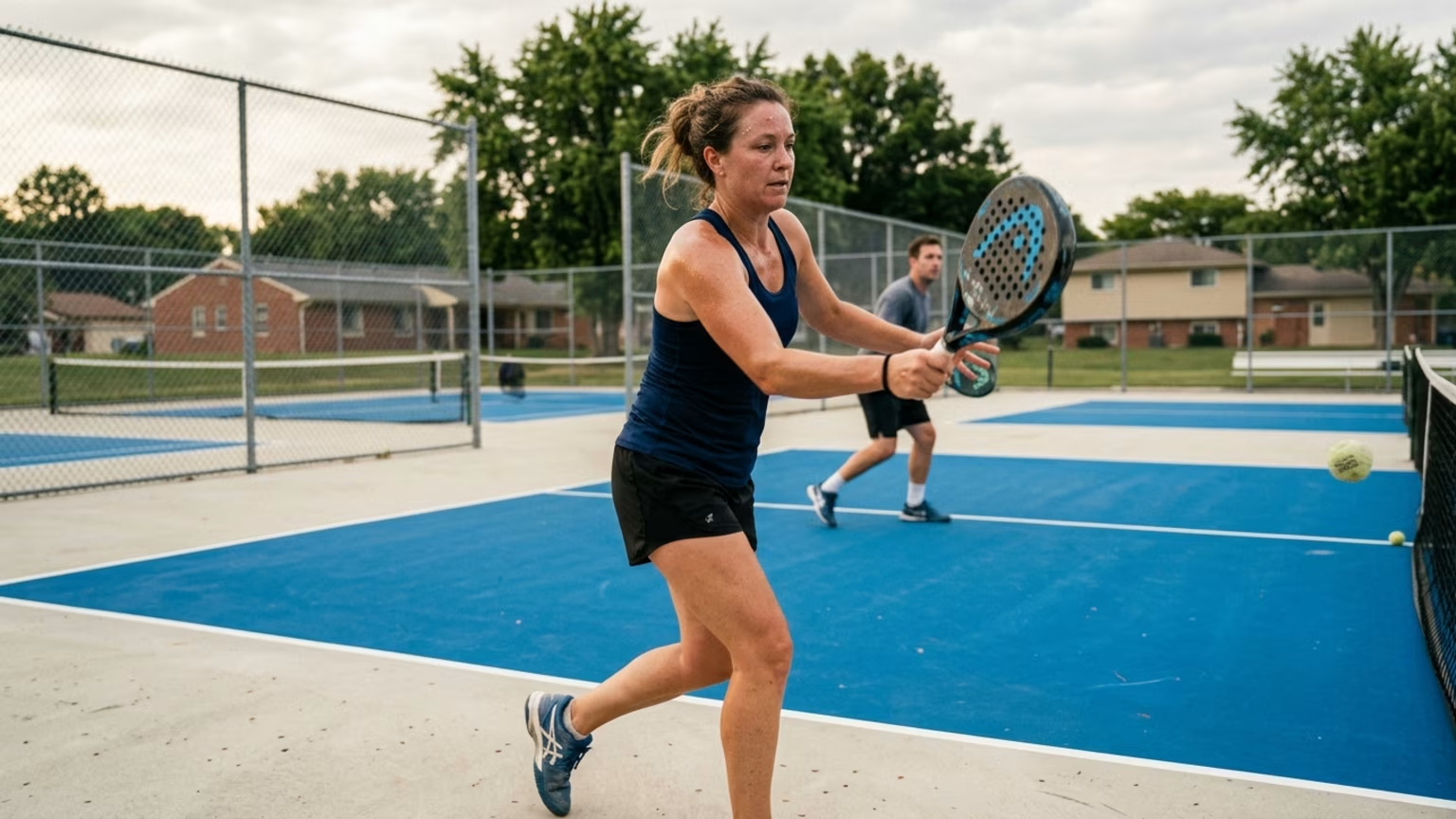

A 2026 report estimates padel players burn 300 to 800 calories per hour while accumulating joint stress. Learn how to manage the physical demands safely.




In September 2026, a newly published report highlighted the specific metabolic demands and joint loads of padel. The analysis featured insights from sports nutritionist Karina Kholtz. She estimated that players expend between 300 and 800 kilocalories per hour on the court. The report also detailed the sport's high accumulation of stress on the elbow, shoulder, knee, and ankle.
Kholtz serves as a curator of Russian national-team padel players. She provided a tiered breakdown of how energy use scales with player ability. Beginners engaging in relaxed play burn roughly 300 to 400 kilocalories per hour. Ordinary club play requires a more intense 400 to 600 kilocalories per hour. Advanced competitive play involving rapid changes of direction demands 600 to 800 kilocalories per hour.
The report stressed that this estimate applies to total time spent on the court. It does not represent an hour of continuous physical exertion. A standard booking involves pauses between points, coaching moments, and ball retrieval. However, professional levels push these numbers much higher, with RBC calculating up to 1,500 kilocalories per match.
Translating these elite metrics to recreational play requires a shift in perspective. Professional players might burn massive amounts of energy, but they also follow highly structured recovery plans. A weekend league player should not view padel simply as a tool for maximizing calorie burn. Chasing the highest possible workload often leads to overloading the joints before cardiovascular fatigue sets in.
Tracking active workload is just as important as tracking total time on the court. A ninety minute booking might only yield forty five minutes of high intensity movement. Measuring perceived exertion during the active phases provides a much better picture of the physical toll. This helps players avoid the trap of scheduling consecutive matches based solely on elapsed time.
The weight management framing in the underlying report is appropriately conditional. Padel can certainly increase daily energy expenditure, but weight loss still relies on dietary intake. Relying entirely on court time to create a calorie deficit is a flawed approach. Adult players should pair their court time with a comprehensive nutrition plan instead of assuming padel alone guarantees results.
The sport demands short accelerations, abrupt braking, and heavy trunk rotation. The physical cost of these movements accumulates quickly during a standard match. The cited report notes that players average four to six shots per rally, adding up to around 300 shots per game. This repetition places heavy demands on the forearm and wrist through constant racket gripping.
Furthermore, the shoulder girdle faces significant stress from overhead shots like smashes, víboras, and bandejas. We have seen the results of ignoring these demands firsthand. In our experience, finishing a tough two hour padel match on a cold Tuesday night can be harsh. Waking up the next morning feeling like your lower back is locked in concrete is unfortunately common.
For a long time, our team just accepted this stiffness as the price of playing hard in our forties. But once we started spending ten minutes on targeted hip mobility before playing, it almost completely vanished. It taught us that adults do not have to accept discomfort as a default state of aging. This lesson translates perfectly to protecting the upper body from the repetitive strain of padel.
The injury data provides verifiable context for these cumulative physical demands. Published estimates vary based on study design and the specific player population being measured. A Belgian survey summarized by a padel health outlet recorded 185 injuries among 457 recreational players. This group showed an injury rate of 2.81 injuries per 1,000 hours of play.
Other summaries report approximately three injuries per 1,000 training hours and eight injuries per 1,000 matches. Across these published studies, the elbow emerges as the most frequently injured joint. The shoulder follows closely among upper body injury sites, validating the concerns about overhead mechanics. The knee and ankle are also identified as commonly affected lower limb areas.
Managing this joint risk requires treating the sport with genuine athletic respect. To support healthy aging, the report recommends adding symmetrical exercises for the shoulder girdle and forearms. This conditioning helps counterbalance the predominantly one-sided demands of racket play. A separate practical prevention guide recommends rotator-cuff and scapular-stability work twice weekly.
A balanced program should include movements that train scapular control, external rotation, and general shoulder endurance. These exercises build the braking capacity needed to decelerate the racket after a forceful overhead swing. Exercise selection and dosage should always be individualized based on a player's previous injury history. Taking a proactive approach to shoulder health is far more effective than reacting to joint pain later.
Building forearm capacity on both sides of the body is a highly sensible load management strategy. It directly addresses the clinical concern about repeated gripping and one-sided stroke production. Adult players should also progress their overhead hitting gradually during every single session. Warming up with easy volleys before attempting high force smashes allows the tissues to prepare for the strain.
The lower body requires equal attention due to the unique geometry of the court. The glass walls force players into compressed lunges and deep squats to dig out low balls. The same prevention guide suggests incorporating single-leg balance, hop-and-stick landings, and lateral-bound exercises. These movements prepare the legs for the rapid braking required on the synthetic turf.
The available evidence strongly supports a thoughtful approach to athletic longevity on the court. Maintaining the capacity of the trunk, hips, thighs, and calves helps players manage repeated lunges. Sustaining the single leg stabilizers is crucial for confident lateral movement as players get older. While these measures are not a guarantee against injury, they significantly improve movement economy.
Combining padel with progressive loading principles creates a much more sustainable athletic routine. Worsening elbow or shoulder pain should always serve as a primary signal to review your training load. Worsening grip strength or compensatory changes in footwork are clear indicators of fatigue. Players should seek assessment from a qualified sports physiotherapist rather than attempting to train through symptoms.
As we look ahead to the next season, we expect recreational padel coaching to evolve. More clubs will likely integrate symmetrical conditioning directly into their standard training programs. Players will increasingly view balanced joint capacity as a baseline requirement for participation. This practical shift will help adults sustain their court time and enjoy the sport for years to come.
Follow Evercourts for practical insights on tennis, pickleball and padel performance, movement, recovery and healthy ageing. Stay connected for new articles, research-led guidance and ideas to help you play well and keep playing for years.


An evidence check on sports supplements like tart cherry juice. Learn why racquet sports players should prioritize core nutrition over functional foods.
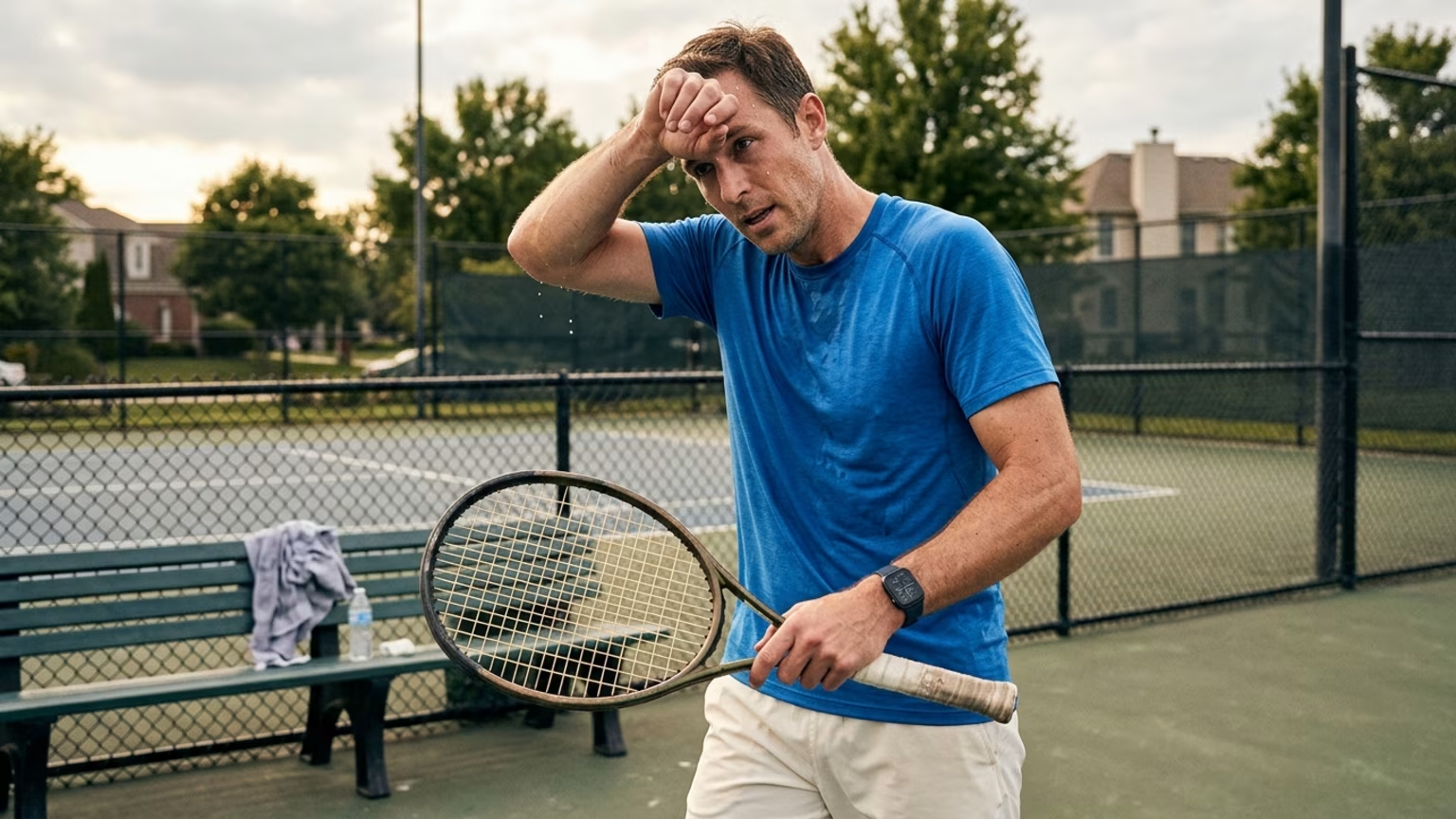
In late 2026, Oura analyzed wearable data to see how recreational tennis impacts heart health and recovery. Learn what this means for your athletic longevity.
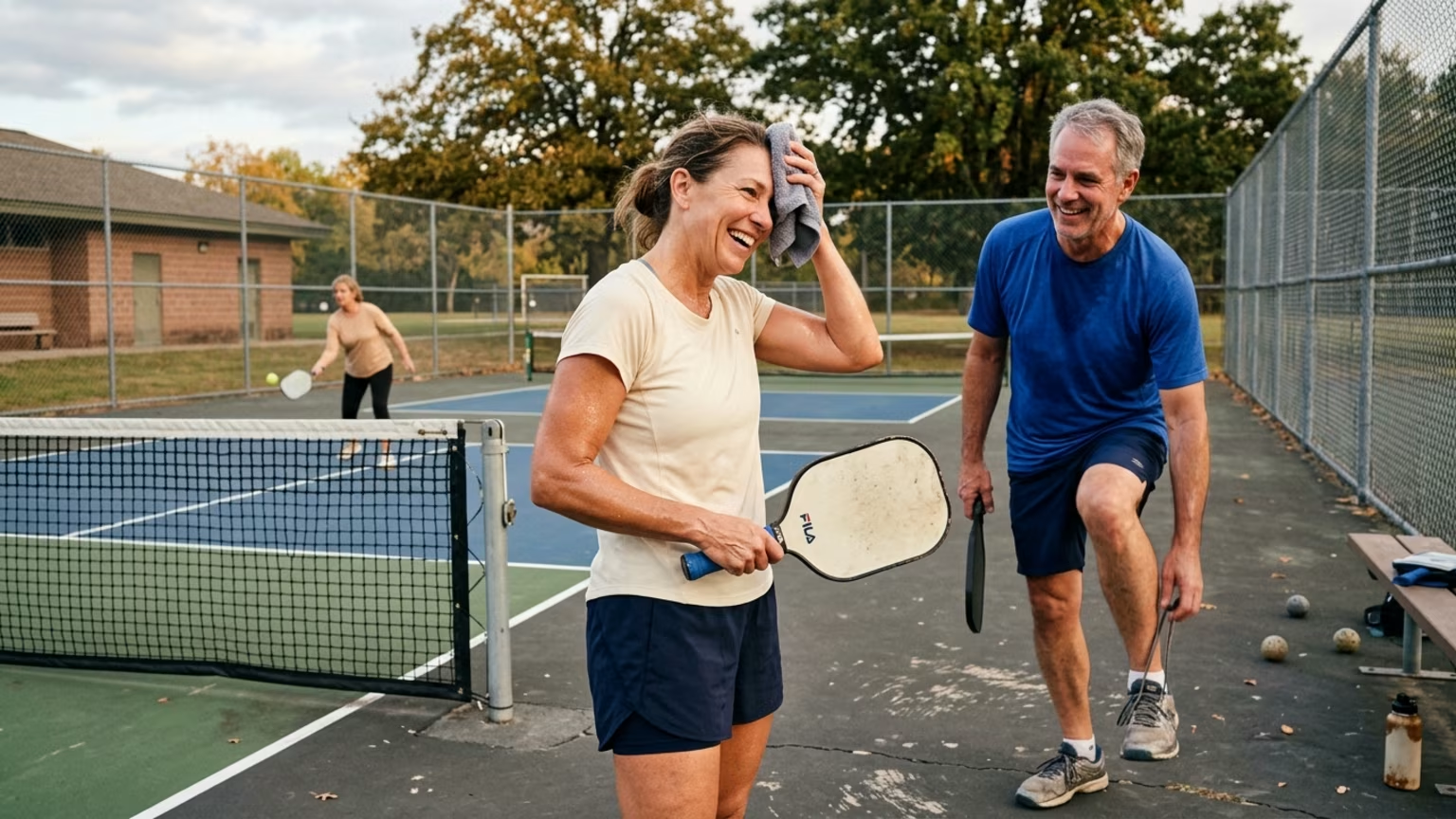
Recent guidelines emphasize gradual progression, dynamic warm-ups, and scheduled recovery to help adult racquet sports players maintain athletic longevity.
Read practical guidance for better movement, smarter preparation and a game that keeps working for you.
explore the Blog
