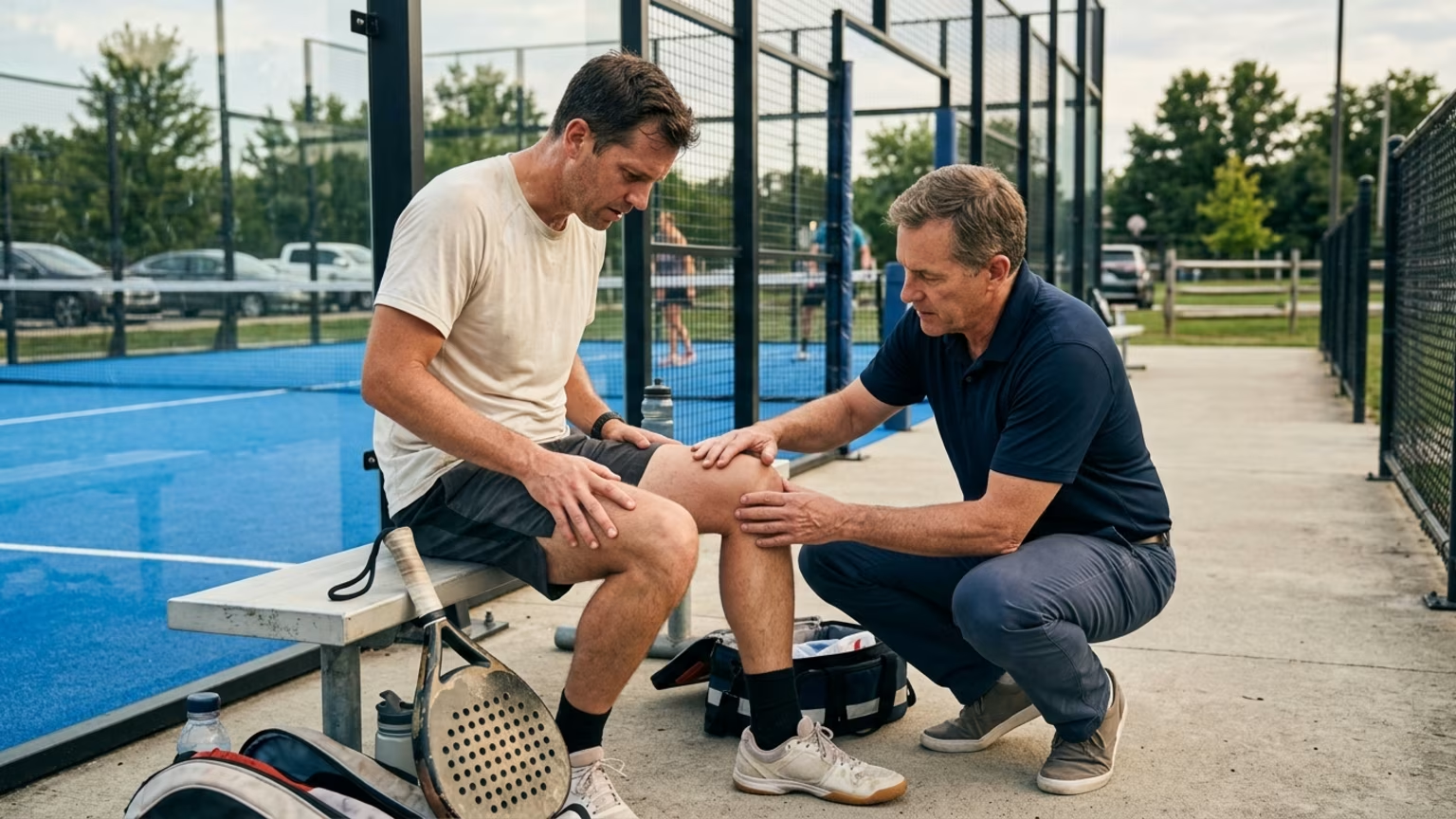

A specialist’s padel knee warning puts preparation and untreated instability in focus, with practical context for adult recreational players.




On October 14, 2026, Kompas.com reported orthopedic sports specialist Dr. L. Andre Pontoh’s warning that an untreated complete ACL tear can leave the knee unstable and contribute to cartilage damage that may lead to early osteoarthritis.
The report followed an October 9 media gathering in Jakarta about osteoarthritis. Pontoh described patients arriving with knee injuries after taking up padel without adequate physical preparation. Kompas highlighted sedentary office workers suddenly joining intense games, with Pontoh also pointing to warm-up and equipment choices.
Pontoh told Kompas.com that he sees patients with padel-related knee injuries “almost every day.” His central concern was a complete ACL tear left untreated. He described how instability and excess movement within the joint can damage cartilage and contribute to early degeneration.
This is one specialist’s clinical account, not a national injury surveillance report or a controlled study of padel players. “Almost every day” is not a population injury rate. The warning also does not establish that every ACL tear leads to osteoarthritis or quantify how likely that outcome is.
For a professional player, the question after an injury may be how to return to high-level competition. For an adult league player, the priority can be broader: preserving the ability to enjoy regular games for years. The useful comparison is not how quickly an elite athlete gets back on court, but how well a return decision fits the individual.
For the recreational reader, the main issue is the gap between wanting to play intensely and being physically prepared for it. Pontoh’s account gives preparation a place in the conversation before match results or court time. That is a practical priority, not a reason to regard every game as a threat.
Pontoh attributed some injuries to players entering a high-intensity sport without enough preparation. The practical direction is to avoid an abrupt jump into demanding play and to give warm-up a proper place. His comments also included equipment choices, without making equipment a substitute for physical readiness.
For adult players, this is a better frame than simply copying the visible parts of an elite routine. The goal is not to reproduce a professional schedule. It is to make preparation proportionate to the demands of the activity and to recognise that enthusiasm alone does not establish readiness.
Looking at how movement demands differ across racquet sports helps keep that discussion sport-specific. Tennis and pickleball need not become reference points for what a padel player should be ready to do. Likewise, off-court preparation belongs in the wider conversation about athletic longevity, rather than appearing only after an injury.
The Kompas report described Pontoh’s advice to rest after a collision or sharp pain and observe swelling. It also reported his recommendation for orthopedic assessment if symptoms had not improved after 48 hours. That interval is not a universal instruction to delay care or to manage an injury alone.
The clear practical point is that symptoms deserve attention, not a test of determination. Personal decisions about an injured knee belong with a qualified clinician. A weekend fixture does not need to become a reason to minimise pain or to decide that finishing a match proves the knee is ready for more.
Pontoh said treatment depends on the extent of the tear, knee stability and activity goals. He described non-operative care as an option for selected partial tears when the knee remains stable and the person gives up strenuous sport. For people with a complete tear who want to remain active and need stability, he recommended ACL reconstruction.
These are distinctions in the specialist’s account, not a menu from which a player can choose without assessment. The relevant lesson is that “ACL injury” does not describe one identical situation for everyone. A qualified clinician must address diagnosis and treatment planning in relation to the individual, rather than a player borrowing someone else’s outcome.
The Kompas report also warned against returning to sport before tissue healing and rehabilitation were complete, because premature return may compromise the reconstruction. For recreational players, the editorial implication is straightforward: a professional comeback story or a friend’s recovery should not set the terms of a personal return.
Evercourts’ discussion of the realities of major knee recovery offers related context for reading sporting comeback stories. The useful focus remains the player’s own assessment with the treating team. A fixture list can organise a season, but it cannot establish whether rehabilitation is complete.
Over the next season, the development worth watching is whether padel’s injury conversation puts more attention on preparation before intense play. The most useful coverage would connect the enjoyment of the sport with physical readiness, rather than treating knee injury as either inevitable or irrelevant.
Future reporting would also be more informative if it distinguished complete ACL injuries from broader knee complaints and provided clear counts alongside participation data. That would give clinical observations a stronger context. Return-to-play stories would be more useful if they explained the assessment behind a comeback, rather than making the date itself the headline.
For adult recreational players, the standard to carry forward is uncomplicated: prepare for the activity and leave personal injury decisions to qualified care. Pontoh’s warning is a reason to take knee stability seriously, not a reason to give up padel. The next season should put sustainable participation ahead of the quickest return.
Follow Evercourts for practical insights on tennis, pickleball and padel performance, movement, recovery and healthy ageing. Stay connected for new articles, research-led guidance and ideas to help you play well and keep playing for years.


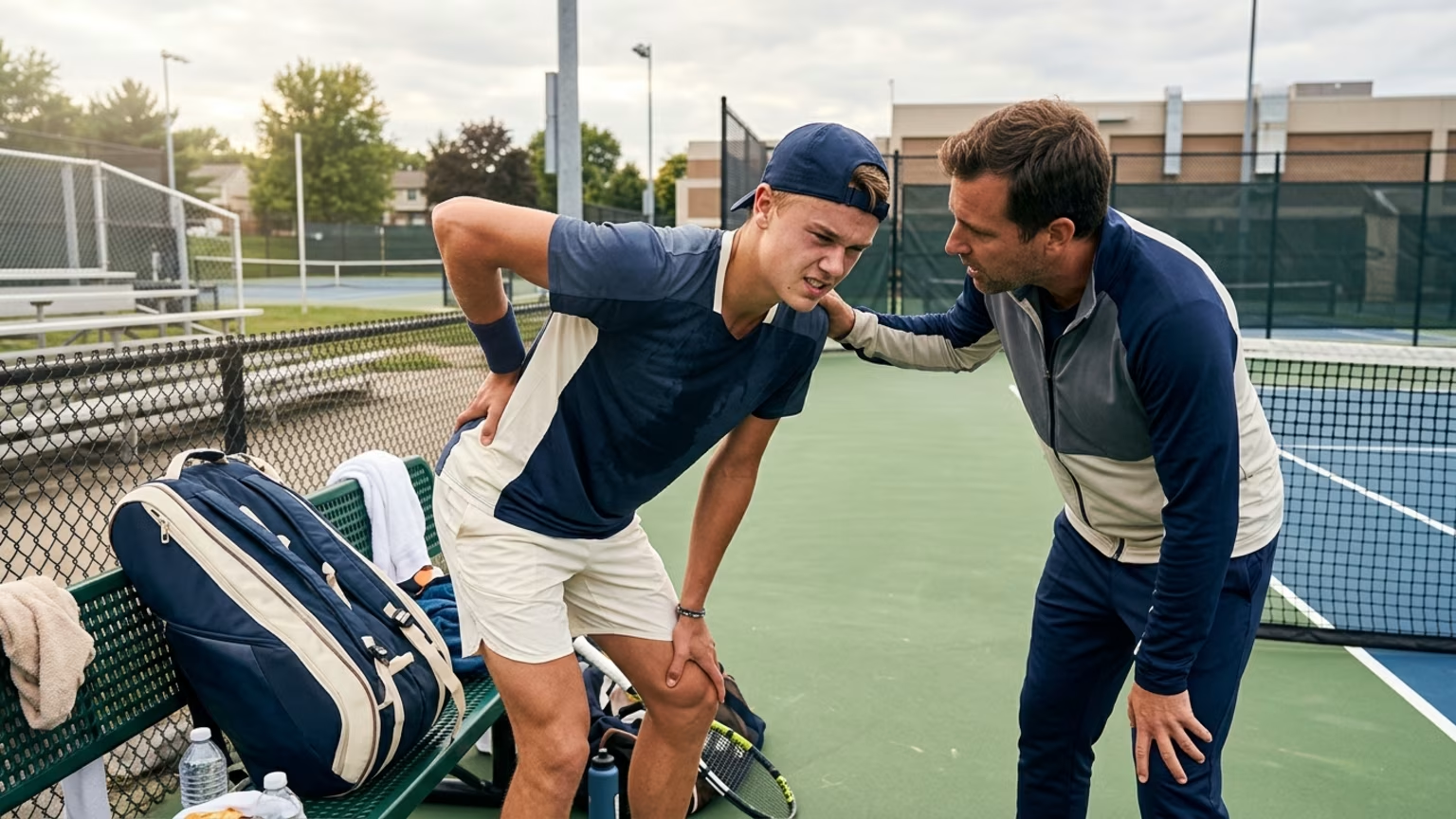
Holger Rune withdrew from the European Open with a back problem. The facts behind his decision and a grounded perspective for recreational players.

The Dink’s October 17 guide emphasizes deep returns, ball-height decisions and positioning against faster pickleball opponents.

A new report outlines padel and tennis gear trends. Learn how to assess adjustable rackets, sensor feedback and smart-court claims.
Read practical guidance for better movement, smarter preparation and a game that keeps working for you.
explore the Blog
