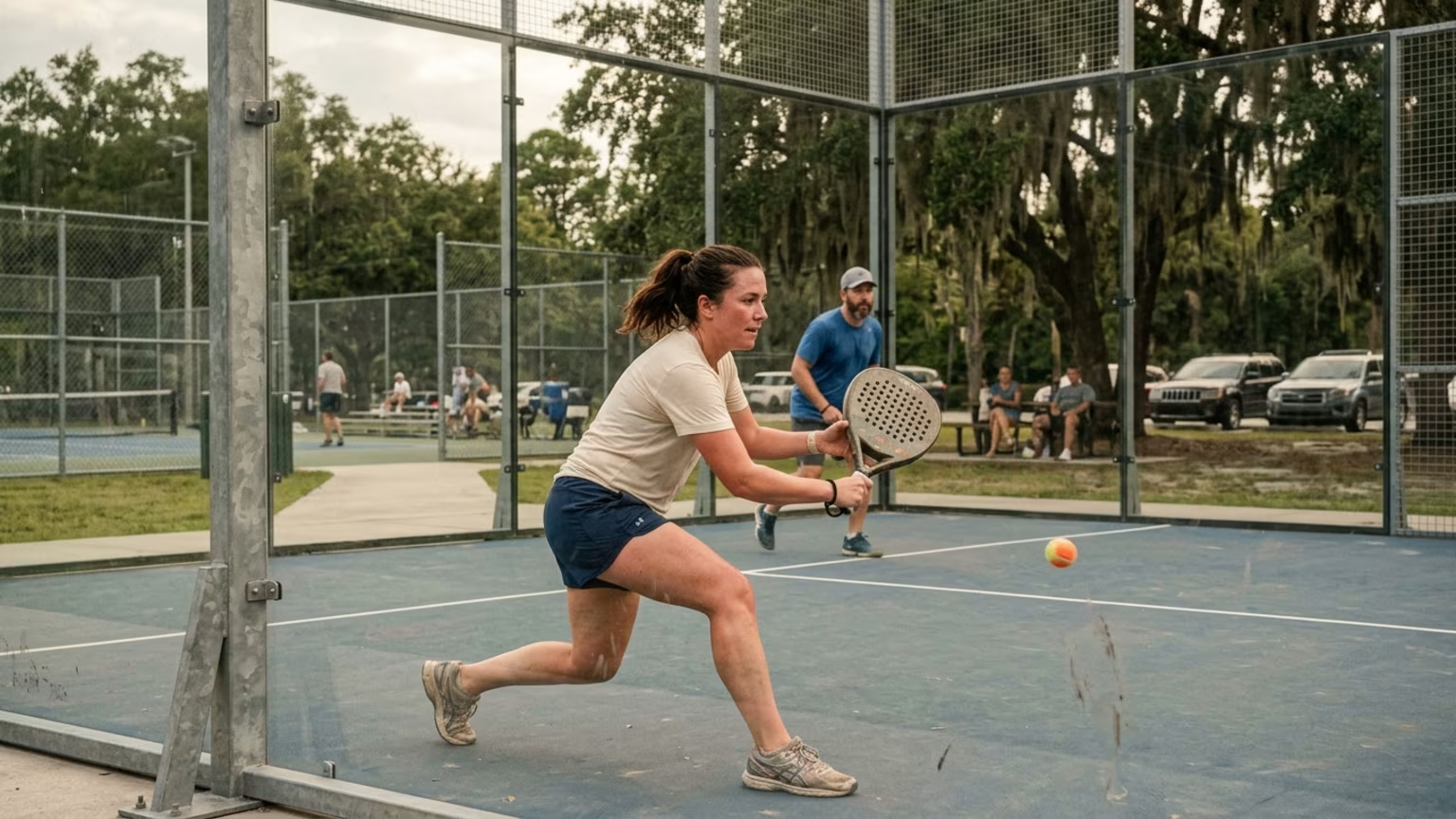

Explore how padel differs from tennis and pickleball as the sport expands in the Lowcountry, bringing enclosed courts and new physical demands to Charleston.




Padel is typically a doubles-only racquet sport played on an enclosed court that is smaller than a tennis court but larger than a pickleball court. The format blends elements of tennis, racquetball and squash into a distinct physical challenge. Mexican businessman Enrique Corcuera invented the sport in his Acapulco backyard in 1969. The game then moved to Spain in 1974 and Argentina in 1975 before experiencing a major growth surge in Sweden and the United Kingdom around 2019.
The Charleston City Paper reported in late August 2026 that South Carolina already has its first public padel court on Daniel Island. A new indoor padel club is planned for Mount Pleasant in November 2026, according to Ben Nichols. Nichols is the founder of Padel 22 and moved from England to Mount Pleasant in late July 2026. He noted that the United Kingdom had more than 2,000 courts, framing the American market as an earlier stage opportunity with a tremendous upward turn.
Nichols described Charleston as being at the beginning of its padel development. He characterized the city as very embryonic for the sport and predicted that its local presence would look substantially different in five years. The planned Mount Pleasant facility is being developed by PATL, which already operates courts in Atlanta and Louisville. PATL founder Andrew Herring noted that the Charleston location could become one of the nicest facilities in the country.
Herring also pointed out the operational advantages of an indoor facility in a hot and wet climate. Indoor environments eliminate rain delays and prevent the intense heat that outdoor glass walls can generate. Another club is expected on Johns Island the following year, expanding the local footprint. Internationally, padel had approximately 35 million players globally in 2025, according to Yahoo Sports.
The same publication noted that USA Padel membership grew by approximately 50 percent year over year. The global appeal makes sense when you look at the tactical depth of the game. Players must learn positioning, shot selection and how the ball behaves after contacting the walls. Padel generally uses familiar tennis-style scoring, including 15, 30, 40 and game.
Pickleball offers a contrasting approach to recreational court sports. While padel players navigate glass walls and larger court dimensions, pickleball players operate in a compact and entirely open space. The sport relies on straightforward boundary lines rather than live walls. This setup keeps the tactical focus on quick exchanges and precise placement near the net.
The United States has seen massive participation in this smaller format. A 2026 industry analysis noted that 24.3 million Americans played pickleball in 2025. This vastly outpaces the one million padel players reported in the same year, highlighting how established pickleball has become locally. The sheer number of active players means that newcomers can easily find a local game or a community clinic.
Pickleball does not require players to read complex angles from a back wall. It instead asks athletes to master the stop-start rhythm of baseline drives and soft drops. Players moving from tennis to pickleball often appreciate the simpler geometry of the court. This immediate accessibility is a major reason why players prioritize finding nearby court availability every weekend.
However, the lack of walls does not mean the physical toll is entirely absent. The rapid deceleration required to defend the non-volley zone places specific stress on the lower body. Players must still manage their workload carefully to maintain their athletic longevity. The explosive stopping forces can tax the knees and Achilles tendons without proper conditioning.
Each racquet sport demands a unique physical toolkit from its players. Tennis asks for explosive power and the ability to cover significant ground during long baseline rallies. Pickleball requires sharp, stop-start agility to dominate quick net exchanges. Padel introduces a completely different element with its multidirectional movement and mandatory wall-based recovery.
I remember finishing a tough two hour padel match on a cold Tuesday night and waking up the next morning feeling like my lower back was locked in concrete. For a long time, I just accepted this as the price of playing hard in my forties. But once I started spending just ten minutes on targeted hip mobility before heading to the club, the stiffness almost completely vanished. It taught me that we do not have to accept pain as a default state of aging.
The live glass walls in padel force players to rotate, reach and change directions rapidly. You cannot simply hit a linear shot and stand still. The ball can remain playable after contacting the back or side walls, which keeps the point alive and forces continuous repositioning. This constant shifting requires robust lower-body strength and excellent spatial awareness.
Adult players transitioning from other sports should treat padel as a completely distinct physical challenge. You must learn rebound angles and specific wall positioning to succeed. Proper instruction on when to let the ball come off the back wall is essential for both performance and joint health. Understanding how court geometry changes the physical toll on your body will help you adapt faster.
Choosing between tennis, pickleball and padel is not about finding the single safest sport. The ultimate winner for athletic longevity is a well rounded approach to physical preparation. A 2026 narrative review found the most consistent benefits from progressive, individualized programs combining balance, functional and strengthening exercises. You must support your court time with dedicated mobility and strength work.
Relying on just one sport can lead to repetitive stress patterns over time. The multidirectional demands of padel complement the linear bursts of pickleball and the explosive swings of tennis. Mixing these modalities can help recreational players develop more resilient bodies. Incorporating cross-training between tennis, pickleball and padel provides a sustainable path forward.
Players returning to racquet sports should ramp up gradually. This is especially true in the hot and humid conditions of the Lowcountry. The planned indoor facilities in Charleston will provide a more controlled environment, but indoor play still requires proper warm-ups and hydration. Direct comparative studies on injury rates between tennis and padel are still lacking, meaning players must take personal responsibility for their conditioning.
We started by looking at the one million padel players who have already found their way to the sport in the United States. As more courts open in Mount Pleasant, Daniel Island and across the country, that number will continue to rise. Preparing your body for the unique demands of the glass walls ensures you can comfortably join those growing ranks for years to come.
Follow Evercourts for practical insights on tennis, pickleball and padel performance, movement, recovery and healthy ageing. Stay connected for new articles, research-led guidance and ideas to help you play well and keep playing for years.


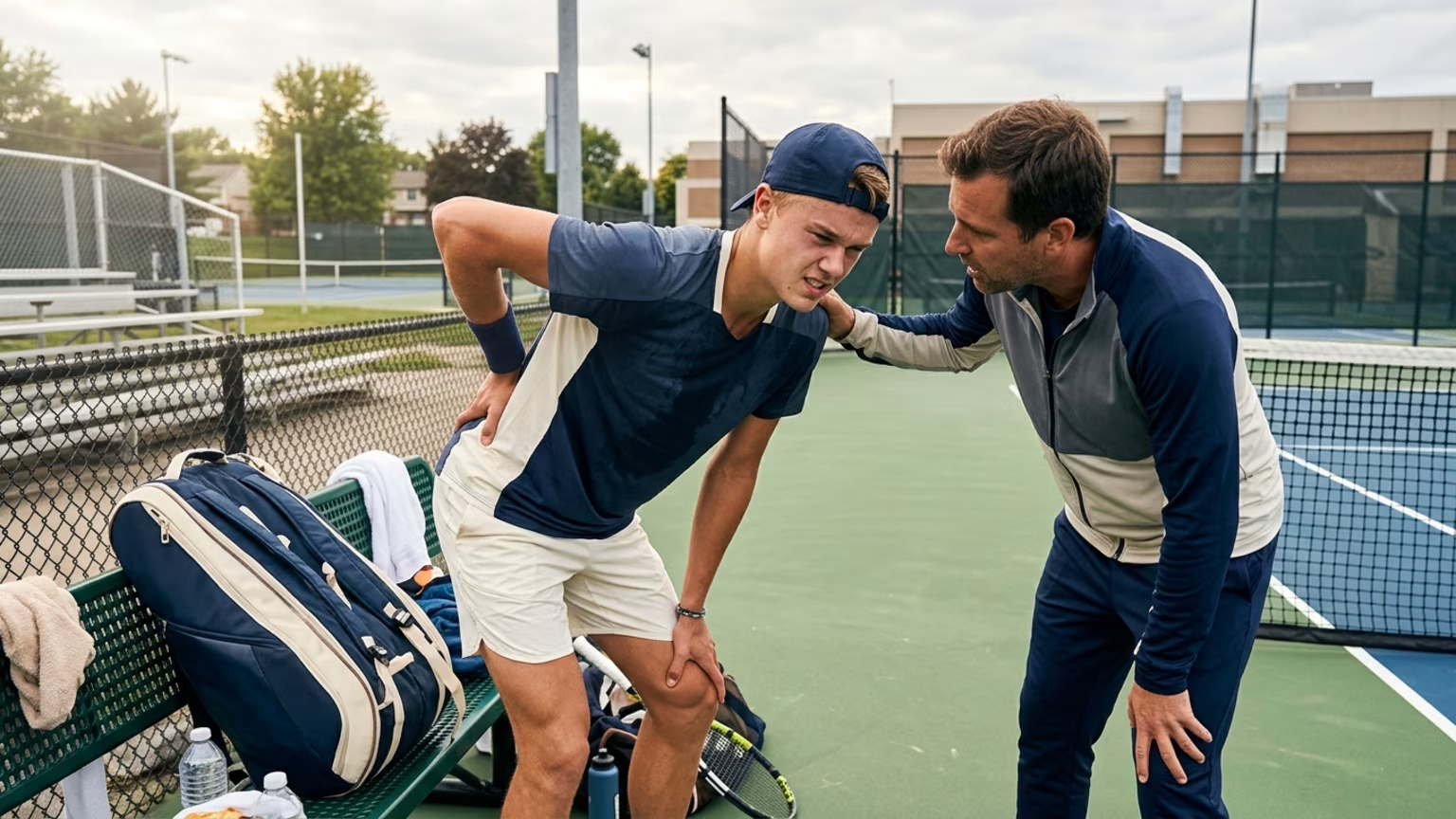
Holger Rune withdrew from the European Open with a back problem. The facts behind his decision and a grounded perspective for recreational players.

The Dink’s October 17 guide emphasizes deep returns, ball-height decisions and positioning against faster pickleball opponents.

A new report outlines padel and tennis gear trends. Learn how to assess adjustable rackets, sensor feedback and smart-court claims.
Read practical guidance for better movement, smarter preparation and a game that keeps working for you.
explore the Blog
