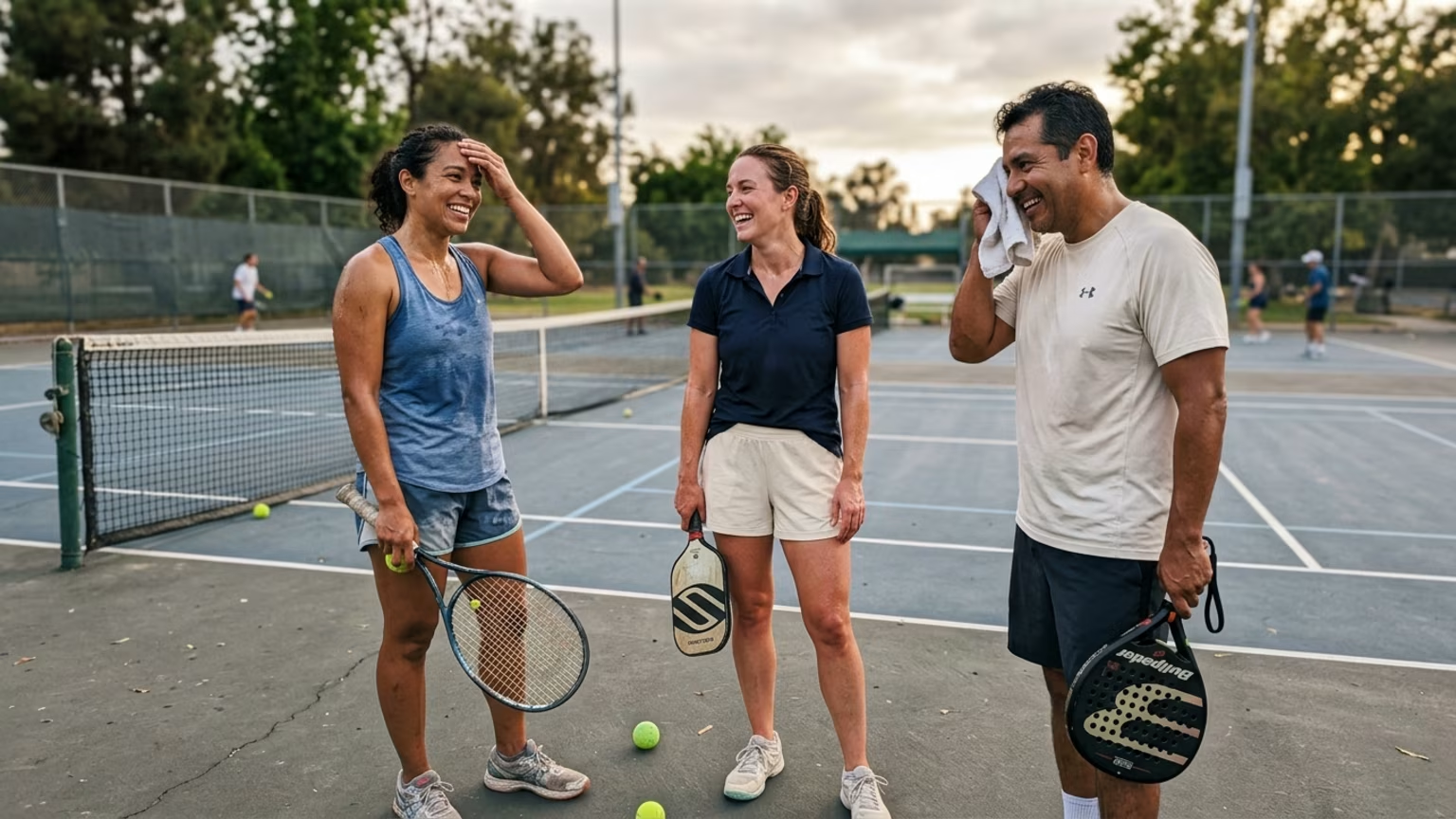

Compare the lifestyle differences, logistical demands and athletic longevity benefits of tennis, pickleball and padel to choose the right sport for you.




In 2025, the USTA reported that U.S. tennis participation reached 27.3 million, proving that the biggest challenge in modern racquet sports is no longer mastering swing technique, but simply finding an open court. This marked a sixth consecutive year of growth and a 54 percent increase since 2019. That retrospective surge in player volume fundamentally changed how adults evaluate their weekly playing time.
This widespread participation growth forced players to look closely at the practical differences between the sports. Tennis requires the most physical space, and the USTA noted that nearly 40 percent of players utilized public parks in 2025. Padel operates on a tighter 20-by-10-metre court enclosed by glass and mesh. Pickleball uses the most compact footprint with a 20-by-44-foot surface for both singles and doubles play.
These spatial differences dictate how easily a player can secure court time during a busy week. A standard tennis court measures 78 feet long, with singles and doubles using different widths. This large playing area naturally limits the number of courts a local facility can host. Pickleball allows more players per square foot, making it much easier to accommodate large crowds during peak hours.
Sanctioned padel is structured exclusively around doubles play. A normal match involves four players sharing that specific enclosed space. This makes the time commitment heavily dependent on the level of coordination required for each game. Tennis remains the best fit for structured individual training and focused technical repetition.
A player can book a court with one partner and devote the entire session to serving drills. Pickleball is the easiest to fit into a flexible social routine because open play formats are incredibly common. Padel often requires the greatest coordination because standard play relies on four committed participants.
Professional racquet sports highlight extreme shot velocity and flawless court positioning. For the recreational adult player, the choice between these sports often comes down to social density and partner dependence. Tennis serves as the ultimate individual project for a dedicated recreational athlete. A player can spend an hour alone working on a serve or book a highly competitive private singles match.
Padel creates a completely different social environment by its very design. The sport requires four players for a standard doubles match, making it structurally interactive. This creates a tight community but demands significant logistical coordination among the participants. If one person cancels at the last minute, the entire session often falls apart without a reliable booking platform.
Pickleball balances these extremes by offering easy rotation and very high social density. The accessible underhand serve and compact court make it simple for mixed-ability players to share a space. Beginners can often start rallying immediately, which dramatically reduces the initial intimidation factor. Understanding how overcrowded courts are changing tennis, pickleball and padel helps players navigate these busy social environments.
The initial learning curves also shape the adult recreational experience quite heavily. Tennis demands a reliable serve, consistent groundstrokes and extensive footwork just to sustain a basic baseline rally. Padel and pickleball allow for fast early success, but players must eventually learn complex tactics to improve. A tennis player transitioning to padel must learn to read wall rebounds and coordinate closely with a partner.
Players often shift between these sports to maintain their physical health, but smaller courts do not automatically eliminate risk. One 2026 study reported that 38.1 percent of its participants had experienced at least one pickleball-related injury during the previous 12 months. Lower-extremity, muscle or tendon, joint-related and overuse injuries were commonly reported by the researchers. Preparing the body for these unique movement demands is absolutely essential for long-term participation.
When I first started playing pickleball, I noticed how many people skipped warming up entirely. They would jump straight out of their cars and right up to the kitchen line. I tried doing that and immediately pulled a calf muscle.
Pickleball requires just as much explosive lateral movement as tennis, just in a tighter space. Since then, I always spend five minutes doing dynamic lunges and ankle rolls. It changes everything about how confident I feel pushing off the baseline.
The physical benefits of racket sports remain incredibly compelling for adults focused on healthy aging. A large observational study summarized in recent research found that racket-sport participation was associated with a 47 percent lower risk of all-cause mortality compared with sedentary participants. The same study noted a 56 percent lower risk of cardiovascular mortality. These figures underscore the immense value of staying active on the court.
Structured participation can clearly improve overall functional fitness and daily mobility. A separate 2026 study reported that an eight-week pickleball intervention reversed pre-frailty, improved functional fitness and enhanced quality of life in older adults. Combining multiple sports might offer the best balance of cardiovascular training and social engagement. Players should slowly increase their weekly volume when cross-training across courts to avoid sudden physical overload.
Moving from a large tennis court to a smaller surface requires careful workload management. Many tennis players assume that a smaller court automatically means a lighter physical workout. However, the short sprints and repeated lunges in pickleball can heavily tax the Achilles and calf muscles. Taking the time to properly condition these areas is critical for athletic longevity.
Padel presents its own unique physical challenges for the transitioning athlete. The enclosed 20-by-10-metre court forces players to constantly pivot, bend and react to unexpected wall rebounds. This unpredictable movement pattern requires excellent hip mobility and core stability to prevent lower back strain. A smart player will gradually introduce padel into their routine rather than playing five days a week immediately.
Understanding the specific movement demands that separate these sports allows players to build better recovery habits. Tennis requires massive court coverage, while pickleball demands rapid start-and-stop reactions near the kitchen line. Padel sits somewhere in the middle, combining short sprints with complex rotational movements. Recognizing these differences helps players choose the right court for their current physical condition.
The transition between these sports will require players to adapt their equipment and their tactical mindset. A padel racket is solid, perforated and stringless, with a maximum total length of 45.5 centimetres under the specifications summarized by PadelUp. Tennis players must learn to manage these new rebound characteristics and master wall interactions. A heavy tennis swing simply will not work inside a compact padel court.
Pickleball relies on a solid paddle and a perforated plastic ball, which completely changes the speed of the game. The non-volley zone forces players to develop soft touch and rapid reaction times near the net. Future recreational athletes will likely build customized weekly schedules that blend all three sports efficiently. A player might use tennis for conditioning, padel for tactical variety and pickleball for casual social contact.
The court a player chooses ultimately shapes their weekly routine, their social circle and their physical movement patterns. Adapting to a new racket or a smaller playing surface requires patience and a willingness to be a beginner again. The lines on the court remain fixed, but the way we choose to move within them is constantly evolving.
Follow Evercourts for practical insights on tennis, pickleball and padel performance, movement, recovery and healthy ageing. Stay connected for new articles, research-led guidance and ideas to help you play well and keep playing for years.


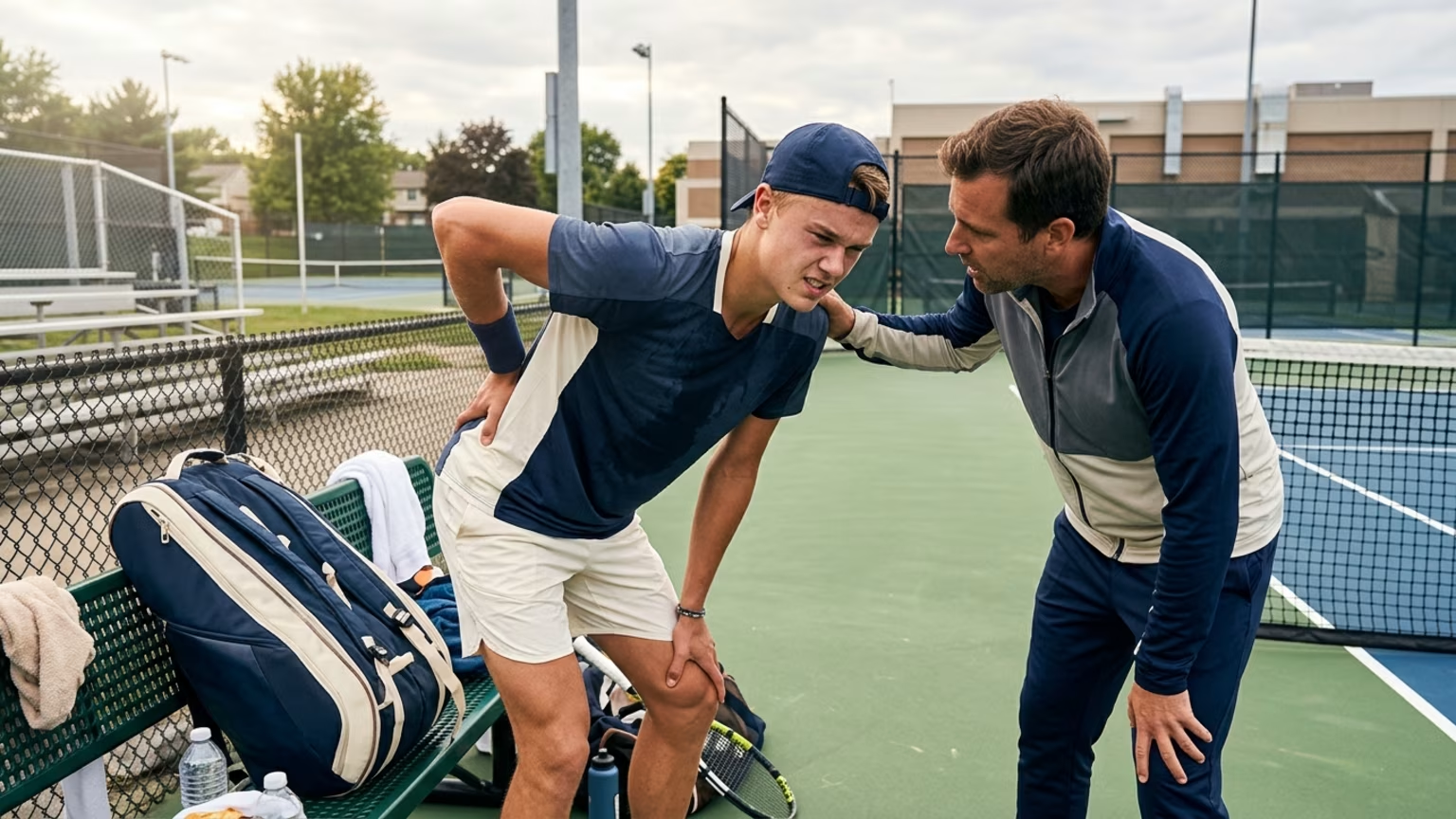
Holger Rune withdrew from the European Open with a back problem. The facts behind his decision and a grounded perspective for recreational players.

The Dink’s October 17 guide emphasizes deep returns, ball-height decisions and positioning against faster pickleball opponents.

A new report outlines padel and tennis gear trends. Learn how to assess adjustable rackets, sensor feedback and smart-court claims.
Read practical guidance for better movement, smarter preparation and a game that keeps working for you.
explore the Blog
