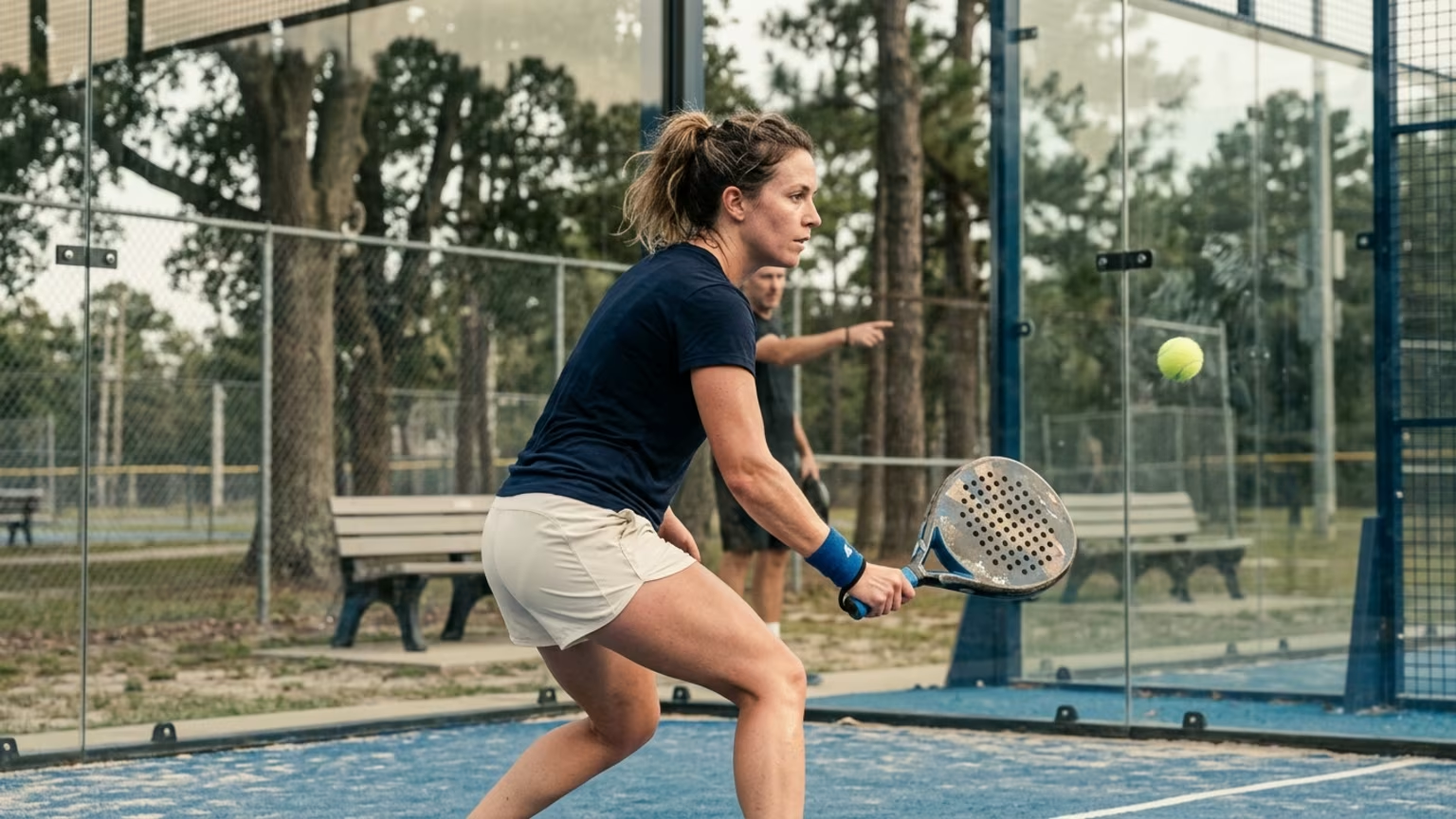

Learn when to play before or after the padel glass, how to approach rebound practice, and when to seek qualified help for movement concerns.




Reading a padel rebound means judging where to position yourself and whether to return the ball before or after it comes off the glass. A deep ball heading toward the back wall presents a choice. Meet it early, or leave room for the wall to bring it back.
The starting point is the rule. As a padel rules guide explains, once the ball has bounced on your side, it can rebound off the glass and remain playable before its second bounce. The glass does not end that opportunity to return the ball.
The same guide distinguishes glass from mesh. Players can deliberately use their own glass, but a shot touching their own fence loses the point. Understanding that distinction comes before choosing a route or attempting a more demanding return.
Repeated explosive efforts and sharp changes of direction are useful only when they serve a playable contact. That is a useful lens for tennis, pickleball and padel: movement speed and movement choice are different things. For a tennis or pickleball player learning padel, the wall deserves specific attention rather than being treated as an obstacle to beat.
This is where a back-wall coaching guide places the emphasis. Its recommended sequence is to move back to allow the bounce and glass rebound, then step forward into the shot. It also recommends giving the rebound space rather than crowding the wall.
Read as a movement problem, that is a change of direction around the ball's journey. Moving toward the back of the court is not the whole task. The return also involves coming forward once the rebound creates the opportunity.
The practical interpretation is simple: do not judge the movement only by how quickly you reach the back wall. Judge whether your position leaves room for the ball and for the next part of the sequence. This connects wall defense with learning to brake and change direction, rather than treating every deep ball as a race.
According to a beginner's guide, a deep ball is a candidate for a glass rebound when that makes the return more manageable. A slow, comfortable ball can instead be played before it reaches the wall. Neither waiting every time nor taking every ball early is the recommendation.
That gives the decision a clear order: consider the likely contact first, then choose the movement. The wall is an option within the rally, not an instruction that overrides the ball in front of you.
The evidence boundary is important. These sources provide rules and coaching recommendations, not controlled evidence that a wall-play progression prevents injury. They do not establish a safest route to the ball or quantify wall-specific risk from awkward reaches and collisions. The progression below is therefore a skill-learning approach, not a medical safeguard.
The back-wall coaching guide recommends the following sequence:
Keep the distinction between the decision and the drill in view. A feed is a way to practise the pattern, not a reason to use the glass when an earlier contact would be more manageable.
The athletic longevity goal is to keep wall practice connected to the movement you want to retain for future play. In this context, that means learning the retreat-and-return sequence deliberately rather than making every session a test of difficult retrievals. Comfort with a basic pattern is the progression marker offered by the coaching source.
Separate learning the decision from proving you can reach everything. A useful practice question is, “Would this ball give me a more manageable contact before or after the glass?” Another is, “Have I left space for the rebound and my move forward?” These questions keep the focus on the movement task.
For adults thinking about years of participation, the value is a clearer understanding of what the skill asks of them. It puts an understandable movement task at the centre of practice. Considering your wider position in the rally also keeps the wall decision in context.
Pain that changes how you move is a reason to consult a qualified physio or healthcare provider rather than press ahead with a wall drill. The same applies if an awkward reach or collision leaves you unsure whether to continue. Decisions about your own symptoms belong in qualified care, not in a generic coaching progression.
Use on-court warning signs as a prompt to take concerns seriously, not as a way to diagnose yourself. If your concern is about symptoms or physical capability, seek individual assessment rather than assuming a different rebound technique will resolve it.
That deep ball heading toward the back wall still presents a choice. The aim is to leave room for a playable return, with professional guidance when discomfort or uncertainty gets in the way.
Follow Evercourts for practical insights on tennis, pickleball and padel performance, movement, recovery and healthy ageing. Stay connected for new articles, research-led guidance and ideas to help you play well and keep playing for years.


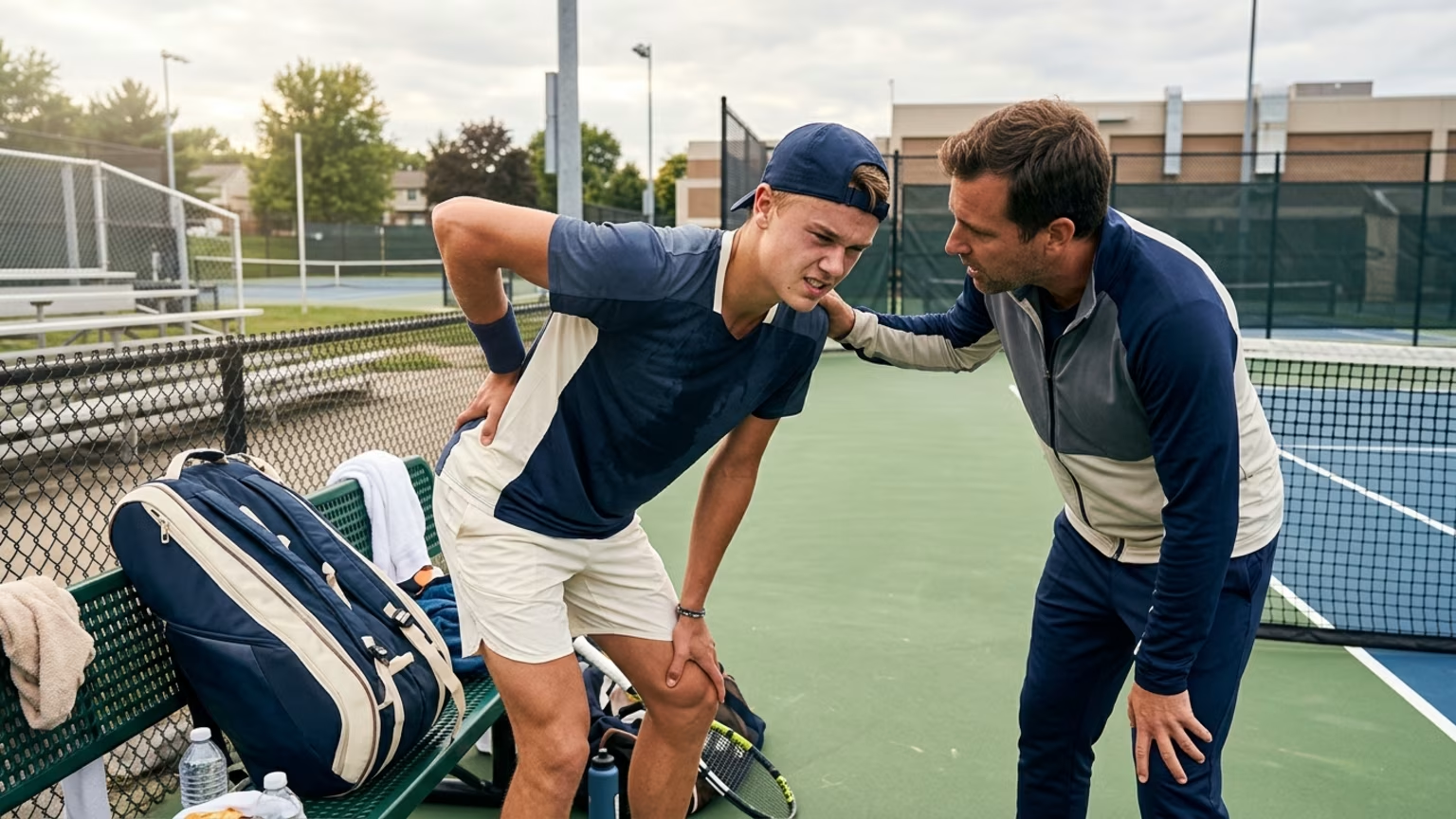
Holger Rune withdrew from the European Open with a back problem. The facts behind his decision and a grounded perspective for recreational players.

The Dink’s October 17 guide emphasizes deep returns, ball-height decisions and positioning against faster pickleball opponents.

A new report outlines padel and tennis gear trends. Learn how to assess adjustable rackets, sensor feedback and smart-court claims.
Read practical guidance for better movement, smarter preparation and a game that keeps working for you.
explore the Blog
