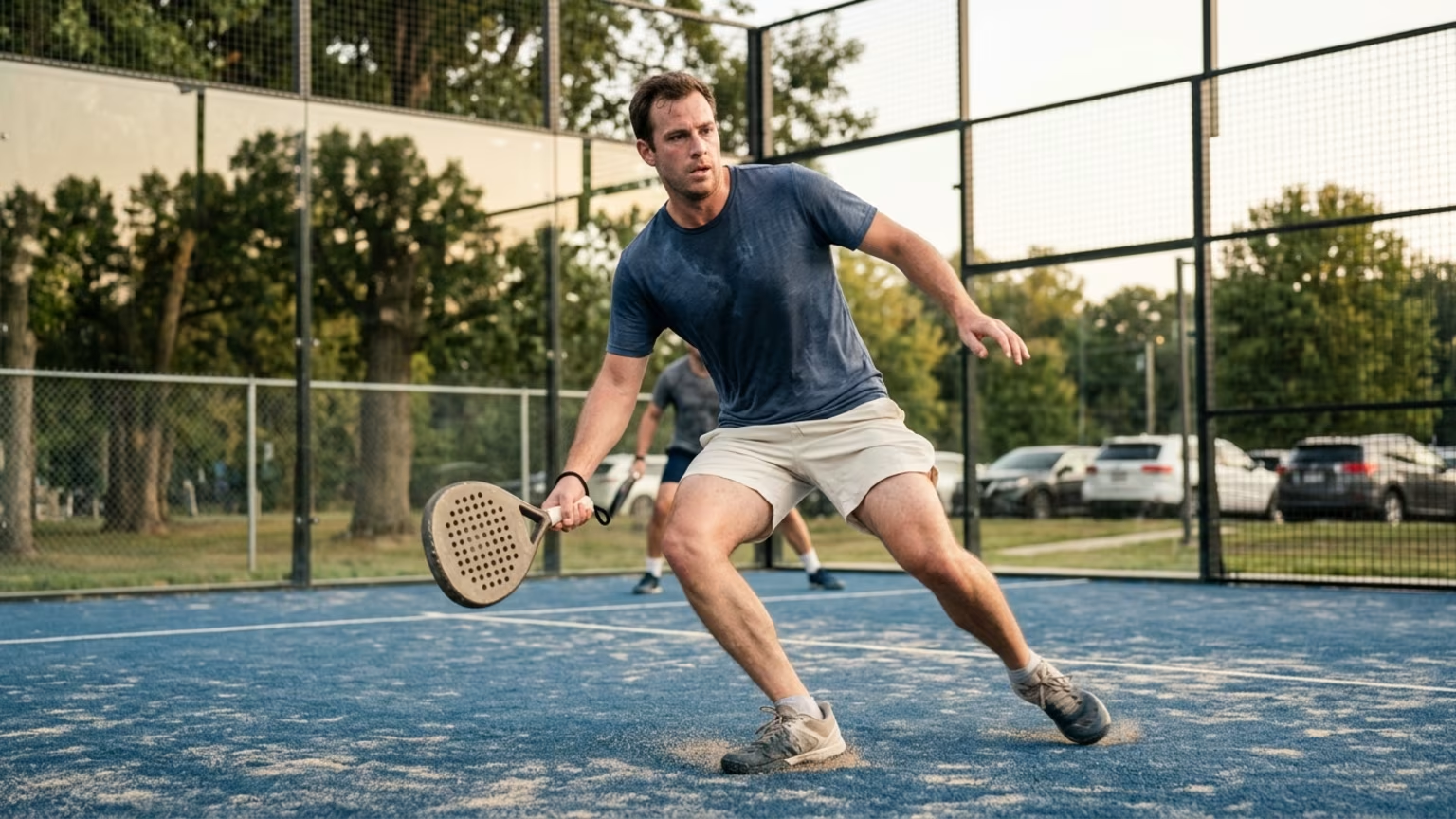

Learn why braking and changing direction are crucial padel skills. This article explains what current research says about court movement and athletic longevity.




Braking in padel is the physical ability to absorb forward or lateral momentum and come to a controlled stop. It is the skill of managing your body weight as you shift from a sprint into a stable, balanced position. Players often focus heavily on acceleration, power, and striking the ball. However, the capacity to decelerate safely dictates how well you can recover for the next shot.
This controlled stopping process requires eccentric strength, which means your muscles lengthen while they are under tension. When a player talks about having good footwork, they are often describing their braking ability. A strong stop allows you to plant your feet firmly and transfer power into your swing. Without this skill, players tend to slide out of position or lose their balance during rallies.
Mastering deceleration is essential for any adult who wants to improve their movement mechanics. Good brakes allow you to change directions quickly without wasting energy. It creates a solid foundation for every swing. Players who learn this skill move with quiet efficiency across the court.
Racquet sports demand constant stops and starts rather than continuous forward running. A tennis player might sprint wide for a forehand and immediately brake to recover to the baseline. Pickleball requires rapid lateral stopping at the non-volley zone line to field fast reactions. Padel combines these familiar movement patterns with the unique geometry of the surrounding glass walls.
You are constantly moving forward to attack, braking to defend lobs, and shifting laterally to cover angles. A systematic review of padel performance analysis describes the game as a high-intensity intermittent sport. The review notes that agility matters specifically because play involves frequent changes of direction. This intermittent nature forces the lower body to absorb high forces repeatedly.
Every time you sprint for a drop shot, your legs must absorb that momentum to prevent you from crashing into the net. This repetitive force absorption is highly taxing on your muscular system. Without adequate braking mechanics, a player cannot transition smoothly between these explosive efforts. Your muscles and tendons must act like shock absorbers during every sudden stop on the court.
This is why racquet sports place significant physical stress on the knees, ankles, and hips. Understanding how court geometry changes the physical toll on your body is critical for managing this stress. Players who cannot brake efficiently often overcommit to their sprints. This leads to longer recovery times between shots and poorer court positioning.
Over time, poor deceleration habits can cause early fatigue during a match. The ability to stop on demand is what truly separates reactive players from controlled movers. Managing these short movements effectively is essential for reliable court coverage. Reading the complete guide to agility and change of direction for racquet sports can provide further context on these movement patterns.
Sports science provides a clear picture of padel demands without relying on fitness hype. A systematic review screened 261 articles and included 27 studies published from 2018 to 2023. This research window shows that analysts have studied match timing, game actions, and court movement. The review identifies strength and agility as highly relevant to padel performance.
It also identifies gaps in the current literature and calls for more complete studies. The research highlights the stop-and-start reality of competitive play. In the World Padel Tour matches analyzed, total duration was approximately 90 minutes. However, real playing time was only about 30 percent of that total time.
The average point duration was roughly 12.5 to 13.5 seconds. These figures illustrate the short, intense bursts of effort required during a match. Distance covered on the court also offers insight into the physical workload. In movement research summarized by the review, advanced players covered about 3,000 metres per match.
One specific study reported an average of 11 metres per point and 80 metres per game. The review warns that some studies examined small or specific groups of players. This makes comparisons difficult and limits how broadly these findings can be generalized to recreational players. For example, movement distances differed by playing level in one regional-category men's study.
Advanced players covered an average of 11.77 metres per point, while beginners covered 8.30 metres. It is important to note that the review does not test a progressive deceleration training programme. It also does not show that specific braking drills prevent injuries. The science simply confirms that changing direction is a fundamental part of the sport.
Understanding these study parameters helps players set realistic expectations for their own performance. Recreational players do not need to mimic the physical output of professional athletes. Instead, they should focus on mastering the basic movement patterns highlighted by the research. The evidence clearly supports treating directional changes as a key area for skill development.
Understanding how to manage momentum is a practical step toward athletic longevity. Many recreational players lose the ability to play frequently because their bodies struggle with sudden stops. Building progressive strength for deceleration helps your joints handle the repetitive stress of racquet sports. This physical preparation allows older adults to maintain their court movement and continue enjoying matches.
Good braking mechanics allow players to reset efficiently after a heavy sprint. If you cannot absorb force well, the impact travels upward into your ankles and knees. By treating deceleration as a trainable skill, you can build a more stable athletic base. Using controlled stops to build a stable base before every shot improves both your health and your performance.
This approach supports healthy aging by maintaining the muscular control needed for high-intensity play. Players can support their physical capabilities by gradually introducing change-of-direction practice. Building this capacity takes time, and you should always adapt practice to your current experience level. Thoughtful workload management is far more effective than intense, unstructured conditioning routines.
Learning how the German DTB padel course is changing workload management offers a great perspective on balancing effort and recovery. Pacing your progression is essential for long-term success on the court. By managing short movements with better control, you preserve your energy over the course of a match. This efficiency translates to better performance in the late stages of a tight game.
It also means less residual stiffness the next day when you wake up. Ultimately, learning to brake safely is a key part of staying active in the sports you love. Players who respect their physical limits tend to enjoy much longer playing careers. Building eccentric strength is a practical investment in your future court time.
While practicing deceleration can improve your game, it is important to recognize your physical limits. You should consult a qualified physiotherapist if you experience sharp pain during sudden stops. Lingering joint stiffness that does not resolve with rest is another clear sign to seek professional advice. A healthcare provider can help if changing direction causes swelling or structural discomfort in your knees.
Do not ignore recurring aches that specifically flare up after heavy racquet sports sessions. A professional can assess your movement mechanics and identify any underlying weaknesses. They can provide tailored guidance that respects your individual medical history and physical capacity. Working with a professional ensures that your training approach remains safe and appropriate for your body.
Pain should never be accepted as a normal consequence of playing racquet sports. If your ability to brake or push off the ground changes suddenly, a clinical assessment is necessary. Proper guidance can prevent minor movement issues from developing into chronic physical restrictions. Taking a proactive approach to your physical health is the best way to stay on the court.
To start improving your braking mechanics today, film yourself moving laterally during a practice session to see if your feet are slipping or stopping cleanly.
Follow Evercourts for practical insights on tennis, pickleball and padel performance, movement, recovery and healthy ageing. Stay connected for new articles, research-led guidance and ideas to help you play well and keep playing for years.


Understand pickleball's stop-and-start movement demands to improve performance and athletic longevity. Learn how to condition safely and protect your joints.
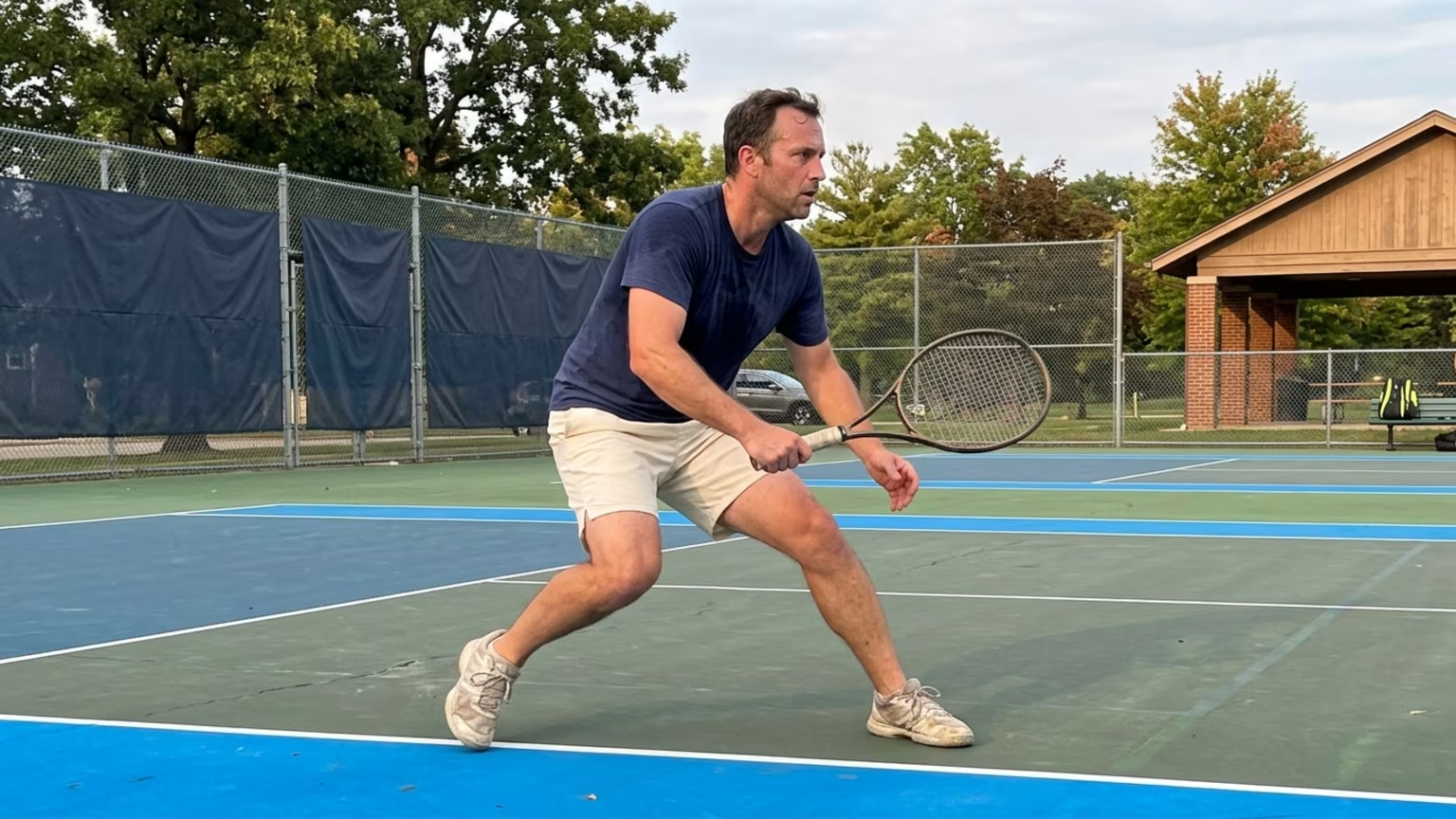
Court movement relies on multidirectional control rather than straight-line speed. Understand how deceleration training supports healthy aging on the court.

Rod Laver, Tim Henman, and Pat Rafter discussed timing and coaching at the 2026 Laver Cup. Learn how adult players can use these insights for healthy aging.
Read practical guidance for better movement, smarter preparation and a game that keeps working for you.
explore the Blog
