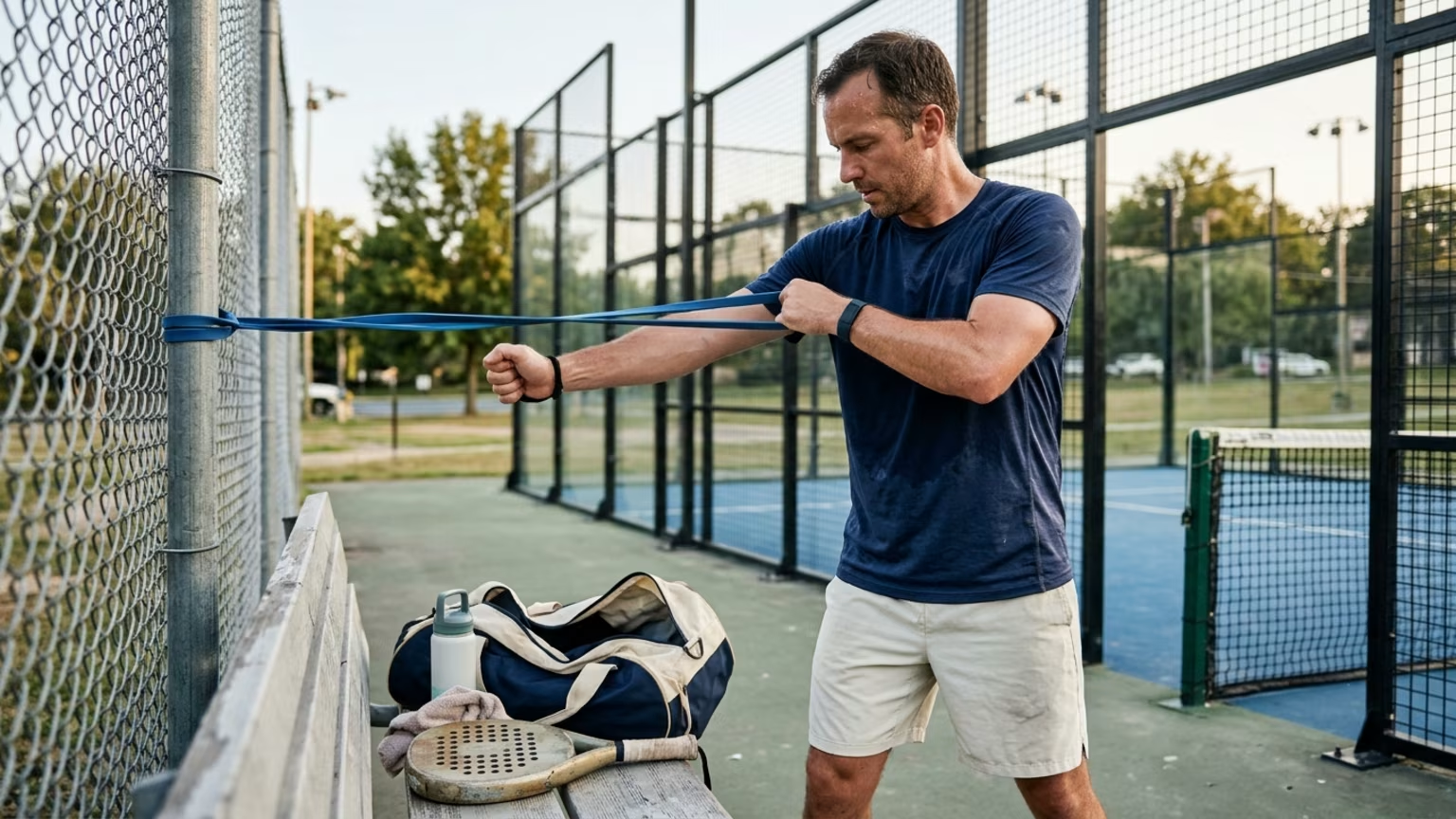

Understand padel shoulder demands, gradual preparation and workload management, plus the recurring symptoms that call for qualified advice.




Shoulder readiness for padel means being prepared to move and control the racket repeatedly, including when the ball goes overhead. It brings together how you prepare, how much you play and how you respond when movement stops feeling normal.
The useful focus is not one ideal exercise. It is the relationship between repeated racket actions and the demands of the session ahead. For adult players, that also means taking recurring discomfort seriously rather than treating it as an unavoidable part of playing.
For tennis, pickleball and padel players, a useful way to think about shoulder demand is to picture a point: an explosive effort followed by a direction change and another racket action. The preparation question is whether that next action feels controlled after hurried footwork, not only when standing still.
Padel's particular focus here is repeated overhead play and racket activity. An overhead is not the only demand worth noticing: an awkward reach or a rushed position also belongs in the preparation picture. A padel-focused preparation guide advises communicating with a partner and avoiding forced, off-balance reaches.
The practical interpretation is straightforward: prepare for movement into the shot as well as the swing itself. That is why a gradual lead-in can include footwork and controlled racket actions rather than focusing only on the shoulder in isolation.
For players who move between sports, considering each court's movement demands provides a useful planning perspective. The aim is to consider the session ahead rather than assume that every court outing asks the same thing.
A secondary summary of a 2023 systematic review describes eight studies involving 2,022 padel players. The review reported 3 injuries per 1,000 hours of training and 8 per 1,000 matches. Those rates use different denominators and should not be read as a direct comparison of training with match play.
A second summary identifies the elbow as the most frequently reported injury site. The knee comes next, followed by the shoulder and lower back. Tendon and muscle injuries were the most frequently reported types.
Those findings give shoulder care a place in the wider picture without making it padel's leading injury problem.
The figures do not isolate shoulder injuries or overhead-shot counts. A further review summary notes differences in study populations, methods and injury definitions. The preparation guide is practical advice rather than a tested clinical protocol. Together, these sources do not establish an individual injury forecast or prove that a particular routine prevents shoulder problems.
The practical takeaway is to build toward the demands of play and take recurring symptoms seriously. Preparation and workload can inform everyday decisions, while personal clinical decisions belong with qualified care.
For adult players, athletic longevity is a useful organizing goal: preserve the ability to keep participating rather than judge every session in isolation. Here, that means giving preparation and recovery a place alongside court time. The guide's recommendations provide a practical framework for that approach.
The padel-focused guide proposes a gradual progression:
This is a sequence of movement types rather than a requirement to complete a set number of minutes or repetitions. The point is to progress toward the session instead of beginning immediately at match intensity.
The guide also gives light band rows and wall slides as examples for shoulder and upper-back preparation. Gentle wrist movements are included as another preparation option. These are examples rather than a compulsory list; the guide recommends individualized guidance when an exercise is unfamiliar.
That distinction matters. A familiar movement can be part of preparation without becoming a personal treatment plan. Choosing exercises for recurring symptoms is a different decision from following general warm-up guidance.
The same guide suggests increasing one training demand at a time. That might mean changing duration or pace rather than also adding range and resistance. It also recommends recovery between harder sessions.
A simple record of how much and how intensely you play can help put those changes in context. The practical value is noticing what changed across sessions, not calculating a supposedly safe number of overheads. Evercourts' guide to organizing court time across the week offers a related planning perspective.
Partner communication belongs in this picture too. Discussing who will take a ball is consistent with the guide's advice to avoid forced reaches. It shifts the focus from doing more shoulder exercises to considering how the point is played.
Think of these habits as ways to make participation more considered. The long-term goal is not to pass a warm-up test and ignore everything afterward. It is to keep preparation, workload and symptom response connected as your playing schedule changes.
Recurring shoulder discomfort deserves attention when it starts changing play or everyday movement. The cited symptom guidance recommends assessment when pain returns or worsens, limits daily movement or comes with reduced joint mobility. The preparation guide also advises reducing or stopping play and seeking medical or physiotherapy advice when pain changes the swing.
Other reasons to seek qualified assessment include:
Significant trauma or severe symptoms call for quicker medical attention. The injury guidance specifically lists marked swelling, deformity, numbness or tingling. Severe or urgent symptoms warrant urgent care rather than an attempt to complete the session.
A qualified physiotherapist or healthcare provider can assess the individual situation. Recurring symptoms should not become a reason to keep experimenting with exercises or repeatedly play through a changed stroke.
When the racket rises for the next overhead, readiness is not just reaching the ball. It is also recognizing when a changed swing is a reason to pause and get help.
Follow Evercourts for practical insights on tennis, pickleball and padel performance, movement, recovery and healthy ageing. Stay connected for new articles, research-led guidance and ideas to help you play well and keep playing for years.


Understand the whole-body demands of tennis serving, put serving volume in context and recognise shoulder symptoms that need professional care.

A research-led guide to progressing from easy movement to court footwork and hitting, with a clear distinction between preparation and injury prevention.
Understand court movement beyond speed, from controlled arrival to purposeful recovery, with coaching examples and clear limits on the research.
Read practical guidance for better movement, smarter preparation and a game that keeps working for you.
explore the Blog
