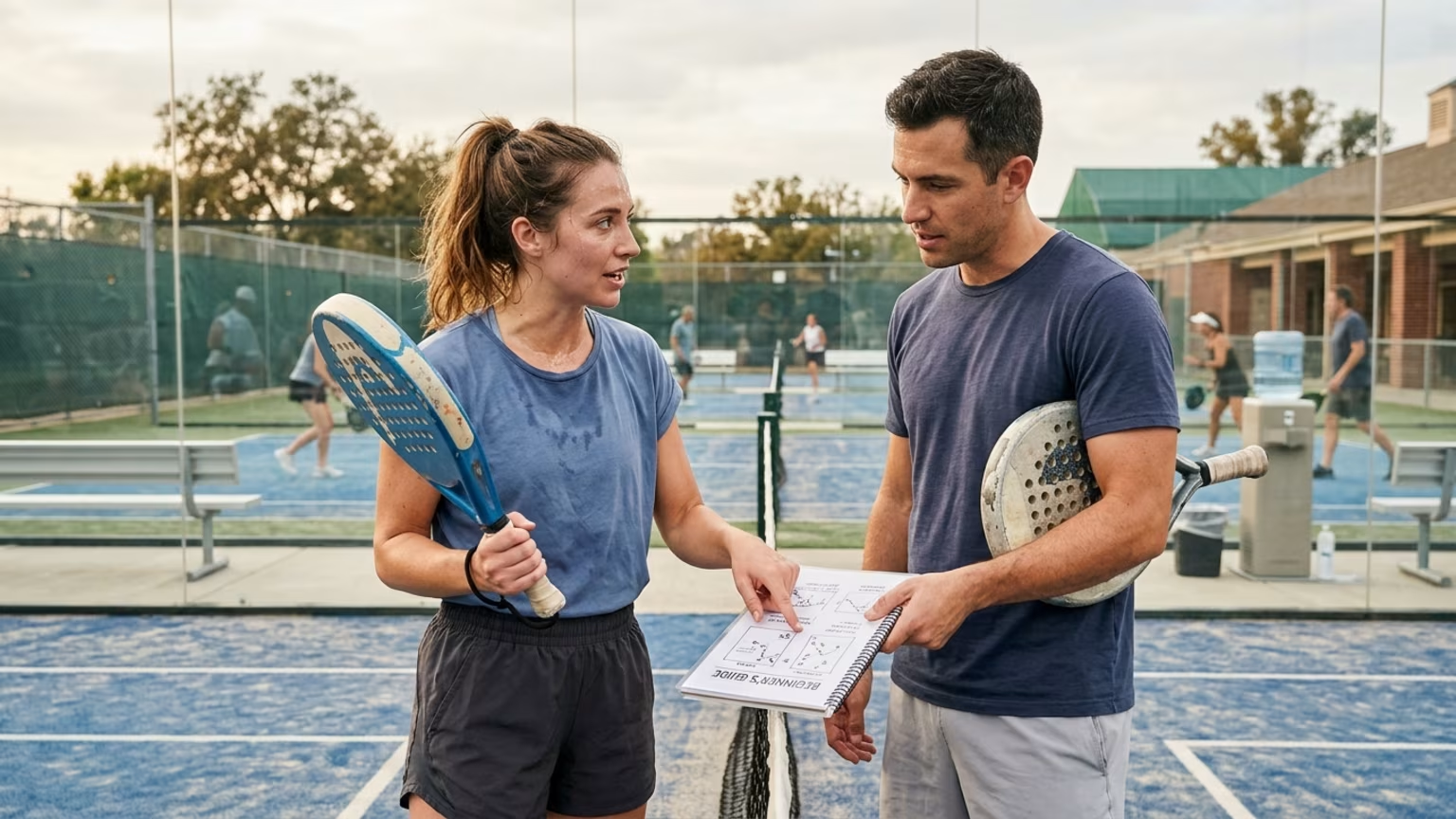

Learn how the Poteau beginner padel guide offers practical tactical advice on court positioning, pace management, and warm-ups for recreational players.




On September 30, 2026, Poteau published a new guide titled "Padel for beginners: your first game, no stress." The publication provides immediate match-habit recommendations for new and returning players. It focuses on court positioning, shot pace, and basic partner communication. This release offers a practical framework for players learning to manage shared space.
The Poteau team presents this information as an introductory primer rather than a formal coaching study. It outlines tactical adjustments and logistical expectations for newcomers entering the sport. The guide aims to simplify the initial learning curve for adult recreational athletes. Understanding these basic principles can help players establish better habits from their very first match.
The Poteau team outlines several specific habits for new players. The guide explicitly advises beginners to wait for the back-glass rebound. The authors explain that the rebound naturally slows the ball down and buys time. Players can use this extra time to read the trajectory and prepare their swing.
Poteau also instructs players to favor softer shots over heavy power. The guide notes that controlling the pace keeps the game manageable for everyone. Additionally, it highlights the danger of balls landing between partners. The team recommends using simple verbal calls to negotiate the middle of the court.
Beyond tactics, the publication sets clear expectations for match logistics. Poteau suggests that new players arrive at the venue 10 minutes early. This specific window is designated for a short warm-up sequence. The warm-up includes basic rallies at the net and fielding balls from the back.
The guide also details typical session parameters found on its booking platform. Most games listed by Poteau last for exactly 90 minutes. These sessions generally welcome players ranging from level one to level four. In France, a standard booking usually costs between €10 and €20 before racket rental.
Adults entering padel often bring habits from other racquet sports. Tennis players are conditioned to take the ball early and attack the baseline. Pickleball players frequently hold their ground at the non-volley zone line to block fast drives. Padel requires a completely different approach to spatial awareness and court positioning.
The glass walls introduce a delayed rhythm that newcomers must respect. Letting the ball hit the back glass feels unnatural to most beginners at first. However, it is the most practical way to create time and reduce rushed swings. Players who study reading and using rebounds will find themselves out of position far less often.
Professional matches feature explosive overheads and high-speed defensive reactions. Elite athletes train their bodies to handle these intense physical loads over long tournaments. For the recreational player, trying to match this pace is usually a mistake. Hitting the ball with maximum power frequently results in unforced errors.
A hard shot will often bounce too high off the opponent's glass. This high bounce gives the other team an easy opportunity to attack the net. The Poteau recommendation to use softer shots is highly effective for weekend matches. Slower shots keep the ball low and force opponents into awkward defensive postures.
Doubles positioning is a major challenge for new padel teams. The center of the court acts as a magnet for confusion and unforced errors. Balls hit down the middle frequently cause hesitation between partners. Poteau emphasizes basic communication to solve this common structural problem.
Calling "yours" or "mine" early in the point removes dangerous ambiguity. This vocal habit prevents physical collisions and keeps both players engaged. Clear communication is the absolute foundation of a successful recreational partnership. Teams that establish doubles communication systems tend to win more points and avoid frustration.
Recreational athletes are notorious for skipping proper warm-ups before matches. Many players simply walk onto the court and begin scoring their game immediately. Poteau's advice to arrive 10 minutes early establishes a much healthier baseline. Spending those first 10 minutes hitting net rallies prepares the lower body for lateral movement.
Taking balls from the back of the court helps the eyes adjust to the glass rebounds. This brief preparation period bridges the gap between daily life and competitive play. A structured warm-up routine is essential for maintaining mobility and court readiness. It helps adult players manage the unique physical demands of the sport safely.
Recreational athletes should view these introductory tips as a foundation for healthy aging. Establishing good movement patterns early prevents chronic joint stiffness and muscle fatigue. When players rush their shots, they often hit off balance. Hitting off balance increases the physical load on the knees and lower back.
By letting the ball travel to the glass, players can position their feet correctly. Proper positioning allows the larger muscles of the legs to generate hitting force. This subtle shift in technique protects the smaller joints of the arm and shoulder. Adult players who master proper conditioning for tennis, pickleball, and padel will enjoy the game longer.
The need for standardized beginner guides reflects the rapid growth of the sport. Padel is currently experiencing an unprecedented surge in global participation. A sports-business article from Racket Business provides significant context for this trend. The publication cited 2025 figures released by the International Padel Federation.
According to these statistics, padel now boasts more than 35 million players worldwide. This massive player base is distributed across 150 different nations. The infrastructure required to support these athletes is expanding rapidly alongside participation. The same 2025 count reported 24,600 active clubs and 77,300 courts globally.
The recreational boom is mirrored by strong professional viewership. Elite padel is drawing larger crowds than ever before. The governing body site for Premier Padel recently shared impressive attendance figures. More than 600,000 spectators attended Premier Padel matches in person.
This spectator turnout occurred across 23 different tournaments in 2025. These numbers highlight a massive and growing global audience for the sport. As professional visibility increases, more recreational players will seek out beginner instruction. This influx of newcomers makes practical guides increasingly valuable for local clubs.
As padel participation continues to grow, expect more platforms to codify beginner tactics. Local clubs will likely develop standardized onboarding programs for new members. These programs will focus heavily on spatial awareness and glass rebound mechanics. The current reliance on informal advice will shift toward structured community guidelines.
New players will benefit from this clear tactical baseline. The emphasis on soft shots and simple communication will improve the quality of recreational matches. As the sport matures, these basic habits will become standard etiquette across public courts. This evolution will help weekend league players adapt faster and perform better.
Follow Evercourts for practical insights on tennis, pickleball and padel performance, movement, recovery and healthy ageing. Stay connected for new articles, research-led guidance and ideas to help you play well and keep playing for years.


An evidence check on sports supplements like tart cherry juice. Learn why racquet sports players should prioritize core nutrition over functional foods.
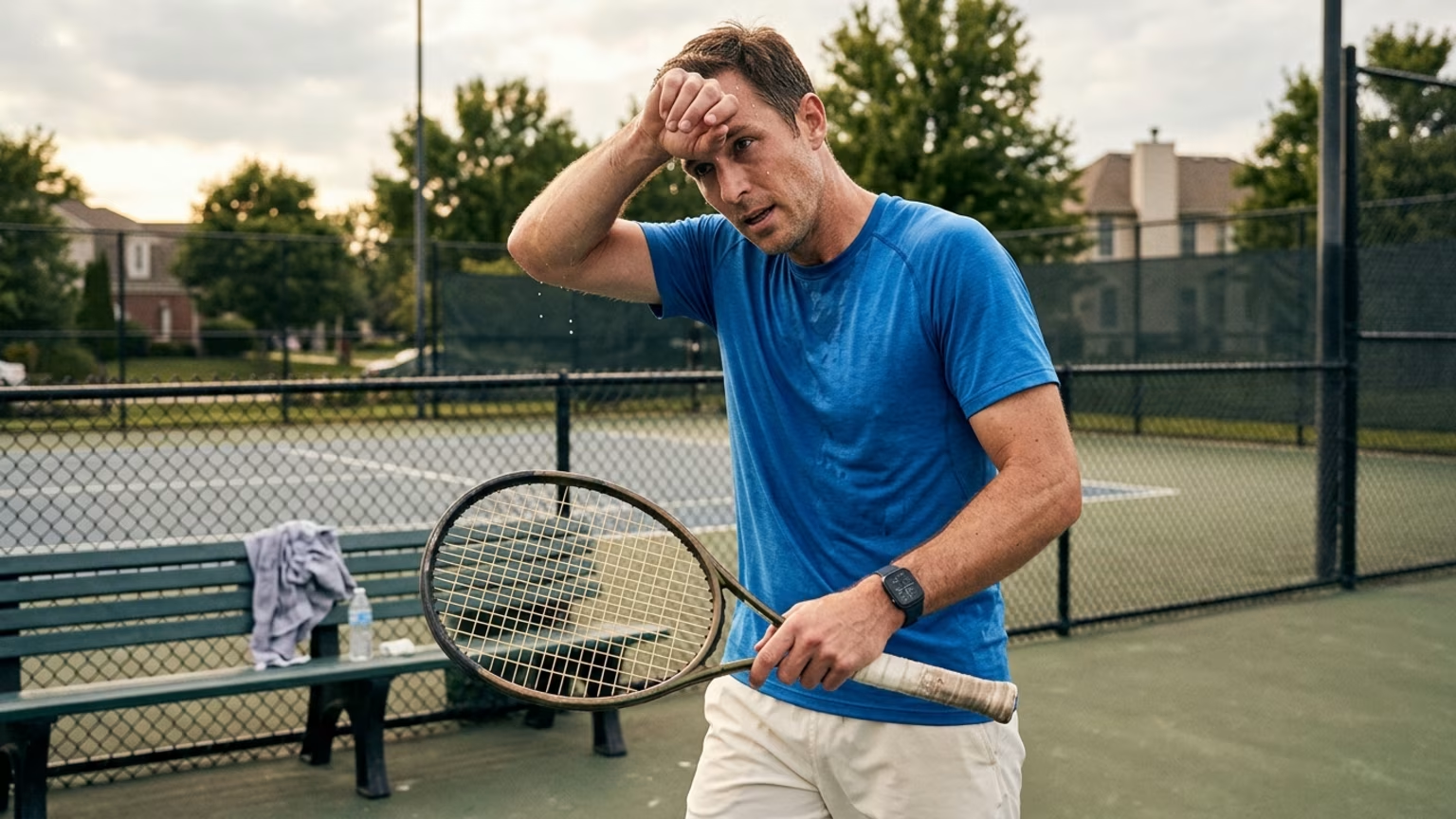
In late 2026, Oura analyzed wearable data to see how recreational tennis impacts heart health and recovery. Learn what this means for your athletic longevity.
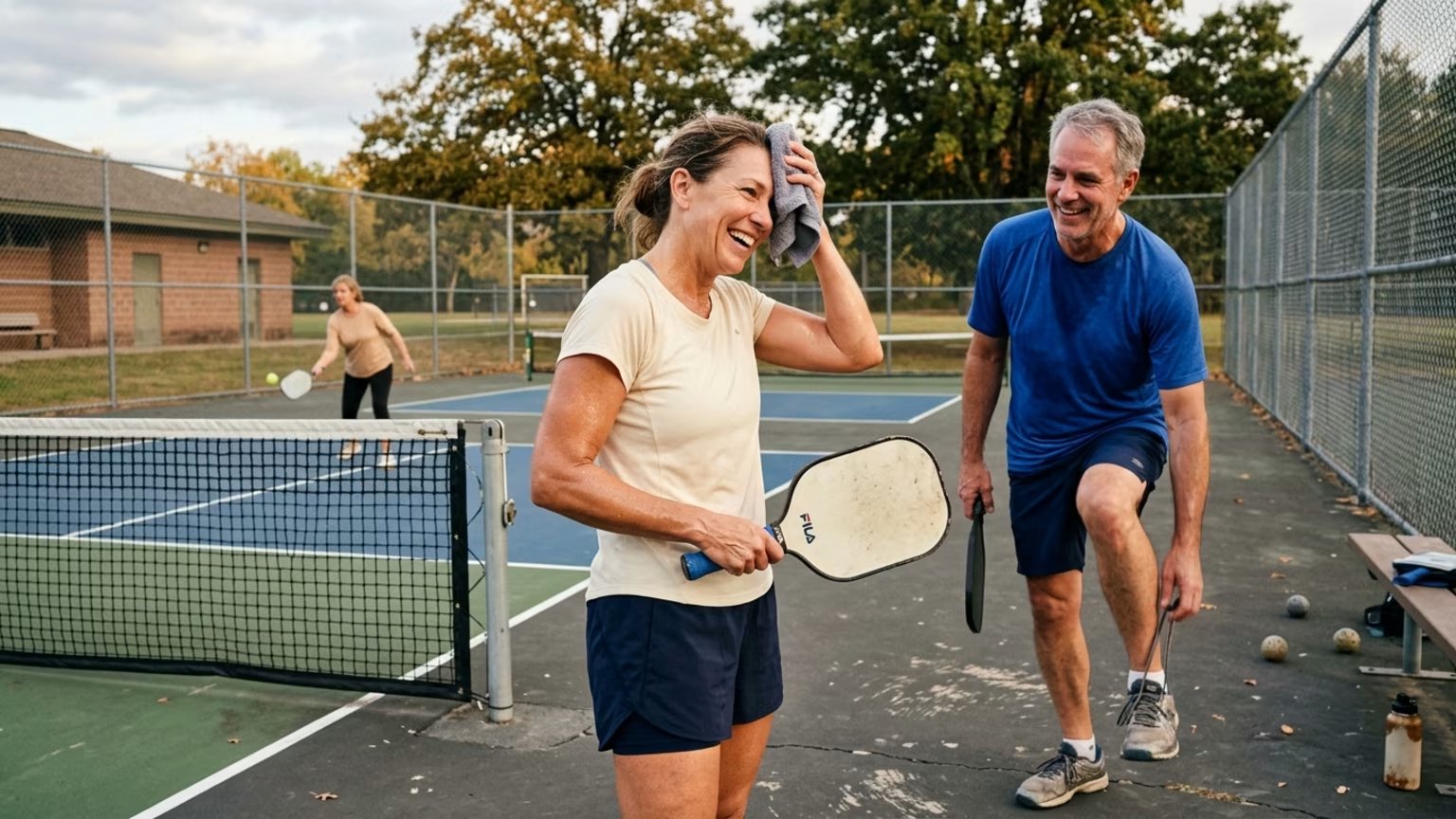
Recent guidelines emphasize gradual progression, dynamic warm-ups, and scheduled recovery to help adult racquet sports players maintain athletic longevity.
Read practical guidance for better movement, smarter preparation and a game that keeps working for you.
explore the Blog
