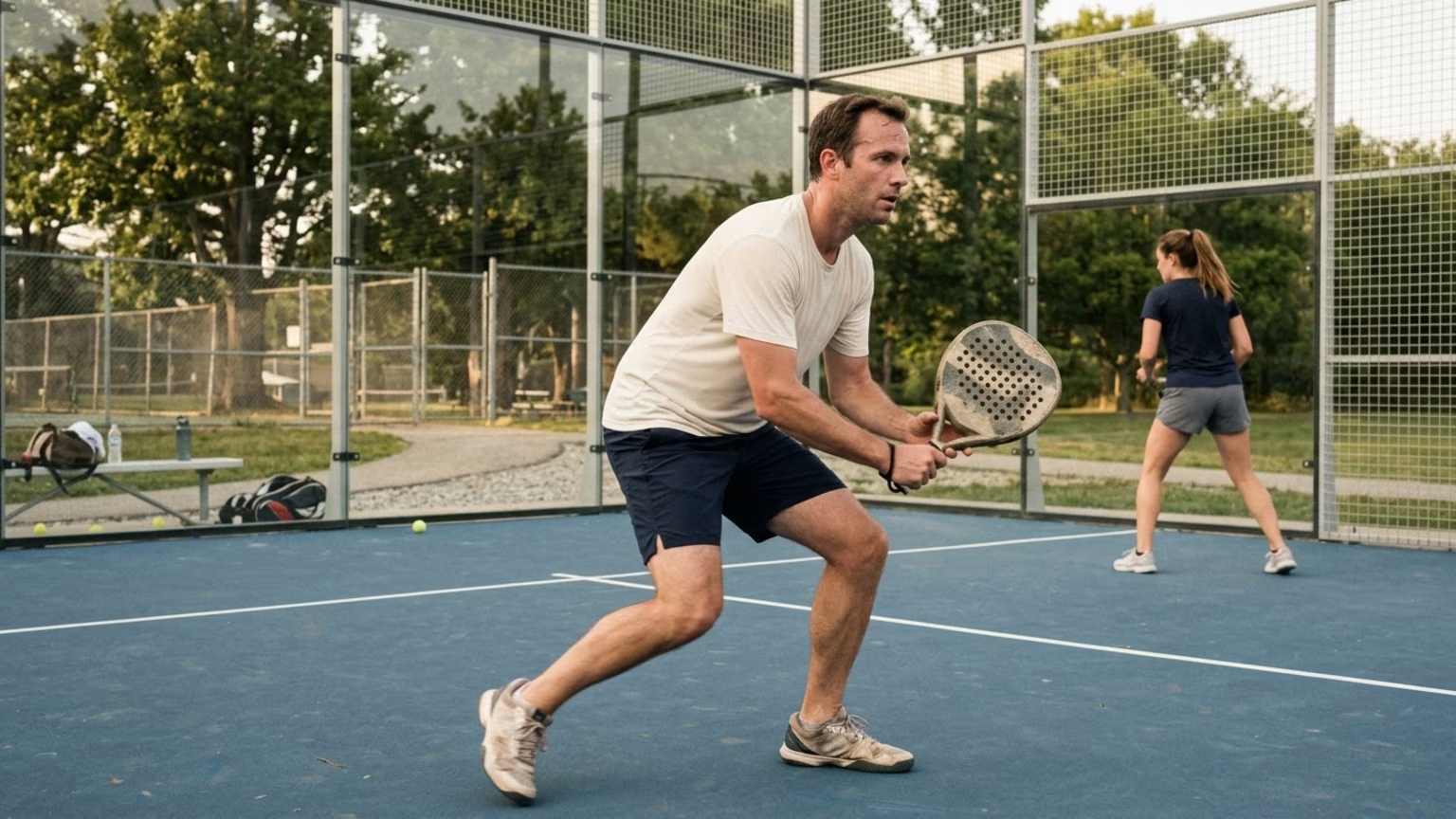

A research-led padel warm-up framework for starts, stops and turns, with adaptable movement guidance and clear limits on injury-prevention claims.




Stop-and-go movement means alternating short bursts of effort with pauses or easier movement. For padel preparation, the useful focus is the transition between those moments: starting, slowing down and changing direction before moving again.
That gives a warm-up a different purpose from simply spending time in motion. The aim is to move gradually toward the actions expected on court. Light movement belongs in that process, but so do controlled changes of direction and familiar racket work.
A padel-focused coaching guide supports this general-to-specific approach. It suggests beginning with light activity, adding dynamic movement for the shoulders and hips, then progressing toward game-like actions. The practical question is how to connect those elements without turning preparation into a fitness test.
Padel is an intermittent sport built around repeated short efforts. Its starts, stops, lateral movements and turns make repeated transitions a more useful preparation target than continuous movement alone.
Think of the movement task rather than the distance covered. A short movement can still involve leaving a position, slowing down and setting up for the next ball. From a preparation standpoint, those changes deserve attention alongside the shots themselves.
Tennis and pickleball present a similar preparation question whenever play calls for explosive efforts and changes of direction. The relevant question is whether preparation includes controlled versions of the movements the player expects to make. This is a shared way to think about court readiness, not a claim that the three sports have identical workloads.
For padel, that points toward light movement followed by more court-like actions. Our guide to rehearsing lateral movement before play offers related context for thinking beyond forward movement.
The European Journal of Sport Science study Neuromuscular Alterations of Knee Extensors During Padel Match Play documented a warm-up before an extended match. The sequence moved from gentle rallying to volleys and overhead shots, then finished with serves and returns.
That study did not compare warm-up methods or test whether warming up improved performance or prevented injury. Its authors also cautioned that the findings might not generalize to beginners, elite players, older adults or a broader female population. The padel-focused coaching guide separately acknowledges a lack of controlled padel warm-up studies.
Together, these limitations leave no established ideal intensity or proven injury-prevention sequence. The directional movements below are a practical editorial adaptation rather than a protocol tested in the match study. The useful takeaway is therefore a flexible order of preparation, not a universal prescription.
The coaching guide begins with light movement to raise heart rate before more specific activity. In practical terms, the opening belongs at the easy end of the session rather than resembling the hardest rally the player expects to face.
There is no need to attach an unsupported duration or target pace to this stage. Its place in the sequence matters more than presenting a precise number as essential.
The guide next includes dynamic movement for the shoulders and hips. This gives those areas a place in preparation before the sequence moves toward game-like actions and racket work.
The practical emphasis is on controlled movement. The available material does not justify prescribing a particular range of motion or asking every player to reproduce the same version of an exercise.
The research packet proposes lateral shuffles, short starts and stops, and easy directional changes as additions before rallying. These movements give the preparation a clearer connection to the transitions expected during play.
As an editorial approach, the starting version should remain small and controlled. Quicker movement belongs later in the progression when it feels comfortable, rather than being the entry requirement.
The match study supplies a sequence: gentle rallying, followed by volleys and overhead shots, then serves and returns. This provides a straightforward bridge from general movement to recognisable padel actions.
The value of this example is its order. It shows how a warm-up can become increasingly specific without requiring a separate collection of unfamiliar drills.
A newer player or someone returning after a break can keep the directional movements smaller and more deliberate. An experienced player can gradually make them quicker and more court-like. This scaling is a cautious editorial recommendation based on the framework, not a study finding.
The same outline can therefore look different from one player to another. There is no reason to turn the quickest person's preparation into the standard for everyone on court.
For adult players, the wider goal is to keep enjoying the sport while maintaining the physical capabilities it asks of them. Understanding stop-and-go demands helps make that goal more concrete: preparation should acknowledge movement transitions rather than focus only on hitting the ball.
The practical value is in having a repeatable framework that allows adjustment. A player can recognise the same broad stages without treating every session as a test of speed or movement range. Consistency of purpose matters more than making every warm-up look identical.
This perspective also separates preparation from proving fitness. Choosing a controlled version is not a failure to complete the routine. It is consistent with the recommendation to scale the movement to the player rather than force the player into a fixed sequence.
For a related discussion, our guide to moving gradually toward full court play considers that transition in a broader racquet-sport setting. The useful question remains simple: does the preparation resemble the activity ahead without becoming a competition of its own?
As a practical editorial boundary, discomfort that makes light movement difficult is a reason to seek individual advice rather than make the routine harder. Recurring aches or stiffness that lead a player to change the planned movements also deserve a conversation with a qualified physiotherapist or healthcare provider.
Uncertainty about adapting preparation after a break is another reasonable reason to ask for help. These are prompts for individual assessment, not diagnostic criteria or a timetable for returning to play. A general article cannot decide what a particular symptom means or which movements suit someone's circumstances.
The point of preparation is not to prove readiness at any cost. It is to approach the first rally with attention to both the game and the person playing it.
Follow Evercourts for practical insights on tennis, pickleball and padel performance, movement, recovery and healthy ageing. Stay connected for new articles, research-led guidance and ideas to help you play well and keep playing for years.


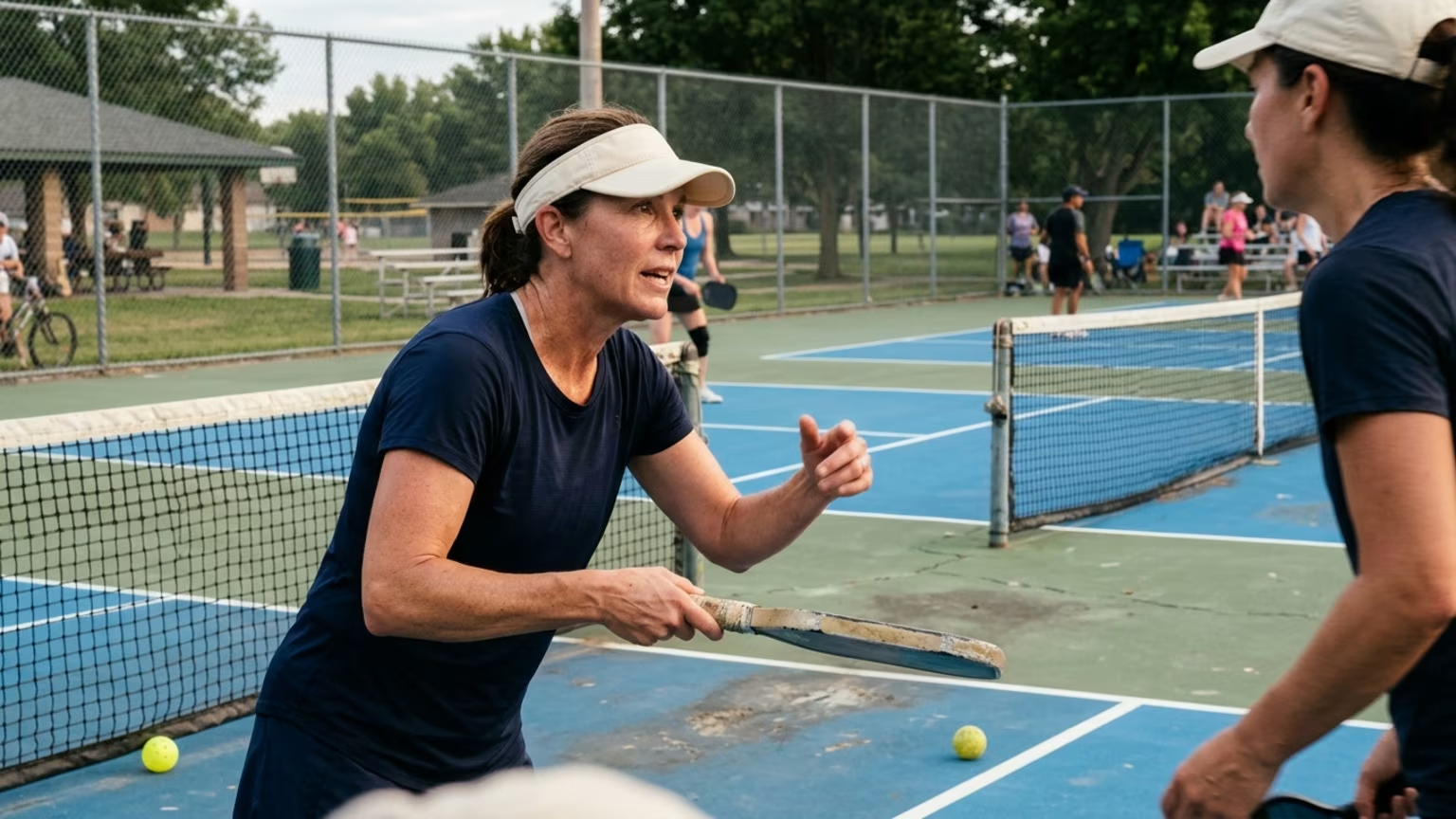
Jilly B challenges five pickleball rules of thumb, with a focus on ball pace, reaction space, paddle readiness and purposeful positioning.

Zheng Qinwen’s early finish to 2026 puts fatigue and recovery in focus. Here is the practical lesson for adult racquet-sport players.
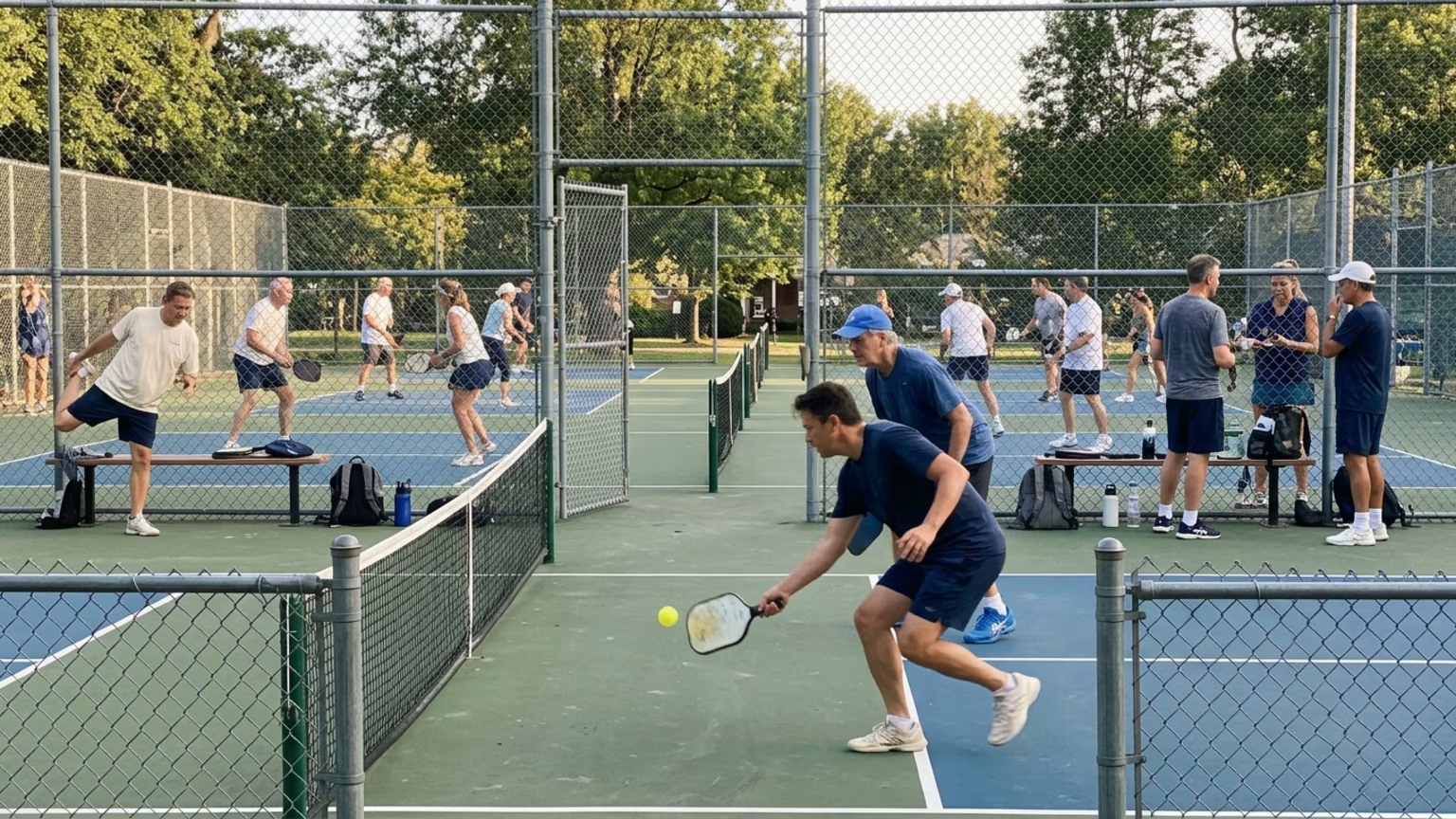
Build toward pickleball match pace with easy movement, court footwork and controlled hitting, plus a short-format option and guidance after a break.
Read practical guidance for better movement, smarter preparation and a game that keeps working for you.
explore the Blog
