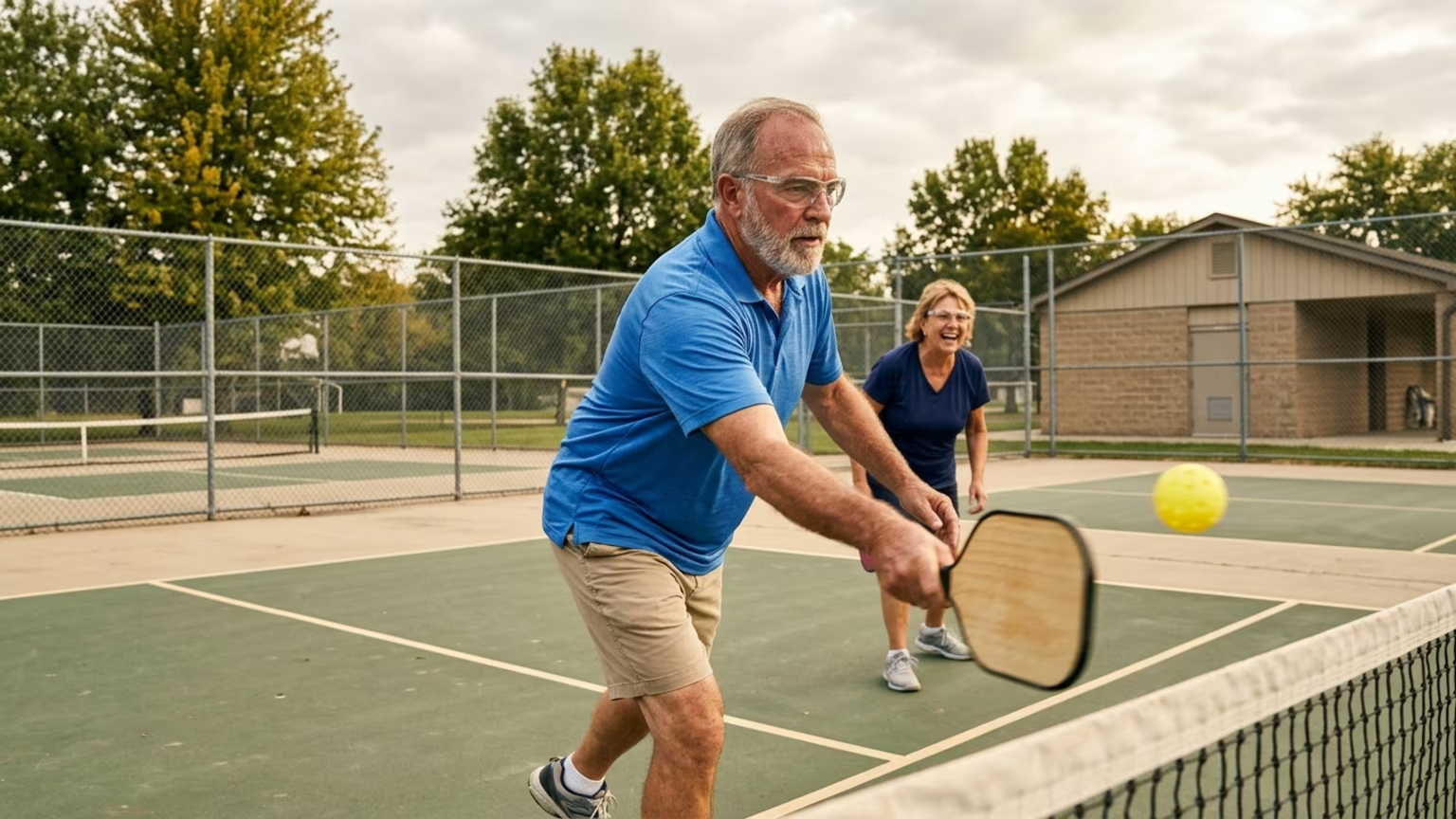

The American Council on Science and Health urges older pickleball players to wear impact-rated goggles due to short reaction times and severe eye injury risks.




On September 7, 2026, the American Council on Science and Health published a specific safety warning. The organization linked September eye-safety observance directly to pickleball players. The guidance urges athletes to treat protective goggles as essential court equipment. ACSH explicitly prioritizes eye protection ahead of optional accessories like elbow braces.
This announcement comes as the sport continues to capture older adult participants. The close quarters of court play create distinct physical challenges. Many adults focus heavily on joint protection and muscular warmups. However, the organization argues that visual protection requires immediate attention before stepping onto the court.
The mechanics of pickleball create unique risks for direct impacts. A standard pickleball court measures a compact 20 by 44 feet. This is significantly smaller than a doubles tennis court measuring 36 by 78 feet. Players often stand a mere 14 feet apart across the net during non-volley zone exchanges.
These tight dimensions severely limit the time available to dodge a ball. Kitchen-line volleys regularly travel at speeds of 30 to 40 miles per hour. ACSH estimates this speed gives players a reaction window of just 0.24 seconds. The risk is magnified by the specific design of the ball itself.
Andrew G. Lee, MD, told ACSH that the small ball poses a distinct anatomical threat. He explained that a pickleball can fit easily into the eye socket. This allows the object to strike the eye directly without hitting the surrounding protective bone. The resulting trauma can require extensive medical intervention.
The potential consequences of these direct strikes are notably severe. ACSH cited examples of trauma reported by Minnesota Eye Consultants to highlight the danger. These outcomes include eyelid lacerations, lens dislocation, retinal detachment, and surgical removal of the eye. To mitigate this risk, ACSH recommends a proactive safety approach.
Players should stretch, secure their goggles, and then start playing. The warning specifically positions goggles as the primary protective item for the sport. Other common supports are framed as purely secondary accessories. The organization notes that casual kitchen-line play carries the same physical risks as intense tournament competition.
Players who cross over from tennis might underestimate the difference in court dimensions. The smaller play area changes the geometry of defensive reactions completely. A tennis ball hit from the baseline offers a much longer visual tracking period. Pickleball removes that luxury entirely.
Professional athletes rely on elite reflexes to block fast volleys at the net. Recreational players aging into the sport face very different physical realities. ACSH reports that an estimated 70 percent of pickleball-related eye injuries occurred among people aged 50 or older. As reflexes naturally slow over time, the brief 0.24-second reaction window becomes much harder to manage safely.
Adult competitors often invest significant time and money into joint support. Many players prioritize advanced knee injury recovery plans or supportive braces while leaving their eyes exposed. The ACSH guidance suggests flipping this traditional equipment checklist immediately. A basic pair of recreational goggles costs roughly $15 to $20.
Players should always verify that their chosen eyewear carries an explicit impact certification. The ACSH article did not identify a specific certification standard for the recreational pair it mentioned. Therefore, consumers must actively check product documentation for verified sports impact ratings. Simple plastic lenses will not provide adequate protection against a high-velocity volley.
Protective equipment alone cannot replace overall physical readiness and alertness. I used to think a tough conditioning block was the only way to improve my court endurance. Then I started tracking my sleep. I noticed that on days I slept less than six hours, my reaction time at the net was noticeably sluggish, and I felt gassed by the second set.
Prioritizing consistent rest did more for my late match stamina than any extra sprints ever did. Recovery is the true foundation of performance. Sharp reflexes require a fully rested nervous system to function properly. Understanding personal recovery challenges helps prevent dangerous accidents during fast volleys.
Maintaining athletic longevity requires acknowledging how fatigue slows movement. Players who are tired simply cannot get their paddles up fast enough. Combining physical readiness with proper eye protection creates a sustainable approach to the sport. General mobility preparation and safety gear work together to keep adults playing safely.
If players cannot see clearly, they cannot perform well. Eye health is a fundamental component of court awareness and tracking. Protecting your vision is just as important as learning to stop faster or improving your split step. Basic safety protocols preserve your ability to keep enjoying the sport.
The sheer volume of eye injuries is directly tied to massive expansion. SFIA data cited by ACSH and industry coverage shows dramatic recent growth. U.S. pickleball participation jumped from 4.2 million players in 2020 to an incredible 24.3 million in 2025. This massive influx of new athletes creates a very large addressable audience for safety education.
ACSH also reports that approximately 30 new courts are built each day in the United States. More players on more courts naturally lead to higher total incident rates. Secondary search coverage highlights 3,112 pickleball-related eye injuries treated in emergency departments from 2005 through 2024. A striking 1,262 of those hospital visits occurred in 2024 alone.
These figures clarify why health professionals are focusing heavily on protective gear habits. The injury count is an estimate, and it does not represent a direct injury rate per hour of play. However, the absolute number of emergency room visits is rising rapidly. Independent coverage shows that 7.5 million of the 2025 participants were core players who played frequently.
High-frequency players naturally face more exposure to dangerous kitchen-line impacts. Protective equipment habits are therefore an increasingly relevant topic for recreational facilities and coaches. The data highlights a clear need for practical safety interventions. Wearing goggles is a simple habit that scales easily across this massive new population of players.
We expect local facilities to actively promote proper eyewear usage over the next year. Coaches will likely normalize impact-rated goggles during beginner instruction and basic warm-up announcements. Eye protection will shift from an uncommon sight to a recognized element of healthy aging on the court. This simple habit will help keep adults playing their best for years to come.
Signage around the non-volley zone will likely increase to remind players of the risks. Governing bodies may not mandate goggles for recreational play immediately. However, the cultural shift toward standardized eye protection is already underway. Prioritizing safety allows players to focus entirely on improving their game and enjoying the competition.
Facilities that prioritize safety will attract more consistent, dedicated players. Athletes want to know that their local clubs understand the realities of the sport. Providing clear guidance on equipment standards builds trust within the community. Ultimately, smart preparation is the foundation for a long playing career.
Follow Evercourts for practical insights on tennis, pickleball and padel performance, movement, recovery and healthy ageing. Stay connected for new articles, research-led guidance and ideas to help you play well and keep playing for years.


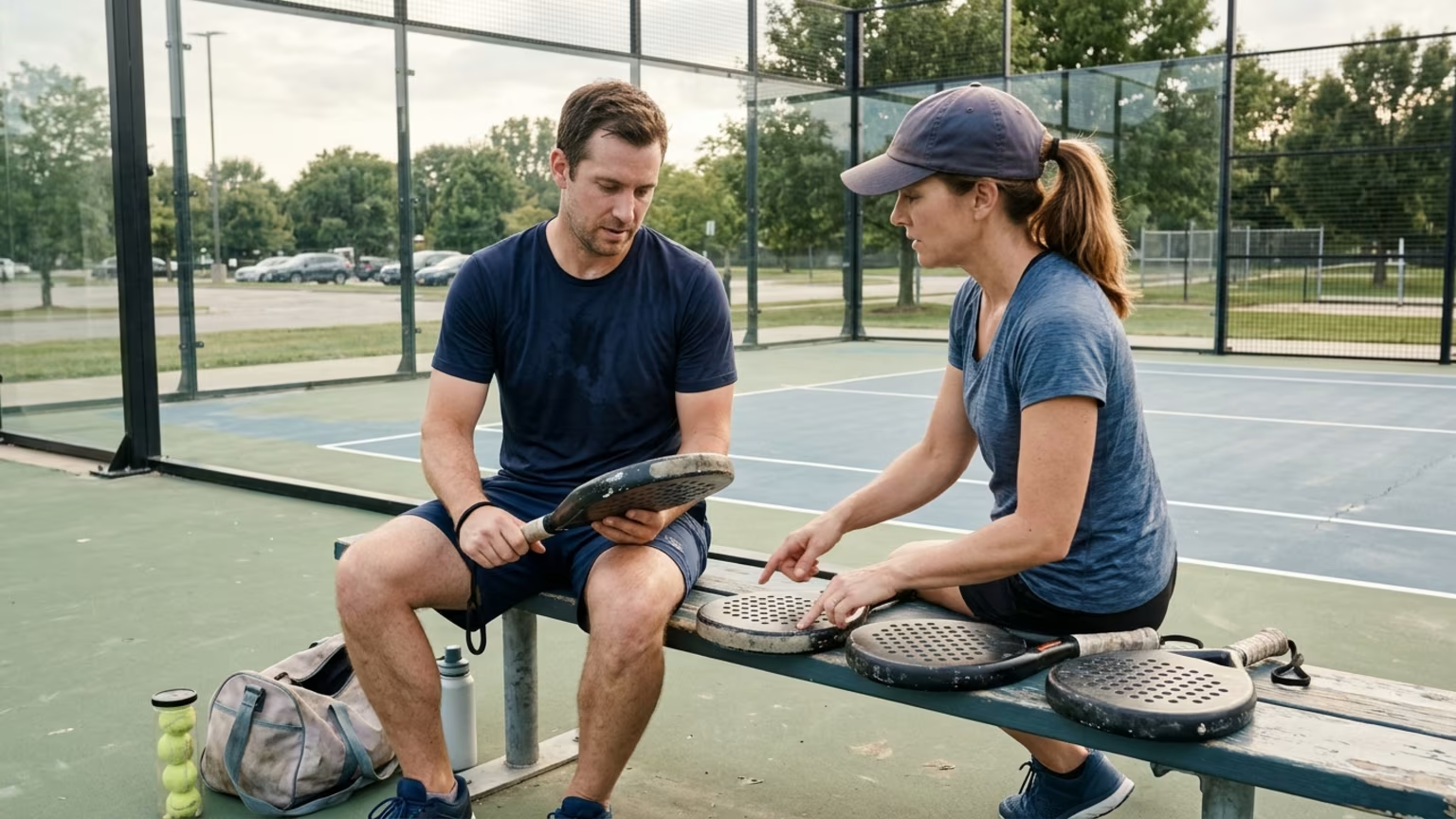
Answers to padel racket questions about weight, balance, shape and grip, with practical trial prompts and guidance on persistent discomfort.
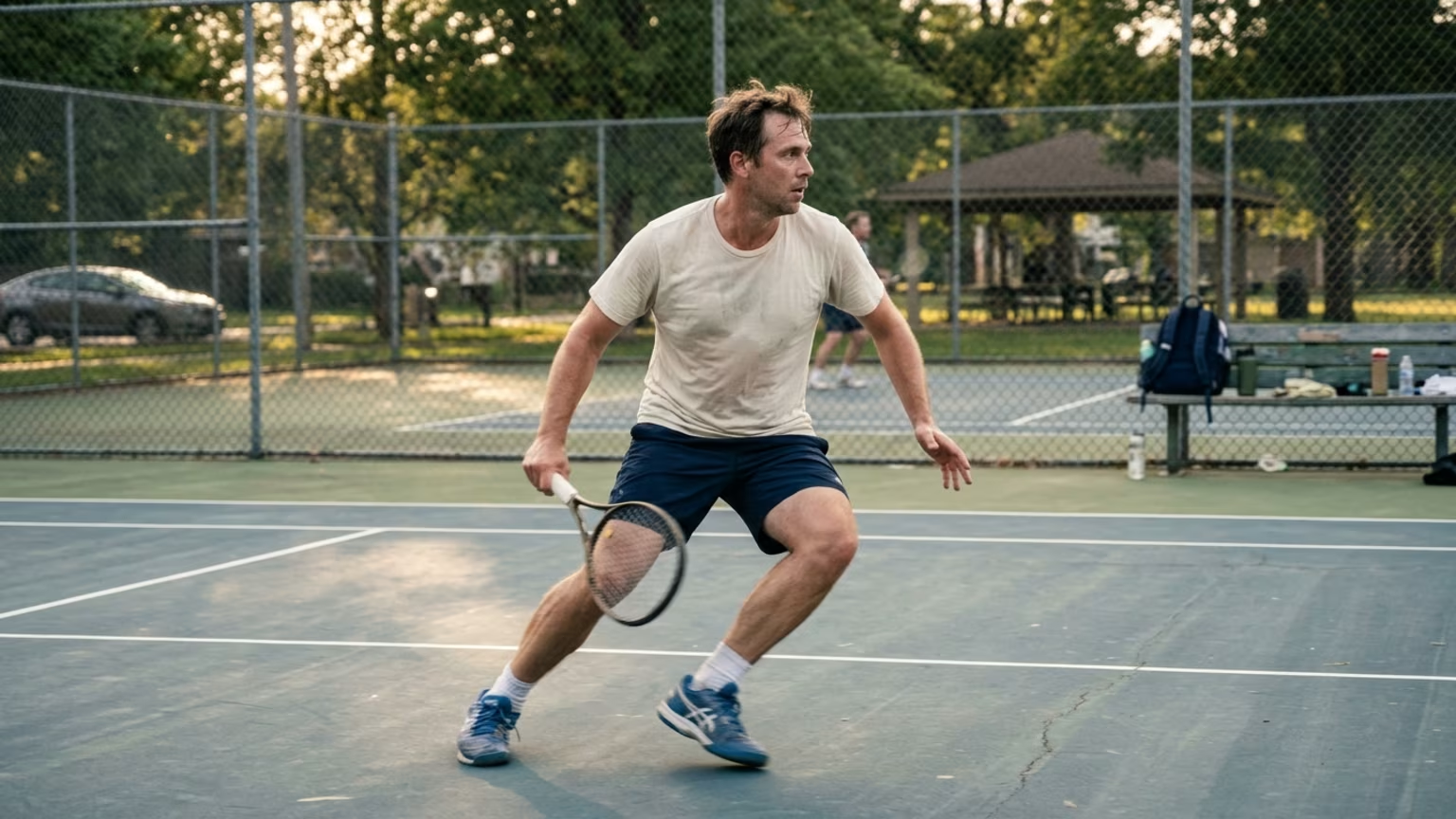
Understand split steps, controlled stops and recovery, with source-based coaching ideas and clear limits for adult racquet-sport players.

A grounded look at lower-body strength and balance for racquet sports, with simple supported examples and clear limits on injury-prevention claims.
Read practical guidance for better movement, smarter preparation and a game that keeps working for you.
explore the Blog
