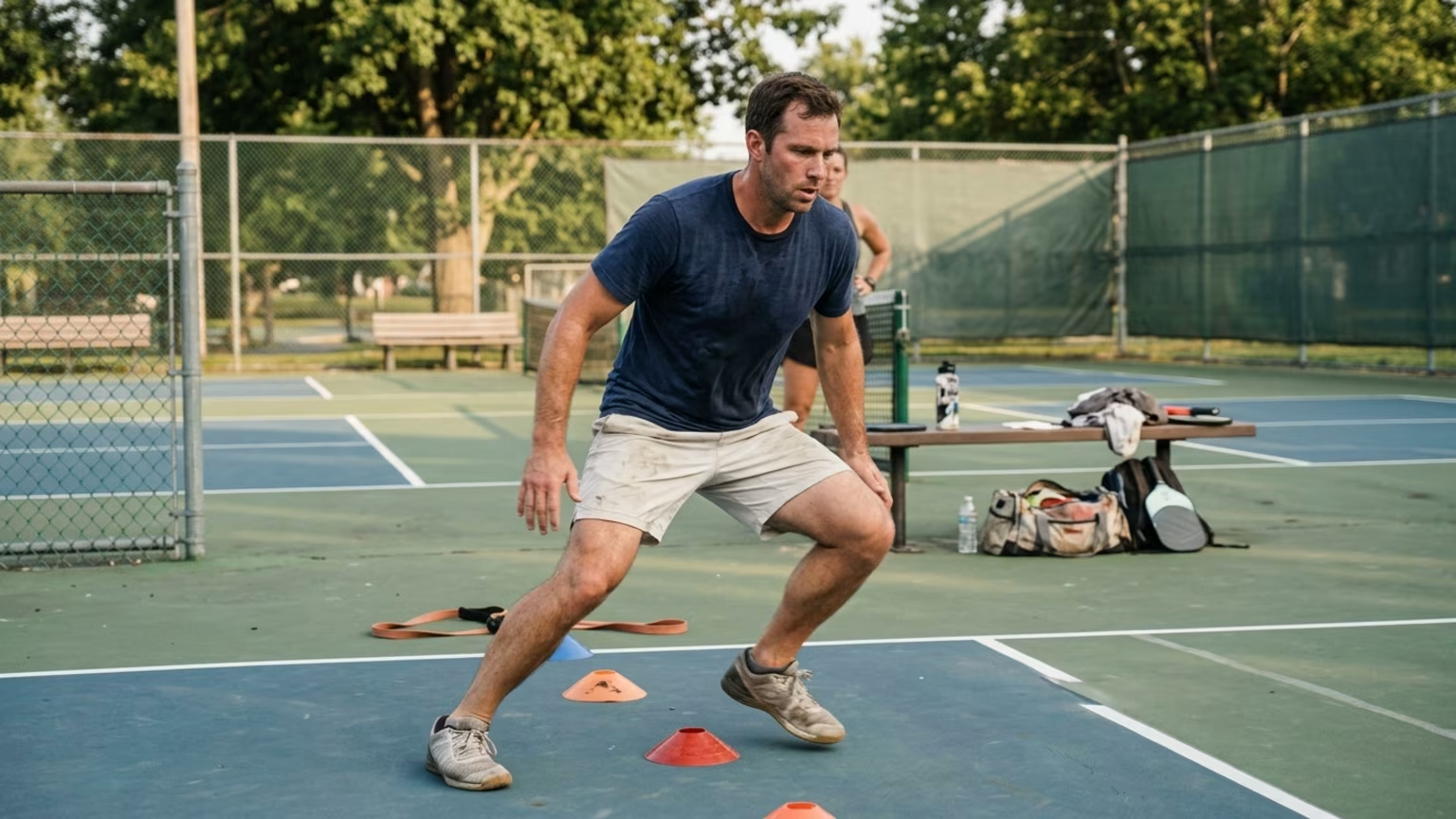

Build resilience for pickleball's sudden starts and lateral shuffles with a practical, court-focused strength routine that protects your lower body.




"How do I build strength for the sudden starts, lateral shuffles, and lunges required in pickleball without overworking myself?" You need a focused routine of controlled lower-body and trunk exercises that supports short bursts of court movement.
Many players assume the smaller court size and shorter rallies mean the sport requires minimal physical preparation. This perspective often ignores the intense muscular demands of repeated starts and stops. Court play involves brief bouts of rapid lateral movement, reaching, and sudden changes of direction. These intermittent actions force your joints to absorb significant force in a very short window of time.
The short rally illusion masks the true physical toll of the game. Even if a point lasts only ten seconds, the rapid acceleration required to reach a drop shot is physically taxing. Muscle tissue must contract forcefully to stop your momentum before you hit the non-volley zone line, placing substantial stress on the knees, hips, and ankles. Because players often complete multiple matches in a single session, the cumulative fatigue can easily sneak up on you.
The need for proper physical preparation becomes clear when looking at recent injury data. A study detailed in a University of Arkansas repository abstract utilized the U.S. National Electronic Injury Surveillance System to analyze court-related incidents. The Arkansas repository record identifies this 2024 paper on age as a risk factor for pickleball-related injuries. The authors of the study called for age-specific interventions to help players stay safe.
Building a capable body is essential for athletic longevity in racquet sports. While research has not tested a universal injury prevention protocol head to head, basic conditioning principles still apply. A targeted routine prepares your tissues for the specific stresses of the game. Developing strength that transfers to the court allows you to move with confidence and control.
The best routines focus heavily on the lower body and the trunk. A pickleball-focused coaching article proposes two coached strength sessions a week for optimal preparation. This specific approach highlights lateral lunges, calf and shin work, hip rotation, and balance exercises. These movements directly mirror the mechanical requirements of reaching for wide shots and holding low positions.
Lateral lunges are particularly valuable for preparing your legs for side-to-side court movement. By training in the frontal plane, you strengthen the adductors and abductors that stabilize your hips. Calf and shin work helps protect the lower leg during sudden sprints and sharp directional shifts. Integrating balance exercises trains your nervous system to maintain control during awkward reaches.
You do not need to push yourself to total exhaustion to see benefits. The goal is to condition the muscles used for acceleration and deceleration. This targeted strategy is why traditional gym machines often fall short for racquet athletes. Free weights and bodyweight exercises demand core stabilization and spatial awareness.
Progression is a critical element of any safe training plan. Experts advise starting with double-leg exercises like basic squats or glute bridges. Once you build a foundation, you can progress gradually to single-leg work such as split squats or step-ups. Keep all movements controlled and stay within a tolerable range of motion to protect your joints.
While all three sports share a common ancestry, their physical requirements are distinct. Pickleball restricts players at the non-volley zone, creating a highly specific tactical environment. This rule forces rapid, compact lateral shuffles and repetitive forward lunges to dig out low balls. The action is heavily concentrated in a small space, demanding quick reactions and sudden stops.
Tennis requires covering a significantly larger baseline area, which changes the mechanical load entirely. Players reach higher top speeds and experience heavier deceleration forces when sliding or planting their feet. The longer rallies in tennis also require a different type of sustained cardiovascular endurance, often stretching matches over several hours. The movement demands that separate these sports dictate how you should structure your weekly workouts.
Padel introduces the unique element of playing the ball off the glass walls. This feature requires frequent rotational tracking, backward pedaling, and twisting actions under load. While padel players focus heavily on spinal rotation and shoulder stability, pickleball players must prioritize lower leg resilience.
Another factor to consider is the equipment used in each sport. A heavier padel bat or a tightly strung tennis racquet sends different vibration patterns up the arm compared to a composite pickleball paddle. While upper body strength matters for all three disciplines, the lower body provides the anchor that makes those swings possible. Recognizing the unique footprint of your game ensures your gym time produces real results.
Understanding these differences helps Evercourts readers tailor their routines accurately. Training generically for racquet sports might leave you unprepared for the exact stresses of your chosen game. A pickleball player needs ankles and calves that can handle hundreds of micro-adjustments per match. A targeted approach respects these subtle but important distinctions.
Adding new exercises to your schedule requires careful load management, as spiking your workload abruptly is a frequent precursor to overuse issues. A common mistake is increasing playing frequency, duration, and intensity all at once. If you start a new strength routine, keep your court hours steady or even reduce them slightly at first. Change only one variable at a time to give your body a chance to adapt.
Two modest strength sessions a week are generally enough to build resilience. This frequency leaves you with plenty of recovery capacity for match play and skill practice. Your body repairs and strengthens itself during rest days, making recovery just as vital as the workouts themselves. Pushing through fatigue regularly can compromise your coordination and increase your risk of a misstep on the court.
The available evidence does not support one rigid routine for every single player. Every athlete brings a different baseline of fitness, joint health, and movement experience to the court. If you have a history of pain or a relevant medical condition, you should seek individualized guidance from a professional. Practical adjustments, like warming up dynamically and wearing appropriate footwear, also play a major role in your overall maintenance plan.
While the sudden starts and lateral shuffles of pickleball place unique demands on your body, a practical strength routine builds the resilience needed to handle them comfortably. By approaching your training with patience and progressive steps, you can trust your legs and keep enjoying the court for years.
Follow Evercourts for practical insights on tennis, pickleball and padel performance, movement, recovery and healthy ageing. Stay connected for new articles, research-led guidance and ideas to help you play well and keep playing for years.


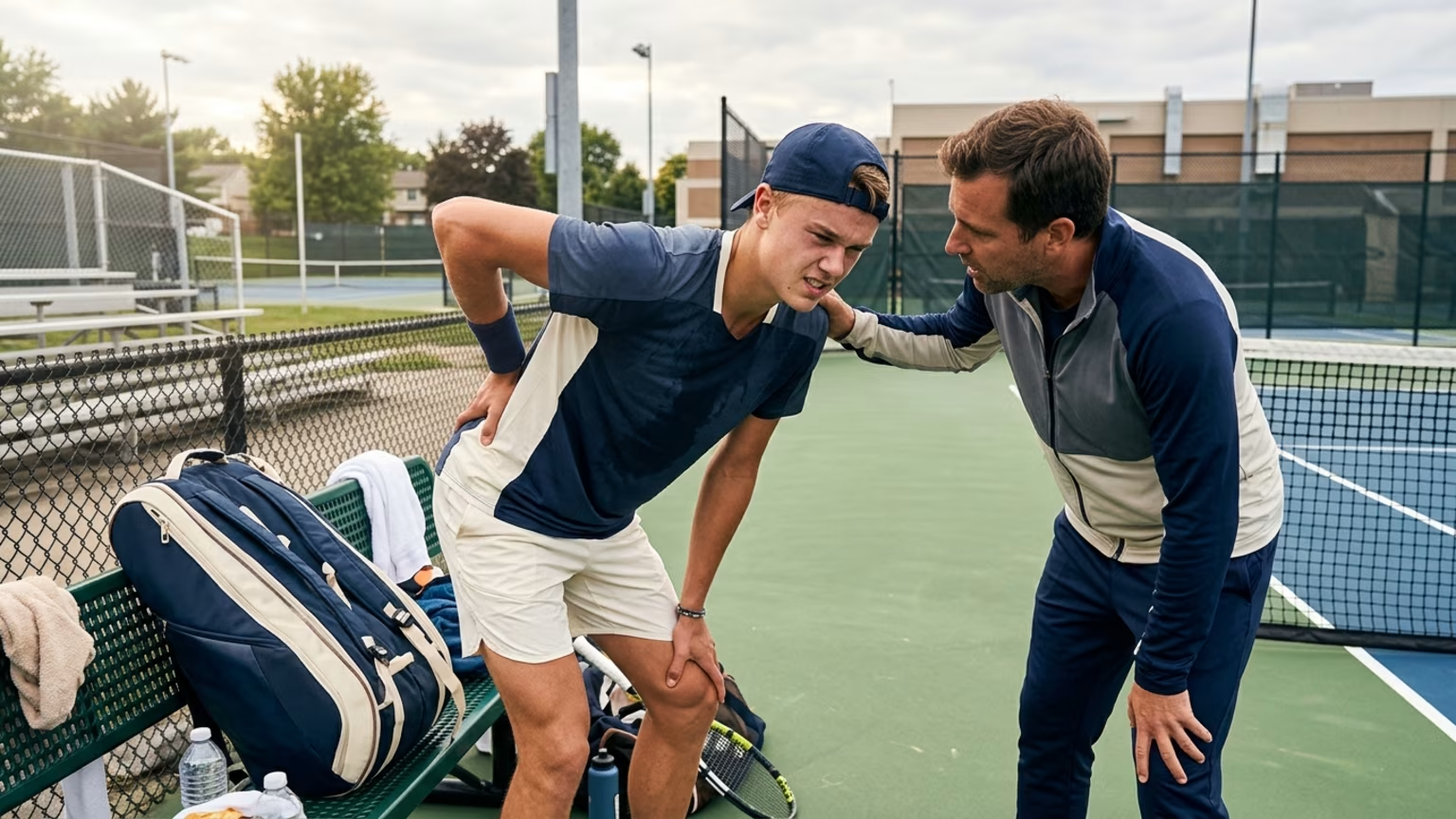
Holger Rune withdrew from the European Open with a back problem. The facts behind his decision and a grounded perspective for recreational players.

The Dink’s October 17 guide emphasizes deep returns, ball-height decisions and positioning against faster pickleball opponents.

A new report outlines padel and tennis gear trends. Learn how to assess adjustable rackets, sensor feedback and smart-court claims.
Read practical guidance for better movement, smarter preparation and a game that keeps working for you.
explore the Blog
