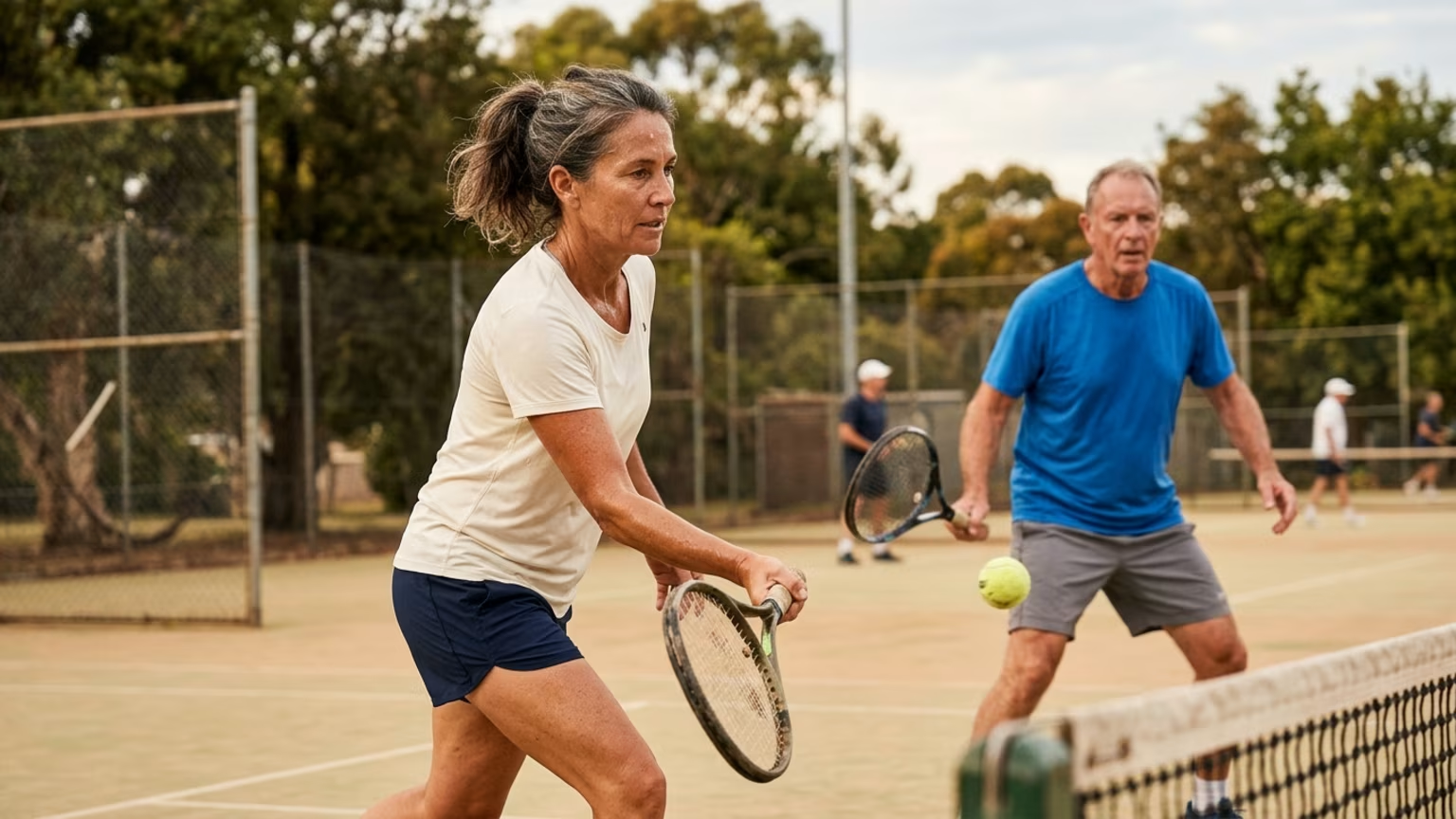

Discover a practical athletic longevity framework for adult racquet players. Learn how consistent strength, balance, and recovery routines improve performance.




Getting older on the court does not mean you have to play slower. In early 2026, the American College of Sports Medicine released a comprehensive position stand reviewing data from more than 30,000 participants. The report concluded that consistent resistance training is far more critical for aging adults than complex programming. This shifts the focus from intense, seasonal gym blocks to simple, repeatable weekly routines.
The latest public health research confirms that complex routines are largely unnecessary for adult athletes. The American College of Sports Medicine noted that consistent resistance training yields the best results for physical longevity. Occasional high-volume lifting blocks are far less effective. They often interrupt regular court time or trigger lingering soreness.
The ACSM summary emphasizes that consistency matters more than highly complex periodization. For recreational or competitive racquet players, this favors a repeatable weekly structure. Modest doses of strength and mobility work are far superior to bodybuilding routines. Those heavier regimens often consume precious recovery resources and reduce court agility.
The Centers for Disease Control and Prevention sets a clear baseline for aging players. Guidance cited by industry sources recommends at least 150 minutes of moderate activity per week for adults aged 65 and older. This should be paired with muscle-strengthening work on at least two days per week. It is a highly practical framework that most recreational players can easily follow.
A 2026 review indexed by the National Institutes of Health also supported practical movement goals. It reported that functional training may improve strength, flexibility, and coordination in older adults with sarcopenia. For healthy racquet athletes, this highlights the value of training movements that transfer to real life. World Health Organization guidance also stresses combining functional balance and strength work into multicomponent activity.
Professional athletes rely on full-time physiotherapists to manage their daily physical volume. Recreational adults must build and monitor their own sustainable schedules. It is a common mistake to view match play and gym routines as entirely separate budgets. Intense court movement and heavy lifting draw from the exact same recovery pool.
Separating training stress from playing stress is the ultimate priority for adult athletes. The recreational reality requires you to manage your own physical budget carefully. Adding extra gym sessions on top of a busy match calendar creates excessive fatigue. A smart weekly structure scales back gym intensity during active league seasons.
A heavy tennis or padel match involves repeated accelerations, abrupt braking, and aggressive rotation. Tracking real capacity means monitoring how well you handle those specific demands. If your next-day stiffness increases, you might be overtaxing your recovery system. Implementing a smarter strength training protocol helps manage this cumulative stress safely.
"A few years ago, I realized my tennis serve speed was dropping, and my shoulder was constantly throbbing after matches. Instead of pushing through the pain, I took a month to rebuild my mechanics and focus on rotator cuff endurance."
"I stopped trying to hit flat aces and developed a much heavier kick serve. My win rate actually went up, and my shoulder stopped hurting. Sometimes longevity means outsmarting your own ego on the court."
Older players should stop comparing themselves to youthful performance benchmarks. Instead, focus on a practical scorecard based on movement quality. Ask yourself if you can still produce a quick first step or brake without losing posture. Success is measured by recovering to a useful court position without excessive fatigue.
The week should be built around a few complementary physical pillars. The first pillar is strength focused on lower-body power, trunk control and upper-body pulling. The second pillar involves very small doses of explosive power work performed when you are completely fresh. The goal is improving coordination and intent rather than chasing exhaustion.
Balance and reaction form the third crucial pillar for older players. This includes practicing single-leg control, split-step timing and lateral repositioning. Integrating a balance training for racquet sports routine directly translates to better on-court stability. Aerobic capacity and mobility make up the final pillar to support match endurance.
Making recovery measurable helps older players stay ahead of potential injuries. Watch for soreness that lasts far beyond your usual recovery window. A declining serve or unusually slow footwork during warmups are immediate red flags. When these signals appear, reduce your training volume before you are forced to stop completely.
The sheer scale of adult participation highlights the urgency of athletic longevity programs. In 2025, the USTA reported that more than 27.3 million people played tennis in the United States. Nearly 40% of those participants utilized public park facilities. This represents a massive audience of older players who want to maintain their competitive edge.
Pickleball growth shows a similar trajectory among aging athletes. Sources citing the Sports & Fitness Industry Association's 2026 report put U.S. pickleball participation at 24.3 million in 2025. This massive influx of recreational players requires sensible, sustainable performance models. Finding a reliable long-term performance guide helps these new players avoid early burnout.
Padel is also expanding rapidly across the globe. A secondary summary of the International Padel Federation's 2025 report cited more than 35 million players worldwide. The same report estimated more than 24,600 clubs and 77,300 courts globally. With millions of adults picking up racquets later in life, the demand for pragmatic training advice is undeniable.
As we move into the next competitive season, expect local clubs to shift their coaching philosophies. Facilities will likely move away from exhaustive cardio drills and prioritize multicomponent functional movement. The racquet sports community is finally recognizing that careful recovery management is a core athletic skill. Future programs will seamlessly integrate balance, flexibility and strength work into standard practice routines.
Players who adapt to this functional approach will see their active playing years multiply. Instead of obsessing over raw power, successful older athletes will prioritize consistent execution and strategic pacing. Managing physical limits intelligently creates a profound advantage over opponents who refuse to adapt. Ultimately, getting older on the court does not mean you have to play slower.
Follow Evercourts for practical insights on tennis, pickleball and padel performance, movement, recovery and healthy ageing. Stay connected for new articles, research-led guidance and ideas to help you play well and keep playing for years.


Holger Rune withdrew from the European Open with a back problem. The facts behind his decision and a grounded perspective for recreational players.

The Dink’s October 17 guide emphasizes deep returns, ball-height decisions and positioning against faster pickleball opponents.

A new report outlines padel and tennis gear trends. Learn how to assess adjustable rackets, sensor feedback and smart-court claims.
Read practical guidance for better movement, smarter preparation and a game that keeps working for you.
explore the Blog
